Buying a camshaft phaser for Alfa Romeo fitment is not a catalog exercise. It is a controlled sourcing decision where the wrong near-match can create cold-start rattle, unstable idle, emissions fault codes, slow phasing response, or early wear. Procurement teams need the OE reference checked against the engine code, the intake or exhaust position confirmed, and the phaser geometry verified against the camshaft nose, sprocket interface, oil galleries, fastening method, parking position, and lock-pin behaviour.
A capable supplier should make the decision easier, not hide risk behind broad interchange claims. Ask for traceable production, functional test evidence, dimensional controls, packaging rules, and documents that support receiving inspection, warranty review, and repeat orders. Driventus supplies engine and powertrain components to B2B buyers that need controlled batches, export documentation, and engineering support for part-number cross-reference work. Driventus is an independent aftermarket manufacturer; Alfa Romeo and other brand names are referenced for fitment identification only.
This guide gives procurement teams a practical way to evaluate a camshaft phaser Alfa Romeo OEM supplier: what to confirm before the RFQ, which technical details fail in the field, how to compare supply routes, and what documentation should be in the file before serial purchasing.
Start With the Fitment Decision, Not the Price
The first decision is whether the part is genuinely the right phaser for the engine. Confirm the engine code, displacement, model year range, valve-train layout, and whether the request is for the intake phaser, exhaust phaser, or a matched set. Alfa Romeo applications may share engine architecture with other group platforms, but shared architecture does not guarantee interchangeability. Camshaft nose geometry, sprocket offset, oil feed layout, trigger-wheel relationship, bolt grade, thread length, and tightening strategy can change by engine code or production revision.
The RFQ should name the OE cross-reference, such as `OE 06A107065` where applicable, and state whether the buyer needs a complete assembly, a service kit, or a subcomponent. If the enquiry starts from an aftermarket number, the supplier should still validate the OE reference and application list before quoting production quantities. Send photos of both faces, the bore, oil ports, timing marks, and any stamped or laser-marked codes.
For reverse-checking, useful sample measurements include bore ID, hub OD, sprocket width, tooth count, bolt size, offset from mounting face to sprocket centreline, and maximum angular travel in crank or cam degrees.
A practical RFQ should include:
OE cross-reference or verified application list
Engine code, displacement, fuel type, power rating, and model year range
Intake or exhaust position, or matched pair requirement
Sample quantity, trial order quantity, repeat MOQ, and annual volume
Target unit price range by order band, such as 100, 500, 1,000, or 5,000 pieces
Packaging requirement, label format, barcode rule, and branding restrictions
Target market, Incoterms, port or warehouse destination, and regulatory destination
Required documents: PPAP level if needed, material certificate, dimensional report, and test summary
If the application list is incomplete, treat the enquiry as higher risk. Ask for a physical sample, teardown reference, or measured drawing before tooling, machining fixtures, gauges, or batch production are released. For a new cross-reference, a normal approval route is 2 to 5 samples for dimensional and bench review, followed by a pilot order before serial supply.
Failure Modes Hidden Behind a Near-Match Phaser
A camshaft phaser is a hydraulic and mechanical timing device, not just a toothed metal assembly. External dimensions matter, but they are only the first filter. Internal vane geometry, rotor-to-housing clearance, stop angles, spring preload, locking-pin travel, sealing condition, and oil gallery alignment all affect timing response. The part must hold concentricity, angular travel, leakage control, and cleanliness within the agreed limits from the vehicle programme, OE drawing, or approved sample.
The common sourcing mistake is accepting a phaser that looks close on the bench but behaves differently in oil. A small leakage difference can slow advance or retard. Burrs can interfere with oil control. A wrong lock-pin parking position can create start-up noise. Surface finish variation can change wear and sticking behaviour after heat exposure.
Buyers should also check how the phaser interacts with the oil control valve, timing chain or belt system, camshaft sensor strategy, and engine management calibration. Where no OE drawing is available, agree acceptance limits from a golden sample and document them before sample approval. Typical control points include bore and hub dimensions measured to 0.01 mm resolution, axial runout and radial runout checks, angular travel confirmed within the agreed degree window, and 100% functional lock/unlock verification for production lots.
Control item
Why it matters
Buyer check
Bore and journal dimensions
Determines fit on the camshaft nose and clamp load transfer
Compare against OE print or measured sample; define go/no-go gauge limits
Request dimensional, leakage, and response data by batch
Locking-pin behaviour
Supports cold-start stability and parking position
Ask for bench-functional test results after oil fill and thermal soak
Surface finish
Reduces wear, sticking, and oil film variation
Confirm finish specification, deburring method, coating details, and hardness range
Oil passage geometry
Controls fill, drain, and phasing response
Verify against cross-section, sample, flow check, or CT/borescope evidence
Cleanliness
Prevents valve sticking and accelerated wear
Agree particle limits, washing method, and final preservation oil
Material traceability
Supports durability review and customer audits
Require heat, batch, and process records for critical parts
</tr></thead><tbody> </tbody></table>Where the buyer is sourcing for a European or UK programme, the documentation package should also support REACH (EC) No 1907/2006 declarations for SVHC screening where relevant to the finished assembly, coatings, lubricants, and packaging supply chain.
Why Integrated Manufacturing Changes the Risk Profile
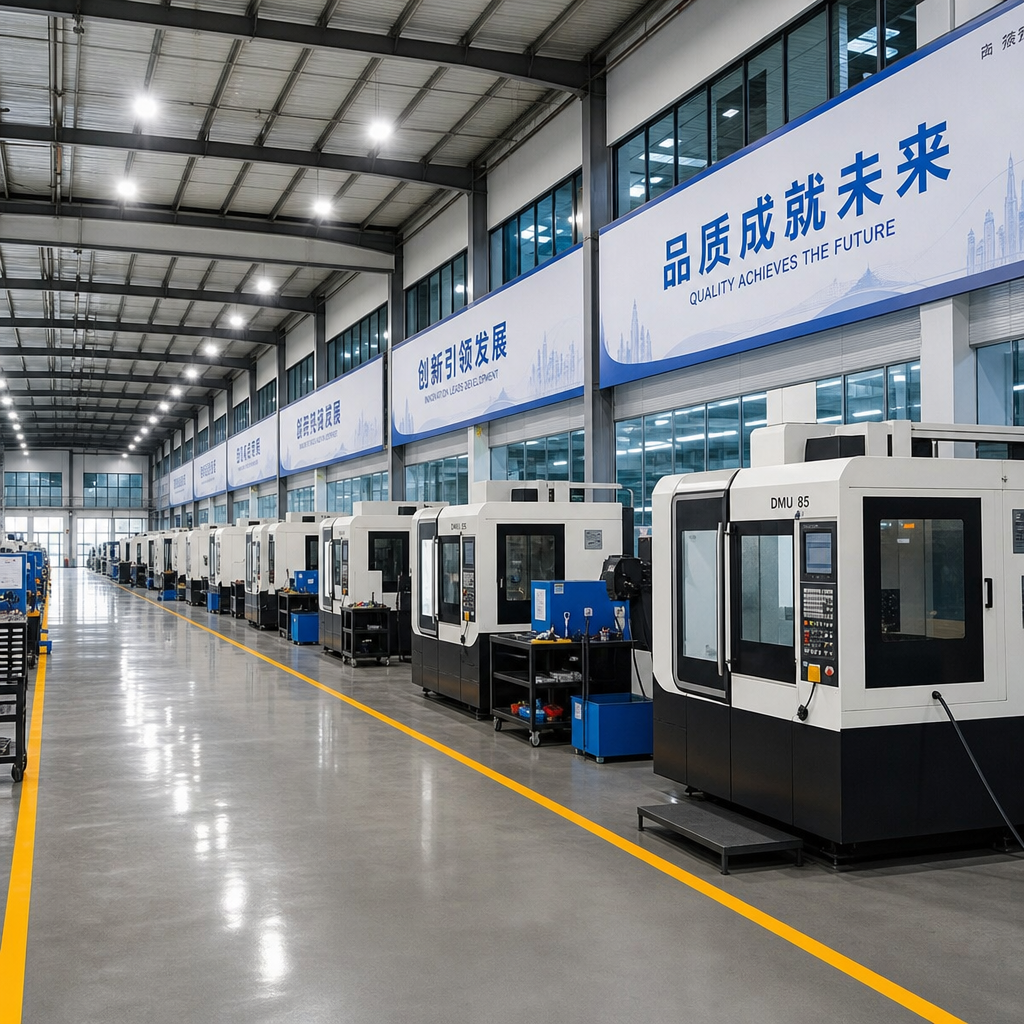
For a timing-critical component, the supply model affects the quality outcome. Driventus operates as a vertically integrated manufacturer, giving buyers a clearer route from sampling to serial supply. That matters because turning, milling, broaching or shaping, heat treatment, surface finishing, washing, assembly, torque control, and final inspection all influence the final phaser.
When production is scattered across unrelated subcontractors, small problems become harder to find and slower to correct. Dimensional drift may appear after a tool change. Cleaning variation may leave debris in oil passages. Material substitutions may not be visible in the finished assembly. Corrective action then depends on how quickly each process owner can isolate the cause.
For procurement teams, integrated production can improve:
Change-control speed between machining, assembly, and quality teams
Lot traceability for housings, rotors, pins, springs, seals, bolts, and fasteners
Cleaning control for internal oil paths and residual machining debris
Sample iteration during part-number validation and cross-reference review
Gauge ownership for bore, offset, runout, angular travel, and lock-pin checks
Containment speed if a pilot lot or customer return shows an abnormal result
Accountability during customer audits, remote reviews, and claim analysis
A typical project route is application confirmation, sample or drawing review, feasibility check, quoted MOQ and lead time, sample production, dimensional and functional report, buyer approval, pilot order, then serial production. Existing repeat-production items can often be sampled faster than a new development part. For a new or uncertain cross-reference, the schedule must include fixture review, gauge confirmation, and at least one controlled sample loop before mass production.
Driventus serves distributors, OEM and Tier-1 programmes, private-label customers, and multi-location repair chains. The commercial model is built around B2B requirements: documented samples, consistent packing, controlled labelling, stable carton quantities, and export-ready shipment planning. For buyers building a wider engine portfolio, see our catalog and engine components.
The Document File That Separates Claims From Control
A supplier claim is not enough for a camshaft phaser Alfa Romeo OEM supplier decision. The file set should prove whether the plant can maintain process discipline at production scale and repeat it across future orders. Driventus works to IATF 16949:2016 and ISO 9001:2015, which are baseline references many automotive sourcing teams expect for controlled manufacturing.
Request the following documents before order placement:
1. Certificate copies for IATF 16949:2016 and ISO 9001:2015, including scope review and expiry date 2. Dimensional inspection report for the sampled batch, with drawing points or sample-based control points identified 3. Material certificate for key metallic components, including heat or melt traceability where applicable 4. Functional test summary for angular movement, leakage, response, return position, and locking action 5. Hardness, surface finish, coating, and heat-treatment records where those processes affect wear 6. Packaging specification, carton strength, packing quantity, pallet pattern, and label format 7. Traceability rule for lot coding, production date, operator or line code, and inspection status 8. Non-conformance and corrective-action process summary, including containment timing 9. Change-control process for materials, tooling, machining parameters, gauges, and sub-suppliers
For higher-volume programmes, buyers may also request PPAP elements such as a control plan, process flow, PFMEA, measurement-system analysis, and initial process capability data. The required level should match the customer, risk class, and order volume. A buyer placing 50 trial pieces may need a sample report and batch traceability. A programme taking 5,000 to 20,000 pieces per year should normally request stronger capability evidence on critical dimensions and functional tests.
If the programme needs third-party supplier onboarding, a documented quality system helps the buyer compare suppliers on the same basis. The central question is rarely whether the part can be made once. It is whether the supplier can hold the same result on the next three reorders. Ask how long records are retained, how rejected parts are segregated, and whether the approved sample is kept as a master reference for future batches.
Commercial Terms That Change the True Unit Cost
The quoted unit price is only one part of the sourcing decision. Commercial terms for camshaft phaser purchasing should reflect validation risk, tooling exposure, and demand visibility. MOQ should cover machining setup, inspection, packing, and document preparation while still allowing a practical trial order. Lead time depends on whether the item is already in repeat production or is a new cross-reference requiring sample approval.
As a practical benchmark, sample orders are often 2 to 10 pieces, pilot orders may run 50 to 200 pieces, and serial MOQs commonly start around 300 to 1,000 pieces depending on machining load, packaging, and document requirements. New tooling, dedicated gauges, or private-label packaging can push the economic MOQ higher.
Clarify these points in the RFQ and purchase order:
MOQ for first order and repeat order, with price breaks by 100, 500, 1,000, and 5,000 pieces where relevant
Sample lead time versus mass-production lead time, and whether the clock starts after drawing, sample, deposit, or label approval
Tooling, fixture, and gauge ownership or maintenance responsibility
Approved sample retention and requalification rules after design, process, or sub-supplier changes
Packing quantity per inner box, master carton, and pallet standard
Incoterms, shipping mode, export documents, and destination compliance documents
Warranty scope, evidence requirements, claim handling procedure, and debit-note rules
Forecast, call-off, blanket-order, or safety-stock expectations for serial supply
Lead-time logic is usually straightforward. In-stock or current-production items can move fastest after fitment confirmation. Repeat production follows the normal machining, assembly, inspection, and packing schedule. A new cross-reference needs extra time for sample measurement, fixture preparation, validation, and approval. Compare price on the same basis, including test level, certificate package, label type, carton specification, payment terms, and freight handover point.
For buyers in the EU, UK, US, Canada, Australia, or Brazil, landed cost should include inspection cost, import handling, duties, local labelling, customs broker fees, and documentation rework. A lower unit price can become poor value if the supplier misses lead times, ships inconsistent batches, or forces repeated returns during qualification. On a timing-critical component, predictable replenishment often outweighs a small price saving.
Validation Tests to Run Before the Part Reaches the Field
Visual inspection will not protect a camshaft phaser programme. The main field risks are delayed response, sticking after thermal soak, start-up noise, leakage outside the acceptable range, incorrect park position, and sensitivity to oil contamination. Ask which tests are performed at component level, which checks are 100%, which are sampled, and which assumptions are based only on historical production.
Useful validation references include:
Functional cycling under defined oil pressure and temperature range
Leakage and response-time checks at agreed pressure, oil viscosity, and temperature
Lock and unlock verification after thermal soak and after oil drain-down simulation
Angular travel, stop position, and return-position confirmation
Visual and dimensional inspection after assembly, including burr and damage checks
Cleanliness control for internal oil paths, with particle limits agreed for the programme
Noise or rattle assessment where the application requires it
Torque audit for fasteners or preassembled components where applicable
Endurance cycling for programmes with higher warranty exposure
For purchasing use, ask the supplier to state the acceptance basis in numbers wherever possible: test oil grade or viscosity, pressure range, temperature range, number of cycles, leakage limit, angular travel target, lock-pin engagement requirement, and sampling frequency. A workable control plan might use 100% functional lock/unlock testing, 100% visual checks, and sampled dimensional audits per production lot, with tighter controls during pilot orders and after any process change.
Where the application requires emissions correlation or durability support, buyers may reference published methods such as ECE R-83 for vehicle emissions context and SAE J2527 for durability-related testing where applicable to the broader validation plan. Use those references carefully. They do not replace the agreed component specification, and they do not imply vehicle manufacturer approval.
The supplier should not claim approval by Alfa Romeo or any vehicle manufacturer unless a formal approval exists. The correct position is that the part is built to OE-equivalent fitment requirements and validated against the agreed programme documents.
When a Custom Phaser Beats an Off-the-Shelf Answer
Not every enquiry should be answered with a stock part. If the buyer has a legacy engine, a running change in OE geometry, a regional variant, or an application with limited catalogue coverage, custom manufacturing may be the lower-risk route. This is especially true when the phaser body, bolt pattern, sprocket offset, oil passages, vane timing window, trigger relationship, or lock-pin parking angle differs from current stock.
Custom work is appropriate when:
No current cross-reference matches the target engine code
The buyer has a sample but no usable production drawing
A running change has created two similar but non-interchangeable versions
Packaging or branding requirements are specific to a channel customer
The application needs modified materials, coatings, lubrication features, or cleaning limits
The order is part of a private-label or programme-specific launch
Driventus supports custom manufacturing when there is a clear commercial case and enough technical information to control the build. That usually means sample parts, measured dimensions, target annual volume, target market, target price band, warranty expectations, and a defined validation plan. One sample should be kept as the master reference, and another can be used for teardown or measurement if the drawing package is incomplete.
For new programmes, the buyer should expect a review stage before production release, followed by sample approval, document review, and controlled ramp-up. The commercial decision should include non-recurring costs for fixtures, gauges, test adapters, packaging artwork, and any special coating or heat-treatment development. A custom phaser with annual demand of only 100 pieces may not justify dedicated tooling. A programme with 1,000 or more pieces per year, private-label demand, or repeated service demand is easier to evaluate economically.
A Scorecard for Comparing Suppliers Without Guesswork
A disciplined comparison scores evidence, not presentation. For a camshaft phaser Alfa Romeo OEM supplier search, the most useful criteria are fitment validation, traceability, dimensional control, functional test evidence, packaging quality, lead-time reliability, and reorder consistency. Price matters, but only after the technical file is acceptable and the same delivery terms are being compared.
A practical shortlist method:
1. Confirm the OE cross-reference, engine code, position, and application match. 2. Review quality certificates, certificate scope, expiry date, and manufacturing responsibility. 3. Compare sample dimensional reports against the same control points. 4. Check functional test coverage for movement, leakage, response, return position, and locking action. 5. Review lead time, MOQ, price breaks, packaging, payment terms, and repeat-order terms. 6. Ask how changes in materials, tooling, process parameters, gauges, or sub-suppliers are controlled. 7. Request audit access, remote process evidence, or production photos if the account is strategic.
A simple scoring table can prevent a price-only decision. Weight technical fit and test evidence more heavily than headline unit price for the first order. For example, assign 30% to fitment and dimensional evidence, 25% to functional validation, 15% to quality system and traceability, 15% to commercial terms, 10% to logistics readiness, and 5% to communication speed. Adjust the weighting if the part is already proven in your channel or if the order is part of a higher-risk launch.
Procurement teams should also judge the quality of the supplier's answers. Vague responses, unsupported interchange claims, missing lot traceability, or reluctance to provide sample data are warning signs. A capable supplier should be able to explain the acceptance basis, document the tested batch, define what will be checked again at serial production, and state when price or lead time changes if MOQ, packaging, or document requirements change.
Buyers looking for a direct sourcing conversation can request a quote with the engine code, OE reference, annual volume, sample requirement, target price band, and destination market. That information is enough to determine whether the part can be supplied from current production or whether a new validation cycle is required.
Frequently asked questions
Provide the engine code, model year range, intake or exhaust position, OE cross-reference, target quantity, annual volume, target price band, packaging requirement, and destination market. A sample or measured drawing is helpful when the application is not already confirmed in the supplier catalogue.
Yes, subject to verified application data and commercial review. Driventus supplies B2B customers in multiple export markets and uses Alfa Romeo references for fitment identification only. Driventus is an independent aftermarket manufacturer and does not claim vehicle manufacturer approval unless formally documented.
At minimum, request IATF 16949:2016 and ISO 9001:2015 certificates, a dimensional report, a material certificate, a functional test summary, packaging details, and traceability records for the supplied batch. Higher-volume programmes may also require PPAP elements, capability data, and a control plan.
No. For a camshaft phaser, buyers should confirm geometry, locking behaviour, oil passage alignment, angular travel, leakage control, cleanliness, and batch traceability. Catalog fitment is a starting point, not the final acceptance basis.
Send the engine code, OE reference, intake or exhaust position, annual volume, target price band, destination market, and sample requirement, and we will confirm fitment and supply options for your programme. Start the discussion at /contact.html