camshaft · 2026-06-04

Camshaft Peugeot Replacement: OE-Equivalent Fit Guide

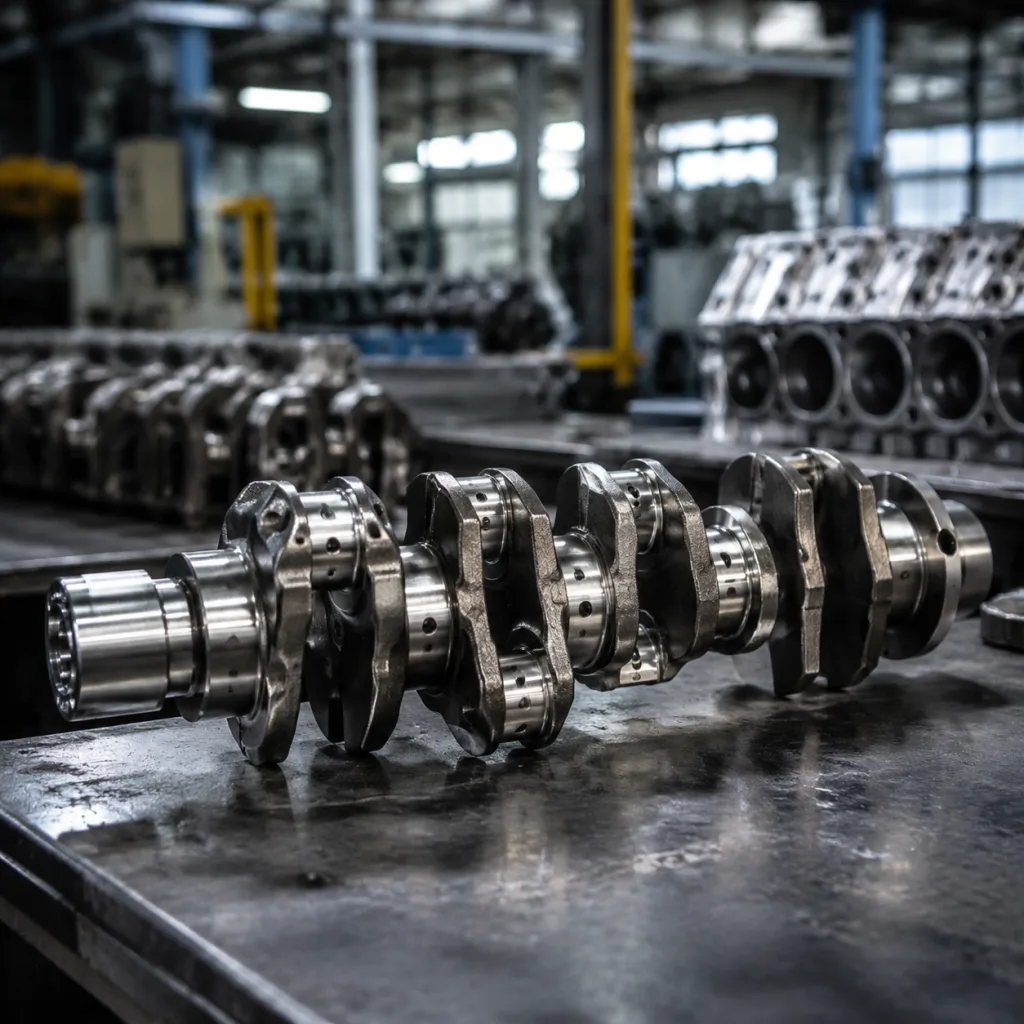
A camshaft Peugeot replacement should be specified as a dimensional, metallurgical, and functional match, not simply as a badge match. The part must reproduce the original valve timing, lobe lift, base-circle diameter, bearing journal geometry, thrust location, trigger pattern, and end machining so the ECU, timing drive, and valvetrain continue to work as designed after installation. For procurement teams, the practical test is whether a supplier can hold those characteristics across repeat orders and document the result with batch-linked inspection data.

Driventus supplies camshaft programmes for Peugeot applications with controlled metallurgy, profile inspection, hardness verification, and export documentation. Driventus is an independent aftermarket manufacturer; brand names are referenced for fitment only. Buyers should confirm the engine code, cylinder head variant, emissions calibration, timing drive type, and camshaft sensor interface before release. A part that is nominally correct but wrong in lift, phase, journal size, or hardness can lead to noise, misfire, poor oil-film control, accelerated follower wear, or timing-related diagnostic trouble codes after installation.

What a Peugeot Replacement Camshaft Must Match

For a Peugeot camshaft replacement, fitment begins with the engine code and cylinder head, not the vehicle badge. The camshaft determines valve opening point, closing point, duration, lift curve, and overlap. If the replacement differs from the original in lobe lift, duration at checking height, base circle, lobe separation angle, or phasing reference, the engine may still start, but it may not run correctly. Typical symptoms include rough idle, weak low-speed torque, elevated emissions, fuel-trim complaints, and accelerated valvetrain wear.

The replacement also has to match the engine's mechanical architecture. Peugeot applications may use SOHC, DOHC, fixed-timing, or variable valve timing layouts, and some engine families use different intake and exhaust camshafts within the same cylinder head. Each layout places its own demands on shaft profile, journal spacing, thrust control, oil feed positions, and timing interface. Hydraulic tappet engines need compatible opening and closing ramps plus a controlled surface finish, so the lifter can follow the lobe without collapse, pump-up, or chatter. Engines with intake or exhaust phasers need a camshaft that preserves the original control window, allowing the ECU to command cam advance and retard across load and rpm without exceeding adaptation limits.

In sourcing terms, the acceptable part is the one that installs without rework, clears the head casting, runs within the original oil-clearance envelope, synchronizes with the belt or chain system, and preserves the combustion strategy the engine was calibrated around. That is the standard for OE-equivalent replacement, and it is the basis for lower-risk procurement in aftermarket distribution, workshop networks, and private-label supply.

Dimensional Checks That Decide Fit

Dimensional validation should start with the engine code and end with measured features on the sample, master drawing, or approved reference part. A Peugeot camshaft can look correct in photos or catalog data and still fail in service if a journal, thrust face, keyway, phaser interface, or trigger feature sits outside tolerance. Differences of only a few hundredths of a millimetre can affect oil-film stability, axial location, ECU signal quality, and timing alignment after installation.

Release inspection should normally use micrometres, height gauges, runout fixtures, profile measurement, and CMM inspection for datum-critical features. The exact tolerance stack depends on the OE design, but a credible production control plan should define measurable limits for every fit, timing, and wear surface instead of relying on visual comparison alone.

</tr></thead><tbody> </tbody></table>The most common sourcing error is selecting by model name alone. For Peugeot, the engine family, cylinder head revision, timing system, and emissions version are more reliable identifiers than trim level or market name. A part that fits the advertised model but not the exact engine code can cause installation delays, comebacks, and avoidable warranty claims. For B2B buyers, that is a cost problem as much as a fitment problem because one catalog mismatch can affect a full distributor batch.

Materials, Hardness, and Wear Control

Replacement camshafts are usually produced from chilled cast iron, ductile iron, forged steel, or assembled steel shaft designs, depending on the original design and follower load. Material selection matters, but it does not determine service life by itself. Heat treatment, lobe hardening, grinding quality, straightness control, and residual stress management decide whether the camshaft maintains its profile after repeated contact with tappets, rocker arms, or finger followers.

For Peugeot applications, the replacement should preserve the functional hardness range and microstructure expected by the engine design. Chilled cast iron lobes typically rely on a hard wear surface formed during casting, while steel designs may require induction hardening, carburizing, or nitriding depending on the OE route. A credible specification should define surface hardness, effective case depth where applicable, core condition, and acceptable decarburization or grinding-burn limits. Where the original uses assembled lobes and journals, the process route must also control press fit, angular indexing, and distortion so the shaft remains straight after hardening and finishing.

Wear control depends on the interface between the cam lobe and the lifter, rocker, or finger follower. The replacement profile should preserve the intended contact pattern, distributing load across the contact patch rather than concentrating it at the lobe nose or edge. Grinding marks should follow a controlled finish specification, and lobe edges should be free from burrs that can cut into followers during first start-up. A credible supplier should be able to provide material certificates, hardness results, case-depth data where relevant, and lot traceability. That is the difference between a part that is theoretically compatible and one that can survive real service conditions in workshops, fleets, and distributor warranty environments.

Validation and Quality Documentation

Procurement teams should ask for evidence, not broad assurances. For camshaft replacement programmes, validation should cover dimensional inspection, hardness verification, profile measurement, runout control, surface-finish inspection, and batch traceability. The records should be tied to the exact production lot shipped, not only to an early sample or catalog reference. If sample parts and mass-production parts are not controlled against the same reference set, repeat orders can drift even when the part number stays the same.

Our control system is aligned with IATF 16949:2016 and ISO 9001:2015. For chemical compliance on finished goods and packaging materials, we can support REACH (EC) No 1907/2006 declarations where required. That gives buyers a clearer compliance path for cross-border supply, distributor onboarding, and private-label programmes.

A typical release file should include:

  • First article or sample inspection report
  • Critical dimension record for journals, lobes, thrust faces, and timing interfaces
  • Cam profile or lift curve comparison against approved reference data
  • Runout, straightness, and angular phasing inspection results where specified
  • Hardness and effective case-depth results where applicable
  • Material identification, heat number or batch reference, and production lot traceability
  • Surface finish and visual inspection criteria for lobes and journals
  • Packaging specification for corrosion protection and export handling
  • Country-of-origin and commercial shipping documents

When comparing suppliers, the key question is whether the inspection data is tied to the exact production batch, not just to an approved drawing. That distinction reduces variation between sample approval and repeat production, and it lowers returns after installation in the field. For workshop networks and distributors, traceability is often what separates a manageable claim rate from a recurring service issue.

How We Support B2B Sourcing

For Peugeot replacement work, the most efficient sourcing process is to start with the engine code, OE sample, casting or forging reference, camshaft position, and timing drive type. From there, confirm target volume, packaging format, and destination market. Our catalog is organised for buyers who need repeatable fitment data rather than generic listings. You can review our catalog, check the quality system, and see engine components that sit alongside camshaft programmes.

If the project needs a non-standard profile, special marking, corrosion protection, export packaging, or a private label programme, custom manufacturing is available. That helps when a distributor needs consolidation across multiple Peugeot applications, when a regional buyer wants one part number to cover verified variants, or when an OEM or Tier-1 programme requires a controlled change to material, finish, laser marking, packaging, or inspection documentation.

To move quickly, send the engine code, intake or exhaust position, target quantity, sample photos, timing interface photos, and any existing OE cross-reference notes. If you have a target market, warranty requirement, or compliance requirement, include that as well so we can align documentation, labeling, corrosion protection, and packaging from the start. When you need a commercial response, use request a quote.

Frequently asked questions

Start with the engine code, cylinder head variant, camshaft position, and timing system, then verify lobe lift, base circle, journal diameter, overall length, thrust location, timing interface, and sensor pattern against the sample or OE reference. Vehicle model alone is not enough because the same model can use multiple engines, emissions calibrations, and camshaft revisions. If possible, compare the old part on a bench before ordering and confirm the phaser, sprocket, or encoder interface before release.

Yes. We can work from a sample, drawing, or target OE-equivalent data and adjust material, hardness, profile, marking, packaging, corrosion protection, or finish as required. Custom work is managed through our OEM process, with sample approval before volume release so buyers can validate fitment, profile data, traceability, and packaging before committing to repeat orders.

Typical shipment packs include commercial invoice, packing list, origin data, and batch-linked inspection records. Where requested, we can add material certificates, hardness results, case-depth data where applicable, cam profile reports, and REACH-related declarations. The exact document set depends on the destination market, consignee requirements, customs process, and the buyer's specification for quality records.

If you need a camshaft Peugeot replacement programme with controlled fitment, profile verification, and documented inspection data, send your engine code and target volume via [request a quote](/contact.html).

Request a Quote
Check Typical control point Why it matters
Base circle and lobe liftMeasured against master profile dataControls valve motion, lash/lifter preload, and lift consistency
Lobe phase and durationCam profile inspection at defined checking heightPreserves valve timing and emissions calibration
Journal diameter and roundnessMicrometre and roundness inspectionProtects oil film, bearing life, and cold-start lubrication
Journal spacing and runoutCMM or V-block/runout fixturePrevents binding, noise, and uneven bearing loading
Overall length and thrust facesEnd-to-end and thrust-width measurementControls axial float and sprocket/phaser alignment
Sprocket, gear, or phaser interfaceKeyway, slot, dowel, bolt pattern, or pressed featurePreserves timing drive alignment and torque transfer
Sensor target or encoder featureTooth count, window pattern, notch geometry, and angular positionSupports correct cam sensor signal and ECU synchronization
Surface finishRa target plus visual inspection for burns, chatter, and scoringReduces follower wear during run-in and service