camshaft · 2026-06-09

Camshaft for Opel Vivaro OE Equivalent Sourcing Guide

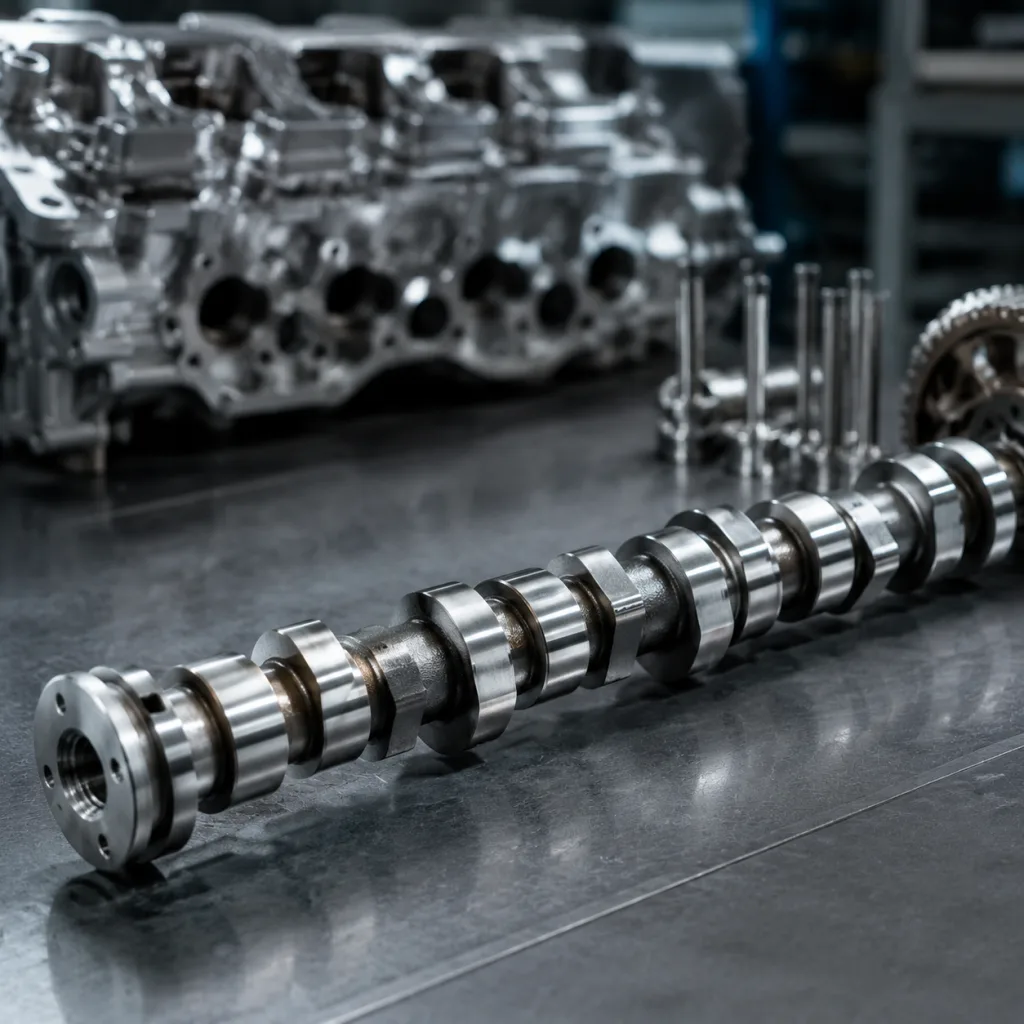
A camshaft for Opel Vivaro OE equivalent replacement programme should begin with controlled fitment data, material traceability and repeatable valve-timing accuracy. For distributors, importers and repair-chain buyers, the main commercial risk is not simply the purchase price. It is warranty exposure caused by the wrong engine application, incorrect journal diameter, lobe-profile variation, insufficient surface hardness, blocked oil passages or packaging that allows damage in transit. Opel Vivaro applications span different model generations and diesel engine families, many of which share platform logic with other light commercial vehicles. Before releasing a purchase order, buyers should verify engine code, production year range, cylinder-head configuration, camshaft position, timing drive layout, sensor trigger details and OE cross-reference format. Driventus manufactures engine and powertrain components for B2B aftermarket supply from Taizhou, Zhejiang, with process controls aligned to IATF 16949:2016 and ISO 9001:2015. This guide explains how procurement teams can evaluate OE-equivalent camshafts for Opel Vivaro replacement demand without relying on vehicle-brand approval claims.

Define OE Equivalence Before Price Comparison

OE equivalence means the replacement camshaft is engineered to match the functional requirements of the original part: dimensional envelope, timing geometry, metallurgy, hardness, oil-feed features, sensor interface and installation position. It does not mean the part is supplied by, approved by or endorsed by the vehicle manufacturer.

Driventus is an independent aftermarket manufacturer; brand names are referenced for fitment identification only.

For Opel Vivaro replacement supply, the sourcing file should define the camshaft through measurable checkpoints rather than a short vehicle description. A buyer should request drawings, controlled inspection data or master-sample confirmation for the relevant application, then compare that evidence with engine-code mapping and the customer’s OE cross-reference list. Where a customer uses a generic OE reference such as OE 06A… or OE 11251… in its internal database, treat it only as a catalogue matching field until the exact engine application and camshaft position are confirmed.

A practical sourcing file should include the target vehicle generation, engine code, fuel type, production range, intake or exhaust position, timing-end design, sensor trigger form and any supersession notes. This prevents price comparisons from being made between parts that appear similar in a catalogue but are not interchangeable in service.

Useful procurement links include our catalog for product-family coverage, engine components for related parts, and custom manufacturing when a buyer needs drawing-controlled production rather than standard aftermarket supply.

Critical Specifications for Opel Vivaro Camshafts

The table below shows the specification areas that should be frozen before a buyer approves bulk supply. Exact dimensions depend on the engine family, model year and camshaft position, so the key control point is procurement discipline rather than one universal measurement.

</tr></thead><tbody> </tbody></table>A camshaft for Opel Vivaro OE equivalent supply should be evaluated with PPAP-style evidence where the customer requires it, even when the order is for aftermarket distribution. Material certificate, dimensional report, hardness report, lobe-profile or lift result, runout result and final inspection records are the minimum practical file for serious import programmes. For high-volume supply, buyers should also agree how often those checks are repeated during production, not only at initial sample approval.

Validation Tests Buyers Should Request

Replacement camshafts are compact parts, but a weak process can stop an engine quickly. A credible supplier should be able to show controls at incoming material, casting or forging verification, machining, heat treatment where applicable, grinding, cleaning, rust prevention and packing stages.

Typical validation package:

  • Dimensional inspection report for journals, lobes, overall length, thrust surfaces, keyways, threads and sensor features.
  • Lobe profile trace or lift measurement compared with the approved drawing, OE-equivalent master sample or customer-approved reference part.
  • Surface hardness and, where applicable, hardness-depth verification or case-characteristic confirmation.
  • Straightness or runout measurement after machining and final cleaning.
  • Material traceability record linked to batch number, heat number or production lot.
  • Surface-finish checks on bearing journals, cam lobes and critical contact areas.
  • Cleanliness inspection for oil holes, cross-drilled passages and machined cavities.
  • Visual inspection for dents, burrs, casting defects, grinding burns, corrosion and handling marks.
  • Salt-spray or corrosion-protection validation for export packaging where the route or storage time requires it.
  • Sample installation, bench fitment or fixture confirmation for the target engine family.

Driventus operates a quality system aligned with IATF 16949:2016 and ISO 9001:2015. For regulated markets, material and chemical declarations may also need to consider REACH (EC) No 1907/2006. Engine emissions regulations such as ECE R-83 are vehicle-level requirements, but they still make valve-timing consistency commercially important for replacement parts used in emissions-controlled applications.

For B2B buyers, the most useful validation evidence is traceable and repeatable. A single clean sample is not enough if the mass-production lot is not controlled by the same dimensions, process route and inspection plan.

Fitment Risks in Opel Vivaro Replacement Programmes

Opel Vivaro applications share platforms, engine families and catalogue logic with other light commercial vehicles. That creates risk when procurement teams source only by model name or by a partial OE reference. The safer route is to build a fitment matrix using engine code, production year range, camshaft type, camshaft position and customer cross-reference.

Common fitment risks include:

  • Similar engine displacement with different cylinder-head design or camshaft sensor geometry.
  • Intake and exhaust camshafts mixed in warehouse data or customer catalogues.
  • Incorrect timing reference feature despite similar journal and lobe appearance.
  • Updated replacement design not reflected in older distributor catalogues.
  • Chain-driven and belt-driven variants listed under the same broad vehicle family.
  • Different trigger-wheel, slot or phase-reference details hidden behind the same short description.
  • Packaging labels that omit engine code, camshaft position or batch information.
  • Superseded OE numbers entered as active references without application notes.

For distributors, the label should include part number, application summary, camshaft position, batch code, quantity, country of origin where required and a scannable internal code if the receiving warehouse uses barcode control. For repair chains, the carton should make the installed position and engine application clear enough to reduce counter-level returns and workshop delays.

Good fitment control also protects sales teams. When catalogue data, carton labels and invoices use the same application language, it becomes easier to identify whether a claim is caused by product quality, incorrect ordering, incorrect installation or catalogue mismatch.

Commercial Sourcing Checks for Import Buyers

A sourcing decision should combine technical evidence with stable export execution. Unit price matters, but a low-cost camshaft that creates returns, emergency air freight, workshop compensation or customer debit notes is not economical. The buying process should test whether the supplier can maintain the same part definition across samples, production lots and repeat orders.

Before issuing a blanket order, buyers should confirm:

  • Minimum order quantity by part number and by mixed-container programme.
  • Sample lead time, mass-production lead time and realistic replenishment cycle.
  • Inspection plan for first article, in-process and final inspection.
  • Batch traceability format and retention period for quality records.
  • Packaging specification for sea freight, pallet storage and parcel distribution.
  • Rust-prevention method and expected protection period under normal storage conditions.
  • Incoterms, HS code confirmation and export document set.
  • After-sales claim process, including required evidence, response time and disposition method.
  • Ability to support private-label packaging where legally appropriate.
  • Catalogue data format, cross-reference support and label content.

For OEM or Tier-1 projects, the review should be deeper: drawing control, APQP timing, PPAP submission level, control plan, measurement system analysis, special-characteristic handling and change-management rules. For aftermarket distributors, the emphasis is usually on fitment accuracy, repeatable quality, export documentation, packaging durability and predictable replenishment.

Buyers should also agree what constitutes an approved change. Material grade, heat-treatment route, casting source, grinding process, sensor-feature machining or packaging design should not be changed silently after sample approval. Clear change control reduces warranty disputes and protects long-term supply continuity.

How Driventus Supports OE-Equivalent Camshaft Supply

Driventus supplies engine and powertrain components including camshafts, pistons, crankshafts, gaskets, water pumps and turbochargers for B2B customers in Europe, the United Kingdom, North America, Australia and Brazil. For a camshaft for Opel Vivaro OE equivalent programme, practical support can include sample matching, drawing review, batch inspection, packaging development and catalogue data support.

The strongest projects usually begin with a clear technical file from the buyer: target application, annual forecast, required cross-references, sample or drawing availability, packaging format, quality documentation level and any market-specific compliance needs. Driventus can then confirm whether the request fits an existing part family in our catalog or should be reviewed through custom manufacturing.

For standard aftermarket supply, the goal is consistent OE-equivalent function: correct intended fitment, controlled dimensions, stable valve-timing geometry, verified material properties and documentation strong enough for procurement, warranty and incoming-inspection teams. For custom programmes, the discussion can extend to drawing-controlled manufacturing, customer-specific packaging, inspection reporting and release documentation.

No supplier should claim vehicle-manufacturer endorsement for an independent aftermarket replacement part unless such approval genuinely exists and can be documented. The correct sourcing standard is controlled replacement performance supported by fitment evidence, process discipline and transparent quality records.

Frequently asked questions

No. OE equivalent means the camshaft is designed to match the fit, function and performance requirements of the original application. It does not mean approval or endorsement by the vehicle manufacturer. Driventus is an independent aftermarket manufacturer; brand names are referenced for fitment identification only.

Provide the engine code, model year range, camshaft position, target quantity, required cross-references, packaging requirements and any available drawing or sample data. Photos of the timing end, sensor features, oil holes and existing labels can also reduce fitment risk before sampling.

Yes. Depending on the order and customer requirement, Driventus can support inspection reports, material traceability, hardness data, packaging specification and quality-system documentation aligned with IATF 16949:2016 and ISO 9001:2015.

For fitment review, sample matching or volume pricing on Opel Vivaro camshafts, send your application list and target quantities to Driventus. You can [request a quote](/contact.html) or contact the team through /contact.html.

Request a Quote
Specification area What to verify Why it matters for replacement supply
Engine applicationOpel Vivaro generation, engine code, fuel type and cylinder-head layoutPrevents wrong-fit shipments across similar model years and shared platforms
Camshaft positionIntake, exhaust or combined valve actuation layoutAffects lobe phasing, timing setup and sensor relationship
Journal diametersDrawing tolerance, roundness and bearing-contact surface finishHelps prevent oil-pressure loss, seizure, abnormal wear and noise complaints
Lobe profileLift, duration, base circle and flank geometry checked by profile measurementMaintains valve timing, emissions behaviour, idle quality and engine output
MaterialChilled cast iron, alloy cast iron or specified steel grade as applicableDetermines wear resistance, machinability and fatigue performance
Surface hardnessSurface hardness and, where applicable, hardness depth or case characteristicsReduces lobe and follower wear under boundary lubrication conditions
Straightness and runoutShaft runout measured after machining and final processingSupports stable rotation and reduces bearing and timing-load issues
Oil passagesHole position, deburring, cleanliness and blockage controlSupports reliable lubrication immediately after installation
Sensor featuresTrigger wheel, slot, tooth or phase-reference geometryPrevents camshaft position sensor fault codes and starting problems
Timing interfaceKeyway, dowel, gear seat, sprocket interface or end featureProtects timing accuracy during installation and service
PackagingRust prevention, end support, separator design and carton strengthLimits transit damage in export and multi-drop distribution