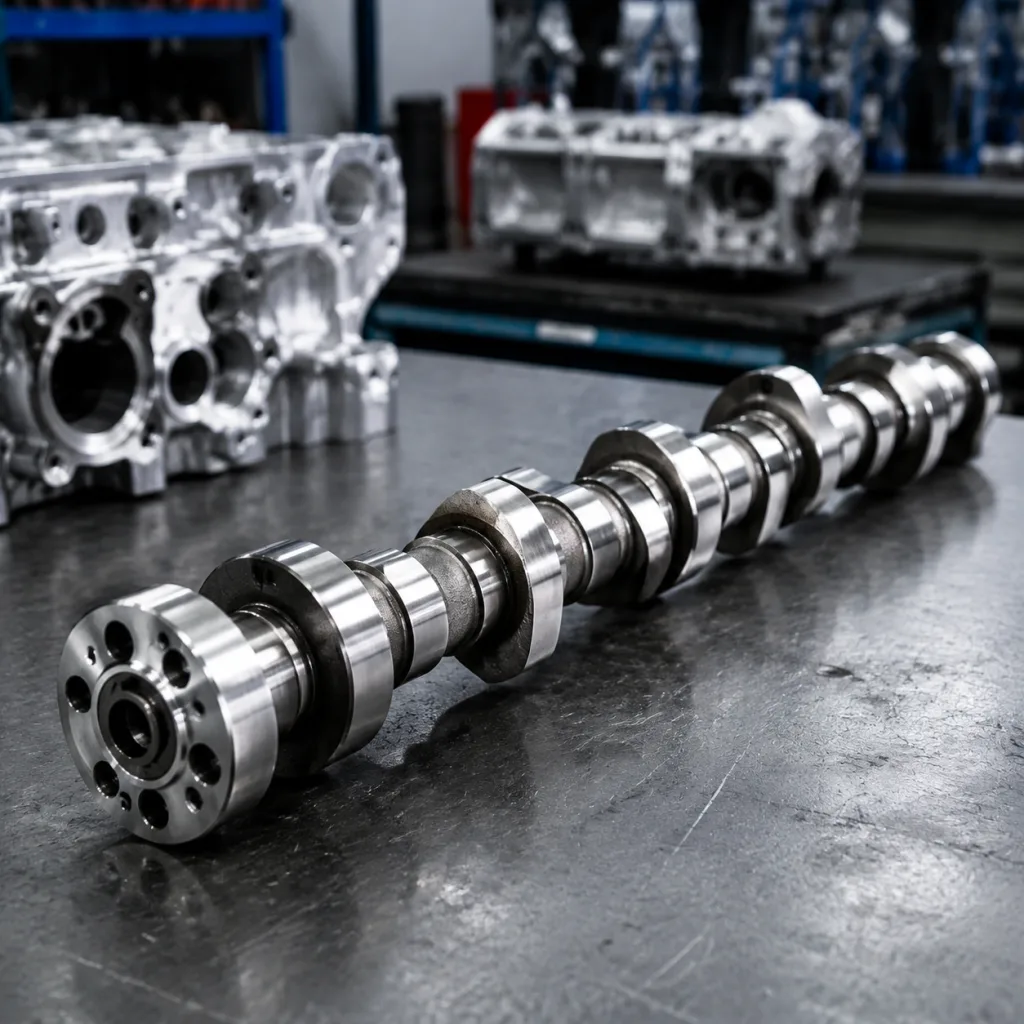
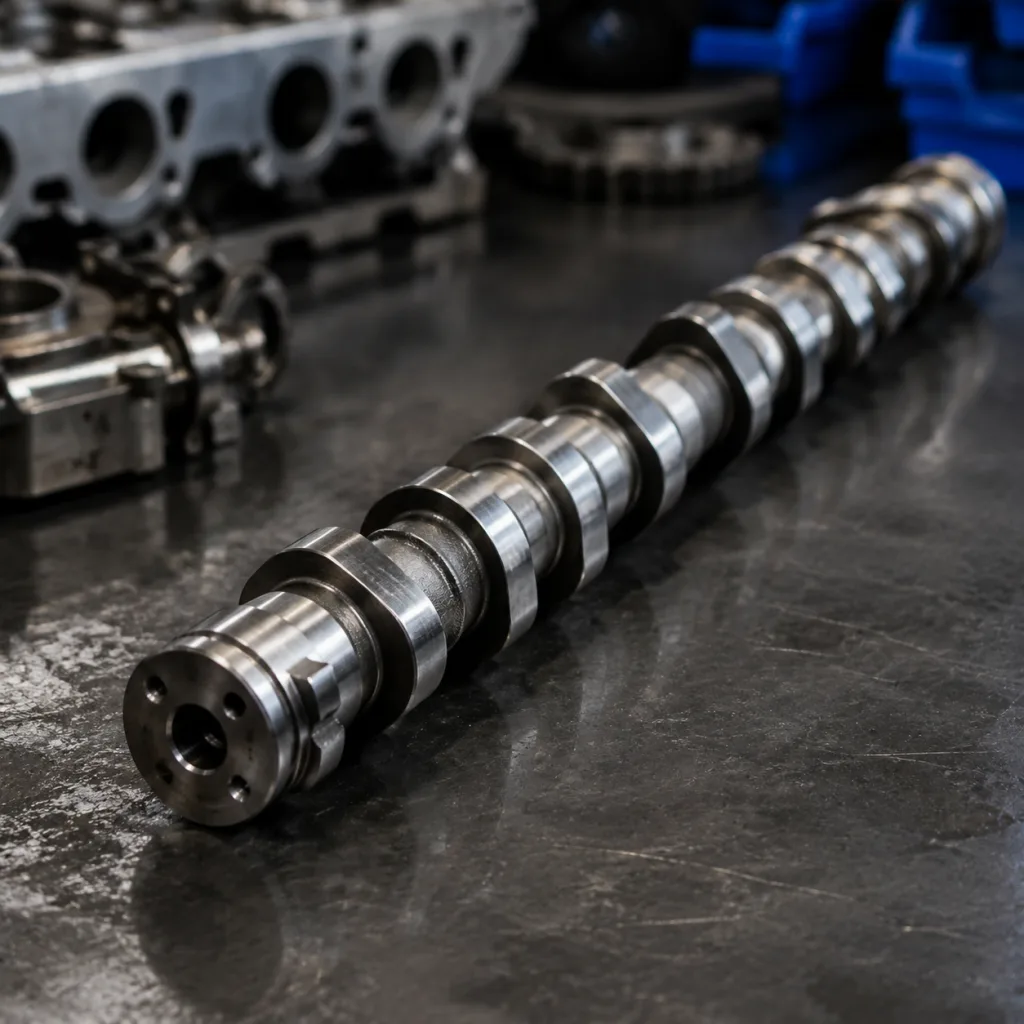
Procurement teams searching for a camshaft Opel OEM supplier need more than a part-number match. They need stable dimensional control, repeatable heat treatment, traceable materials, and production capacity that can support both replenishment and new programme launches. For Opel passenger car and light commercial applications, the sourcing decision usually depends on OE-equivalent geometry, lobe hardness, journal finish, and delivery reliability across EU, UK, North America, Australia, and Brazil. Driventus is an independent aftermarket manufacturer; brand names are referenced for fitment only. We supply engine components from our Taizhou facility under IATF 16949:2016 and ISO 9001:2015 controls, with export support for distributors, OEM programmes, and repair networks. If you are building a sourcing shortlist, use this page to review what to verify, what to ask for, and how to compare suppliers before you approve samples or place a production order.
Camshaft Sourcing: The Few Checks That Decide the Outcome
A camshaft is not a commodity part when OE fitment is the target. The first checks should cover technical and commercial risk together:
Base material: chilled cast iron or forged steel, depending on the application and duty cycle
Heat treatment: lobe hardness typically specified around 50–58 HRC, with journals controlled to drawing requirements by batch
Runout and concentricity: commonly held to 0.02–0.05 mm TIR unless the drawing specifies tighter limits
Surface finish: journals and lobes typically controlled at Ra 0.2–0.8 μm, depending on the interface and lubrication design
Packaging: anti-rust oil, VCI bagging, cavity separation, and part-level labelling
Traceability: batch number, date code, furnace lot, and inspection records tied to each shipment
Supply terms: MOQ, lead time, reorder window, and repeat-order stability
For OE cross-reference work, buyers usually start from an OE number and then validate equivalent geometry through drawing review, sample measurement, and test data. If the target application already has a known OE part number, keep that reference in the RFQ and request confirmation by measurement rather than assumption. A practical RFQ should also ask for critical-to-function dimensions, nominal tolerance bands, and whether the supplier measures 100% or by sampling.
What Separates a Real OEM Supplier From a Parts Seller
A capable camshaft supplier should support both catalogue business and private-label or OEM-linked programmes. That usually means controlled machining, in-house metrology, and a documented quality system.
Capability
Why it matters
What to ask for
Dimensional control
Protects valve timing and assembly fit
Critical dimensions, CMM report, sample approval data, tolerance stack-up on shaft and lobe locations
Heat treatment
Supports wear resistance
Hardness range by feature, process route, batch traceability, furnace chart if available
Surface integrity
Reduces friction and early failure
Roughness values, grinding method, inspection method, lobe profile data
Production scale
Keeps replenishment stable
Monthly output, MOQ, standard lead time, surge capacity for peak orders
Export readiness
Lowers border and compliance issues
HS code support, packing list format, carton labelling, country-of-origin documents
</tr></thead><tbody> </tbody></table>Driventus operates under IATF 16949:2016 and ISO 9001:2015, which helps procurement teams audit process discipline. For compliance-sensitive markets, review material declarations against REACH (EC) No 1907/2006 where applicable. When comparing suppliers, ask whether process controls cover incoming raw bar or billet inspection, in-process gauging, final runout verification, and final oil-preservation before packing.
Validation Walkthrough: From OE Number to Approved Sample
Camshaft approval should follow a controlled validation sequence, especially when replacing an OE source or adding a second source.
1. Confirm the application by engine code, cylinder head variant, valve-train configuration, and emission family. 2. Compare key dimensions: overall length, journal diameter, lobe lift, base circle, lobe separation, and thrust features. 3. Check the timing reference points, sprocket or gear interface, and any sensor target features. 4. Request material specification, hardness data, and the heat-treatment method used for the exact part number. 5. Validate measurement against a golden sample or drawing with a minimum of 3 pieces for first-article comparison. 6. Run a trial build and inspect oiling, lash, timing alignment, and bearing contact pattern. 7. If required, complete durability, corrosion, and oil-compatibility checks before release.
For durability screening, many buyers use internal bench tests and, where relevant, correlate results to established industry methods such as SAE J2527 for corrosion exposure or manufacturer-specific endurance plans. For emissions-related engine programmes in regulated markets, timing stability, surface wear, and follower contact pattern should be assessed carefully before release. Buyers should also define the acceptance window up front, such as maximum cam lift deviation, allowable phasing variance, and post-test wear limit, so the supplier knows exactly what pass/fail looks like.
How Driventus Supports Sourcing Programmes
Driventus supplies engine and powertrain components to aftermarket distributors, OEM/Tier-1 buyers, and multi-location repair groups. For camshaft sourcing, that usually means a mix of catalogue items, private-label supply, and application-specific development.
Our team can support:
Sample submission with dimensional, hardness, and visual inspection data
New part development from drawing, sample, or reverse-engineered reference
Packaging design for warehouse picking and retail-ready logistics
Consolidated sourcing across related engine components such as pistons, gaskets, water pumps, and turbochargers
Programme-specific documentation for buyer audits and vendor onboarding
Basic commercial planning with MOQ, target annual volume, and release schedule aligned to forecast
If your project needs a broader engine assembly basket, see our catalog and the wider engine components range. For documentation and supplier review, our quality system page outlines the controls used in production and inspection. Buyers typically use this route when they want one supplier to manage part validation, export packing, and repeat replenishment under the same commercial file.
Commercial Terms: Where Good Deals Usually Go Wrong
For a camshaft programme, the commercial terms should match the technical risk. A low unit price is not useful if the supplier cannot hold lead time or repeat the same hardness and geometry on the next batch.
Key points to lock in:
MOQ by part number and by mixed-line order, with price breaks defined at specific volume tiers
Sample lead time versus production lead time, including whether first articles ship in 10–15 days and production batches in 30–45 days after approval
Tooling ownership and maintenance responsibility, including replacement timing for worn fixtures
Warranty terms for material or workmanship defects, plus claim response time and corrective-action format
Incoterms, carton count, pallet standard, and whether the quote includes export documentation and inspection reports
Change-control notice period for material, process, or sub-supplier updates, ideally with written approval before release
A practical buyer should also ask for an indicative price ladder, for example 1–49 pieces, 50–199 pieces, 200–499 pieces, and 500+ pieces, because camshaft pricing often changes materially with batch size and packaging specification. If the part is being sourced for a private-label or customer-specific application, custom manufacturing is the right route. That allows drawing review, packaging customisation, and release documentation aligned to the customer’s purchasing process. For RFQs, include annual demand, launch volume, safety stock target, and preferred shipment cadence so the supplier can quote a realistic landed-cost model instead of a loose unit price.
Procurement Checklist Before You Shortlist a Supplier
Use this checklist before you approve a supplier:
Can they name the exact OE cross-reference and the fitment scope?
Do they provide dimensional inspection records for each batch, including at least the critical shaft and lobe dimensions?
Is the material specification documented and consistent across lots, with hardness results by batch?
Are IATF 16949:2016 and ISO 9001:2015 controls active and auditable?
Can they support forecasted demand without frequent expediting, and can they state a stable MOQ and lead time?
Do they have export packaging and documentation experience for your market?
Will they commit to change-control notice before any material, tooling, or process revision?
A qualified camshaft Opel OEM supplier should answer these questions clearly and back them with records, not general claims. If a supplier cannot provide tolerances, batch-level inspection evidence, and a realistic replenishment plan, the sourcing risk is usually too high for programme approval.
Frequently asked questions
Yes. We supply camshafts for selected Opel fitments through aftermarket and OEM-linked channels. Driventus is an independent aftermarket manufacturer; brand names are referenced for fitment only.
Request dimensional data, material specification, hardness results, batch traceability, packaging details, and sample approval records. For regulated markets, also ask for REACH-related material declarations where relevant. For a formal RFQ, include OE reference, annual demand, target price band, and requested lead time so the quote is directly comparable.
Yes. We support custom manufacturing, including labelling, cartons, and programme-specific documentation, subject to order volume and technical review. Use the contact page to discuss the scope. Typical projects are reviewed against MOQ, launch quantity, and the packaging spec before a commercial offer is issued.
If you are building a camshaft sourcing shortlist, send your OE reference, annual demand, target market, and preferred MOQ for a technical review. Use our request a quote form at /contact.html.