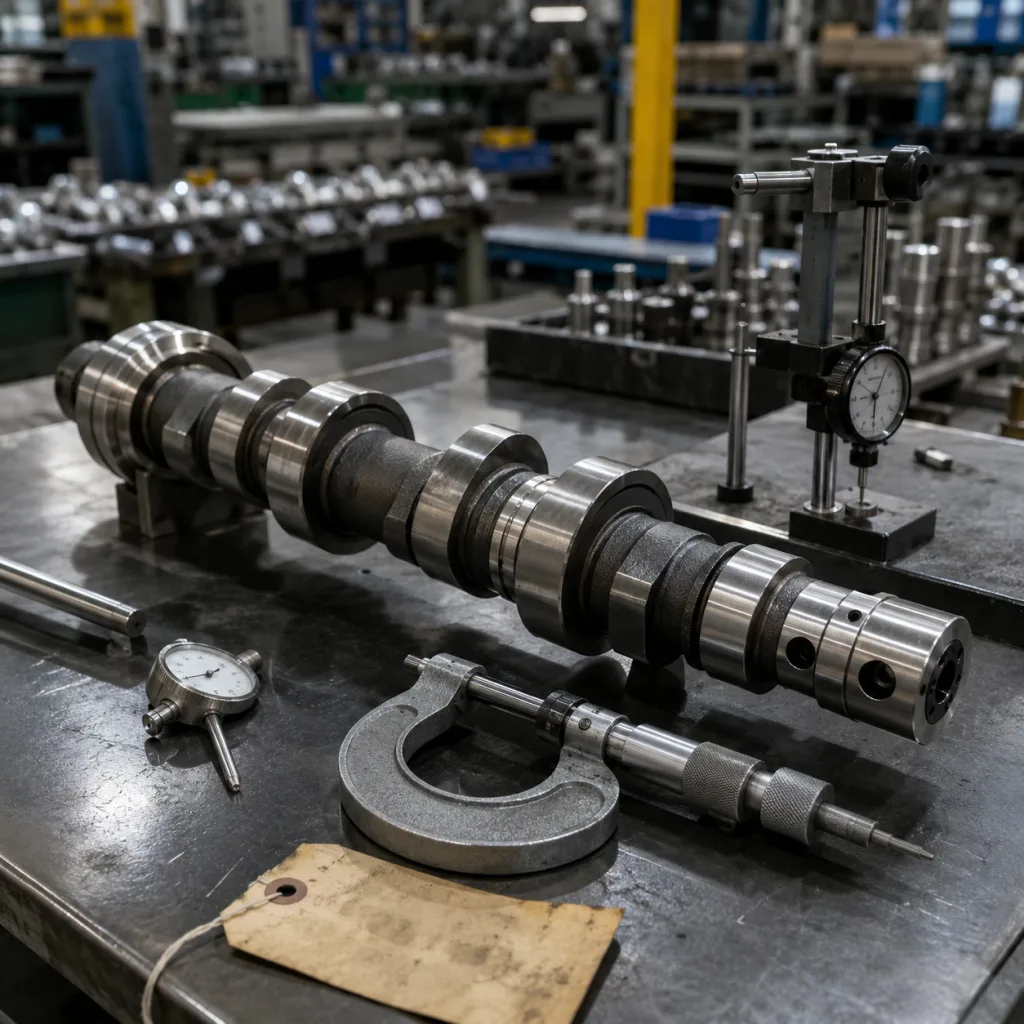
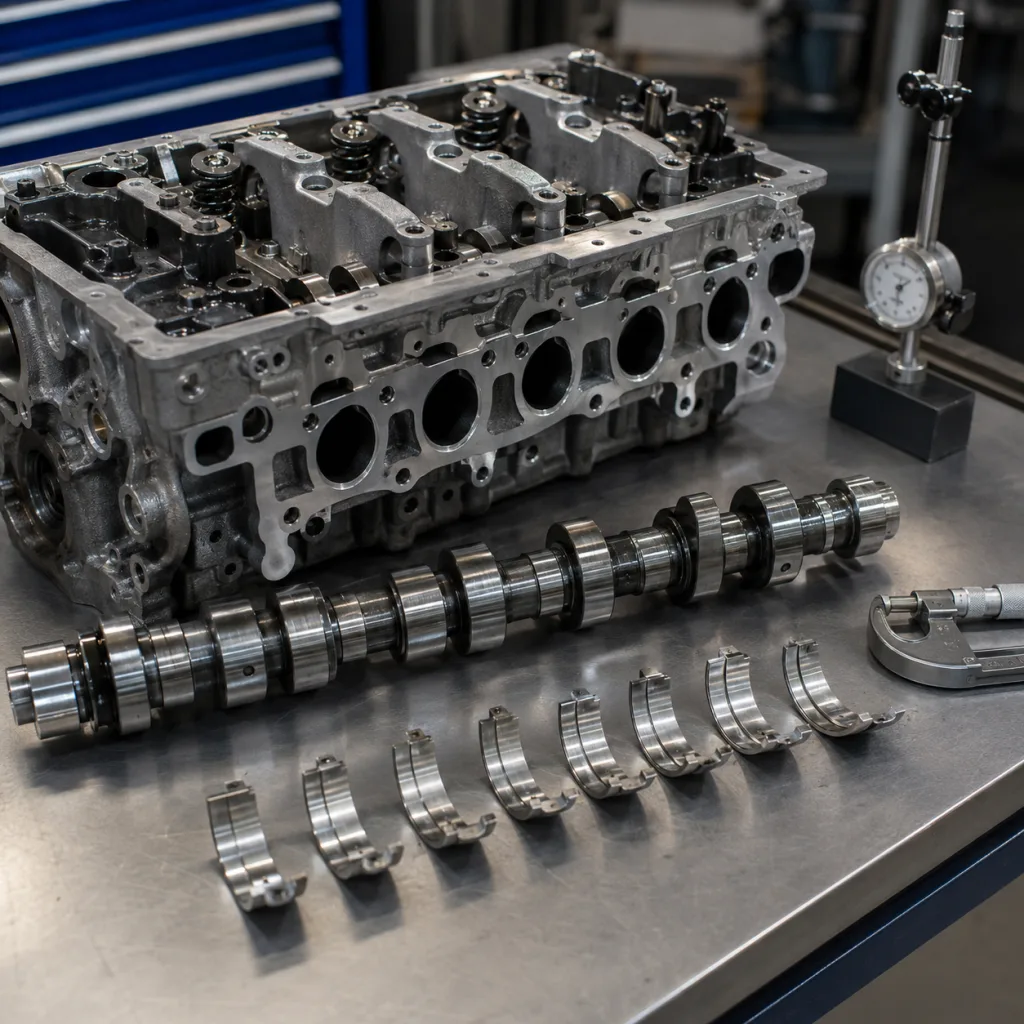
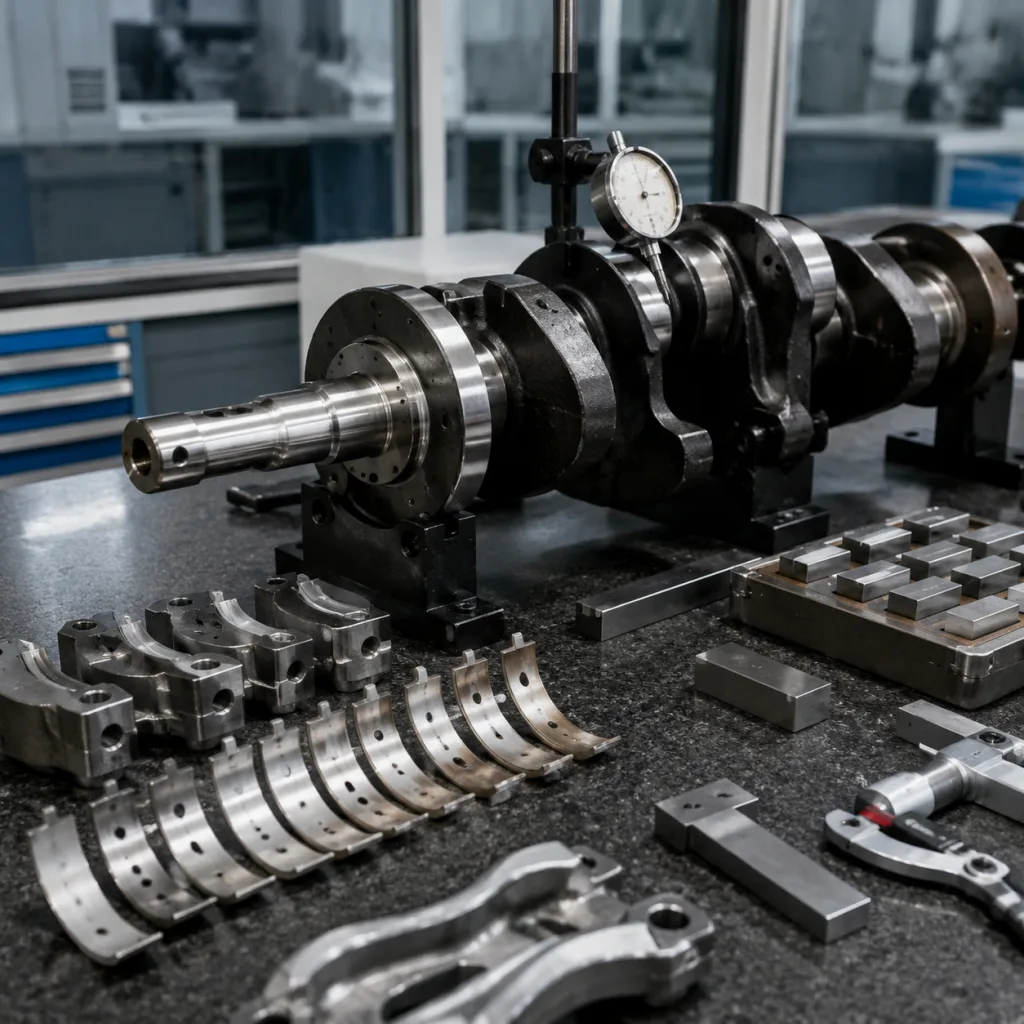
When buyers search for camshaft oe equivalent, they usually need a replacement that fits first time, matches the OE functional targets, and can be sourced with stable quality across repeat orders. That requires more than a part that looks similar on the bench. Journal size, lobe profile, timing drive interface, surface hardness, and inspection method all affect fit, durability, and warranty risk. For distributors, repair chains, and OEM programmes, the real question is whether the camshaft matches the OE drawing, the engine calibration, and the expected duty cycle. Driventus is an independent aftermarket manufacturer; brand names are referenced for fitment only. The objective is straightforward: reduce installation risk, avoid avoidable returns, and keep supply consistent across batches. The sections below set out the checks that matter before you approve a replacement part for production or resale.
What OE-equivalent means in practice
An OE-equivalent camshaft is not defined by appearance alone. It has to reproduce the functional geometry that controls valve timing, lift, overlap, and contact loading. If any of those parameters drift, the engine may idle poorly, lose torque, trigger fault codes, or wear the valvetrain prematurely.
For procurement teams, the practical test is whether the part matches OE intent within the same installation envelope. In most programmes, that means:
Journal diameter, width, and alignment within the agreed print tolerance
Lobe lift, base circle, and lobe separation consistent with the OE profile
Timing gear, sprocket, keyway, tone wheel, or phaser interface matched to the application
Nose length, thrust face, and oil feed features aligned with the original layout
Surface finish and hardness suitable for the follower type and oil specification
If the part is being bought as a service replacement, the buyer should ask for the dimensional report, material declaration, and process record before release. A visual match is not enough to prove functional equivalence.
Dimensions that must match, and what can vary
Feature
Must match
Can vary if validated
Journal diameter and alignment
Yes
No
Lobe profile, lift, and timing events
Yes
No
Sprocket, keyway, or phaser interface
Yes
No
Thrust face and end-play control
Yes
No
Material grade and heat treatment
Yes
No
Marking, packaging, and label format
No
Yes
Protective coating or corrosion finish
Not always
Yes, if performance is proven
</tr></thead><tbody> </tbody></table>The safest sourcing position is to treat all load-bearing and timing-critical dimensions as fixed. Packaging, laser marking, outer carton artwork, and secondary coating details can change, but only if they do not affect assembly, lubrication, or durability.
If you are comparing two supply options, ask whether the supplier measured the part against the OE drawing or only against a sample. A sample-to-sample match is useful for screening, but it is not enough for long-term buying decisions. The standard should be print-based validation with controlled revision history.
Materials, heat treatment, and surface finish
Material choice depends on engine load, follower type, and target cost. Common camshaft bases include chilled cast iron, ductile iron, and billet steel. The right option depends on whether the application uses flat tappets, roller followers, or variable valve timing hardware.
Key technical checks include:
Case hardness and core strength after heat treatment
Lobe surface finish for reduced break-in wear
Journal roundness and straightness after grinding
Microstructure consistency across the working surfaces
Corrosion protection where storage or sea freight exposure is a risk
For B2B buyers, the documentation matters as much as the metal. Ask for the material certificate, hardness report, and traceability record. If a product enters the EU market, material declarations should also support REACH (EC) No 1907/2006 compliance. A supplier operating under IATF 16949:2016 and ISO 9001:2015 is generally easier to audit across repeat orders because the process controls, record keeping, and corrective-action flow are more mature.
Validation tests before release
Validation should start with dimensional inspection and end with run verification on the engine or a representative test rig. The depth of testing depends on whether the part is intended for a service channel, a private-label programme, or a new build.
Typical release checks include:
CMM or profile measurement against the approved drawing
Runout, straightness, and concentricity checks
Hardness testing at the lobe and journal surfaces
Case depth or microstructure review for heat-treated parts
Fitment checks with followers, bearings, and the timing drive
Packaging audit to confirm traceability and transit protection
For higher-risk programmes, a short endurance test is often worth the cost. It reduces the chance of releasing a part that passes dimension checks but fails under load. Our quality system follows that logic: control the geometry, verify the material, then prove the part under the intended use case.
Where a customer needs additional process development, Driventus can align the inspection plan with the application through custom manufacturing.
A sourcing checklist for buyers
Use a strict checklist before you place repeat orders. That is especially important for distributors and multi-location repair chains, where one bad batch can create avoidable returns across many branches.
1. Confirm the OE cross-reference, engine code, and revision level. 2. Request a dimensional report with the critical-to-function features highlighted. 3. Ask for the material certificate, heat-treatment method, and hardness data. 4. Verify whether the supplier can hold batch traceability from raw material to carton. 5. Check whether the label format, barcode, and packaging protect the part in export transit. 6. Confirm annual demand, MOQ, and lead time before committing to stock.
If you already know the platform family, start with our catalog and the wider engine components range to compare adjacent parts in the build system. If the catalog item does not cover your print, send the sample, drawing, or target volume through request a quote.
If you need a private-label or print-to-spec programme, custom manufacturing is the right route. Driventus can review the geometry, inspection criteria, and commercial target before tooling is released.
Frequently asked questions
Not necessarily from the same producer. It should match the OE fit, function, and durability targets under the agreed drawing and test plan. Brand names are referenced for fitment only.
Request the dimensional report, material certificate, hardness data, traceability record, and packing specification. For recurring orders, keep the approved sample and revision history on file.
Yes. Share the sample, drawing, engine code, and target volume, and we can review feasibility, inspection scope, and commercial terms before production.
Share the OE sample, drawing, or target volume and we will confirm fitment, testing scope, and commercial terms through [request a quote](/contact.html).