camshaft · 2026-05-28

Camshaft Nissan Replacement: OE-Equivalent Sourcing Guide

A camshaft Nissan replacement must match the original part’s lobe profile, journal diameters, timing drive interface, and overall length before it is released into production or aftermarket supply. For procurement teams, the main risk is not only fitment failure but also inconsistent heat treatment, surface finish, or runout that can affect valve timing and engine durability. Driventus supplies camshafts for passenger car and light-duty applications with dimensional control, material traceability, and validation aligned to IATF 16949:2016 and ISO 9001:2015. Driventus is an independent aftermarket manufacturer; brand names are referenced for fitment only. This article explains what to verify when sourcing a replacement camshaft, how to compare OE data with supplier specifications, and which inspection records should be requested before purchase. It also outlines the checks used to reduce claims from mismatch, noise, and premature wear across distributor, wholesale, and repair-chain channels.

What defines a correct camshaft Nissan replacement

A correct replacement is one that matches the original application at the functional interface level, not just the model name. For Nissan engines, buyers should verify:

  • Overall length and bearing journal sequence
  • Journal diameter, roundness, and surface finish
  • Lobe lift, base circle, and lobe separation
  • Timing drive type: chain, gear, or belt interface
  • VVT/VTC phaser interface where applicable
  • End play control and thrust surface geometry
  • Sensor target wheel position, if integrated

For OE-equivalent sourcing, the supplier should provide dimensional inspection data and, where relevant, cross-reference the OE number in a controlled format such as OE 06A107065 only when that identifier is already supplied by the buyer. For Nissan applications, the same discipline applies to a camshaft Nissan replacement across petrol and diesel families used in fleet and repair networks.

Key specifications to request before ordering

Procurement teams should ask for a written technical sheet before placing a trial order. A practical comparison list is below.

</tr></thead><tbody> </tbody></table>Where possible, align the request with published standards such as IATF 16949:2016, ISO 9001:2015, and REACH (EC) No 1907/2006 for material compliance. If the application is for emissions-sensitive markets, confirm whether the engine family is subject to ECE R-83 requirements at the vehicle level, even though the camshaft itself is a component.

Validation checks that reduce warranty risk

Replacement camshafts should be validated against both geometry and process data. A basic approval package should include:

1. First article inspection report with critical dimensions. 2. Material certificate or heat lot traceability. 3. Hardness test results at defined locations. 4. Runout and concentricity measurements. 5. Visual inspection criteria for pitting, scoring, and burrs. 6. Packaging verification for rust prevention.

For distributors and repair chains, a short installation trial is valuable when the engine family has known variation in cam profiles or phaser fitment. The supplier should also confirm that oil gallery drilling, sensor triggers, and thrust features are identical to the target application. If a part is supplied against an OE number, the buyer should keep the cross-reference record in the ERP file and link it to the purchase specification.

Driventus can support validation through controlled production records and dimensional reports, which are especially important when a camshaft Nissan replacement is being launched into multiple markets with different rebuild standards.

Comparison: OE matching versus aftermarket-only selection

Procurement decisions are easier when the trade-offs are explicit.

Item What to verify Typical procurement risk
MaterialCast iron, chilled cast, or forged steel gradeIncorrect wear resistance
HardnessSurface and core hardness rangePremature lobe or journal wear
RunoutMeasured on centres with stated methodNoise, timing drift
Surface finishJournal and lobe Ra valueOil film breakdown
Heat treatmentInduction hardening or nitriding processShort service life
Inspection100% or sampling plan, CMM reportLot variation
PackagingCorrosion protection and part labellingTransit damage

</tr></thead><tbody> </tbody></table>For an established programme, custom manufacturing may be the right route when the buyer needs stable supply, revised packaging, or application-specific validation. See custom manufacturing for programme support. For standard stock planning, review our catalog and the relevant engine families in engine components.

Common failure points and how to inspect them

Most returns are caused by one of four issues: wrong profile, incorrect timing drive interface, poor surface finish, or inadequate heat treatment. Inspection should focus on the following:

  • Compare old and new camshafts side by side before installation.
  • Check the drive end, sensor ring, and thrust areas for dimensional consistency.
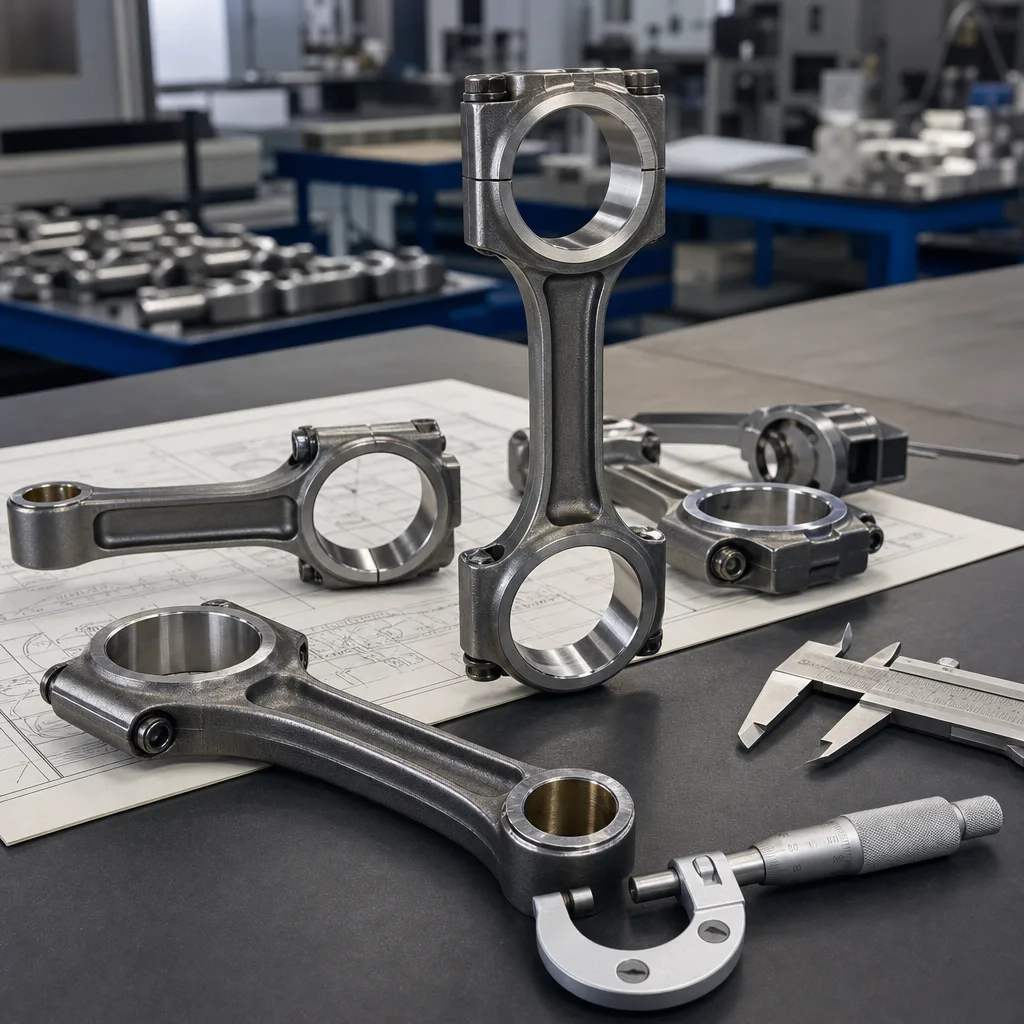
  • Measure journal diameter with calibrated micrometers at the specified points.
  • Confirm lobe lift against the target engine data sheet.
  • Verify that lobes are free from scoring, nicks, or grinding burns.

If an engine shows noise, misfire, or low compression after installation, the root cause is not always the camshaft itself. Valve train geometry, oil quality, lifter condition, and timing chain wear can produce similar symptoms. For that reason, procurement teams should require installation notes and failure photos from field claims before concluding that the part is nonconforming.

How Driventus supports replacement sourcing

Driventus produces camshafts within an integrated manufacturing system in Taizhou, Zhejiang, with export experience in 60+ countries. For buyers, the practical value is controlled process flow from raw material to final inspection. Our quality system covers supplier control, in-process checks, and final release documentation under IATF 16949:2016 and ISO 9001:2015.

For programmes requiring unique packaging, labelling, or cataloguing, custom manufacturing can support application-specific builds. For quotation requests and technical matching, use request a quote. Driventus is an independent aftermarket manufacturer; brand names are referenced for fitment only.

Typical documents available on request:

  • Dimensional inspection report
  • Material and heat treatment records
  • Packaging specification
  • Sample order support
  • OE reference mapping supplied by the buyer

Frequently asked questions

Match the journal diameters, overall length, lobe profile, drive end, and any sensor or phaser interface. Ask for a dimensional report and compare it to the removed part before release.

Request first article inspection data, material traceability, hardness results, runout measurements, and packaging details. For regulated markets, ask for REACH-related material confirmation where applicable.

Yes, if the buyer supplies the target OE reference and technical data. We validate the geometry against the application file and support programme-level sourcing with documented quality controls.

If you are building a replacement programme or need a technical cross-check for a camshaft Nissan replacement, send your drawing, OE reference, or sample for review and we will respond promptly at /contact.html.

Request a Quote
Approach Advantages Limitations Best use case
OE-matched replacementHighest fit confidence, easier catalogue mappingDepends on accurate cross-reference dataDealer-style and repair-chain supply
Aftermarket-only selectionWider sourcing options, potentially shorter lead timeHigher verification burdenPrice-sensitive wholesale programmes
Custom manufacturingControlled profile, packaging, and traceabilityLonger development cyclePrivate label and programme supply