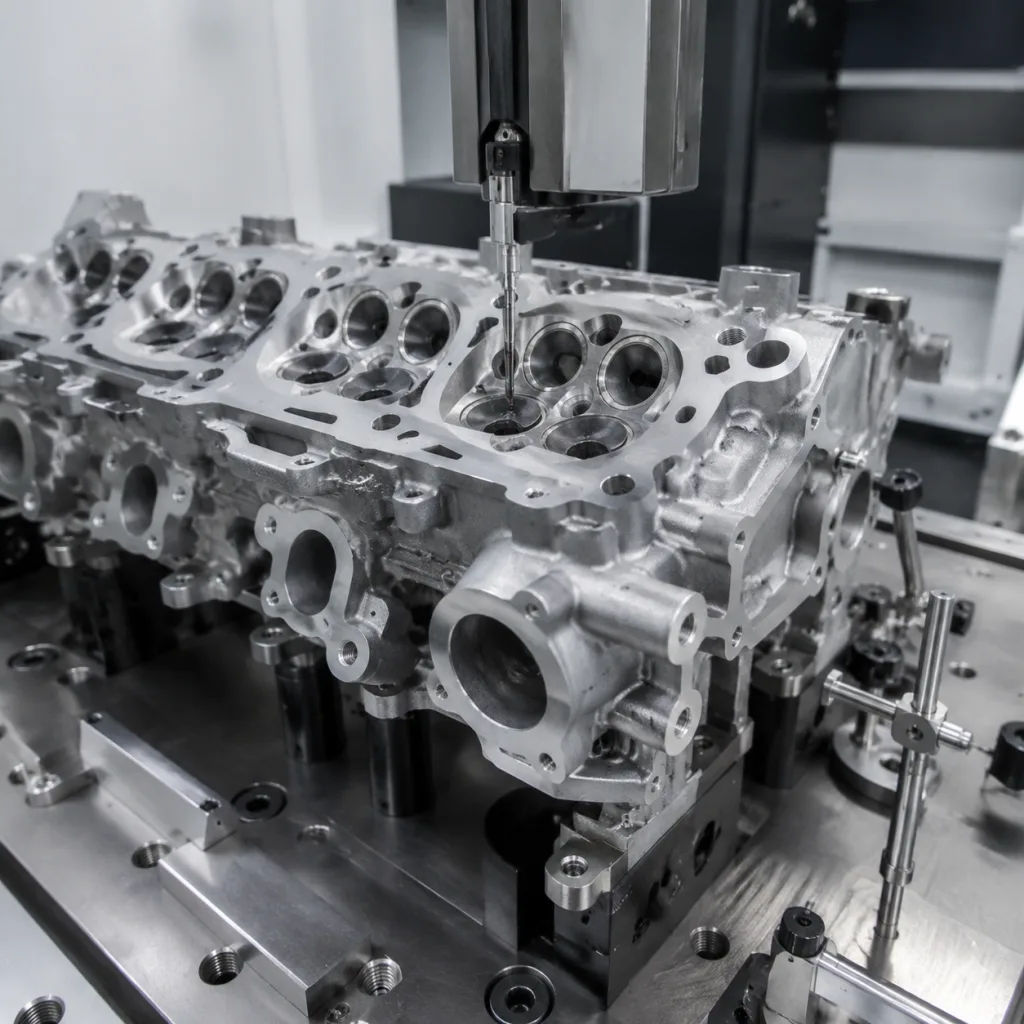
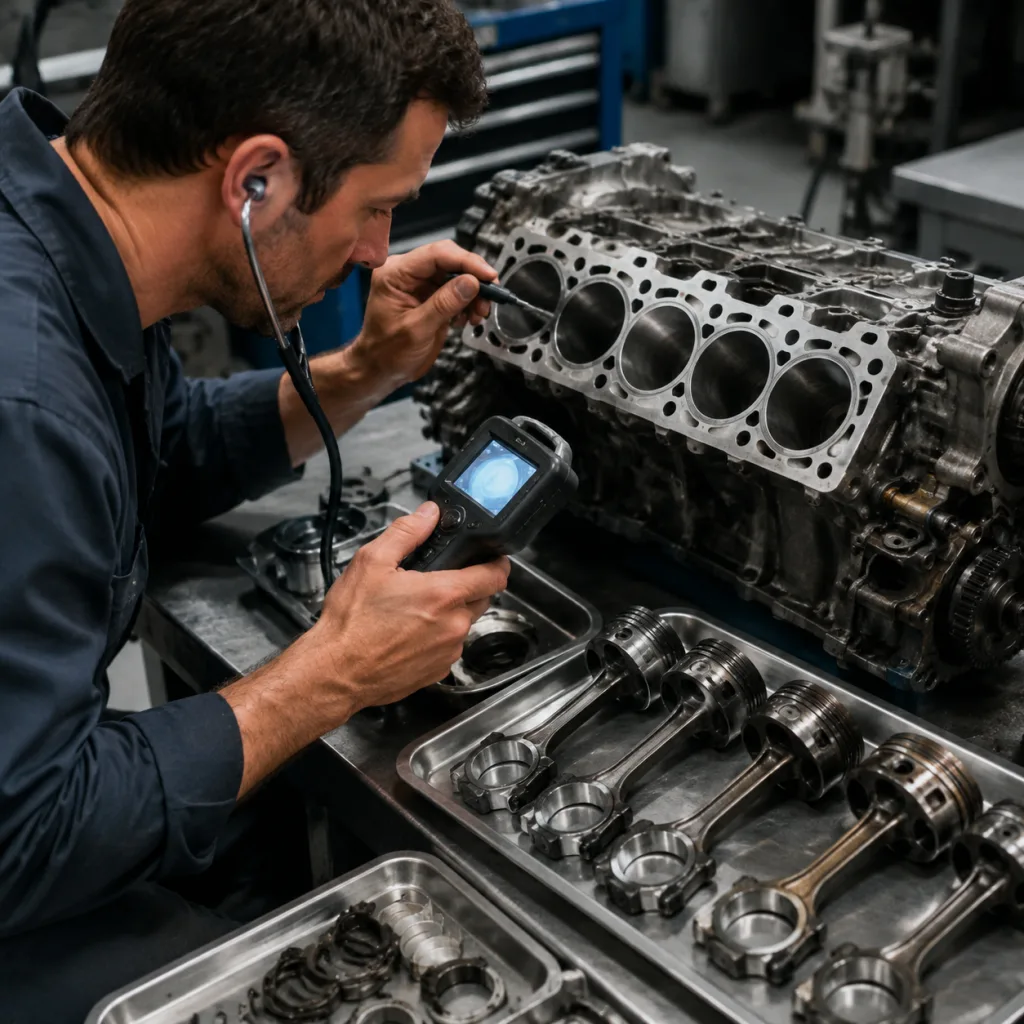
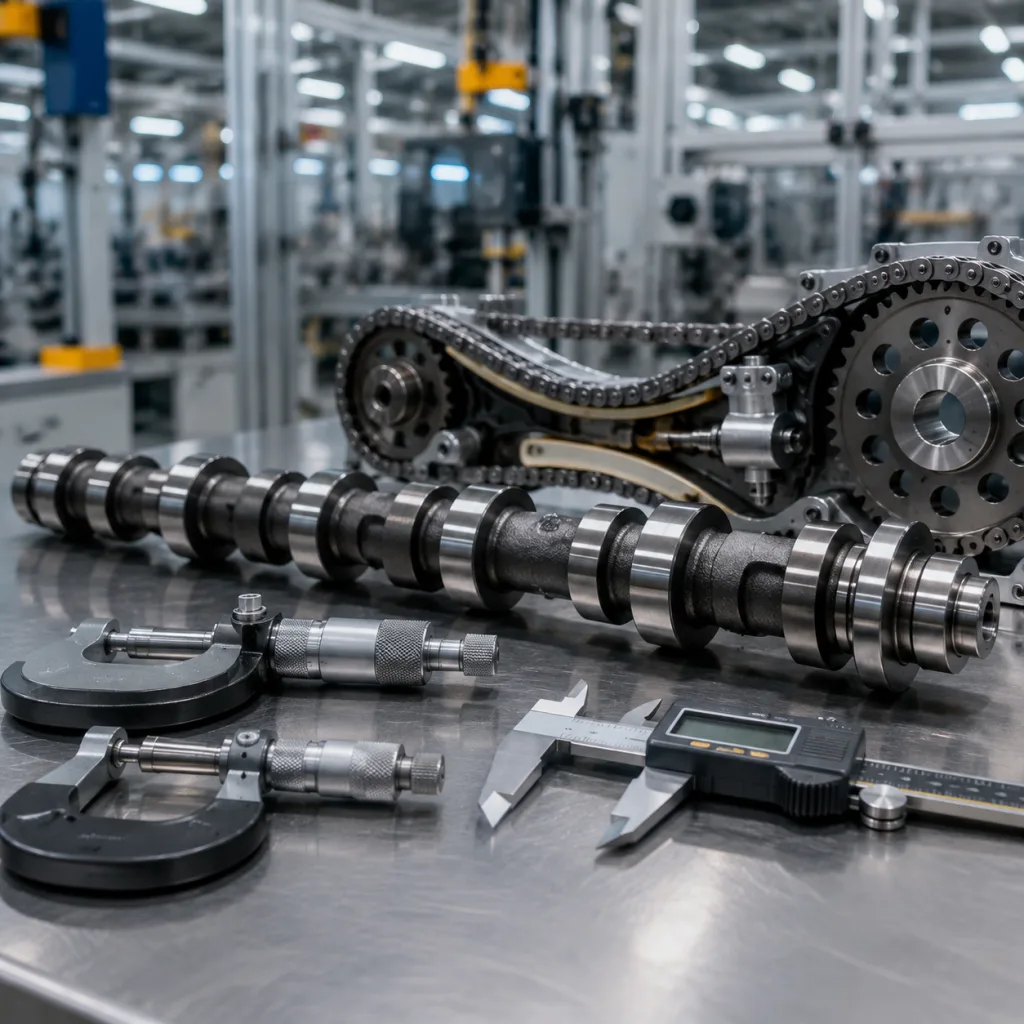
A camshaft for Mercedes-Benz E-Class replacement program should be managed as a precision engine sourcing project, not as a simple catalogue purchase. The part must match the intended engine code, cylinder head design, cam position, timing interface, lubrication layout, and sensor trigger pattern. Small differences in lobe geometry or journal features can lead to fitment problems, valve train noise, fault codes, premature wear, or high warranty exposure.
For distributors, repair chains, importers, and engine rebuilders, the real cost is rarely the camshaft price alone. It is the cost of incorrect applications entering inventory, repeat labor claims, mixed references under one SKU, or insufficient inspection evidence when a field issue appears. This guide explains the checks Driventus applies when supplying replacement camshafts for Mercedes-Benz E-Class applications across petrol and diesel engine families. It covers OE-equivalent matching, material and heat-treatment control, validation records, packaging, and sourcing documentation. Driventus is an independent aftermarket manufacturer; brand names and OE references are used for fitment identification only.
Fitment Scope and OE-Equivalent Matching
The Mercedes-Benz E-Class spans many engine generations, valve train layouts, displacement ranges, and emissions markets. A replacement camshaft must therefore be confirmed by technical application data, not by model name alone. At minimum, the buyer should identify the engine code, cylinder head type, intake or exhaust position, timing system, sensor trigger arrangement, and any market-specific variation that may affect installation.
For aftermarket cataloguing, Driventus maps applications through sample inspection, controlled drawings, and OE part-number cross-references where available. If a buyer provides an OE number such as OE 06A107065 or a family-style reference such as 11251..., the reference is used for fitment confirmation and interchange discussion. It does not imply approval, authorization, or endorsement by the vehicle manufacturer.
Key fitment checks include:
Intake or exhaust camshaft position
Number of lobes and journal count
Overall length, journal diameter, and thrust face position
Timing gear, sprocket, chain drive, or phaser interface
Sensor wheel, trigger pattern, and camshaft position signal compatibility
Oil feed holes, lubrication grooves, and gallery alignment
End-float control and cylinder head bearing layout
Compatibility with followers, lifters, rockers, and related valve train parts
Replacement orders can be cross-checked against our catalog, including related engine components when the repair program also requires lifters, gaskets, timing parts, water pumps, or other engine service items.
Material, Heat Treatment, and Surface Requirements
A camshaft works under repeated load cycles, sliding contact, boundary lubrication, and high local stress at the lobe and follower interface. Material selection, heat treatment, hardness depth, and surface finish directly influence service life. Depending on the original engine design, a camshaft may be produced from cast iron, chilled cast iron, forged steel, or an assembled steel tube structure. A replacement part should match the functional requirements of the original design, not only its visible dimensions.
Typical procurement specifications should define the following items:
Parameter
Typical control point
Buyer verification method
Journal diameter
Drawing-specific tolerance
Micrometer inspection report
Lobe lift
Drawing-specific tolerance
Cam profile measurement
Base circle
Drawing-specific tolerance
Profile or CMM inspection
Surface hardness
Application-specific range
Hardness test record
Case depth or chilled depth
Process-specific requirement
Section test or validation record
Runout
Controlled on datum journals
V-block, dial indicator, or CMM report
Surface roughness
Controlled on lobes and journals
Roughness tester data
Material batch
Traceable heat or lot number
Mill certificate or internal batch record
</tr></thead><tbody> </tbody></table>Surface condition deserves special attention. A rough lobe can accelerate follower wear, while a polished appearance alone does not prove that hardness, depth, or metallurgy are suitable. Oil film behavior also depends on the finished surface and the mating valve train components. Driventus uses controlled machining, grinding, heat-treatment validation, and final inspection to support OE-equivalent service behavior for replacement programs.
Validation Tests for Replacement Programs
For a camshaft for Mercedes-Benz E-Class replacement launch, validation requirements should be agreed before volume purchasing. The appropriate level of testing depends on order size, application risk, whether the SKU is new to the buyer's catalogue, and whether the camshaft will be sold alone or as part of a repair package.
Common validation items include:
First article dimensional inspection against approved drawings or master samples
Cam lobe profile comparison using dedicated measuring equipment
Hardness and case-depth verification where the design requires it
Runout inspection before final packing
Metallographic examination for new material or heat-treatment routes
Trial fitment on representative cylinder head assemblies when required
Lubrication feature inspection, including oil holes and grooves
Packaging drop, corrosion protection, and handling checks for export shipments
Driventus manufacturing and inspection processes are managed under IATF 16949:2016 and ISO 9001:2015 principles. These management systems do not replace part-specific validation, but they support process control, traceability, corrective action, and change management. Buyers can review our quality system before supplier approval, technical review, or factory audit planning.
For emissions-sensitive engine applications, the camshaft must maintain valve timing, lift, and signal characteristics consistent with the intended engine specification. Regional vehicle compliance may involve regulations such as ECE R-83, but final suitability must be assessed against the complete engine, control system, and vehicle application.
Common Replacement Risks and Controls
Replacement camshaft failures often start with a mismatch between the part, the valve train, the lubrication condition, and the installation environment. Procurement teams can reduce returns by controlling the full replacement package, catalogue data, and supporting documentation instead of treating the camshaft as an isolated item.
Require hardness, roughness, cleanliness, and batch controls
Timing fault codes
Wrong trigger pattern, phaser interface, or cam position
Confirm engine code, cam position, and sensor wheel configuration
Oil starvation at journals
Missing or misaligned oil feed feature
Check oil hole position, groove layout, and cylinder head compatibility
Difficult installation
Incorrect thrust face, journal count, or overall length
Verify sample dimensions before launch and after engineering changes
High return rate
Mixed applications under one SKU
Separate catalogue records by engine code, cam position, and production variant
</tr></thead><tbody> </tbody></table>Repair chains should also specify whether the camshaft will be installed with new hydraulic lifters, rockers, seals, timing chain parts, tensioners, or gaskets. A technically correct camshaft can still fail if paired with worn followers, contaminated oil, blocked lubrication passages, or incorrect break-in practice. For distributors, clear carton labels, application notes, and batch traceability reduce warehouse errors and make claims investigation faster.
Sourcing Documentation for Import Buyers
Importers and category buyers should request documentation that supports internal approval, customs review, technical comparison, and aftersales investigation. The file does not need to be excessive, but it should be consistent from pilot order to repeat shipment so the buyer can connect each delivery to the correct specification and production batch.
Recommended documentation package:
Part drawing or controlled specification sheet
Application list with engine code, cam position, and cross-reference notes
Material declaration and batch traceability record
First article inspection report for new SKUs
Process flow summary and control plan on request
Packing specification with corrosion protection method
Certificate of conformity for each shipment
Corrective action process for field claims
REACH (EC) No 1907/2006 declaration where relevant for EU importers
For private-label or application-specific development, Driventus can support custom manufacturing based on samples, drawings, or agreed performance requirements. This is useful when a distributor needs controlled branding, regional catalogue separation, export packaging, or a replacement camshaft that must be validated together with related valve train parts.
Commercial Considerations for Replacement Buyers
A camshaft for Mercedes-Benz E-Class replacement line should be evaluated on landed reliability, not unit price alone. Buyers should compare machining consistency, claim history, packing protection, inspection transparency, communication speed, and lead-time stability. A lower purchase price can disappear quickly if the line creates fitment disputes, noisy operation, repeat labor claims, or excess slow-moving inventory.
For B2B purchasing, the main commercial variables are:
SKU range and engine-code coverage
Minimum order quantity by part number or mixed order
Tooling, sample, or validation cost for low-volume references
Normal production lead time and peak-season capacity
Neutral packing, private label, or distributor carton options
Availability of related components for bundled repair kits
Inspection records supplied with pilot orders and repeat shipments
Warranty handling process and evidence requirements
Driventus exports engine and powertrain components to more than 60 countries from Taizhou, Zhejiang. For replacement camshaft sourcing, the preferred workflow is sample or OE-reference confirmation, technical review, pilot order, inspection approval, and scheduled replenishment. This approach helps distributors reduce launch risk, keep repair-chain inventory aligned with actual demand, and maintain clearer evidence when a technical question reaches the aftersales team.
Frequently asked questions
Sometimes, but buyers should not assume interchange by vehicle model name. Engine code, cam position, timing interface, sensor trigger pattern, cylinder head design, and related valve train components should be checked before ordering.
For new SKUs, request dimensional inspection, lobe profile data, hardness results, runout measurement, surface finish data, lubrication feature checks, and batch traceability. Repeat orders may use agreed sampling plans tied to the approved specification.
No. Driventus is an independent aftermarket manufacturer; brand names and OE references are used for fitment identification only. Replacement parts are supplied to agreed specifications for aftermarket and B2B sourcing programs.
For application review, sample matching, or volume pricing on E-Class replacement camshafts, send your engine code, target OE reference, camshaft position, and annual demand. You can [request a quote](/contact.html).