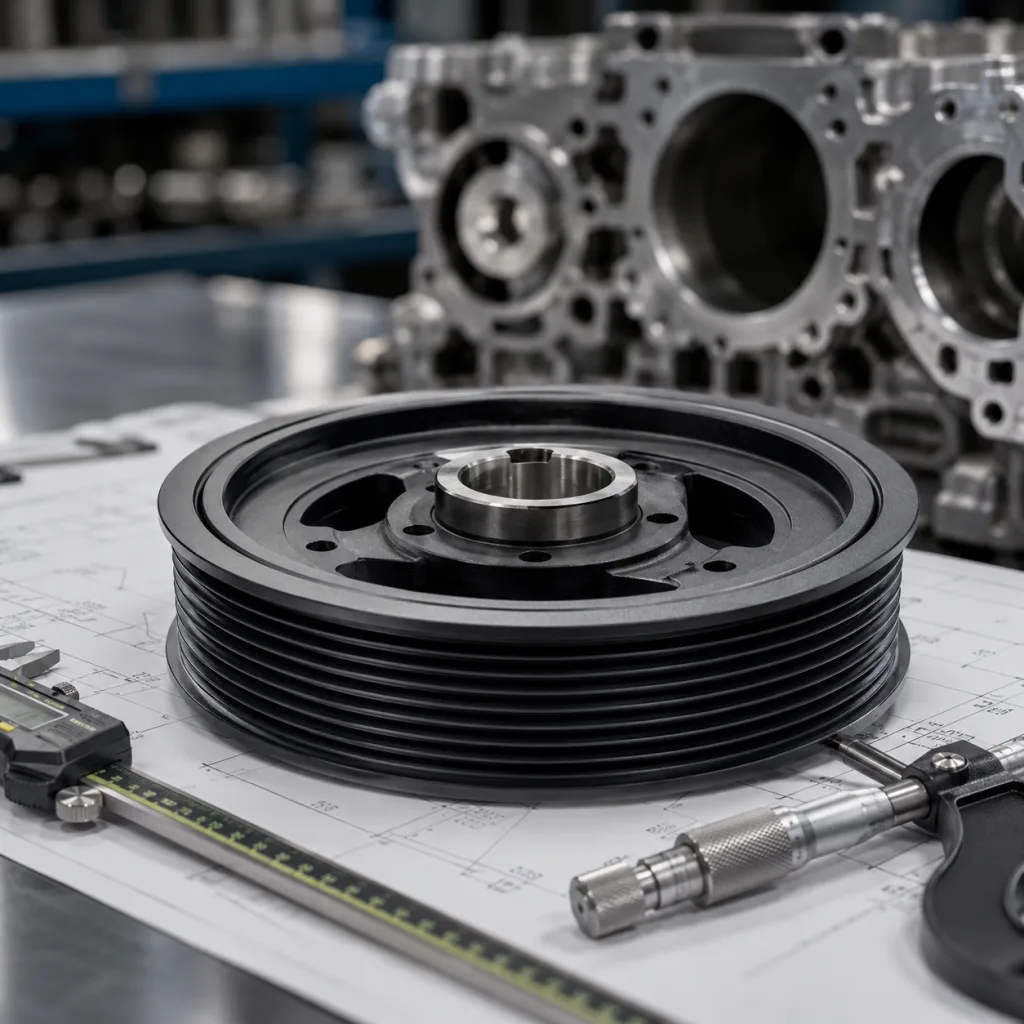
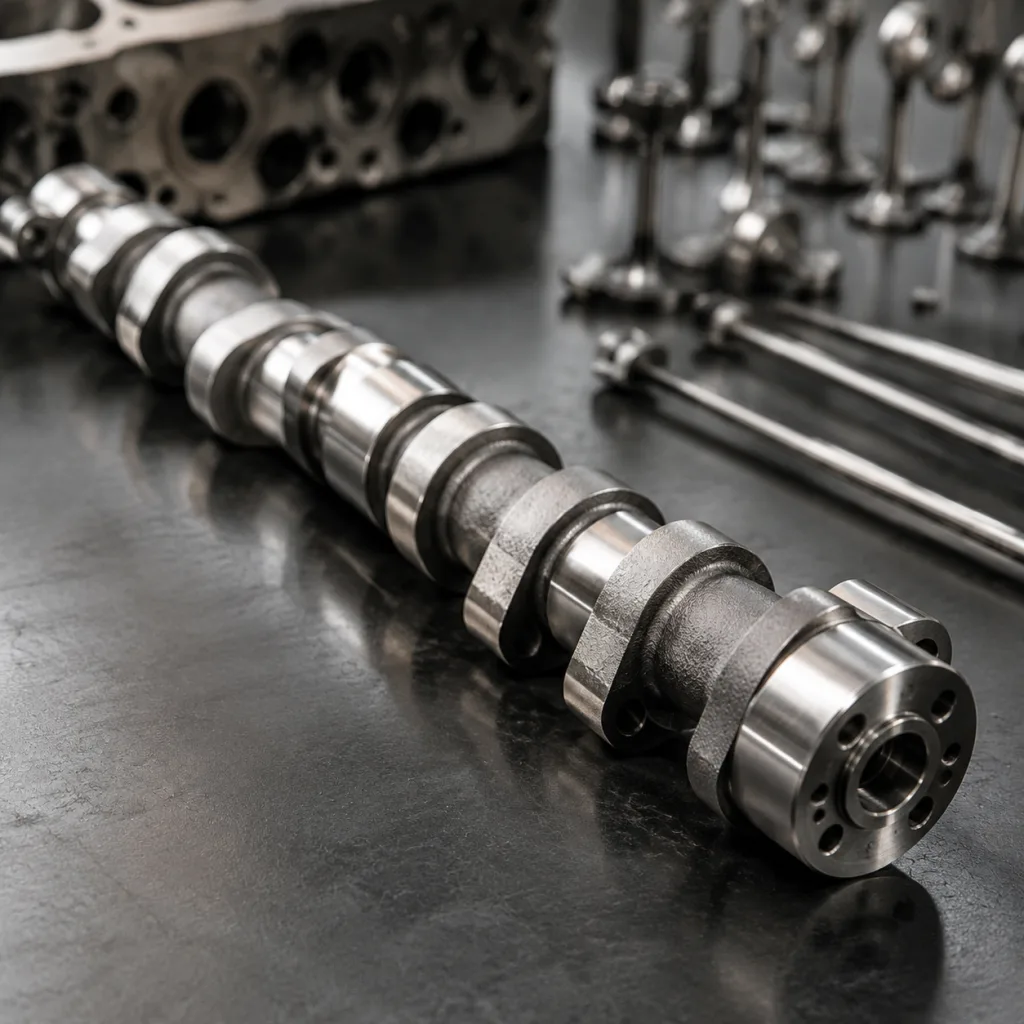
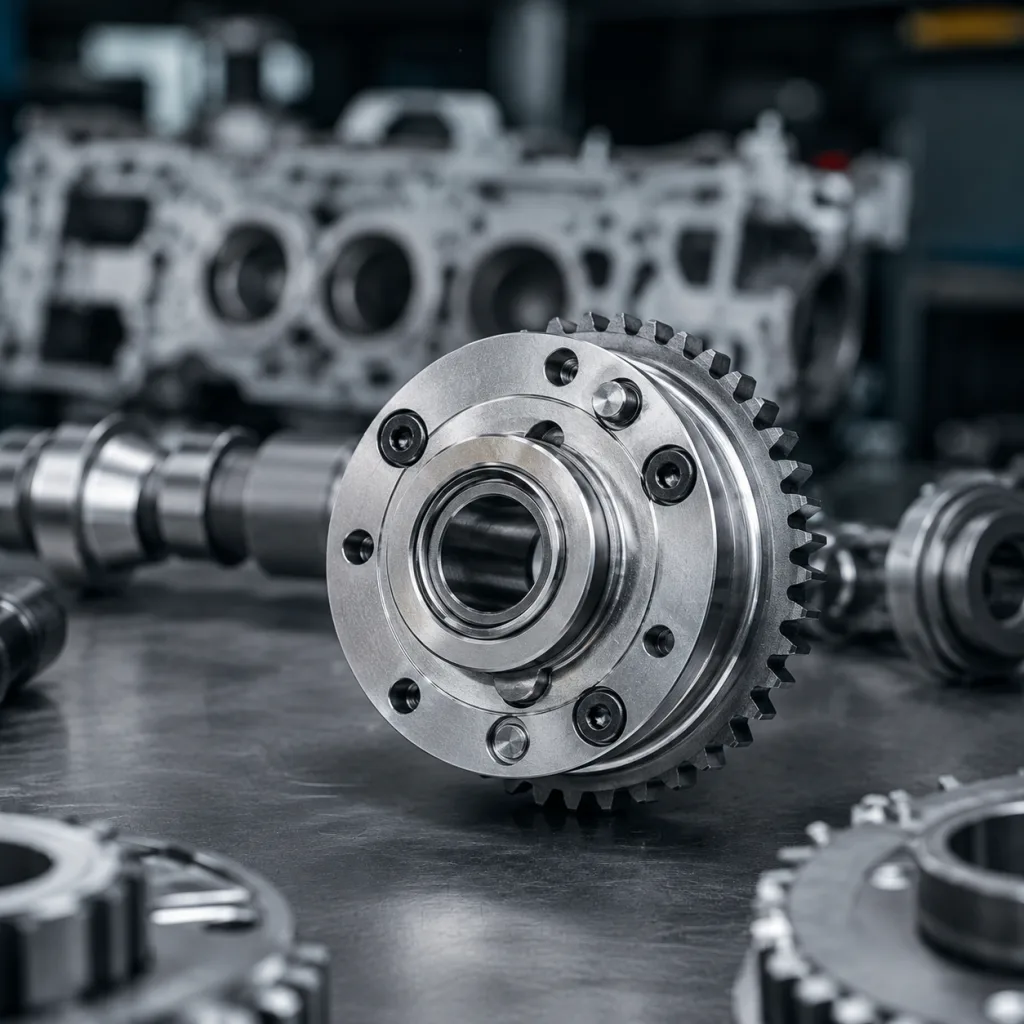
For Lexus engine rebuilds, a camshaft is not a generic wear item. Lobe lift, base circle, journal diameter, overall length, thrust control, trigger geometry, oil-feed layout, surface finish, and heat treatment all have to match the exact engine family. If they do not, the result can be unstable idle, noise, misfire codes, phasing errors, or accelerated valvetrain wear. Driventus supplies aftermarket camshafts for B2B buyers that need OE-equivalent fitment for distributors, repair networks, and engine remanufacturers. Driventus is an independent aftermarket manufacturer; brand names are referenced for fitment only. Production and inspection can be aligned to IATF 16949:2016 and ISO 9001:2015, with material, hardness, and traceability records prepared for procurement review. This article explains what to verify before ordering a Lexus camshaft replacement, how dimensional match is confirmed, which documentation to request, and which supply route fits wholesale, workshop, or private-label programs best.
What must match on a Lexus camshaft
The first control point is the exact engine code, not the vehicle badge. Lexus nameplates can share trim and platform while using different cylinder heads, cam timing systems, sensor targets, and intake/exhaust shaft specifications. Fitment has to be checked against the engine family, the original sample, and the functional drawing or master measurement set.
For a camshaft Lexus aftermarket replacement to be acceptable in wholesale or remanufacturing supply, the part must match the geometry that governs valve events and timing control. The most common failure is not an obvious dimensional error. It is a small deviation in profile, trigger pattern, or thrust location that only appears later as a drivability or durability complaint.
Key points buyers should verify:
Intake and exhaust side assignment
Journal diameter, journal count, bearing spacing, and overall length
Lobe lift, lobe width, lobe center, base circle, and separation angle
Thrust face location and end-play requirement
Trigger wheel, reluctor, or sensor target pattern
Oil drillings, feed paths, and groove geometry
Surface finish, hardness, and heat-treatment consistency
VVT actuator interface, phaser drive, or end-of-shaft feature
A replacement camshaft should not be released on visual similarity alone. Small changes in phasing or trigger geometry can affect crank/cam synchronization, startability, misfire monitoring, idle stability, and long-term wear. For procurement teams, the useful standard is not cosmetic match; it is dimensional equivalence backed by measurements, inspection records, and sample approval tied to the exact engine code.
OEM, reman, or new aftermarket
For a Lexus camshaft replacement program, the main decision is usually between OEM new, remanufactured, and new aftermarket. The right route depends on stock strategy, margin target, warranty exposure, and how much validation the buyer wants on file.
Option
Typical use case
Procurement note
OEM new
Dealer-oriented repair, strict original packaging preference, warranty-sensitive channel
Highest cost, limited sourcing flexibility, often slower replenishment
Best when dimensional match, hardness, finish, and repeatability are documented
</tr></thead><tbody> </tbody></table>For most B2B buyers, a new aftermarket camshaft is the practical replacement route when the supplier can hold geometry, hardness, and finish within agreed limits. The objective is not to mimic branding; it is to reproduce the functional dimensions that keep the valvetrain and timing system within specification. In practice, that means the buyer should compare profile data, journal geometry, and trigger features against the original part before approving volume orders.
Remanufactured parts can still make sense in controlled channels, especially when core supply is stable and the customer accepts higher variation risk. But for multi-branch distributors, export wholesalers, and private-label programs, new aftermarket parts are usually easier to standardize because the supplier controls the full production sequence instead of rebuilding worn cores to a mixed baseline.
Inspection and standards buyers ask for
Buyers in the EU, UK, US, Canada, Australia, and Brazil usually want the same core documentation set: material confirmation, dimensional inspection, heat-treatment records, and traceability back to the production lot. That is the minimum for a controlled replacement part, especially when it will be sold through multiple warehouses, installed by franchise repair networks, or included in a remanufacturing bill of materials.
Common review points include:
IATF 16949:2016 and ISO 9001:2015 process control
Incoming bar-stock, forging, or casting material verification
Chemistry and lot traceability for the raw material source
Hardness testing and case-depth review where applicable
Runout, concentricity, and journal alignment inspection
Lobe profile, lift, and phase verification against the master sample
Surface roughness and wear-surface finish checks
Oil passage verification and deburring inspection
REACH (EC) No 1907/2006 chemical compliance for the component and coatings
For applications tied to emissions durability or fleet reliability, buyers may also request test evidence aligned to program requirements such as ECE R-83, SAE J2527, or internal endurance cycles, depending on the validation plan. The specific test name matters less than the fact that the data is repeatable, readable, and tied to the part number, revision level, and batch number.
A strong supplier package should let procurement answer three questions quickly: does the part match the engine family, can the process be repeated, and can the lot be traced if a field issue appears. If any of those answers are unclear, the sourcing risk is higher than the unit price suggests.
What to send for a quote
A useful quote request removes ambiguity before tooling, sampling, or stock allocation begins. For camshaft sourcing, the buyer should send the engine code, vehicle model year range, photos of the original camshaft, and any drawing, sample, or OE cross-reference already available. If the part is paired with VVT hardware, the request should identify that interface explicitly so the supplier does not quote the wrong shaft variant.
We also recommend including:
Intake or exhaust position
Quantity per order and target monthly volume
Packaging requirement: bulk, boxed, or retail-ready
Required inspection documents and acceptance criteria
Destination country and preferred Incoterm
Target lead time, replenishment schedule, or forecast horizon
Whether the order is for stock, repair, export, or private-label packaging
Photos of markings, sensor targets, and key end features on the original part
If you are building a broader program, you can review our catalog or the wider engine range at engine components. For process details, see our quality system. For special profile work, reverse engineering, or private label development, custom manufacturing is available. When the specification is ready, request a quote with the sample or drawing set.
This workflow is usually faster than buying by vehicle name alone because it reduces the risk of ordering the wrong lobe set, trigger pattern, journal configuration, or actuator interface. It also gives procurement a cleaner basis for comparing suppliers, since each quote can be evaluated against the same dimensional and documentary requirements.
When replacement is better than regrind
A regrind can work in some engines, but it is not the default answer for a Lexus camshaft replacement program. Depending on the original profile and the amount of material removed, regrinding can change base circle, reduce lobe contact geometry, alter valve timing, or create compatibility issues with hydraulic lifters, rocker ratio, lash settings, or cam timing limits.
Replacement is usually the better option when:
The worn surface has pitting, scoring, or heat damage
The profile must remain close to OE geometry for drivability or emissions reasons
The vehicle has tight emissions or idle-quality requirements
The buyer needs repeatable stock for multiple branches or export channels
The customer expects consistent service life across batches
The application uses VVT or closely controlled cam timing
The original shaft shows wear in journals, not only on the lobe surface
If the application is high-volume, replacing with a new camshaft simplifies warranty handling and reduces the need for case-by-case setup checks. It also makes incoming inspection more predictable, because the supplier can hold the same geometry and finish from batch to batch. For distributors and rebuilders, that consistency often matters more than the one-time savings of reworking a marginal core.
A practical sourcing rule is simple: if the part affects timing, emissions, or a shared fleet warranty, use replacement unless the regrind process has been explicitly qualified for that engine family. That keeps the purchasing decision aligned with the actual risk profile instead of the lowest initial unit price.
Frequently asked questions
Match the engine code, intake or exhaust position, trigger geometry, journal dimensions, oiling features, and overall length against the original sample or drawing. Vehicle model name alone is not enough, especially when the same badge covers multiple engine variants.
Yes, if the supplier controls profile, hardness, finish, and dimensional inspection, and can document batch traceability. Buyers should ask for measurement records, sample approval data, and revision control before release.
Ask for material data, dimensional inspection results, hardness records where applicable, country-of-origin details, traceability by lot or batch, and quality-system evidence tied to the production run. For regulated or fleet programs, request any endurance or validation data that supports the intended market.
For a fitment review, batch pricing, or drawing confirmation, send your requirements through [request a quote](/contact.html).