camshaft · 2026-07-03

Camshaft Land Rover Aftermarket Replacement Guide

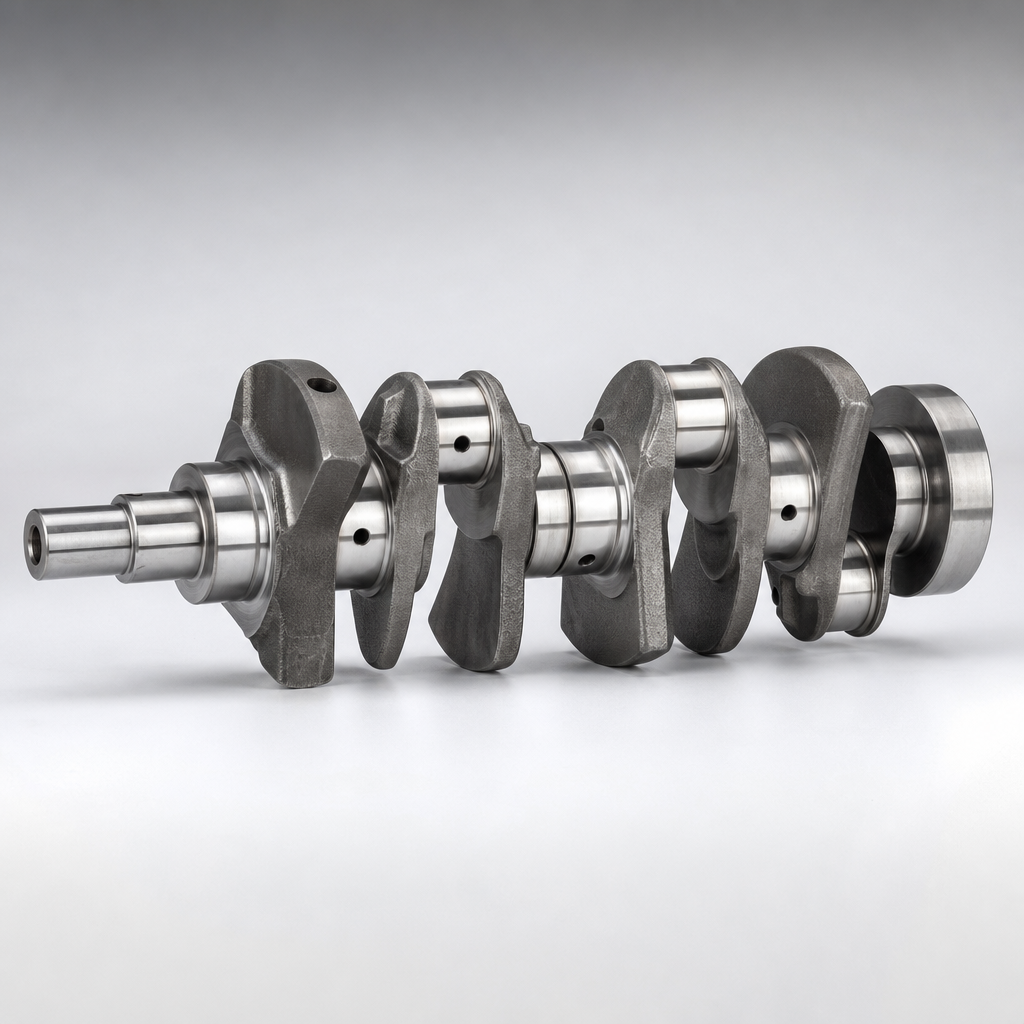
Sourcing a **camshaft Land Rover aftermarket replacement** is not a catalog exercise. Buyers are usually choosing between two risks: paying more for a controlled part, or accepting a cheaper offer that may create timing variation, follower wear, noise, installation delays, and warranty returns. For distributors and repair groups, one bad batch can erase margin quickly. For OEM and Tier-1 style programmes, the bar is higher again because drawing control, PPAP expectations, capability targets, and repeatable metallurgy all come into play.

This guide is built for procurement teams that need to qualify suppliers with more precision. It covers the decision points that actually separate stable supply from avoidable claims: geometry control, material route, inspection logic, packaging discipline, and commercial terms that hold up in repeat orders. Driventus is an independent aftermarket manufacturer; brand names are referenced for fitment only. Buyers reviewing related engine parts can also see our catalog for associated valvetrain and engine-component lines.

Start with the decision framework, not the fitment claim

The first question is not whether the camshaft fits. It is whether the part will repeat OE-level function across batches.

For any camshaft Land Rover aftermarket replacement, buyers should break approval into five checks:

1. Geometry: journal diameters, lobe lift, base circle, phasing, thrust features, oil-feed details 2. Metallurgy: base material, hardness window, case depth where relevant, microstructure stability 3. Finish quality: runout, roundness, surface roughness, cleanliness after machining and wash 4. Traceability: lot definition, heat number, process records, inspection linkage to shipped cartons 5. Commercial realism: MOQ, lead time, packaging, claim policy, and whether the quoted scope actually includes full inspection and protection

That is the difference between a serious nomination and a generic "matches OE" statement.

A capable supplier should be able to provide nominal dimensions, tolerance bands, and the inspection method tied to each critical characteristic. On camshaft programmes, the numbers that most often drive field performance are typically controlled in ranges such as:

  • Journal diameter tolerance: commonly within +/-0.010 mm to +/-0.020 mm, depending on engine family and bearing design
  • Lobe lift deviation: typically controlled within +/-0.02 mm to +/-0.05 mm from drawing target
  • Total indicated runout (TIR): often controlled at 0.03 mm to 0.08 mm max across specified journals
  • Lobe-to-lobe phasing: frequently held within +/-0.25 degree to +/-0.50 degree cam angle where timing sensitivity is high
  • Surface roughness: commonly around Ra 0.2-0.8 um on journals and Ra 0.4-1.0 um on finished lobes, subject to material and grind route
  • End-float or thrust control features: verified to drawing because excess axial movement can affect timing stability and wear pattern

For Land Rover fitment programmes, the approval file usually needs to cover:

  • Base material: commonly chilled cast iron or forged/alloy steel, selected according to engine family, loading, and follower type
  • Lobe hardness: controlled after heat treatment and commonly verified by Rockwell or Vickers testing at defined points; many buyers expect a documented range such as HRC 52-60 on working surfaces, depending on design
  • Journal roundness and runout: checked to drawing tolerance to protect bearing surfaces and maintain timing stability
  • Surface roughness: especially important on lobes and journals to limit scuffing during initial start-up
  • Oil passage cleanliness: residual contamination can damage bearings and hydraulic lash components; practical cleanliness limits are often set by particle size and wash-process validation
  • Traceability: heat number, batch number, production date, and inspection records linked to each shipment

If a sourcing brief includes a cross-reference such as OE 06A107065 or a gasket-family reference such as OE 11251..., treat it as a fitment checkpoint only. It does not prove vehicle-maker approval.

Commercially, buyers should also pressure-test very low quotes. If one supplier is offering 20-35% below the normal market band for a fully ground, hardened camshaft, check whether the quote leaves out profile inspection, final wash control, or protective export packing. Cheap on paper often becomes expensive after rejection, labor, and freight claims.

Where camshaft programmes usually fail before nomination

Most bad programmes do not fail because the part number was completely wrong. They fail because one control point was weak and nobody forced it into the approval process.

Common failure modes include:

  • Profile drift: the camshaft passes a basic dimensional check but valve-event timing is off because lobe geometry is inconsistent
  • Hardness inconsistency: one batch wears normally, the next produces rapid lobe or follower damage
  • Runout variation: transit or process distortion creates vibration, uneven bearing load, or installation issues
  • Weak lot definition: the supplier cannot isolate which melt, heat-treatment load, or grinding setup created the defect
  • Hand-finished samples: pilot parts look acceptable, but regular production does not match them

That is why dimensional data alone is not enough. Buyers should ask for process-validation evidence before nomination.

Recommended validation scope

</tr></thead><tbody> </tbody></table>Sampling logic matters just as much as the checklist. A usable approval path usually looks like this:

  • Prototype stage: 3-10 pcs for fitment and bench review
  • First article / pilot lot: 20-50 pcs from normal production tooling and process flow
  • Mass-production release: dimensional summary from the approved lot plus agreed ongoing sampling frequency
  • Ongoing lot inspection: for example, 100% visual, 100% key characteristic check where automated, and destructive metallography on a defined periodic basis such as 1 pc per lot or 1 pc per 500-1,000 pcs

Buyers should also ask one direct question: how is a manufacturing lot defined? In practice, lot size may tie back to one melt, one heat-treatment load, one grinding setup, or one shift output. If that definition is vague, traceability becomes weak the moment a warranty claim appears.

Where formal launch procedures apply, many buyers request PPAP documentation aligned with IATF 16949:2016. Even in the independent aftermarket, that discipline is useful. A control plan, PFMEA, material certificate, dimensional report, process flow, and MSA summary make supplier comparison much sharper than a fitment list.

A supplier operating under ISO 9001:2015 should also be able to show how nonconforming batches are segregated, how gauges are calibrated, and how traceability is maintained through machining, heat treatment, grinding, washing, and packing. Useful records include calibration intervals, Cp/Cpk targets for critical journals or lobes, and signed first-piece approval after process changes.

A practical red flag: if the supplier cannot provide a full dimensional report, a hardness or microstructure report, and evidence that the measured parts came from normal production, nomination risk is high.

Material route comparison: what changes cost, wear, and margin

Two camshafts can share the same drawing and perform very differently in service. The gap usually comes from the manufacturing route and how tightly that route is controlled.

For many replacement applications, buyers compare these common approaches:

Check item Why it matters Typical verification method
Lobe profile accuracyControls valve event timing and liftCMM or dedicated cam profile measuring equipment
Total indicated runoutPrevents vibration and uneven bearing loadDial indicator on V-blocks
Journal diameter consistencyProtects oil film and housing fitMicrometer or air gauge
Hardness rangeLimits lobe and follower wearRockwell/Vickers test with batch records
Case depth or microstructureConfirms heat-treatment resultMetallographic section analysis
Surface finish on lobes/journalsReduces scuffing riskProfilometer
Phosphate/oil protectionSupports corrosion control in transitSalt-spray or packaging validation

</tr></thead><tbody> </tbody></table>The buying mistake here is to ask only, "cast or steel?" That is too narrow.

A better comparison asks:

  • What follower type and load level does the engine use?
  • How stable is the heat-treatment window?
  • Are lobes and journals fully ground or only partly finished?
  • Is case depth or microstructure verified at a defined frequency?
  • What process controls are in place for deburring, oil-hole cleaning, and corrosion prevention?

In broad aftermarket export practice:

  • Chilled cast iron is often the lower-cost route for established passenger-engine applications and may offer the best price in medium to high volume
  • Alloy steel plus induction hardening usually carries a higher machining and inspection cost, but may be preferred where fatigue margin or premium positioning matters
  • Fully ground lobes and journals generally add cost versus rougher finish routes, yet they reduce variation in profile and surface quality

Typical cost movement is driven less by raw material alone than by process hours. Unit price changes with:

  • hardness route and required case depth verification
  • number of grinding operations
  • whether oil holes require deburring and flow checks
  • anti-rust treatment and VCI packing level
  • documentation package depth, especially PPAP-style submission

The same part can quote very differently at 100 pcs, 500 pcs, and 2,000 pcs because setup, tooling wear, and inspection overhead are distributed differently. It is common for the unit price on a 500+ pc order to be materially lower than on a 50-100 pc sample or mixed-model order, while private-label packaging or stronger rust prevention can add cost back in.

For export buyers, process discipline matters as much as the chosen material route. A capable manufacturer should define hardness windows, grinding stock removal, wash cleanliness, and rust-prevention handling. On hardened surfaces, buyers often ask for final hardness plus effective depth, decarburization control, and metallographic confirmation at agreed frequencies.

Material declarations may also be required for regional compliance, especially where REACH (EC) No 1907/2006 reporting is requested by EU importers. Some buyers also request statements covering restricted substances in coatings, oils, inks, and packaging materials.

If the programme includes associated components such as followers, valve lifters, rocker arms, or gasket sets, consolidating them with one validated engine-components supplier can simplify both validation and claims handling. Relevant ranges can be reviewed under our catalog and the broader /products/engine-components.html section.

Step by step: how to reduce fitment, transit, and warranty surprises

A replacement camshaft programme usually breaks down in one of three places: fitment mapping, packaging, or downstream installation support. Each one is manageable if the approval process is explicit.

Start with these controls:

  • Fitment coding: internal SKU linked to engine code, production year range, and any revision split
  • Protective packaging: anti-corrosion oil, VCI material where required, and rigid support to prevent journal impact during sea freight
  • Label accuracy: part number, batch number, quantity, country of origin, and barcode format as agreed
  • First-article approval: golden sample retained against future production lots
  • Complaint loop: documented 8D or equivalent corrective-action process for field issues

Then pressure-test the shipment as if the warehouse and installer will make no assumptions in your favor.

For multi-location repair chains, packaging consistency is not a small detail. A bent camshaft caused by weak pack-out may only be discovered during installation, at which point a freight problem turns into a labor claim. Buyers should therefore ask for carton drop validation, pallet stability checks, and moisture-control measures suited to long transit routes.

In practical export supply, a robust pack-out specification often covers:

  • Individual protection: rust-preventive oil plus sleeve, wrap, or formed support to isolate lobes and journals
  • Carton loading limit: fixed quantity per inner and master carton to avoid shaft-to-shaft impact
  • Pallet standard: pallet dimensions, stack height, gross-weight limit, and corner protection for sea freight
  • Transit duration assumption: for example 30-45 days sea transit plus warehouse dwell time, which affects corrosion-prevention choice
  • Packaging validation: drop test, vibration simulation, and post-transit runout recheck on retained samples

Fitment control should also include a clear supersession logic. If one Land Rover engine family has revision splits by build date, sensor drive, or thrust arrangement, the outer box, inner label, and ERP description should all show that distinction. Generic labeling increases returns because warehouse staff and installers usually work from the label first.

Quality records should be supported by a documented quality system. At minimum, that system should cover incoming material inspection, in-process checks, final audit, gauge calibration, and record-retention periods for production and inspection data. For warranty-sensitive accounts, buyers often request retention of inspection and traceability records for 3-7 years, depending on market requirements.

Some importers also require installation notes or pairing guidance where the camshaft should be replaced together with lifters, followers, or matching valvetrain parts. That step does not change the camshaft itself. It does reduce field failures caused by incomplete repair practice.

Supplier comparison that goes beyond unit price

When buyers compare suppliers for a camshaft Land Rover aftermarket replacement, the useful question is not "who is cheapest?" It is "who creates the lowest total programme risk at the demand level we actually have?"

A practical scorecard should include:

  • Certification status: current IATF 16949:2016 and ISO 9001:2015 certificates
  • Process capability: in-house or tightly controlled outsourced heat treatment, grinding, and profile inspection
  • Documentation package: dimensional report, material certificates, hardness report, runout data, and packaging specification
  • MOQ and replenishment lead time: especially important for mixed-container aftermarket orders
  • Audit readiness: willingness to support plant audits, sample submission, and corrective-action follow-up
  • Development support: reverse engineering from sample or drawing under controlled validation

To make quotations comparable, buyers should ask each supplier to break terms into the same structure:

Manufacturing route Typical use case Main advantages Main control risks
Chilled cast iron camshaftHigh-volume passenger vehicle enginesGood wear resistance, cost efficiencyChill depth variation, brittle zones if process drifts
Forged/alloy steel camshaftHigher-load or premium applicationsStrong core properties, stable fatigue performanceHigher machining cost, heat-treatment variation
Induction-hardened lobesSelected steel-based programmesLocalised hardness, controlled wear surfaceUneven hardness pattern if setup is unstable
Fully ground finishOE-equivalent and premium aftermarketBetter profile consistency and surface controlMore process steps, tighter gauge discipline required

</tr></thead><tbody> </tbody></table>In current aftermarket practice, many suppliers quote along lines such as sample MOQ 5-20 pcs, trial MOQ 50-100 pcs, and standard production MOQ 100-300 pcs per item, but this varies depending on whether the part is already in catalogue production or requires new development. Lead times usually follow the same pattern:

  • Existing catalogue item sample: around 2-4 weeks
  • New development from sample/drawing: around 4-8 weeks for first samples
  • Mass-production replenishment: commonly 30-45 days after deposit or order confirmation
  • Private-label packaging or custom barcode setup: can add 1-2 weeks if artwork approval is pending

Buyers should also stress-test pricing against annual demand. A supplier with a slightly higher unit price but stable 30-day replenishment may outperform a cheaper source with an unreliable 60-90 day cycle, because the second case usually forces higher buffer stock and more missed sales. This matters even more for distributors carrying long-tail Land Rover references in low but urgent demand.

Where standard catalogue parts do not fully match the target programme, buyers may need drawing-based adaptation, alternative packaging, private label, or controlled specification changes. That is where custom manufacturing becomes relevant, provided the supplier can maintain dimensional discipline and revision control.

Driventus is an independent aftermarket manufacturer; brand names are referenced for fitment only. For procurement teams evaluating a camshaft Land Rover aftermarket replacement, the practical requirement stays simple: stable geometry, verified metallurgy, controlled finishing, commercial terms that match replenishment reality, and export documentation that reduces claims instead of shifting risk downstream.

Frequently asked questions

Ask for a dimensional report, material certificate, hardness report, runout data, fitment list, packing specification, and batch traceability records. For higher-control programmes, request PPAP-style documents, process flow, PFMEA, control plan, and where relevant metallographic or case-depth reports aligned with IATF 16949:2016 practice.

Neither is automatically better. The correct choice depends on engine design, follower type, operating load, target price, and heat-treatment control. A well-controlled cast iron camshaft can perform reliably, while a poorly processed steel camshaft can still fail early. Buyers should compare hardness range, microstructure, surface finish, and process consistency, not just the material label.

Use first-article approval, verify lobe profile and hardness data, confirm protective packaging, and retain golden samples. It also helps to define lot traceability, agreed sampling frequency, and an 8D-style corrective-action process before shipment. For long sea freight routes, ask for packaging validation and post-transit runout checks on retained samples.

If you are reviewing a current or new replacement camshaft programme, we can support fitment review, sample validation, MOQ and lead-time assessment, and production supply. Send your drawing, sample, or target specification to [request a quote](/contact.html).

Request a Quote
Commercial item Typical buyer check Why it changes total cost
MOQSample MOQ, production MOQ, mixed-SKU flexibilityHigh MOQ ties up working capital and slows range expansion
Unit price bandPrice at 50, 200, 500, and 1,000+ pcsReveals setup-cost effect and real scaling logic
Tooling/NREWhether reverse engineering, gauges, or fixtures are chargedLow unit price can hide one-time cost
Lead timeSample lead time vs repeat-order lead timeAffects safety stock and fill-rate performance
IncotermEXW, FOB, CIF, DDP basisFreight and duty assumptions often distort quote comparison
Claim policyReplacement only, credit note, or labor-sharing termsDirectly affects warranty exposure