camshaft · 2026-07-09

Camshaft Jaguar Replacement: OE Match and Sourcing

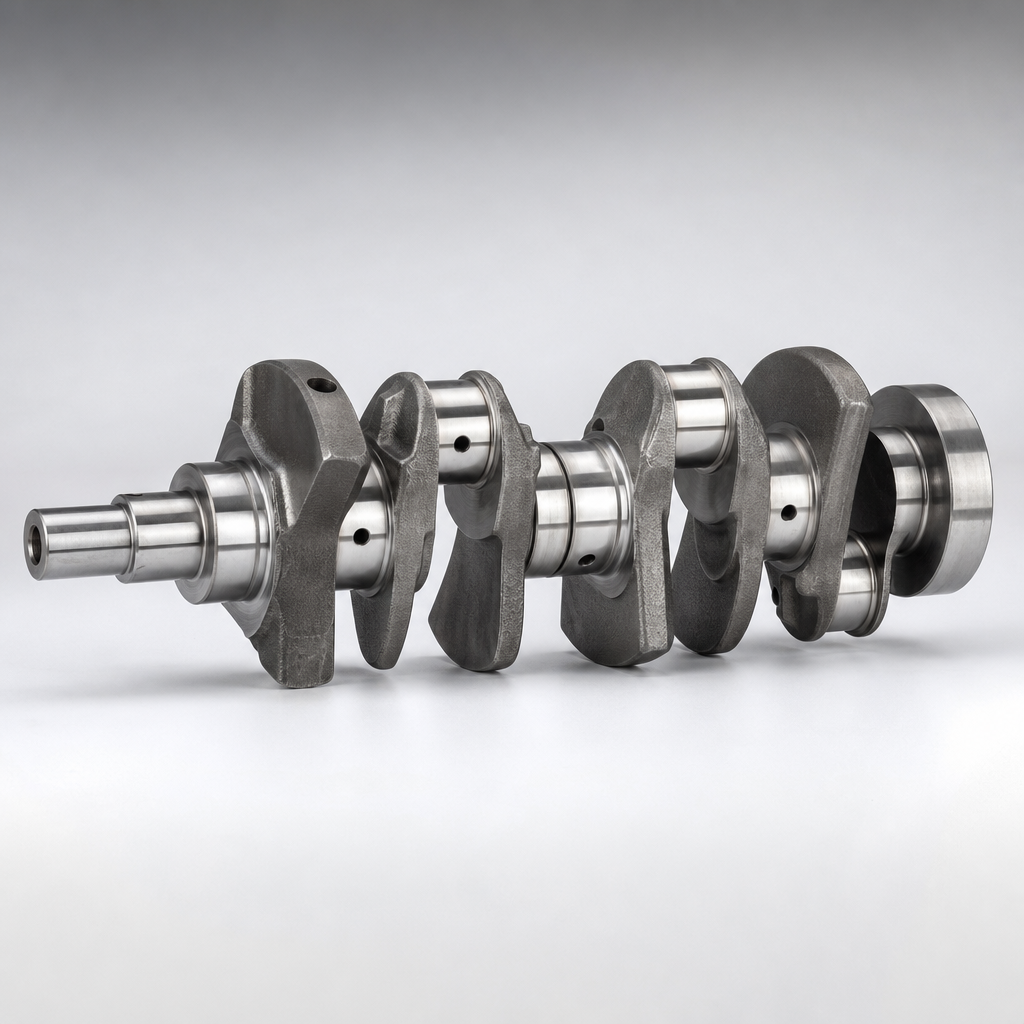
A camshaft Jaguar replacement is not a catalogue substitution. It is an engineering match with commercial consequences. The part must align with the OE reference on base circle, lobe profile, journal diameter, lift, timing events, trigger features, oil feeds, phaser interface, and surface finish. A camshaft that looks correct can still be wrong by 0.10 mm in lift, one tooth in trigger indexing, or a few degrees in valve timing.

For procurement teams, the useful questions are specific: what is the reference part, which tolerance window is controlled, how was the match verified, and what documents will support incoming inspection? A photo match or broad cross-reference is not enough, especially when intake and exhaust profiles differ or variable valve timing interfaces are involved.

Driventus supplies camshafts for aftermarket replacement programmes and B2B sourcing. We manufacture to controlled specifications under IATF 16949:2016 and ISO 9001:2015, and we can support OE-number cross-referencing when the application data is complete. Driventus is an independent aftermarket manufacturer; brand names are referenced for fitment only. This guide explains how to define the part, where sourcing errors usually occur, which tests matter, how MOQ, price, and lead time are usually built, and how to reduce mismatch risk when sourcing replacement camshafts for Jaguar applications in the EU, UK, US, Canada, Australia, and Brazil.

Start with the failure modes, not the catalogue photo

The first sourcing question is not whether the camshaft looks right. It is how the wrong part would fail in the engine. A replacement camshaft can pass a visual check and still create noise, poor idle quality, misfire complaints, timing correlation faults, low oil-film stability, or accelerated follower and bearing wear.

Common failure modes to rule out before order placement:

  • Wrong intake or exhaust position on engines with separate profiles
  • Lobe lift or duration outside the OE operating window
  • Base circle variation that changes valve train geometry
  • Journal diameter drift that affects bearing fit and oil clearance
  • Trigger tooth count, tooth form, or angular indexing mismatch
  • Cam nose, phaser, sprocket, dowel, keyway, or bolt-interface mismatch
  • Oil-feed holes that do not align with the lubrication or VVT circuit
  • Hardness, case depth, or surface finish that cannot support service life
  • Excessive runout at defined support points

A workable sourcing file should state both the target value and the allowed measurement window. For aftermarket channels, the camshaft must also work with the existing chain, tensioner, follower, lubrication path, and engine management system without forcing unplanned components into the bill of materials. The buying objective is OE-equivalent function, not visual similarity.

Cross-reference control: where fitment mistakes usually enter

Cross-referencing should begin with the OE part number, engine family, engine code, market, and build range. Jaguar applications may share similar engine architecture across model years, but that does not prove interchangeability. Small differences in cam nose shape, trigger position, phaser interface, journal count, oil-feed layout, or thrust face width can make a visually similar camshaft unusable.

Use these control points before accepting a match:

</tr></thead><tbody> </tbody></table>If application data is incomplete, request drawings, sample parts, or measured reference data before committing volume. A useful sample report should include overall length, all journal diameters, base-circle readings, lobe height, calculated lift, cam runout, trigger angular position, and clear photos of both ends. This is where documented dimensional control reduces receiving risk and avoids catalogue-driven assumptions.

Specification pack: the measurements that deserve a line item

A replacement camshaft should arrive with a specification pack, not only a label or catalogue reference. At minimum, buyers should request material identification, heat-treatment route, hardness range, and critical dimensions tied to the drawing or approved sample. If the buyer does not have an OE drawing, the approved master sample should become the controlled reference, with measured values recorded and signed off before production.

Recommended inspection list:

  • Material grade and heat-treatment route, such as chilled cast iron, forged steel, or machined billet depending on design
  • Hardness at the lobe and journal surfaces, commonly reported in HRC, HV, or HB according to the material route
  • Case depth or hardened layer evidence where the process requires it
  • Runout and straightness limits measured at agreed support journals
  • Journal diameter tolerance and oil-clearance relevance, with each journal recorded separately
  • Lobe lift tolerance, base-circle control, and lobe-to-lobe consistency
  • Surface roughness on journals and lobes, with Ra values stated instead of generic polishing claims
  • Thrust face width, end-feature dimensions, bolt thread, dowel, keyway, and oil-hole position
  • Cleanliness, anti-corrosion oil, end protection, and export packaging standard

Surface finish and hardness are not cosmetic details. They influence wear rate, oil film stability, follower condition, start-up durability, and noise. Ask which surfaces are 100% checked, which are sampled by lot, and what AQL or control-plan frequency applies. Critical journals may need higher-frequency measurement than packaging checks, while hardness and metallurgical verification may be managed by batch.

For regulated markets, documentation should also align with REACH (EC) No 1907/2006 where applicable, and with customer-specific traceability requirements. Driventus can support dimensional inspection records, first-article review, retained samples, and production traceability for B2B buyers who need repeatable replenishment rather than one-off supply.

Validation path: sample, pilot lot, then recurring supply

Validation should reflect how the camshaft will be used, stored, shipped, and installed. For buyers, the value is practical: lower claim rates, fewer returns, and better confidence before wider release. The test plan should state sample quantity, measurement method, acceptance criteria, and the response if a result falls outside tolerance.

Useful validation items include:

  • Dimensional inspection against drawing, OE sample, or approved master sample
  • Metallurgical verification of base material and microstructure where required
  • Rockwell, Vickers, or Brinell hardness checks on critical surfaces
  • Runout, straightness, lobe-position, and trigger-index measurement
  • Magnetic particle or equivalent crack screening where required
  • Oil-hole location and passage verification for phaser or lubrication-critical designs
  • Trial assembly with sprocket, phaser, bolt, dowel, and relevant sensor interface where practical
  • Dyno or engine bench confirmation for timing, idle stability, fault-code behaviour, and valvetrain noise when the programme warrants it
  • Packaging drop, corrosion protection, salt-humidity exposure where specified, and storage-condition checks

For a new camshaft Jaguar replacement programme, a conservative release path is sample approval first, pilot lot second, replenishment order third. A buyer might approve 3 to 10 samples dimensionally, run a 20 to 50 piece pilot for warehouse and installer feedback, and only then move to recurring volume. Actual quantities depend on application risk, order value, and whether the part is being sold under a private label.

For coatings and corrosion resistance, programme requirements may reference SAE J2527 for exposure methodology in adjacent validation work. Engine calibration or emissions-sensitive programmes may require application-specific review against local regulations such as ECE R-83 where relevant to the vehicle system. These standards should not be treated as automatic camshaft approval. They are reference points that engineering and compliance teams may use to structure verification.

Aftermarket, OE-equivalent, or programme-built: choose by control level

Not every buyer needs the same finishing level, document depth, or validation evidence. A maintenance distributor may prioritise availability, clean cataloguing, and consistent fitment. An OEM or Tier-1 buyer may need tighter traceability, controlled drawings, and APQP-style records. The useful comparison is technical control, not brand language.

Check item Why it matters Buyer action
OE referencePrimary fitment anchorConfirm against VIN, vehicle data, engine code, and production range
Cam positionIntake and exhaust cams may differOrder, label, and store separately; avoid mixed-bin handling
Trigger featuresAffects ECU signal and VVT operationCompare tooth count, profile, air-gap face, and angular indexing
Journal sizesControls bearing fit and oil clearanceMeasure every journal against sample or drawing; record minimum and maximum
Lobe dataDetermines valve lift and timing behaviourMatch lift, duration, base circle, and opening/closing events to OE spec
Interface detailsControls sprocket, phaser, or sensor fitCheck nose form, keyway, dowel, bolt thread, oil passages, and seating face

</tr></thead><tbody> </tbody></table>Commercial comparison should include MOQ, unit price, tooling or fixture cost, sample cost, lead time, documentation level, and claim-handling terms. A low unit price can become expensive if the supplier cannot separate intake and exhaust variants, cannot hold trigger indexing, or ships mixed production lots without traceability. Ask whether quoted pricing is based on existing tooling, new development, or reverse engineering from sample parts.

If a reference part is available, compare the replacement on a sample basis before a wider release. That step is especially useful for Jaguar camshaft programmes with mixed model-year coverage, similar engine families, or intake and exhaust variants that are easy to confuse in warehouse handling.

Inside the production control plan

A credible replacement programme depends on process discipline. At Driventus, camshaft production is managed under IATF 16949:2016 and ISO 9001:2015 with controlled incoming material checks, in-process measurement, and final inspection records.

Our standard controls include:

  • Raw material verification before machining
  • Operation routing for rough machining, heat treatment where applicable, straightening, grinding, finishing, cleaning, and packing
  • Critical dimension monitoring at defined checkpoints, including journals, lobes, thrust faces, and end features
  • Heat-treatment validation on batch records, with hardness checks linked to lot identity
  • Surface and geometric inspection on finished parts
  • Runout, journal, lobe, and trigger-position checks against the approved specification
  • Gauge calibration control for micrometers, height gauges, runout fixtures, roughness testers, and hardness equipment
  • Traceable lot coding for replenishment support

This matters because replacement camshafts are sensitive to process drift. A 0.02 mm journal deviation, shifted trigger feature, out-of-window oil hole, or inconsistent surface finish can change how the engine behaves in service.

For recurring programmes, the practical control point is the control plan: which features are measured at setup, which are checked during production, which are checked at final inspection, and which are retained in the lot record. See our catalog, our quality system, and custom manufacturing for the documentation and sourcing paths we support.

RFQ data: one line item that prevents weeks of clarification

Before placing a purchase order, compile the minimum data set in one line item or application sheet. This prevents mis-shipment, shortens verification time, and reduces back-and-forth between purchasing, quality, and the supplier.

Use this checklist:

  • Vehicle make and model year range
  • Engine code, displacement, fuel type, and market where known
  • Intake or exhaust position
  • OE number and supersession history, if available
  • Sample, drawing, or approved reference part
  • Required quantity, annual estimate, and release schedule
  • Target price level, Incoterms, destination port or warehouse, and payment terms
  • Packaging and labelling requirement, including carton quantity, barcode, and private-label artwork if needed
  • Country of destination and compliance documents needed
  • Any private-label, barcode, or lot-traceability requirement

For Jaguar camshaft replacement programmes, incomplete fitment data is one of the most common causes of delay. A practical RFQ separates sample approval from production release: sample lead time, pilot-lot lead time, and mass-production lead time should be quoted as separate lines. Existing designs may move faster than new reverse-engineered parts, while new tooling, special heat treatment, private-label packaging, or third-party testing will extend the schedule.

When buyers send a clear application sheet, the supplier can confirm geometry, interface details, packaging, MOQ, price basis, and documentation faster. That is usually the difference between on-time replenishment and a return cycle.

When Driventus is the right sourcing route

Driventus is a fit for buyers who need repeatable replacement supply, not speculative parts sourcing. We support camshaft programmes for aftermarket distributors, OEM/Tier-1 supply chains, and multi-location repair networks that need stable fitment, controlled inspection, and practical sourcing support.

Choose this route when you need:

  • OE-number cross-reference support for a defined application
  • Consistent batch-to-batch dimensional control
  • Documentation tied to IATF 16949:2016 and ISO 9001:2015
  • Export-ready B2B packing and traceability
  • Private-label or programme-specific manufacturing support
  • Sample review before wider release
  • MOQ, price, and lead-time discussion based on real application data rather than generic catalogue assumptions

For Jaguar applications, the commercial goal is simple: the replacement part must fit, function, and repeat. For RFQ planning, send the annual demand, first release quantity, destination, required documents, and whether the part is already in an approved drawing set or needs sample-based development. Price is usually driven by material route, machining time, heat treatment, finishing, inspection level, packaging, and order volume; lead time is driven by existing tooling, sample approval speed, and production slot availability.

If your team is validating a new source or consolidating suppliers, start with a technical review and sample confirmation. For a direct conversation, request a quote.

Frequently asked questions

Yes, where the OE number and engine application are confirmed. We use the OE reference for fitment cross-checking and do not claim manufacturer endorsement.

Confirm engine code, intake or exhaust position, OE number, trigger features, journal sizes, lobe data, oil-feed layout, and any variable valve timing interface. A sample or drawing is useful when fitment data is incomplete.

Yes. We work under IATF 16949:2016 and ISO 9001:2015 and can support inspection records, traceability, first-article review, and production documentation depending on the programme.

No. We supply camshafts and related engine components across multiple B2B programmes. Brand names are referenced for fitment only.

Send your application data, OE reference, quantity target, destination market, and sample requirements and we will review the fitment and sourcing path with you. Start here: /contact.html

Request a Quote
Buyer need Lower-risk requirement Notes
Distributor replenishmentStable dimensions and protective packagingFocus on repeat order consistency, carton strength, and barcode accuracy
Repair chain supplyFast identification and low return rateKeep application data clean and position-specific
OEM / Tier-1 sourcingDrawing control and traceabilityRequire PPAP-style evidence where requested
Export complianceDocumented material and chemical statusReview REACH, customer declarations, and destination paperwork
Private-label programmesRepeatable specification and labelling controlAlign packaging, lot coding, inspection records, and artwork approval