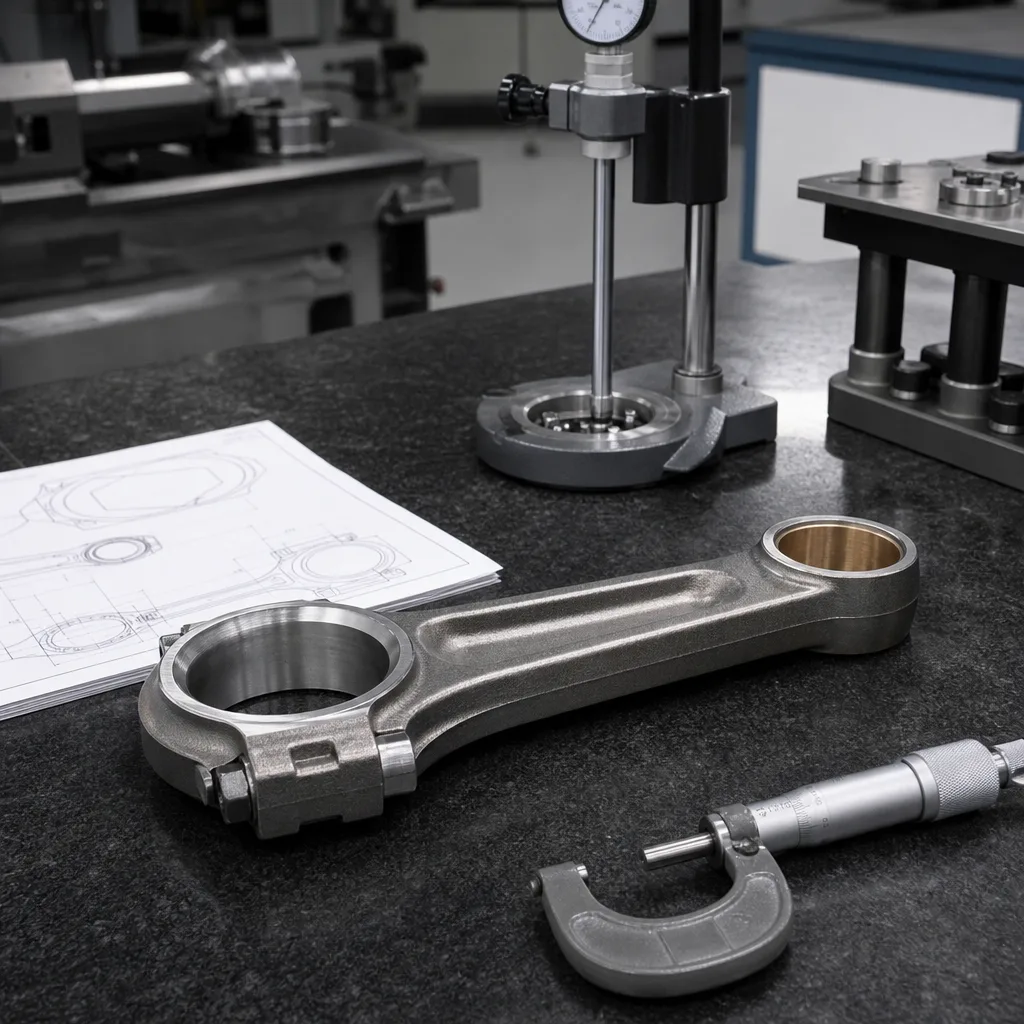
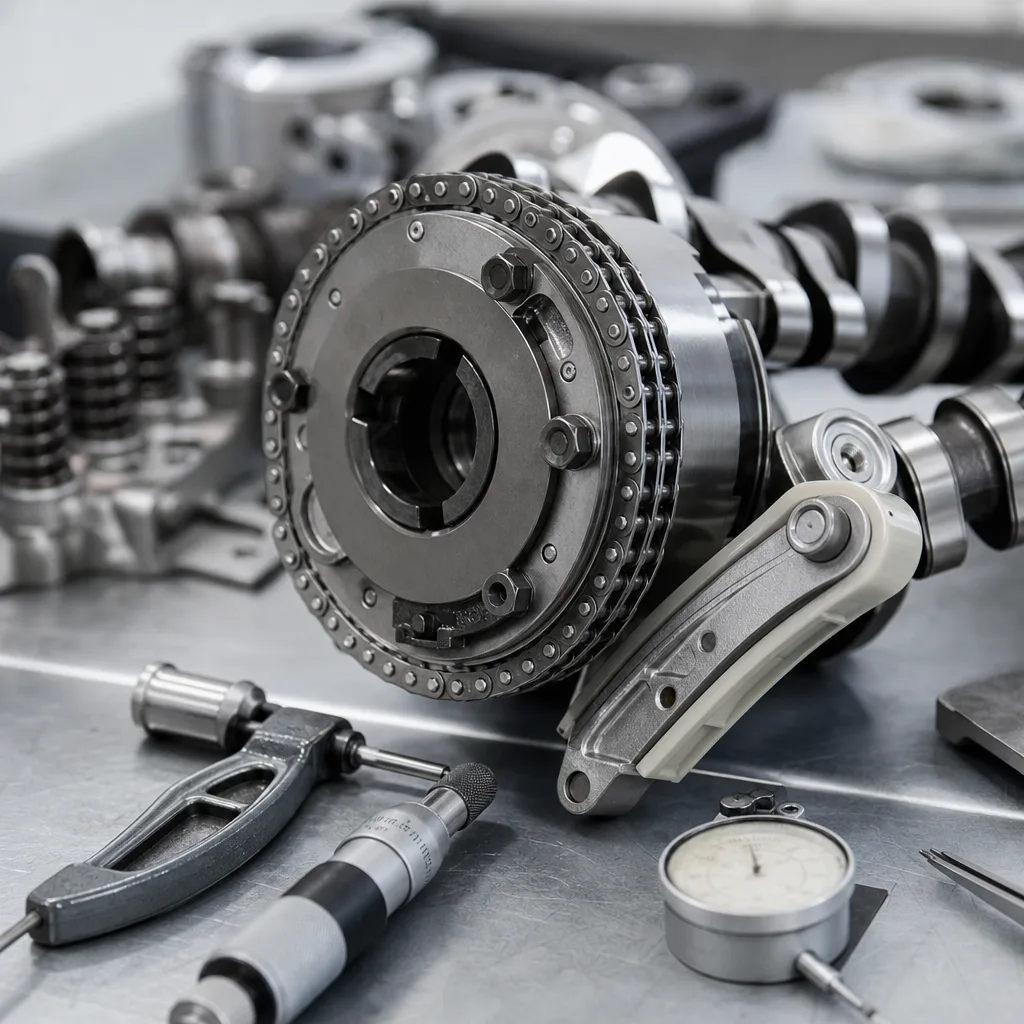
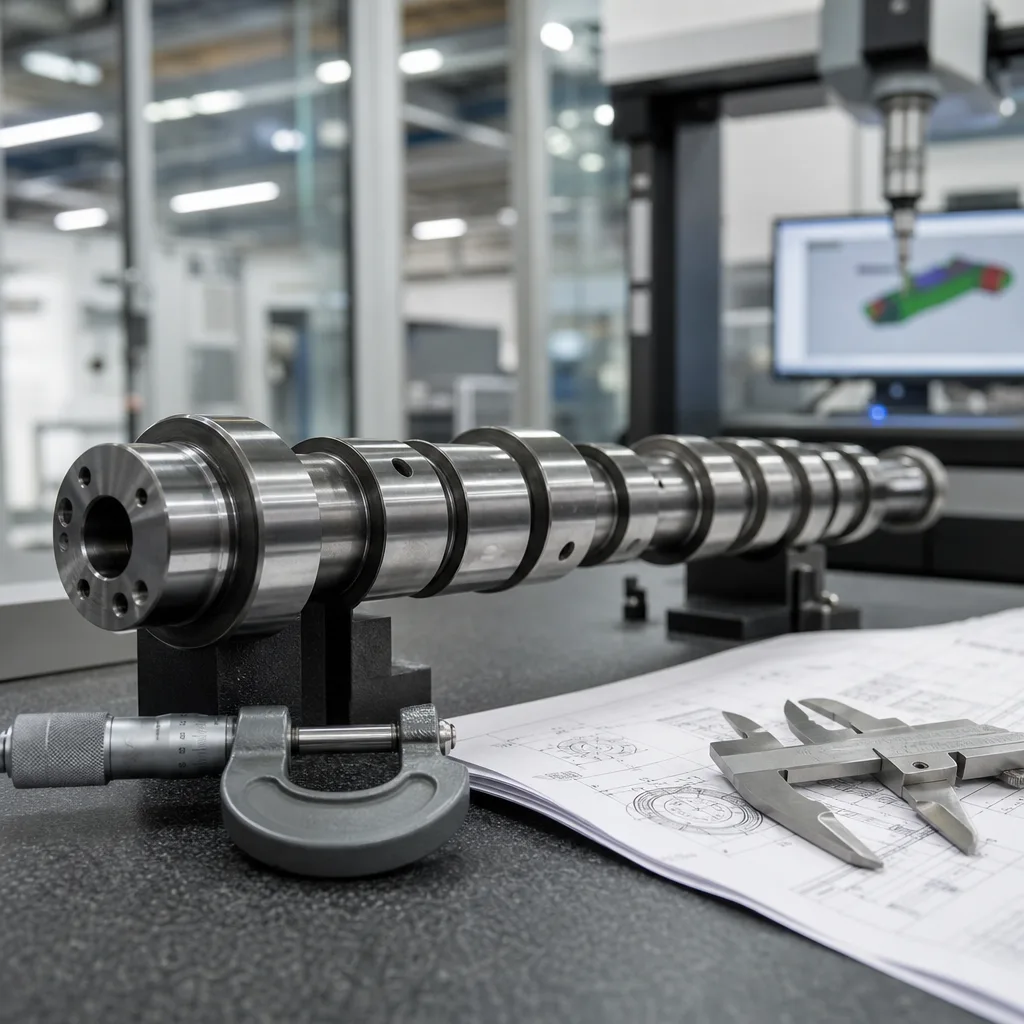
If you are sourcing a camshaft Jaguar manufacturer China supply chain partner, the main questions are not about price alone. Procurement teams need dimensional consistency, material traceability, stable lead times, and documented quality controls. For Jaguar applications, fitment risk is high because camshaft profiles, journal geometry, sensor triggers, and phasing features must match the engine specification exactly. A supplier should be able to support OE 06A107065-style cross-references where applicable, provide inspection data, and explain the validation method used for each batch. Driventus is an independent aftermarket manufacturer; brand names are referenced for fitment only. We supply engine and powertrain components from Taizhou, Zhejiang, to distributors, OEM and Tier-1 buyers, and repair networks that need repeatable parts, controlled packaging, and export-ready documentation. If you are building a shortlist, the sections below cover sourcing criteria, technical checks, quality requirements, and what to verify before you issue a trial order.
What buyers should verify before sourcing Jaguar camshafts
For a Jaguar camshaft programme, procurement should confirm fitment data at the engine-code level, not only at model level. The same vehicle line may use different cam profiles, trigger wheel layouts, or bearing journal dimensions across production years.
Minimum sourcing checklist
Engine code, displacement, and valve train type
Intake or exhaust position
Number of lobes and trigger features
Journal diameter, overall length, and thrust-face geometry
Surface finish, hardness, and balance requirement
Packaging and rust-prevention method
Cross-reference format for OE 06A107065 or equivalent references where supplied by the buyer
For sourcing teams, the key commercial question is whether the supplier can hold tolerance across repeated batches. A supplier who only offers a visual match is not enough. Ask for inspection records showing critical dimensions, hardness range, and runout data. If your team buys through multiple regions, request one controlled part number, one drawing revision, and one approved sample set.
Technical specifications and validation points
Camshafts are machined, heat-treated, and finished parts. Small deviations affect valve timing, emissions, idle quality, and wear. For aftermarket supply, the buyer should ask for the full control plan and the measurement method used at each process step.
Item
Typical buyer check
Why it matters
Material
Alloy cast iron or forged steel, per drawing
Affects strength and wear life
Hardness
Verified by batch test report
Impacts lobe durability
Journal diameter
Measured against drawing tolerance
Controls bearing fit
Lobe profile
Checked by profile gauge or CMM
Preserves valve timing
Runout
Measured at finished part stage
Reduces vibration and wear
Surface finish
Visual plus roughness check
Affects break-in and oil film
Sensor trigger geometry
Verified on applicable designs
Supports engine position signal
</tr></thead><tbody> </tbody></table>Where the buyer requires validation, the normal expectation is dimensional inspection, hardness verification, and packaging corrosion testing. For export programmes, Driventus supports documented checks aligned with IATF 16949:2016 and ISO 9001:2015 quality controls. For corrosion-related transport risk, many customers also request salt-spray or equivalent packaging validation, and material compliance review for REACH (EC) No 1907/2006 when needed.
How Driventus supports B2B camshaft supply
As a camshaft Jaguar manufacturer China customers can audit, Driventus focuses on repeatable production and controlled traceability. Our position is straightforward: the part must match the drawing, the process must be stable, and the shipment must be export-ready.
We support buyers through:
Drawing review against the buyer’s reference sample or technical file
Sample submission for dimensional confirmation
Batch traceability tied to heat number and production lot
Incoming, in-process, and final inspection records
Export packaging suited to distributor, warehouse, or line-side receipt
For larger programmes, buyers often ask for a factory audit before first order release. That review usually covers machining equipment, heat-treatment control, gauging calibration, and nonconformance handling. Our quality system outlines the controls used for B2B engine components. If you are consolidating SKUs across multiple vehicle lines, our our catalog helps your team compare part families before issuing RFQs.
MOQ, lead time, and commercial terms
For procurement teams, commercial structure matters as much as technical fit. Camshafts are not low-risk commodity parts; they need tooling control, process stability, and careful packing. A supplier should state MOQ by part family, sample lead time, mass-production lead time, and whether custom marking or kitting is possible.
Typical buyer questions:
What is the MOQ for one camshaft reference and for mixed SKU orders?
Can the supplier hold buffer stock for repeat lines?
Is packaging neutral, export-grade, and barcode-ready?
Are revisions controlled by drawing number and sample approval?
Is custom branding or carton specification available?
If your programme needs a non-standard finish, modified packaging, or a private-label supply format, our custom manufacturing page explains how we handle OEM-style development without claiming vehicle-maker approval. For standard aftermarket fulfilment, buyers usually value predictable replenishment and clear communication on dispatch dates over the lowest initial unit price.
Factory audit criteria for Jaguar applications
A supplier audit should focus on process capability, not only on appearance. For camshafts, the most important areas are machining stability, heat-treatment control, and inspection discipline.
Audit points buyers should confirm
1. Calibration records for measuring tools and gauges 2. Incoming material identification and lot segregation 3. Heat-treatment parameter control and record retention 4. Lobe and journal inspection method, including frequency 5. Nonconformance quarantine and corrective action process 6. Final packaging checks for oiling, wrap, and carton integrity
If you need to benchmark multiple suppliers, compare the level of documentation offered for each lot. A reliable plant should be able to explain how it prevents mix-up between similar camshaft variants and how it tracks revisions through production. Buyers in the EU, UK, US, Canada, Australia, and Brazil often require this level of evidence before moving from sample to volume order. Driventus serves as an independent aftermarket manufacturer; brand names are referenced for fitment only.
When to request a quote and how to start
If your sourcing project is at RFQ stage, send the engine code, reference sample photos, drawing if available, annual forecast, and target market. The more precise the technical input, the faster the supplier can confirm manufacturability and quotation accuracy.
A strong RFQ package should include:
Application details and engine code
Intake/exhaust position
Required quantity and target ship date
Packaging requirement
Any cross-reference such as OE 06A107065-style numbers supplied by your team
Inspection or compliance documentation needed for your market
For buyers expanding a Jaguar-related line or replacing an existing supplier, request a quote once your technical file is complete. If you also source related engine parts, our products for engine components page may help consolidate procurement across multiple categories.
Frequently asked questions
Yes. We supply independently manufactured camshafts for aftermarket applications. Driventus is an independent aftermarket manufacturer; brand names are referenced for fitment only.
Buyers can request dimensional reports, hardness records, lot traceability details, packing specifications, and sample confirmation against the supplied reference or drawing.
Yes. We can support private-label packaging, drawing-based development, and controlled revisions through our custom manufacturing process, subject to technical review.
If you are building a Jaguar camshaft supply shortlist, send your drawing, sample photos, and forecast for review. Use /contact.html to request a quote and start the technical check.