camshaft · 2026-06-19

Camshaft for Hyundai Sonata Aftermarket Replacement Guide

A camshaft for Hyundai Sonata aftermarket replacement has to match the OE profile, journal geometry, drive interface, and valve timing strategy before it belongs in a controlled supply chain. For procurement teams, the main risk is rarely the casting alone; it is dimensional drift, incorrect heat treatment, or a part that looks correct in a catalog but fails timing and wear validation in service. Driventus supplies engine components for B2B buyers and verifies replacement parts against drawing-critical features and production inspection records. Driventus is an independent aftermarket manufacturer; brand names are referenced for fitment only. For buyers comparing sources, the process is straightforward: confirm the engine code, verify OE cross-reference data, and review the supplier’s quality system before placing volume orders. Published standards such as IATF 16949:2016, ISO 9001:2015, and REACH (EC) No 1907/2006 should be included in the due diligence file.

How to decide if a replacement camshaft is the right buy

Not every worn camshaft should be replaced the same way. The buying decision depends on failure mode, production consistency, and how much risk the downstream shop can absorb.

Use replacement when:

  • The lobe is worn, scored, or pitted
  • The engine has contamination history
  • You need repeatable fitment across multiple workshops
  • You want a fixed production target rather than a machined-to-wear surface
  • Warranty handling must stay simple across volume orders

A regrind can look cheaper on paper, but it changes the base circle and can force clearance checks across the valve train. That may mean extra shims, lifters, or timing components. For distributors and fleet programs, the apparent savings often disappear once revalidation and labor are counted.

For a camshaft for Hyundai Sonata aftermarket replacement, the cleanest commercial path is usually a new part with documented inspection data. It gives procurement teams one specification to manage and one acceptance standard to enforce.

What the Sonata application actually has to match

The engine family matters more than the badge on the trunk. A Sonata camshaft can vary by displacement, head design, timing mechanism, and sensor strategy.

A correct part should align with these features:

  • Overall length and journal spacing
  • Journal diameter and runout control
  • Lobe lift, base circle, and phasing
  • Drive-end geometry, keyway, or sprocket interface
  • Trigger pattern where cam sensors are used
  • Surface hardness and finish on wear surfaces

If the OE number is known, keep it in the item master and cross-check any supersessions. If it is not, collect the VIN, model year, engine code, and cylinder head variant before requesting a sample. Do not approve a part from a photo. Visual similarity does not prove timing compatibility or dimensional match.

A camshaft for Hyundai Sonata aftermarket replacement is only suitable when the fitment data is tied to the exact build record, not to a broad model description.

Technical specification checks before purchase

Procurement should be driven by measurable data, not catalog language. The key question is whether the batch matches the drawing and stays stable in production.

</tr></thead><tbody> </tbody></table>Ask for dimensional inspection reports, hardness records, and first-article samples. For this part type, the most useful evidence is measured lift, lobe centerline, and phasing data shown both as nominal and as-built values. That lets incoming QC compare the shipment, not just the print.

A practical acceptance file usually includes 100% critical-feature inspection on first lots, AQL sampling on repeat orders, retained samples, and barcode traceability. For export programs, confirm REACH documentation and any market-specific declarations before launch.

Failure modes that cause returns

Most camshaft complaints come from a short list of failure modes. Recognizing them early helps sourcing teams avoid expensive returns later.

Common problems include:

  • Lobe wear caused by poor surface hardness
  • Excess runout that shows up as noise or uneven valve motion
  • Incorrect drive-end geometry that prevents clean installation
  • Wrong sensor trigger pattern
  • Phasing drift that changes timing behavior
  • Packaging damage that introduces rust before installation

A catalog match can still fail if the part was built to the wrong engine code or an older superseded design. That is why the supplier’s drawing control matters as much as the part itself. If the production lot cannot be tied to a traceable inspection record, you have no clean way to separate a bad batch from a bad fitment assumption.

For a camshaft for Hyundai Sonata aftermarket replacement, the failure mode to watch most closely is timing mismatch. It may not show up at receiving. It often appears only after installation, when the engine is already down.

How Driventus validates replacement parts

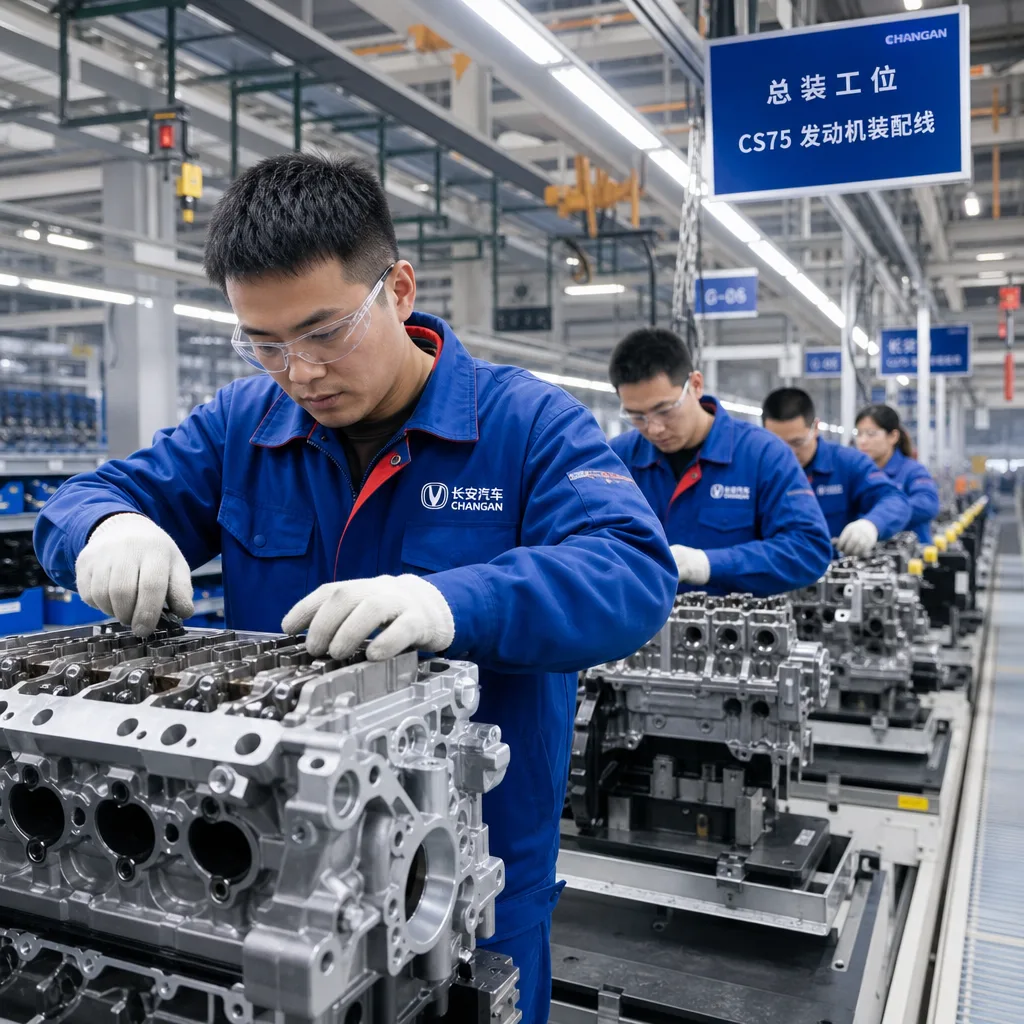
Driventus manufactures engine and powertrain components in Taizhou, Zhejiang, with export programs for aftermarket and OEM/Tier-1 buyers. Validation centers on the features that affect fitment and durability:

  • Profile and dimensional inspection against agreed drawings
  • Hardness verification on critical wear surfaces
  • Surface and finish inspection on lobes and journals
  • Batch traceability and incoming material control
  • Corrosion protection for export packing
  • Sample approval against a PPAP-style checklist where requested

Our quality system is built around IATF 16949:2016 and ISO 9001:2015. Buyers may review the quality system when qualifying a supplier and compare available engine products in our catalog. If a program needs non-standard packaging, private label support, or drawing-based development, custom manufacturing is available for qualified B2B accounts.

That combination gives sourcing teams a clearer path from sample approval to repeat production. For volume programs, we also align inspection frequency, control plan points, and outgoing shipment records so the buyer can set a stable receiving standard before the first container ships.

Step-by-step sourcing workflow

Use a simple sequence to keep the purchase controlled.

1. Confirm engine code, build date, and valve train configuration. 2. Verify OE cross-reference and any supersession history. 3. Request dimensional data for journals, lobes, drive features, and allowable runout. 4. Ask for inspection, hardness, and traceability records. 5. Confirm packaging, labelling, and carton quantity. 6. Validate lead time, MOQ, and export documentation. 7. Lock payment terms, sample cost, and warranty return rules before release.

For regional distributors and multi-location repair networks, consistency matters more than the lowest unit price. A camshaft that fits one engine family and fails another creates returns, labour claims, and inventory write-downs. If you are building a broader engine programme, review our catalog and the related engine components range to consolidate suppliers.

A useful rule of thumb: ask for a quoted MOQ, tiered price breaks at 500, 1,000, and 3,000 units where applicable, and a lead-time split between sample, pilot, and mass production. That keeps freight and launch timing under control.

Frequently asked questions

Match the engine code, build year, OE cross-reference, and valve train layout. Then verify journal dimensions, lobe profile, and drive-end features against the supplier data sheet, and request measured runout and hardness values before approval.

Yes, if it matches OE-critical dimensions and is supported by inspection records, hardness data, and traceability. Many distributors buy aftermarket parts for cost control and availability, especially when the supplier can hold stable lot-to-lot dimensions and packaging.

Ask for dimensional inspection reports, hardness results, material declaration, lot traceability, compliance documents such as ISO 9001:2015 and REACH where applicable, plus MOQ, lead time, sample price, and warranty terms in the quotation.

If you are sourcing a camshaft for Hyundai Sonata aftermarket replacement, send your OE number, engine code, and annual volume through our request a quote page: /contact.html

Request a Quote
Check item Typical buying requirement
MaterialAlloy cast iron or forged steel, per application
HardnessVerified on lobe and journal surfaces, often HRC 50-60 depending on design
RunoutControlled within drawing limit, commonly 0.02-0.05 mm TIR or tighter by OE print
Lobe profileMatched to OE timing and lift, with lift tolerance typically within ±0.03-0.05 mm of approved target
Surface finishSuitable for boundary lubrication during break-in, often Ra 0.2-0.8 μm on critical surfaces
PackagingCorrosion protection and traceable lot marking
Critical dimensionsJournal OD, thrust face width, and drive-end geometry within print tolerance