Camshaft for Honda Civic Replacement Sourcing Guide
A camshaft for Honda Civic replacement program should be treated as a precision valvetrain sourcing project, not a generic engine-parts purchase. Civic applications span several engine families, markets, and production periods, so buyers need disciplined fitment control, OE-equivalent geometry, stable metallurgy, and repeatable inspection evidence before adding a part number to inventory. For distributors, wholesalers, and repair-chain buyers, the main commercial risk is rarely the quoted unit price by itself. It is the cost of returns, claims, workshop downtime, and catalogue distrust caused by lobe wear, incorrect journal sizing, timing misalignment, poor surface finish, or inconsistent hardness. Driventus manufactures aftermarket engine components in Taizhou, Zhejiang for export programs in Europe, the UK, North America, Australia, and Brazil. This guide explains what procurement teams should verify when sourcing replacement camshafts for Civic applications, including fitment mapping, critical dimensions, materials, validation testing, documentation, packaging, and supplier qualification. Driventus is an independent aftermarket manufacturer; brand names are referenced for fitment only.
Fitment Control for Civic Engine Families
Civic camshaft coverage should begin with engine-code and production-year mapping rather than a broad model-name listing. A camshaft that looks interchangeable on a catalogue photo can differ in journal diameter, lobe profile, lobe separation, distributor or sensor drive detail, thrust control, oiling features, or timing reference position. Those differences are enough to create installation problems even when the vehicle name and displacement appear to match.
For B2B programs, the part master should record:
Vehicle model, market, year range, and engine code
Intake or exhaust camshaft position where applicable
Valve count, fuel system type, and timing system type
OE part-number cross-reference format where available, using customer-supplied data only
Interchange notes for supersession, split-year changes, and regional variants
Related components such as followers, rockers, seals, or timing hardware where they affect service recommendations
Packaging code, barcode format, label language, and country-of-origin marking requirements
This level of fitment control is especially important when a buyer is consolidating SKUs across markets. A European application table, a North American application table, and an Asia-Pacific application table may not use the same trim naming or production-date breakpoints. The safest approach is to tie every listing back to engine code, camshaft position, and verified dimensional data.
Driventus can align camshaft listings with distributor fitment tables and repair-chain stocking structures through our catalog and engine component program data at /products/engine-components.html. The purpose is not to claim vehicle-maker approval. It is to reduce catalogue ambiguity, improve first-time installation match, and lower avoidable returns before the product reaches workshops.
OE-Equivalent Geometry and Critical Dimensions
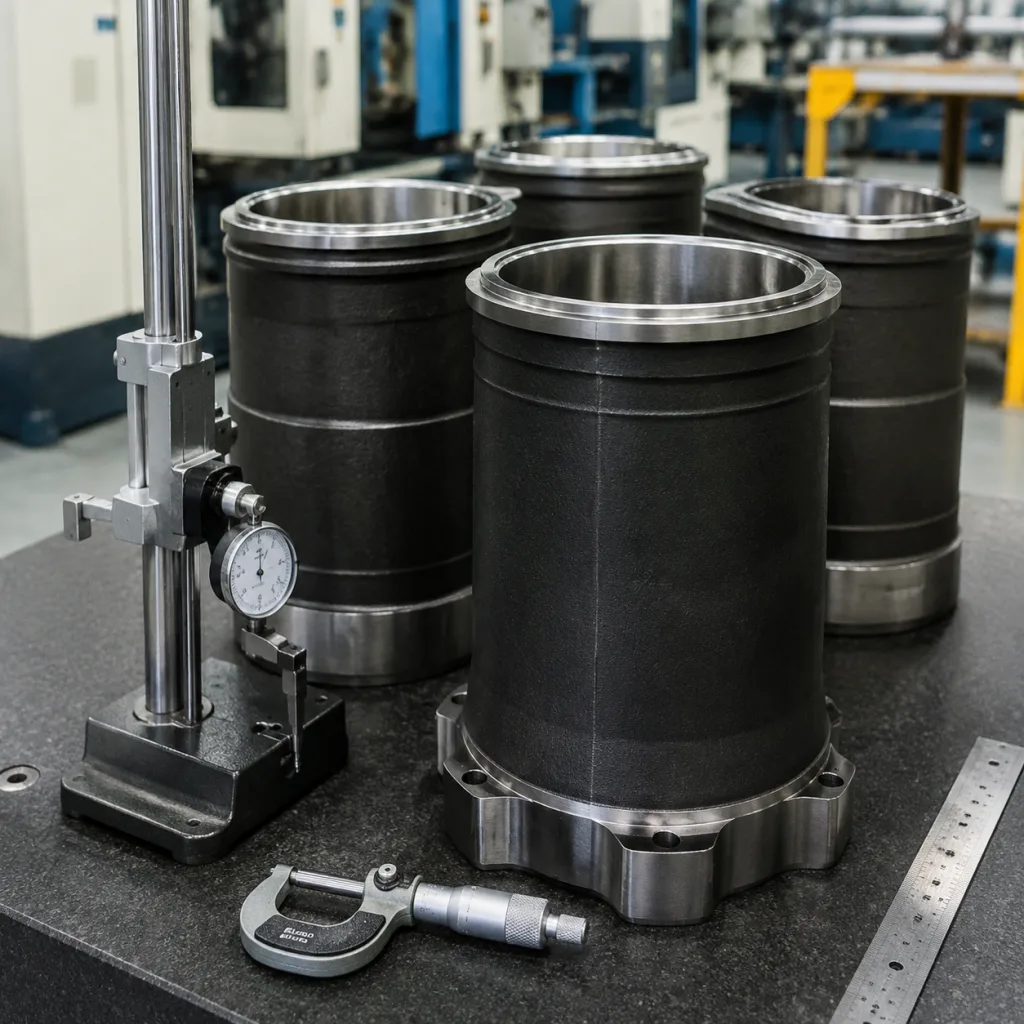
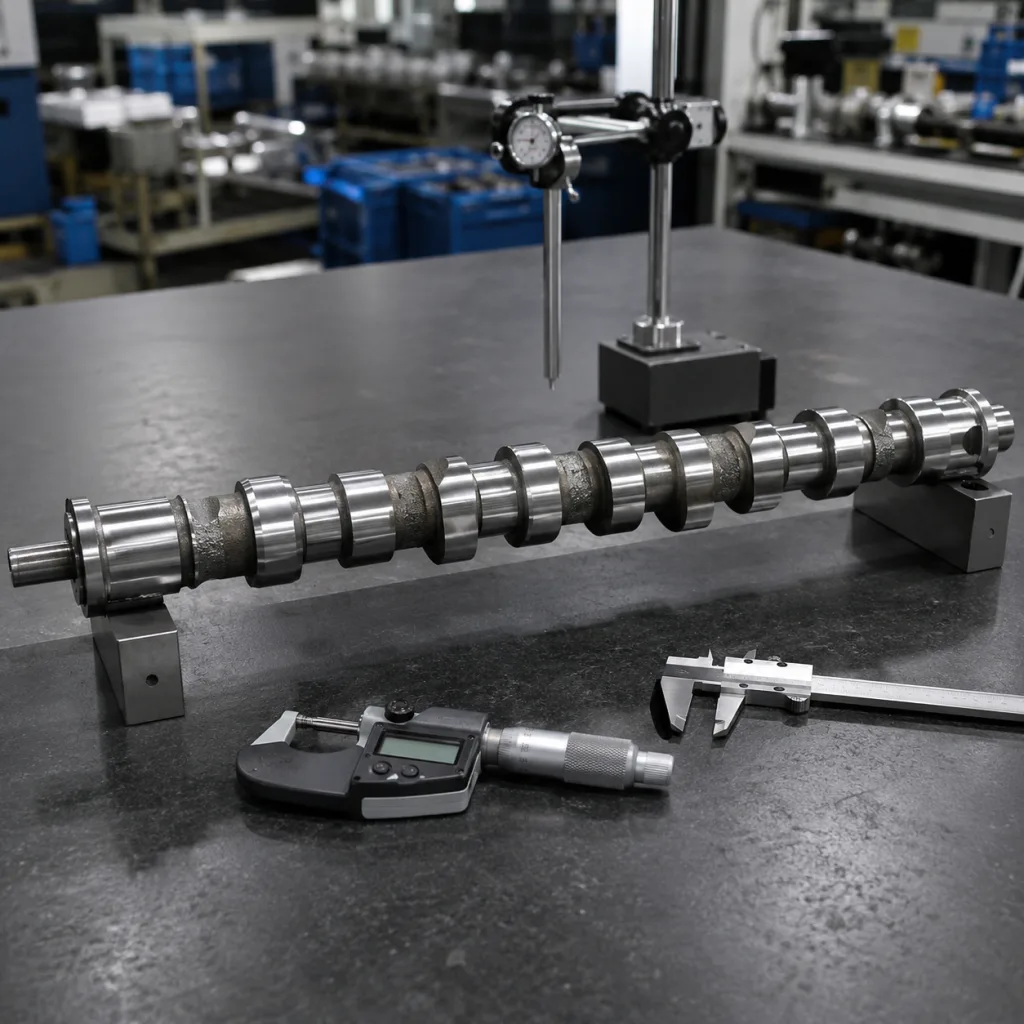
A replacement camshaft must reproduce the working geometry of the original design within controlled manufacturing limits. Small deviations can change idle quality, valve timing, emissions behaviour, oil-film stability, and contact stress at the follower or rocker interface. For a camshaft for Honda Civic replacement range, dimensional control should be built into both sample approval and routine production release.
Feature
Procurement Check
Why It Matters
Journal diameter
Measured against drawing tolerance
Controls oil film stability and bearing clearance
Lobe lift
Profile measurement or CMM trace
Affects valve opening and cylinder filling
Base circle
Verified per lobe
Influences lash, hydraulic adjustment range, and valve timing
Runout
Checked on V-blocks or between centres
Reduces vibration and uneven bearing wear
Thrust face width
Compared with OE-style datum
Controls axial movement
Timing reference
Fixture-checked
Prevents phase error during installation
Oil holes and grooves
Visually and dimensionally checked
Supports lubrication to journals and contact surfaces
Surface roughness
Ra measurement on journals and lobes
Supports lubrication, bedding-in, and wear resistance
</tr></thead><tbody> </tbody></table>Buyers should request an inspection plan that identifies datum points, measurement equipment, tolerance references, and sampling frequency. A useful dimensional report includes actual measured values, not only pass/fail marks. Actual values allow procurement and quality teams to see process centring, drift, and batch-to-batch consistency.
For high-volume programs, initial sample inspection reports and retained master samples help maintain consistency across batches. Where the buyer controls the drawing, both parties should agree how changes are handled, how superseded samples are retired, and which dimensional characteristics are treated as critical-to-quality.
Materials, Heat Treatment, and Wear Resistance
Camshaft durability depends on the combination of base material, casting or forging quality, machining control, surface hardening, and final finishing. Common aftermarket routes include chilled cast iron and alloy steel, selected according to the original design, valvetrain layout, and application load. The correct choice is not simply the hardest material available; the part needs a compatible surface structure, adequate core strength, and stable interaction with the follower or rocker surface.
A technically useful supplier quotation should state:
Material grade or internal material specification
Manufacturing route, such as casting, forging, or machined billet where applicable
Heat-treatment method and target hardness range
Case depth or hardened layer control where relevant
Surface finishing process for lobes and journals
Crack inspection method for production release
Traceability from heat lot to finished batch
Rust-prevention method for storage and export transport
Hardness should be controlled as a range, not treated as a single headline number. Excessive variation can lead to premature lobe wear, follower damage, or inconsistent break-in behaviour. Surface finish also deserves attention because a camshaft with acceptable hardness but poor finish can still score journals, disturb lubrication, or accelerate contact wear.
Driventus applies incoming material checks, controlled machining, heat-treatment monitoring, and final inspection under a documented quality system aligned with IATF 16949:2016 and ISO 9001:2015. These standards do not certify a part for a specific vehicle brand, but they define process discipline for automotive production, corrective action, traceability, and continual improvement.
For EU and UK import programs, buyers may also request material declarations related to REACH (EC) No 1907/2006. Where packaging, corrosion protection, or surface oil requirements are specified by the importer, they should be written into the purchase specification before production starts.
Validation Testing Before Program Release
Replacement camshafts should be validated before catalogue launch, especially when a buyer is introducing a new Civic engine family, switching suppliers, or combining several regional applications under one SKU. Validation should confirm dimensional accuracy, wear behaviour, installation compatibility, lubrication features, and packaging integrity.
Recommended Pre-Launch Checks
Full dimensional layout against drawing or approved sample
Hardness testing on lobes and journals
Metallographic review when heat-treatment changes are introduced
Runout and straightness verification
Surface roughness measurement after final grinding or polishing
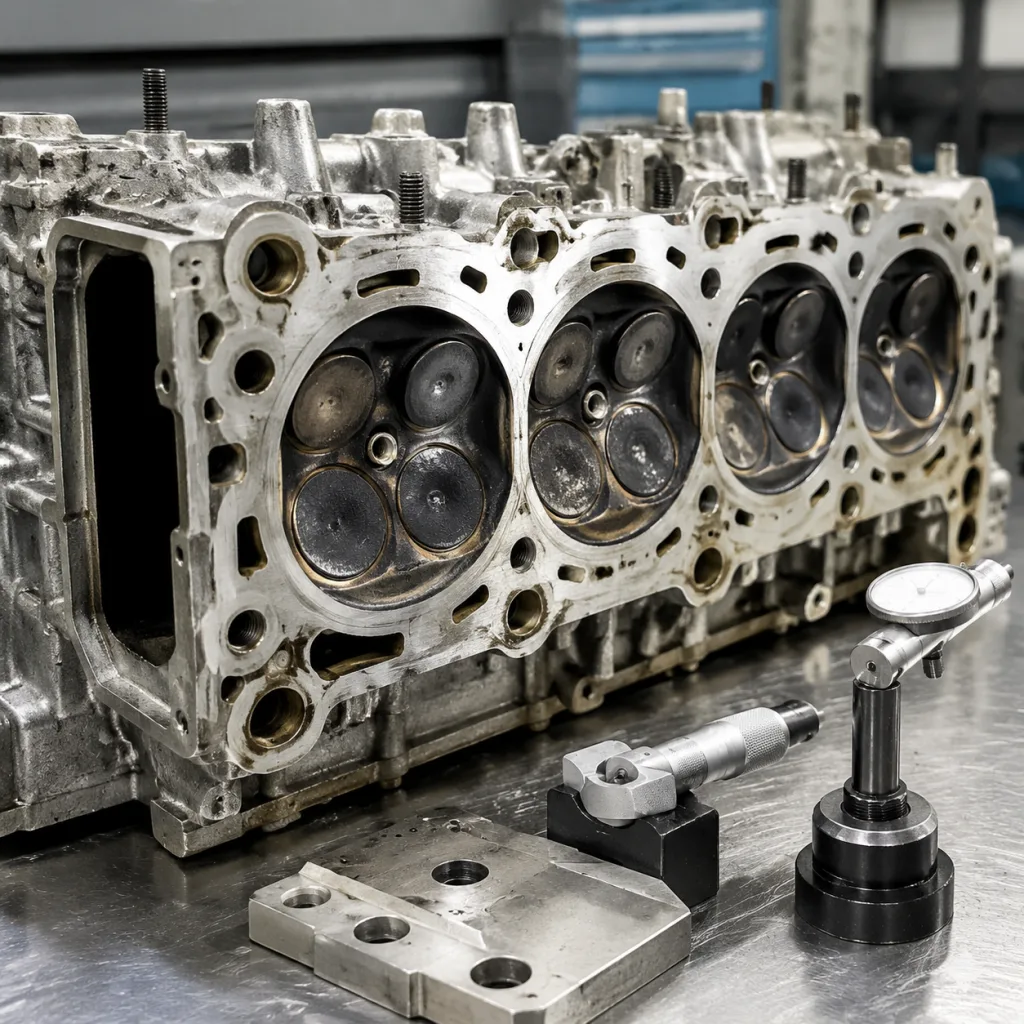
Trial installation on a representative cylinder head or fixture
Oil-hole and lubrication-path inspection where applicable
Timing reference and sensor-drive confirmation where applicable
Salt-spray or corrosion-resistance checks for specified coatings or packaging protection
Carton drop test or transport simulation for export shipments
For emissions-sensitive markets, replacement components should not be positioned as modifying engine calibration or emissions control performance. Where a vehicle program is subject to regulatory frameworks such as ECE R-83, the camshaft should be specified as OE-equivalent for repair use, not as a performance alteration unless the buyer has separate market-specific compliance documentation.
Driventus can provide production samples, inspection records, and packaging samples for buyer approval before mass shipment. For private-label or drawing-controlled projects, custom manufacturing can include agreed control plans, PPAP-style documentation where required by the customer, and batch traceability. A controlled release process is slower than buying from open stock, but it gives the buyer evidence to defend the listing if field questions arise later.
Common Failure Modes and Supplier Controls
Field returns for replacement camshafts usually trace back to one of four areas: incorrect application, lubrication failure, surface hardness variation, or installation error. Procurement teams cannot control every workshop practice, but they can reduce avoidable risk through supplier controls, fitment discipline, packaging protection, and clear technical documentation.
</tr></thead><tbody> </tbody></table>A well-manufactured camshaft can still fail if installed with worn followers, blocked oil passages, contaminated oil, incorrect timing setup, or unsuitable break-in lubricant where required. For repair-chain programs, it is useful to include installation cautions on the label insert or technical bulletin. The language should be factual and limited to checks that protect the part and the engine.
Claims handling should also be part of supplier evaluation. When a return occurs, buyers need batch traceability, inspection records, photographs of retained samples where available, and a practical corrective-action response. A supplier that can connect a field symptom to production data helps the importer separate manufacturing issues from installation or application errors.
Commercial Sourcing Criteria for Importers
For distributors and wholesalers, a camshaft for Honda Civic replacement line needs predictable availability, stable quality, and clear documentation. Buyers should compare suppliers on measurable factors rather than catalogue breadth alone. A large range is useful only if the supplier can protect fitment accuracy, repeat dimensions across batches, and support claims analysis when the market sends feedback.
Practical sourcing criteria include:
Minimum order quantity by part number and mixed-container flexibility
Lead time for initial samples, pilot orders, and repeat production
Ability to hold agreed tolerances across multiple batches
Export packaging strength for sea freight and parcel redistribution
Laser marking or label control for traceability
Batch inspection reports and retention sample policy
Responsiveness to 8D corrective-action requests
Capability to support private-label packaging and regional compliance documents
Clear communication on supersession, application splits, and discontinued references
Driventus exports engine and powertrain components to more than 60 countries and supports aftermarket distributors, OEM and Tier-1 supply projects, and multi-location repair chains. For Civic camshaft programs, the recommended buying sequence is sample review, dimensional approval, pilot order, field feedback window, and then scheduled replenishment. This sequence is slower than a spot purchase, but it reduces claims exposure and protects catalogue credibility.
Importers should also define the commercial rules before production: approved artwork, carton strength, pallet configuration, label data, inspection level, documentation language, and response time for quality concerns. When those expectations are written into the sourcing file, the camshaft program becomes easier to repeat, audit, and scale across regions.
Frequently asked questions
Sometimes, but fitment must be confirmed by engine code, market, timing system, and camshaft position. Similar-looking parts can have different journal sizes, lobe profiles, sensor-drive details, or timing references. Use verified catalogue data, dimensional checks, and approved samples before consolidating part numbers.
For new programs, request dimensional inspection reports, hardness results, material information, packaging specifications, and batch traceability records. For larger contracts, buyers may also request control plans, sample approval records, retained-sample policies, and corrective-action procedures aligned with IATF 16949:2016 and ISO 9001:2015.
No. Driventus supplies independent aftermarket replacement components. Driventus is an independent aftermarket manufacturer; brand names are referenced for fitment only. No vehicle manufacturer approval, affiliation, or endorsement is claimed.
For Civic camshaft sourcing, sample review, or private-label program discussions, send your target applications, annual volume, quality documentation needs, and packaging requirements to [request a quote](/contact.html).