Camshaft Genesis Wholesale: Sourcing Specs and Supply
For camshaft Genesis wholesale programmes, the main risk is not finding a supplier. It is finding one that can hold profile accuracy, heat-treatment depth, surface finish, and batch consistency across repeat orders. Buyers should start with the application, the valve-train layout, the timing drive, and the validation file, then confirm how the supplier handles revision control and traceability. Driventus is an independent aftermarket manufacturer; brand names are referenced for fitment only. For procurement teams, the useful questions are simple: can the factory build to drawing, can it prove the measurements, and can it ship parts in a condition that survives export handling without corrosion or damage?
What buyers should verify first
For camshaft Genesis wholesale sourcing, start with the engine family, valve count, trigger features, and duty cycle. The same outer fit can still fail if the lobe profile, journal dimensions, or phaser interface are wrong for the head or follower type.
Use our catalog to shortlist the family, then review the quality system records before you issue a purchase order. A serious supplier should validate OE cross-references from drawings, samples, and application data, then freeze the revision before mass production.
Checklist:
Valve event targets and lift profile
Journal diameter, runout, and surface finish
Material route and heat-treatment method
Sprocket or phaser interface
Packaging and corrosion protection for export
Dimensions, materials, and machining controls
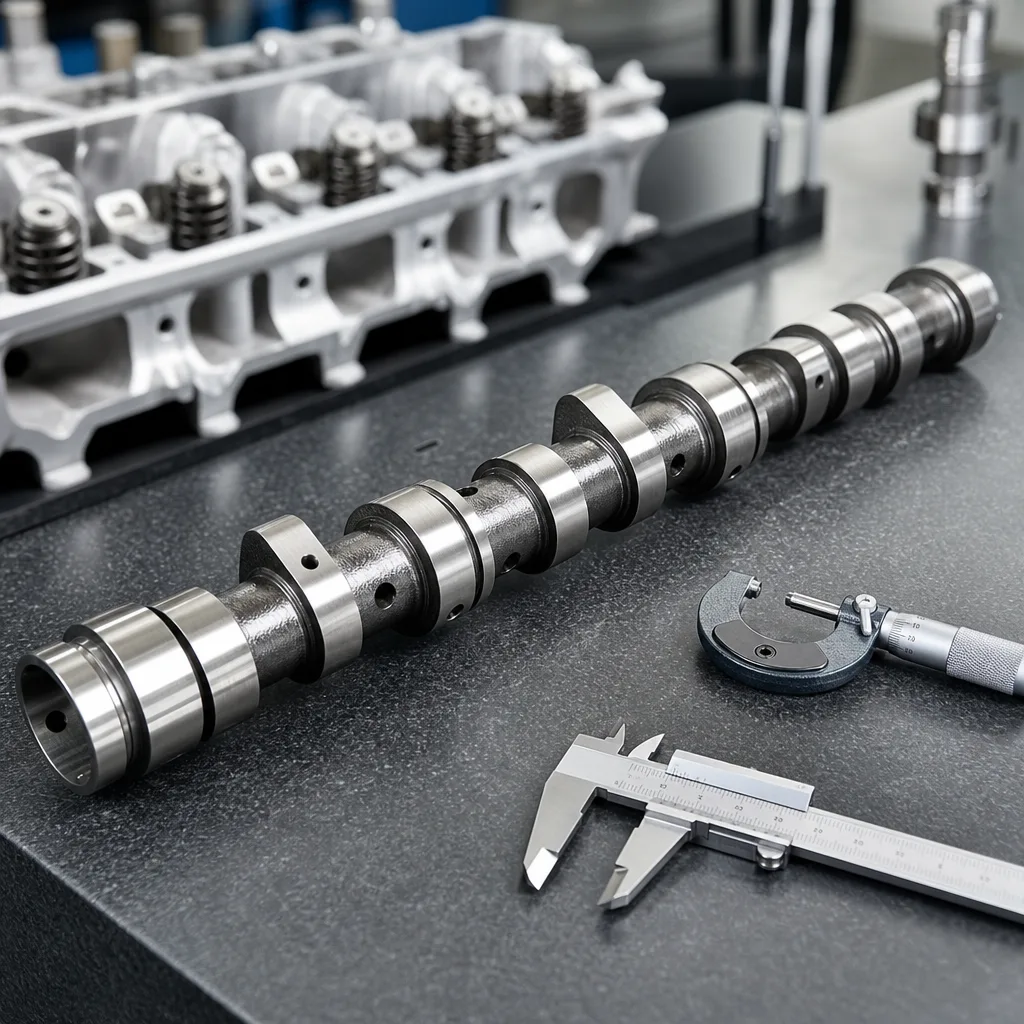
Camshafts fail in service when one control point is treated as optional. Buyers should define the material, the hardening route, the finish grinding method, and the inspection frequency on the same document set.
Control item
What to specify
Why it matters
Material route
forged steel, chilled cast iron, or billet, matched to the engine duty
affects fatigue life and machining method
Geometry
journal and lobe dimensions to the drawing, with controlled runout after final grind
stabilises timing and oil film
Hardness
surface and core hardness window, plus case depth where applicable
reduces scuffing and pitting
Finish
lobe and journal finish target, with grind records
lowers break-in wear and noise
Traceability
heat number, batch number, and lot label on every carton
supports claims handling and recall control
</tr></thead><tbody> </tbody></table>Many programmes use finish grinding after hardening, but the process route should be defined by the print, not by the supplier's convenience. If the buyer does not specify the inspection points, the first production lot often becomes a debate about what was actually measured.
Quality documents procurement should ask for
A wholesale order should ship with a document pack, not only a certificate. At minimum, ask for the following:
IATF 16949:2016 or ISO 9001:2015 site registration
First article or PPAP-style dimensional report
Material certificate and heat-treatment record
Hardness, runout, and profile inspection data
REACH (EC) No 1907/2006 declaration where applicable
Lot traceability and nonconformance handling procedure
If the vehicle programme is emissions-sensitive, the supplier should be able to map its records to the customer validation file without changing the part revision. In some buyer files, adjacent testing references may include ECE R-83 or SAE J2527; the key point is that the camshaft lot history still has to match the sample, the drawing, and the approved build.
MOQ, lead time, and export packing
Wholesale pricing is usually driven by family, process route, and batch size. The lowest unit price is not always the lowest landed cost if the packaging fails in transit or the inspection file slows customs release.
Commercial variable
What it changes
Buyer action
MOQ
machine setup and raw material reservation
consolidate SKUs where possible
Lead time
forging or casting queue, heat-treatment capacity, and final grind slots
freeze the forecast before release
Packaging
rust prevention and damage risk
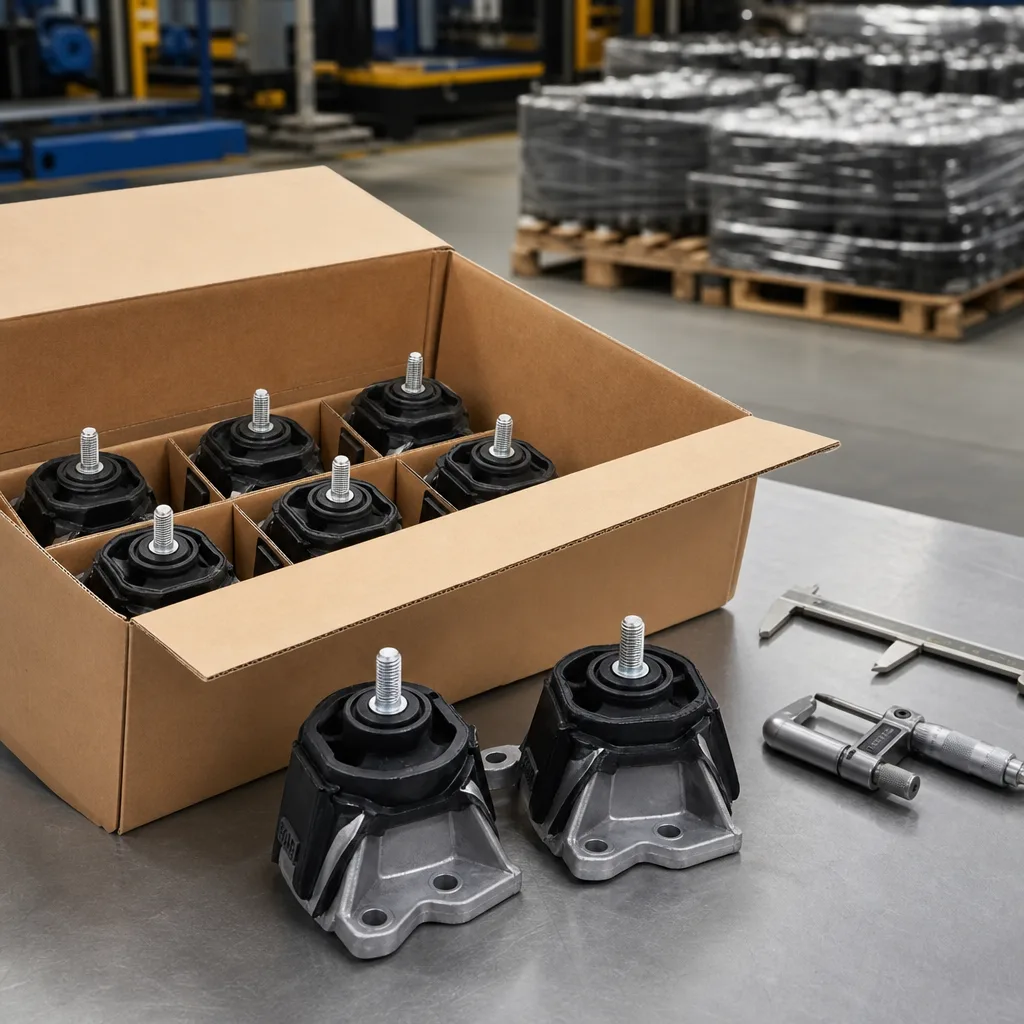
define VCI, sleeves, and pallet load
Incoterms
freight and duty allocation
compare landed cost, not factory price
</tr></thead><tbody> </tbody></table>For repeat programmes, stable demand usually moves faster than one-off emergency buying. Before shipment release, confirm carton count, net weight, gross weight, and barcode format. If you want a current price and schedule, use request a quote.
When custom manufacturing makes sense
Not every buying case should be handled as a catalog item. Custom lobe separation, trigger wheel geometry, phaser interface, or heat-treatment route may be justified when the OE part is discontinued, the sample is worn, or the fleet duty cycle is different from the original application.
Use custom manufacturing when the print does not exist, when the sample must be reverse engineered, or when the commercial spec needs a revised pack count. Driventus is an independent aftermarket manufacturer; brand names are referenced for fitment only.
For the fastest quotation, send a drawing, a sample, the target annual volume, the inspection standard, and the export pack spec. That reduces back-and-forth on revision control and shortens the sampling cycle.
Application, engine code, sample photos, target annual volume, finish requirements, and any OE cross-reference notes. A drawing is best, but a measured sample can start the review.
Yes. We can build to customer drawings and validation files through [custom manufacturing](/oem-services.html). Fitment is checked against the supplied sample or print; brand names are referenced for fitment only.
Typical files include dimensional reports, material traceability, heat-treatment records, and packing details. We can also align the file set with the buyer's quality system and export paperwork.
If you need a sourcing review, send your target application, volume, and packing spec through [request a quote](/contact.html).