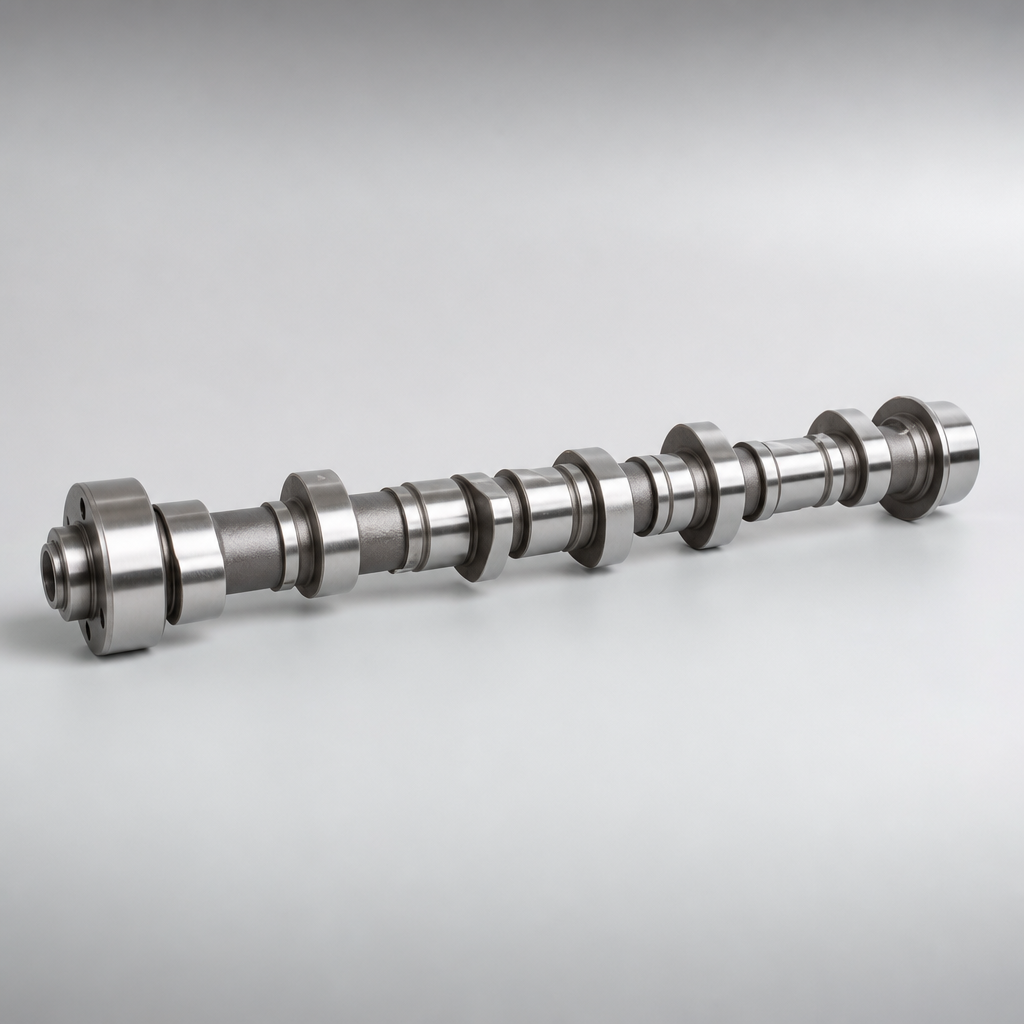
Camshaft for Ford Escape Aftermarket Replacement Guide
A **camshaft for Ford Escape aftermarket replacement** purchase usually starts after lobe wear, scoring, journal damage, or timing faults make regrinding a weak option. For procurement teams, the real question is not whether the shaft can be installed. It is whether the part reproduces OE geometry, metallurgy, and surface condition closely enough to keep valve timing stable, preserve oil film, and avoid early wear.
That makes this a sourcing and risk-control exercise, not a simple fitment lookup. Buyers should confirm engine-code accuracy, intake versus exhaust position, VVT interface details, dimensional limits, hardness range, runout, journal finish, washing standard, packaging method, and lot traceability. Just as important, the supplier should be able to show how those points are controlled across repeat production rather than on one clean sample. The sections below break the review into practical buying angles so a camshaft for Ford Escape aftermarket replacement programme can be judged on field-risk, not marketing language.
Decision framework: qualify the application before you compare prices
The first filter is application accuracy by engine code, model year, and valve-train layout. Ford Escape programmes have used more than one petrol engine configuration across different generations, so vehicle name alone is too broad to approve a shaft.
A fast first-pass review should answer six questions:
Is the shaft mapped to the exact engine code?
Is it intake or exhaust side, and is that documented clearly?
Does the design use VVT, and is the nose/phaser interface validated?
Do critical dimensions match the controlled drawing?
Is the material and heat-treatment route stated?
Can the supplier trace the lot back to inspection records?
Buyers typically want these checks up front:
Engine-specific fitment: displacement, valve count, VVT or non-VVT configuration, intake or exhaust position
Critical dimensions: overall length, base circle, lobe lift profile, journal diameter, keyway or trigger-feature geometry
Material and heat treatment: manufacturing route such as cast iron or forged steel, plus hardness consistency across lobes and journals
Surface condition: lobe and journal roughness, chamfer quality, and post-grinding cleanliness
Oil passage integrity: deburring and cleaning of drilled galleries where internal oiling is used
Traceability: batch coding, inspection records, and retained dimensional data
The most useful opening document package is simple: fitment list tied to OEM references, controlled drawing, and sample inspection sheet. If a supplier cannot connect the part to engine code, intake/exhaust position, and revision level in one package, the sourcing risk is already visible.
Typical screening values buyers ask to see before sampling include:
Journal diameter tolerance: often around +/-0.010 mm to +/-0.020 mm depending on design and grinding route
Runout limit: commonly <=0.03 mm, with tighter internal targets such as 0.02 mm on repeat production
Lobe profile deviation: often controlled within 0.01-0.03 mm against the approved master profile
Surface roughness: journals around Ra 0.2-0.4 um; lobes often around Ra 0.4-0.8 um after finish grinding
Hardness window: a controlled range such as 52-60 HRC or an equivalent material-specific requirement
These are not universal Ford Escape specifications. They must follow the approved drawing for the exact engine programme. What matters commercially is whether the supplier can state the real control window, measuring method, and sampling frequency without hesitation.
If the programme includes private-label supply, confirm early whether the supplier can support drawing control, branded packaging, and forecast-based production through custom manufacturing.
Comparison view: what OE-equivalence really means on a camshaft
OE-equivalence is a technical match, not a loose quality claim. A shaft can fit physically and still create timing variation, wear, or drivability problems if the valve-event geometry is off.
Core criteria
Item
Typical procurement check
Why it matters
Lobe profile
Profile comparator or CMM verification against approved drawing
Determines valve lift, duration, and timing accuracy
Journal diameter
Micrometer inspection to drawing tolerance
Controls oil clearance and bearing support
Shaft runout
Dial indicator check on centres or V-blocks
Excess runout increases wear and timing variation
Lobe hardness
Hardness test by defined sampling plan
Insufficient hardness shortens wear life
Surface roughness
Ra check on journals and lobes
Finish affects lubrication and break-in behaviour
Phasing features
Keyway, dowel, or trigger-geometry validation
Prevents installation errors and timing faults
Cleanliness
Residual contamination check after machining
Protects the engine oil circuit during initial start-up
</tr></thead><tbody> </tbody></table>A generic "OE quality" statement is not enough. Buyers should ask how equivalence is measured in production. In practice, the supplier should be able to show:
Profile measurement method: CMM, form tracer, or dedicated master-check fixture
Phasing control: angular relationship between lobes and key timing features, often reported in degrees or arc minutes
Gauge system: calibrated micrometers, roughness tester, hardness equipment, and gauge R&R where relevant
Sampling plan: first-off, in-process checks at defined batch intervals, and final audit before packing
For a camshaft for Ford Escape aftermarket replacement, the usual risk is not obvious misfit. It is a shaft that installs, starts, and then triggers claims because a few characteristics are slightly wrong. The highest-risk mismatch points are usually:
Lobe-to-lobe phasing error that shifts valve timing
Nose-feature deviation at the VVT or phaser interface
Journal size drift that changes oil clearance at start-up
Hardness scatter between lobes in the same lot, leading to uneven wear later
Where the application uses variable valve timing hardware, the interface accuracy between the shaft nose and phaser-related features deserves extra scrutiny. Small deviations can lead to timing codes, unstable idle, or inconsistent performance after installation. On higher-claim programmes, buyers often require a controlled maximum phasing deviation and a signed first-article report before approving regular supply.
A supplier operating to IATF 16949:2016 and ISO 9001:2015 should be able to provide documented control plans, incoming material checks, in-process inspection, and final release criteria. Those certifications do not prove fitment by themselves, but they do indicate process discipline.
Failure modes: where aftermarket camshafts create field claims
Most field problems do not start with the invoice price. They start with weak process control after the blank is made.
Camshaft durability depends heavily on what happens after casting or forging: heat treatment, grinding accuracy, straightness control, washing, and rust protection. Buyers often focus on nominal dimensions first because they are easy to compare. Returns, however, are just as likely to come from metallurgy drift, grinding variation, or residual contamination.
High-impact process points
Blank integrity: raw material chemistry and casting or forging soundness should be controlled lot by lot
Heat treatment stability: hardness variation across lobe sets should stay within the supplier's approved range
Journal grinding: roundness and taper must be tightly controlled to preserve oil film behaviour
Straightness control: post-process correction and runout inspection reduce installation and wear problems
Final washing and rust prevention: essential for export transit, storage stability, and first-start cleanliness
From a sourcing standpoint, ask for the actual process sequence rather than a broad manufacturing summary. A robust route usually includes raw blank receiving inspection, rough machining, heat treatment or induction hardening where specified, semi-finish machining, journal and lobe grinding, deburring, washing, rust preventive application, 100% appearance check, and lot-controlled packing.
Useful process-detail questions include:
How is hardness verified? Example: 2-5 pcs per heat-treat lot, or tighter frequency on early production
Is runout checked 100% or by sampling? This matters on long, slender shafts where distortion can appear after grinding
How are oil holes cleaned and verified? Buyers often ask for air blow, flushing, and borescope or visual verification standards
What is the residual contamination limit after washing? Some buyers define a maximum particle or weight threshold for release
How is rust prevention applied? Dip oil, spray oil, or VCI-only packing changes storage performance and shelf-life
Where repeat quality matters, process capability is more useful than a one-time pass/fail result. For key dimensions such as journal diameter and runout, many professional buyers expect the supplier to understand Cp/Cpk performance and flag any characteristic trending below the internal target, often 1.33 or higher for stable mass production.
For export supply into the EU and UK, buyers commonly request material declarations aligned with REACH (EC) No 1907/2006 where applicable to the supplied article and its packaging materials. For corrosion protection and shelf-life control, the packaging specification should also define VCI use, oiling method, carton strength, and palletisation.
One practical discussion point is the release package for each batch. At minimum, procurement should ask whether the shipment can be supported by dimensional records, hardness data, appearance criteria, and lot identification linked to the production date. For sea freight or long warehouse dwell time, confirm a stated shelf-life for rust protection, commonly 6-12 months depending on oiling method, bag seal quality, and storage conditions.
Step-by-step approval path: from drawing review to pilot lot
For distributor and repair-chain programmes, supply approval should be based on repeatable inspection rather than a single sample that happens to install correctly. A workable workflow combines drawing review, sample measurement, and limited installation validation.
Recommended approval checks:
1. Drawing confirmation against the intended engine application and revision status 2. Sample dimensional inspection for journals, lobes, overall length, and timing features 3. Runout and hardness verification on first articles and early production lots 4. Surface finish inspection on functional areas 5. Pilot installation to confirm fit, rotation, and timing alignment 6. Packaging drop and corrosion review for export handling
In practice, buyers often split approval into three stages:
1. Desktop qualification: fitment list, drawing, material route, control plan, and preliminary quotation 2. Sample approval: 3-10 pcs for dimensional study and bench checks 3. Pilot lot approval: commonly 30-100 pcs to verify repeatability, packaging, labeling, and documentation before normal release
If the supplier cannot identify the special characteristics on the drawing, approval should pause there. On camshafts, those characteristics usually include journal diameter, lobe height, runout, and phasing-related features.
A practical first-article submission package often includes:
Ballooned drawing with measured results for every critical and major characteristic
Hardness report by location and sample quantity
Runout record with gauge method stated
Surface roughness report for lobes and journals
Material or process declaration for the blank and heat treatment route
Packaging specification including corrosion protection and label format
For pilot installation, buyers usually want more than basic fit. A useful validation checklist covers free rotation after assembly, timing alignment, abnormal noise at start-up, oil pressure behaviour, fault-code status where relevant, and visual inspection after limited running. Even a short controlled validation can expose geometry or cleanliness problems before the first commercial shipment.
Driventus maintains documented controls through its quality system, with production support for aftermarket and private-label engine component programmes.
Commercial scenario: choosing the supplier with the lowest total programme risk
Once the technical match is established, the decision usually shifts from engineering to operating risk. A lower unit price has limited value if dimensional drift leads to installer complaints across several markets.
Procurement teams should compare suppliers on these points:
Application coverage: whether the range supports a single engine or a wider Escape-related programme
MOQ and replenishment: order quantities aligned with warehouse turns and service-level targets
Lead time stability: normal production cycle plus contingency for demand spikes
Private-label readiness: carton artwork, barcode control, and document support
Claim handling: response time, batch investigation method, and containment procedure
Document availability: inspection reports, packing lists, origin documents, and material declarations
The commercial logic usually looks like this:
Sample stage: MOQ may be low, but unit cost is highest because setup, inspection time, and separate packing are spread over few pieces
Pilot lot stage: pricing improves once the supplier can run a controlled short batch and standardise inspection
Regular production: the best pricing normally appears only after forecast visibility, stable packaging format, and repeat purchase volume are in place
For many aftermarket programmes, buyers should expect quotations by MOQ band rather than one flat number. Typical structures may look like:
Trial or sample MOQ: 1-10 pcs if stock exists, or a small paid development lot if production must be scheduled
Pilot MOQ: 30-100 pcs for validation and initial market release
Mass-order MOQ: 100-300+ pcs per part number depending on process route, packaging format, and whether the part is held in stock
Lead-time logic should also be broken down clearly. Ask the supplier to separate:
Sample lead time: often fastest if an existing drawing and tooling route already exist
Normal production lead time: commonly several weeks from deposit or PO confirmation through machining, grinding, inspection, and packing
Peak-season or surge lead time: what happens when orders rise above forecast or multiple part numbers are combined in one shipment
Transit time: air, LCL, or FCL timing, since the lowest ex-works price can still create the highest landed-cost risk if replenishment is unstable
A disciplined quote comparison should include more than piece price. Buyers should calculate total programme cost across:
inspection and incoming quality labour
packaging conformity and relabeling risk
field claim rate exposure
emergency freight probability
payment terms versus stock-holding burden
For buyers importing into regulated markets, document readiness can matter as much as machining quality. A supplier that can provide complete batch paperwork reduces receiving delays and simplifies internal quality release.
Driventus is an independent aftermarket manufacturer; brand names are referenced for fitment only.
To review range availability or discuss a camshaft for Ford Escape aftermarket replacement programme, buyers can use our catalog for current product families or request a quote for application-specific support.
Frequently asked questions
The difference usually comes down to profile accuracy, hardness consistency, journal finish, and process control. A part may install physically but still cause noise, accelerated wear, or timing faults if those characteristics fall outside the required range. Buyers should ask for measurable data such as runout, hardness, roughness, and profile inspection results rather than relying on a generic quality claim.
For regular supply, yes. At minimum, request lot traceability and records for key dimensions, hardness, and appearance. This is especially important for multi-location repair chains and private-label distribution where claim exposure is higher. Many buyers also require first-article data on initial lots and then a defined batch release package for ongoing orders.
No. Escape applications vary by engine family, model year, and intake or exhaust position. Fitment should be confirmed by engine code and technical drawing rather than by vehicle name alone. Buyers should also verify VVT versus non-VVT configuration and any phaser-interface differences before approving supply.
If you are qualifying a **camshaft for Ford Escape aftermarket replacement** supply programme, we can review the application, inspection points, MOQ structure, lead-time assumptions, and packaging requirements with your team. Contact Driventus to [request a quote](/contact.html).