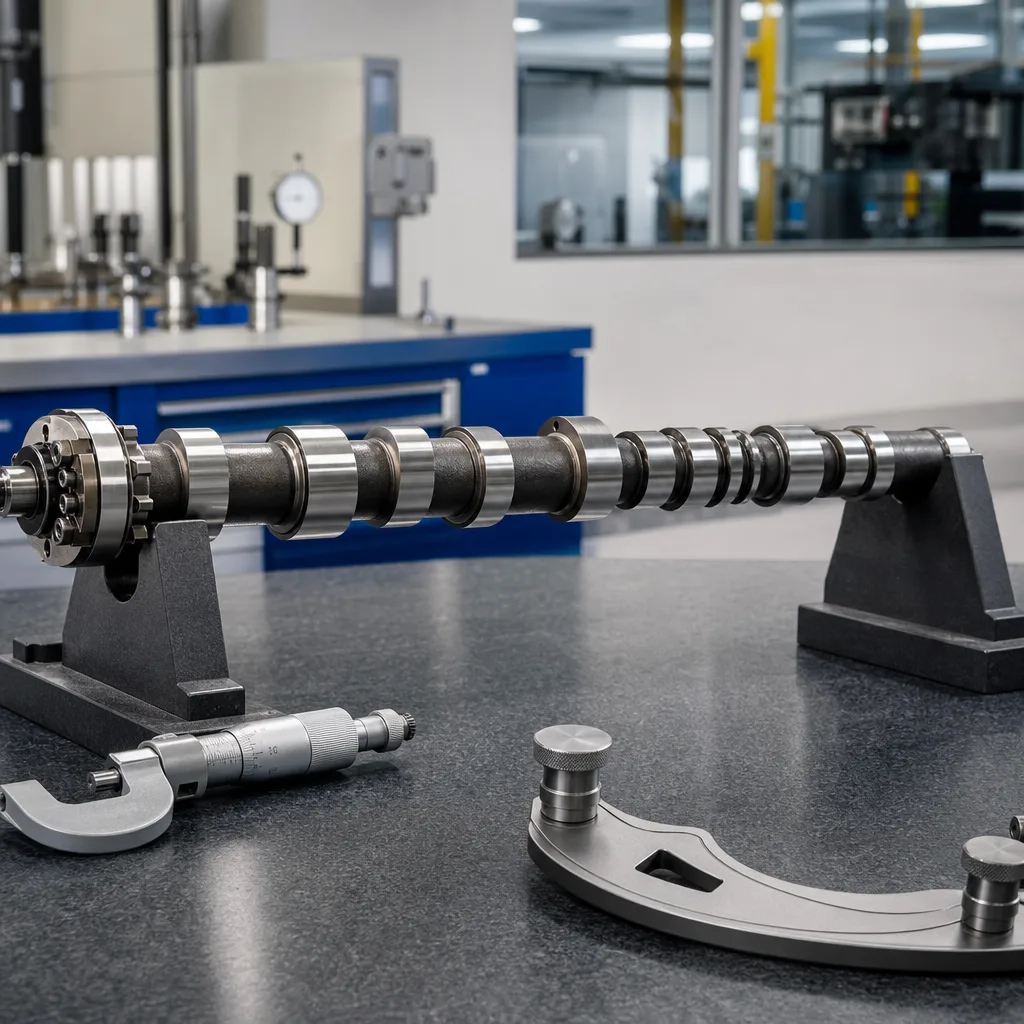
Camshaft for Volvo V40 OE Equivalent: Sourcing Guide
Procurement teams sourcing a camshaft for Volvo V40 OE equivalent need more than a part that physically fits. The key controls are shaft geometry, journal finish, lobe timing, nose and flange details, heat treatment, and repeatable dimensional inspection. For replacement programmes, the target is OE-equivalent form, fit, and function, supported by stable process control and test data. Driventus supplies engine and powertrain components from Taizhou, Zhejiang to B2B buyers in more than 60 countries, with production aligned to IATF 16949:2016 and ISO 9001:2015 requirements. Driventus is an independent aftermarket manufacturer; brand names are referenced for fitment only. For sourcing teams, the practical question is how to confirm cross-reference accuracy before placing a production order, especially when Volvo V40 applications vary by engine code, emissions market, and model year. This article covers the checks that matter before you issue an RFQ or approve a sample.
What OE-equivalent means for a Volvo V40 camshaft
OE-equivalent does not mean a branded part. It means the camshaft must match the original design intent for the specific engine variant used in the Volvo V40 application. For procurement, that includes:
Overall length and bearing journal diameters
Lobe lift, base circle, and lobe centreline positions
Thrust face location and end-play control
Drive feature geometry, such as gear, sprocket, or sensor interface
Surface hardness and fatigue resistance
A correct replacement should preserve valve timing, idle quality, emissions performance, and cold-start behaviour. If the application uses variable valve timing, the interface tolerances and oil passage alignment must also be verified. A supplier should provide dimensional inspection records, material traceability, and heat-treatment confirmation, not only a catalogue reference.
For buyers managing multiple SKUs, it helps to cross-check against the engine code, OE 06A… style reference where applicable, and the market specification, rather than relying on the vehicle name alone.
Key dimensions and inspection points buyers should verify
A camshaft can look correct and still fail in service if any critical dimension is off. The most important checks are below.
Inspection item
Why it matters
Typical buyer check
Journal diameter and roundness
Bearing fit and oil film stability
Micrometre report by journal
Lobe lift and base circle
Valve opening profile
CMM or cam profile measurement
Axial length and thrust position
End-play control
Verified against drawing
Surface roughness
Wear rate and oil retention
Ra measurement on journals
Hardness after heat treatment
Wear and pitting resistance
Hardness test certificate
Drive end geometry
Timing accuracy and sensor alignment
Go/no-go or fixture check
</tr></thead><tbody> </tbody></table>For export procurement, ask for the inspection method, sampling plan, and acceptance criteria. If your programme requires PPAP-style support, request dimensional reports, material certificates, and process flow documentation. For reference, a supplier operating under IATF 16949:2016 and ISO 9001:2015 should be able to show controlled inspection records and traceability from batch to finished part.
Material, heat treatment, and durability expectations
A replacement camshaft is usually produced from chilled cast iron, cast steel, or forged steel depending on design and duty cycle. The correct choice depends on lobe loading, expected service life, and manufacturing route.
Common material routes
Chilled cast iron: cost-effective for many passenger-car applications; good wear resistance when heat treated correctly
Cast steel: used where strength and fatigue resistance are more important
Forged steel: suited to higher load programmes and tighter performance margins
Heat treatment is not optional. Buyers should confirm case depth or through-hardness targets, plus post-machining cleanliness. Poor control can cause accelerated lobe wear, journal scoring, or timing noise. If the vehicle uses hydraulic lifters, oil cleanliness and surface finish become even more important.
For procurement files, request:
Material grade declaration
Heat-treatment method and hardness range
Surface finish data for journals and lobes
Packaging specification to prevent corrosion during sea freight
If your programme needs a non-standard coating, profile, or packaging format, Driventus can support custom manufacturing for defined engineering requirements.
How to validate fitment before release to production
Validation should be done in layers: paper check, sample check, then engine-level confirmation.
1. Match the engine code and model year range for the Volvo V40 application. 2. Confirm whether the engine uses fixed timing or variable valve timing. 3. Check the OE reference, including any OE 06A… style cross-reference used in your catalogue data. 4. Compare the supplier drawing to the original part on all critical dimensions. 5. Inspect sample parts on a metrology report, not visual similarity alone. 6. Run installation checks for clearance, timing alignment, and oil flow where needed. 7. Confirm no abnormal noise, misfire, or fault codes after assembly.
This process matters because the Volvo V40 nameplate spans multiple powertrains and year ranges. A part may fit one engine family and fail on another with a different cam sensor drive or thrust arrangement. Buyers who want a broader range of verified engine parts can review our catalog and engine components before shortlisting suppliers.
Procurement terms that reduce sourcing risk
When you issue an RFQ, ask for the same information every time so quotations are comparable.
OEM/OE cross-reference and engine code coverage
Material and heat-treatment specification
Dimensional tolerance sheet
Surface finish and hardness data
Sample lead time and mass-production lead time
Packaging and anti-corrosion protection
Certificate pack: IATF 16949:2016, ISO 9001:2015, and material traceability
If you supply to distributors, repair chains, or regional warehouses, stable batch consistency is as important as unit price. Request a control plan, incoming inspection records, and a clear non-conformance process. For regulated export channels, confirm compliance support for REACH (EC) No 1907/2006 where applicable.
Driventus works as an independent aftermarket manufacturer; brand names are referenced for fitment only. Buyers can review our quality system before audit or sample approval.
When to request a quotation or a bespoke programme
A standard replacement part is suitable when your target is direct OE-equivalent supply with normal volumes and established fitment. A bespoke programme becomes useful when you need one of the following:
A specific surface treatment or hardness window
Private-label packaging
A revised inspection plan for your warehouse process
Consolidation of multiple references into one validated part number
Longer production continuity for a regional programme
For projects with special requirements, request a quote and include engine code, OE reference, annual volume, target market, and required documentation. If the application is still under review, send the original sample part or technical drawing so the engineering team can compare lobe geometry, thrust details, and sensor drive features before release.
Published validation should be aligned to the vehicle duty cycle. Where emissions durability is sensitive, test evidence may also reference SAE J2527 or related endurance methods, depending on the programme brief.
Frequently asked questions
No. OE-equivalent means the replacement matches the original fit, function, and key dimensions for the stated application. Driventus is an independent aftermarket manufacturer; brand names are referenced for fitment only.
Ask for the engine code, OE cross-reference, dimensional report, material declaration, heat-treatment data, and packaging specification. For production orders, confirm sampling and traceability documents as well.
No. The Volvo V40 nameplate covers multiple engines and model years. Fitment must be checked by engine code, timing system, and sensor or thrust arrangement, not by vehicle model alone.
If you need a verified camshaft for Volvo V40 OE equivalent, send your engine code and reference number for review. Our team can confirm fitment, documentation, and production options at /contact.html