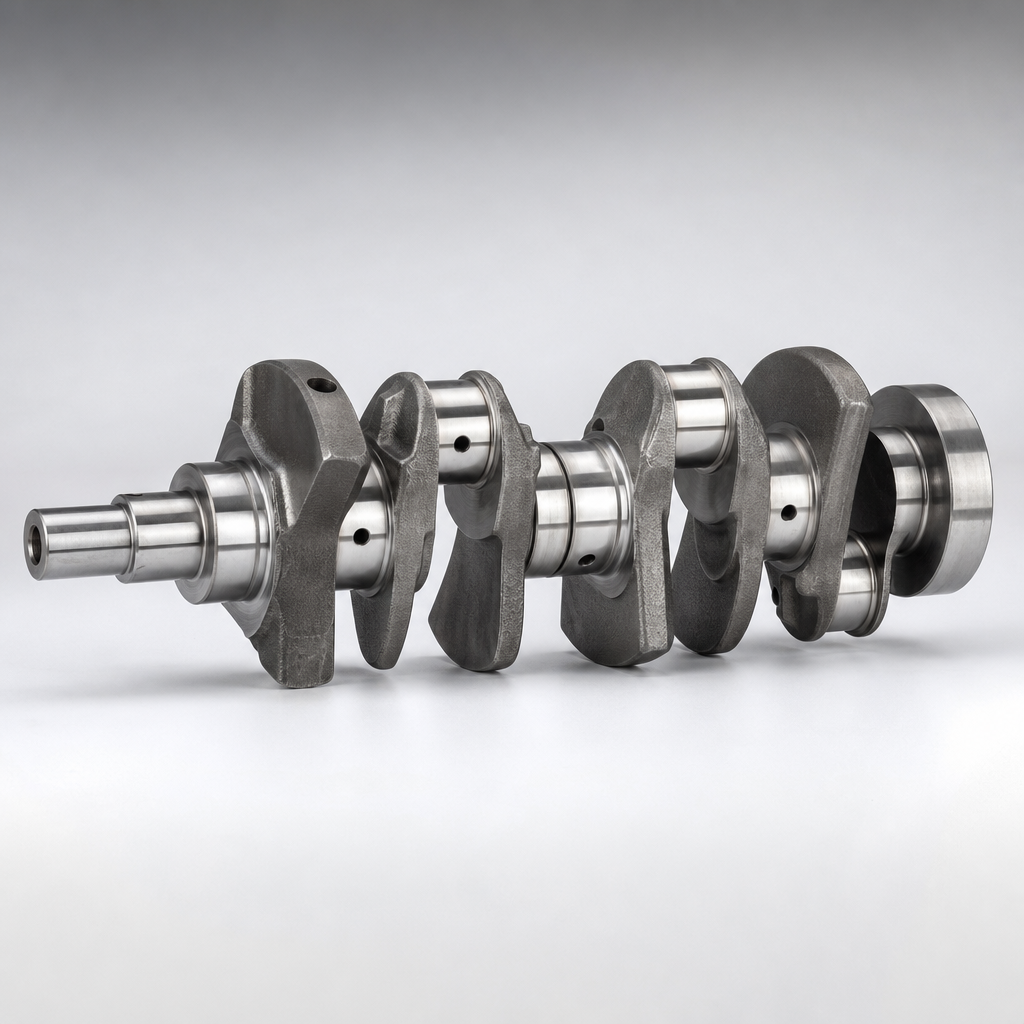
Camshaft for Opel Insignia Aftermarket Replacement Guide
Choosing a **camshaft for Opel Insignia aftermarket replacement** is not a routine commodity buy. For distributors, repair-chain buyers, importers, and sourcing teams, the part has to match the original closely enough to preserve valve timing, oil control, noise behavior, and service life. Small deviations in lobe lift, base circle, journal geometry, runout, or oil-feed details can trigger fault codes, rough idle, follower wear, cold-start noise, or emissions-related drivability issues.
So the buying process should start with evidence, not catalogue language. Review measurable fitment data, dimensional inspection, material traceability, heat-treatment consistency, surface-finish control, corrosion protection, and batch repeatability. That is what separates a workable programme from a warranty problem waiting to scale.
For a camshaft for Opel Insignia aftermarket replacement, commercial details also need to be settled early. Is the offer based on stock supply or batch production? What MOQ applies for neutral packaging versus private label? What inspection scope is included in the quoted price? How much does lead time change if you require 100% runout checks, laser marking, or salt-spray-tested packaging? In practice, price is driven by blank type, grinding time, heat-treatment route, packaging, and order volume. Driventus is an independent aftermarket manufacturer; brand names are referenced for fitment only.
Decision framework: what actually decides whether an Insignia camshaft is acceptable
A replacement camshaft does not pass just because it installs. It passes when the engine behaves like it should after installation.
That means the approval decision should focus on functional geometry and process control, not on whether the listing looks complete in a catalogue.
Key checkpoints for procurement teams include:
Lobe profile accuracy: intake and exhaust lobes need to match the required lift, duration, and phasing for the target engine code; ask for measured lobe lift and angular position data, not a broad conformity statement
Base circle consistency: variation changes follower contact and lash behavior; keep base-circle variation within drawing tolerance and watch lobe-to-lobe repeatability on the same shaft
Journal diameter and roundness: poor journal geometry weakens oil-film stability and raises bearing-wear risk; buyers commonly review position-by-position journal measurements and roundness data in the low-micron range where specified
Runout control: excessive runout creates cyclic loading, vibration, and premature follower damage; many buyers use ≤0.02-0.05 mm TIR as a practical review band depending on design and measurement span
Surface roughness on journals and lobes: finish affects oil retention, scuff resistance, and cold-start lubrication; typical review values sit around Ra 0.2-0.8 µm on functional surfaces, subject to drawing requirement
Oil-feed hole position and edge quality: poor alignment or burrs can disturb lubrication to journals and followers; deburring and hole-location checks should be part of final inspection
Material and heat treatment: hardness profile, case depth, and core strength drive wear resistance and fatigue life; ask whether the shaft uses induction hardening, chilled-cast lobe surfaces, or another validated route
Sensor and trigger compatibility where applicable: positional mismatch can create timing-correlation faults and drivability complaints; verify trigger-feature angle relative to key datums
For the Insignia range, engine-code confirmation is non-negotiable. One camshaft should never be assumed to cover all petrol or diesel variants without checking production year, displacement, timing layout, emissions variant, and OE cross-reference logic.
If a supplier makes broad fitment claims, push one step further: ask how the fitment was confirmed. Physical measurement? Trial assembly? Field validation? Or database mapping only? The strongest suppliers can explain the basis of the match.
Also confirm what is actually being quoted. Is it only a bare camshaft, or is the supplier also recommending followers, bolts, caps, or timing components? A low unit price can turn into an expensive claims pattern if the wear system is treated as a single-part replacement.
Spec deep-dive: the dimensional and material checks worth paying attention to
When sourcing a camshaft for Opel Insignia aftermarket replacement, the most useful supplier information is objective inspection data tied to batch records. If the supplier cannot show measurements, material specs, and process controls linked to trace codes, the conversation is still at catalogue stage.
Recommended verification points
Item
What to verify
Why it matters
Overall shaft length
Against drawing or approved sample, typically to ±0.05-0.10 mm depending on design
Confirms axial fit in head and timing components
Journal diameter
Micrometre inspection by journal position, often controlled within ±0.005-0.015 mm
Supports oil-clearance control
Journal roundness/cylindricity
Measured on critical journals, often expected within 0.003-0.010 mm
Helps maintain stable lubrication and bearing life
Lobe lift and base circle
Measured per lobe; many buyers ask for values within ±0.02-0.05 mm of target
Confirms valve-event geometry
Lobe phasing
Relative position of lobes and trigger features, commonly reviewed in angular minutes or within about ±0.25-0.50° where specified
Protects timing accuracy
Runout
V-block or dedicated fixture measurement, often targeted at ≤0.02-0.05 mm TIR
Reduces vibration and uneven wear
Surface hardness
Controlled range after heat treatment, for example HRC 52-60 or equivalent validated scale by design
Supports lobe durability
Case depth
Effective hardened depth where used, often around 0.8-2.0 mm depending on material and process
Prevents premature wear-through
Metallurgy
Material grade and microstructure record
Confirms fatigue and wear capability
Surface finish
Ra value on journals/lobes where specified, commonly Ra 0.2-0.8 µm
Affects lubrication and scuff resistance
Preservation
Rust inhibitor, VCI bag or oil film, end protection and sealed packaging
Prevents corrosion in transit and storage
</tr></thead><tbody> </tbody></table>One good sample is not enough. What matters in aftermarket supply is repeatability from lot to lot. Buyers should ask how often first-off, in-process, and final inspections are performed; whether critical dimensions are logged statistically; and how non-conforming batches are contained. A sensible control plan may include 100% visual inspection, 100% marking verification, and AQL or fixed-frequency dimensional checks on journals, lobe lift, and runout, with a higher inspection level for first batch or engineering changes.
The manufacturing route also deserves a direct question. Camshafts may be made from cast blanks, forged steel, chilled-cast lobes, or assembled constructions. The route itself is not the issue. Stability is. Buyers should understand the process flow: blank sourcing, rough turning, heat treatment, semi-finish machining, lobe grinding, journal grinding, deburring, washing, anti-rust preservation, and protected packing. Ask where the critical datums are established and at what stage runout is corrected or rejected.
Commercially, inspection scope affects the quote. A standard batch with routine outgoing inspection will usually price lower than a batch requiring full layout reporting, PPAP-style submission, private-label barcoding, or 100% runout recording. As a market rule, small MOQs of 20-50 pieces carry higher unit pricing because setup, gauge checks, and packaging costs are spread over fewer parts, while 100-300 piece repeat orders usually improve cost if the specification stays fixed.
At Driventus, these controls sit within our quality system, aligned with IATF 16949:2016 and ISO 9001:2015 requirements for traceability, corrective action, and controlled production documentation.
Proof, not promises: what validation evidence should be on your request list
A practical replacement programme needs evidence that the part will perform in service. Looking similar is not enough.
Useful evidence may include:
Dimensional layout reports against approved drawings or master samples, ideally covering journals, lobe heights, base circles, phase angles, and key axial dimensions
Hardness and case-depth records where surface hardening is used, taken from defined lobe and journal positions
Metallographic examination for structure verification after heat treatment, especially on first article or process-change lots
Runout and concentricity checks on finished parts, with the measurement method and fixture defined
Trial assembly results with matching followers, caps, and timing components to confirm free rotation and correct seating
Bench or durability testing simulating cyclic valvetrain contact; buyers may ask for test hours, oil-temperature range, rpm range, and wear criteria
Surface-finish verification on journals and lobes where specified
Field return analysis showing corrective action on wear, noise, or fitment issues
For EU and UK supply, supporting material-compliance information also matters, especially where surface treatments, oils, or packaging chemicals are involved. Ask whether the supplier can support REACH (EC) No 1907/2006 information requests for substances in articles and associated process materials where applicable.
There is also an indirect emissions point here. A camshaft is not certified to ECE R-83, but poor valve-event accuracy can still affect combustion stability, misfire behavior, and aftertreatment loading. In other words, dimensional drift can become a vehicle-performance issue.
For larger-volume or private-label programmes, custom manufacturing may be useful when the buyer needs tailored packaging, laser marking, defined inspection frequency, customer-specific traceability, or extra corrosion protection.
Agree early on which documents are included in the base quote and which require extra time or cost. A supplier may ship stock orders in 2-7 days if no special paperwork is needed. A first private-label batch with sample approval, artwork signoff, and inspection submission may take 30-45 days or longer depending on blank availability and heat-treatment scheduling.
Failure modes in the aftermarket: where camshaft programmes usually go wrong
Most warranty issues around camshafts start before installation. The part is misapplied, under-validated, poorly packed, or paired with worn hardware. Then the failure gets blamed on the shaft alone.
Cross-reference errors
A broad interchange claim may group different engine variants under one part number even when the geometry is not identical. Always verify engine code, production-date break, emissions version, and any OE-style cross-reference in the listing. If a source cites a reference such as OE 06A107065, treat that as a checkpoint, not proof. Compare key dimensions against the approved reference part instead of relying on vehicle-model text only.
Incomplete replacement sets
Some “camshaft failures” are actually caused by reused followers, damaged bearing caps, stretched timing components, blocked oil passages, or contaminated lubrication systems. Buyers supplying workshop networks should consider whether installation guidance or bundled replacement recommendations are needed. In many cases, adding followers or recommending an oil-system flush reduces claims more effectively than negotiating the lowest camshaft price.
Packaging and corrosion damage
Fine-finished journals and lobes do not tolerate weak tray support or poor rust prevention. Sea freight, humid storage, and repeated handling can turn an acceptable part into a returned part. For export shipments, practical protection may include anti-rust oil or wax, VCI bagging, individual sleeves, plastic end caps, desiccant where needed, and master cartons strong enough for pallet stacking. Buyers shipping by sea for 25-45 days should ask how long the preservation is validated for under warehouse conditions.
Batch inconsistency
One approved sample proves very little if grinding, heat treatment, or final inspection drifts from batch to batch. Ask whether trace codes stay linked to inspection records after packing and shipment, and what the supplier does if a critical parameter drifts. Is the batch sorted, reground, scrapped, or released under concession?
Catalogue-only validation
Some listings are built from database mapping rather than measured comparison or physical fitting. When the application matters commercially, prioritize suppliers that can show physical validation, not just coverage claims.
Commercial mismatch
A supplier may quote an aggressive price based on annual repeat volume, then stretch lead time or reduce inspection attention when the actual order arrives as a small mixed batch. Confirm the real MOQ, carton quantity, pallet quantity, and whether the quoted price depends on annual call-off volume. In many programmes, sample orders of 1-5 pieces, pilot orders of 20-50 pieces, and repeat wholesale orders of 100+ pieces should have different price and lead-time expectations.
A supplier with a broader engine-parts offering can also simplify combined sourcing. Buyers evaluating related valvetrain and engine items can see our catalog or the wider engine components range.
Step-by-step supplier qualification for B2B camshaft sourcing
For distributors, importers, and private-label programmes, supplier approval should combine technical review with operational review. A simple step-by-step process works better than a vague “factory seems capable” judgment.
A practical supplier-qualification checklist:
1. Confirm certification status: request current certificates for IATF 16949:2016 and ISO 9001:2015 where applicable to the manufacturing site. 2. Review application coverage: obtain engine-code mapping, production-date splits, and any OE-style cross-references used in the catalogue. 3. Request inspection data: ask for actual reports on critical dimensions, hardness, and runout from recent production lots. 4. Check material and process controls: verify blank-production route, machining flow, heat-treatment method, and final grinding controls. 5. Assess packaging standards: confirm rust prevention, individual protection, carton strength, and warehouse-friendly labelling for traceability. 6. Sample before rollout: perform incoming inspection, fit verification, and trial installation before network-wide launch. 7. Agree claims handling: define return-analysis workflow, response time, containment actions, and documentation expectations for suspected defects. 8. Review supply stability: confirm production capacity, lead-time reliability, and the supplier’s ability to hold the same specification over repeat orders.
This matters most when the buyer is solving an urgent replacement need. The part has to arrive with low ambiguity, clear application data, and minimal return risk.
In practice, the strongest suppliers are rarely just the cheapest. They are the ones combining technical records, repeatable manufacturing, stable export execution, and predictable response when something goes wrong.
The qualification discussion should also cover concrete commercial points:
MOQ: confirm whether MOQ is per item, packaging style, or custom label; standard neutral-pack stock may allow lower MOQs, while private label often starts at 50-100 pieces per SKU or by carton multiple
Price breaks: request at least three levels, such as sample, pilot, and annual-volume order, so the cost curve is visible
Lead time: separate stock lead time from production lead time; a realistic range may be 2-7 days ex stock, 20-35 days for repeat production, and 30-60 days for new private-label setup
Tooling or one-time costs: confirm whether custom boxes, laser-mark files, gauge development, or validation tests are charged separately
Incoterms: compare EXW, FOB, and CIF because a slightly higher FOB price can still reduce landed cost if packing quality is better and claim risk is lower
Capacity and flexibility: ask monthly output by SKU family, not just total factory capacity, because bottlenecks often sit at heat treatment or finish grinding
A useful approval method is supplier scoring. For example: 40% technical conformity, 25% quality system and traceability, 20% price and MOQ, and 15% delivery performance. That makes it easier to justify why a slightly higher-priced source may still be the lower-risk option over a 12-month programme.
Scenario view: when a validated aftermarket programme makes more sense than a price-first buy
A validated aftermarket camshaft programme is usually the better choice when the buyer needs repeatable fit and service performance without dealer-channel cost or supply restrictions.
This approach fits several common B2B scenarios:
aftermarket distributors building coverage for high-turn European applications
repair chains trying to standardize replacement quality across multiple branches
importers needing documented quality controls for customs, insurer review, or customer audits
private-label buyers who want controlled packaging and traceability from the first batch onward
The real requirement is discipline. A camshaft should be sourced as a controlled engine component, not as a generic metal spare. Dimensional integrity, metallurgy, lubrication features, heat-treatment consistency, and packaging quality all affect field results.
For buyers searching specifically for a camshaft for Opel Insignia aftermarket replacement, the best outcomes usually come from suppliers that connect fitment data with inspection evidence and support that with reliable export packaging.
Commercially, a validated programme makes the most sense when repeat demand is expected and hidden costs matter. Returns, workshop labor disputes, emergency airfreight, and brand damage can erase any small saving on unit price. That is why many buyers compare total cost per installed unit, not purchase price alone.
As a rule, choose a validated programme when you need one or more of the following: stable repeat specification, documented inspection, predictable lead times, export-safe corrosion protection, clear engine-code mapping, and scalable MOQ options from trial order to wholesale volume. Those are the features that make a camshaft for Opel Insignia aftermarket replacement commercially reliable, not merely technically acceptable.
Driventus supports B2B buyers with documented manufacturing controls, export packaging, and application-focused supply across engine and powertrain categories. Driventus is an independent aftermarket manufacturer; brand names are referenced for fitment only. If you need current availability, technical review, or sample support for an Insignia application, you can request a quote.
Frequently asked questions
Ask for dimensional inspection reports, hardness records, material specifications, batch traceability details, fitment cross-reference data and packaging specifications. For EU supply, it is also useful to request REACH-related material information where applicable. If the order is private label or first batch, also request sample approval status, runout data, and the planned inspection frequency for critical dimensions.
Yes. Insignia applications can differ by engine family, production year, emissions version and timing layout. Relying only on the vehicle model name increases the risk of mismatch in lobe profile, sensor compatibility, oil-feed features or journal geometry. Buyers should confirm engine code, OE reference, and where possible compare key dimensions against the approved sample or drawing.
It can, provided the replacement is dimensionally matched, properly heat treated, manufactured from suitable material and validated through inspection and trial assembly. Buyers should request evidence of equivalence rather than assume it from a catalogue listing alone. The most reliable programmes also control runout, hardness, surface finish and packaging consistency across repeat batches, not just one sample.
If you are qualifying a supplier for a camshaft for Opel Insignia aftermarket replacement or need application support for a current sourcing project, contact the Driventus team to discuss specifications, MOQ, sample timing, inspection scope and export supply options: /contact.html