camshaft · 2026-05-31

Camshaft for Jeep Grand Cherokee Aftermarket Replacement

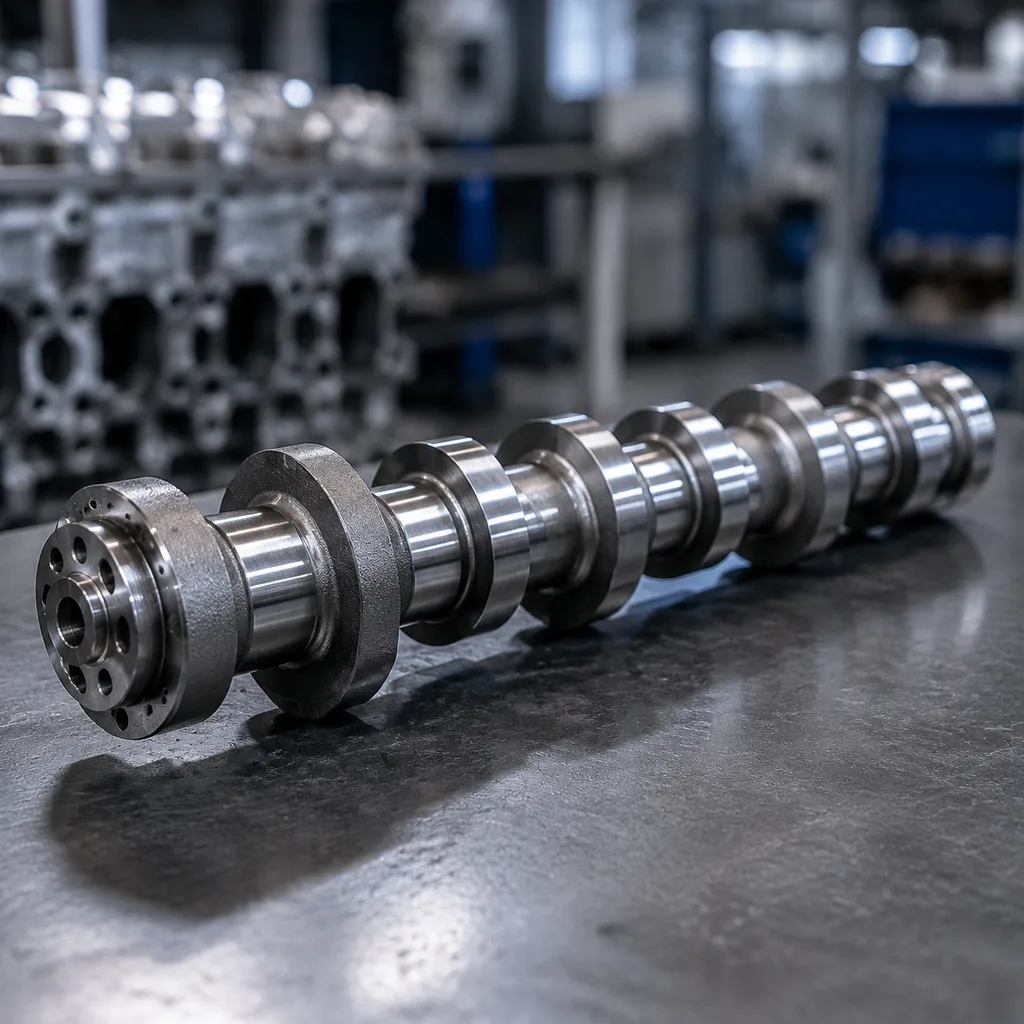
Sourcing a camshaft for Jeep Grand Cherokee aftermarket replacement is less about the model name and more about the exact engine, timing hardware, and shaft design. The Grand Cherokee range includes pushrod OHV and overhead-cam valve-train layouts, single- and dual-cam arrangements, VVT phasers, different cam/crank sensor strategies, and multiple trigger-wheel patterns. Before a part is released, buyers need the VIN decode, engine code, model year, market specification, OE or reference number where available, and a measured comparison with the removed camshaft. Driventus is an independent aftermarket manufacturer; brand names are referenced for fitment only. For procurement teams, the practical target is OE-equivalent lobe geometry, correct journal and thrust dimensions, stable hardness, controlled surface finish, verified reluctor indexing, and supply terms that support distributor, OEM, or repair-chain replenishment. A VVT-equipped Grand Cherokee may reject a camshaft that is dimensionally close but indexed incorrectly at the trigger wheel or phaser interface. Engine-family changes within the same vehicle generation can also alter journal diameters, lobe order, oil-feed design, or cam sensor location. The correct replacement is the shaft that matches the exact engine variant, bank, intake/exhaust position, timing hardware, sensor strategy, and service requirement.

What buyers should verify before ordering

Treat camshaft selection for the Grand Cherokee as an engine-level purchase. The same nameplate can cover inline, V6, and V8 engines; OHV and OHC architectures; single-cam and multi-cam layouts; fixed sprockets and cam phasers; and different camshaft position sensor trigger designs. A part may look right at the counter and still fail during assembly, set cam/crank correlation faults, or produce unstable idle after start-up.

Before ordering, verify the engine code, displacement, model year, market region, emissions family, VIN decode, and OE or interchange number where available. Confirm whether the application uses one camshaft in the block, separate intake and exhaust camshafts, a cam phaser, a fixed sprocket, or bank-specific timing hardware. On V6 and V8 engines, bank position and intake/exhaust position matter because left/right and intake/exhaust shafts can share similar journal layouts while using different lobe phasing, nose details, or reluctor indexing.

Wherever possible, inspect the removed part before release. Check journal count and diameter, bearing surface width, lobe count and sequence, thrust face position, overall length, nose profile, rear-end profile, oil-feed holes, grooves, dowel or keyway position, bolt pattern, and trigger wheel design. Useful inspection records include journal diameter readings taken with a micrometer, total indicated runout on V-blocks or centers, lobe lift compared with the OE sample, and visible surface condition on lobes, journals, and thrust faces.

The failure mode deserves attention too. Journal scoring often points to oil starvation, blocked oil galleries, or bearing damage. Lobe pitting can signal poor lubrication, follower wear, incorrect oil specification, or excessive spring load. Blue or brown heat discoloration suggests a broader engine condition that may damage the replacement part as well. For fleets, rebuilders, distributors, and repair-chain buyers, the purchasing file should include batch traceability, dimensional records, carton labeling, corrosion protection, and the target application list. That documentation helps prevent mixed stock, weak cross-references, and returns caused by fitting a visually similar shaft to the wrong engine variant.

Fitment is defined by the shaft, not the badge

Fitment data should come from the vehicle, catalog cross-reference, and old camshaft, not the badge alone. Jeep Grand Cherokee identifies the vehicle line; it does not define the camshaft. A procurement team should base the purchase decision on measurable features of the shaft and its timing interface.

Key checks include:

  • Engine code, displacement, model year, emissions family, and market specification
  • OHV, SOHC, or DOHC architecture and the number of camshafts per engine
  • Intake or exhaust position, bank position, and cylinder-head layout
  • Journal count, journal diameter, bearing width, and oil-clearance requirement against the service specification
  • Overall length, nose profile, rear-end profile, bolt pattern, and thrust surface location
  • Lobe count, lobe sequence, lobe lift, base-circle diameter, duration, and lobe separation against the OE profile
  • Oil-feed hole position, groove design, plug location, and lubrication path
  • Sensor trigger wheel tooth count, missing-tooth pattern if used, edge shape, and indexing angle relative to the dowel, keyway, or reference lobe
  • Cam phaser, sprocket, dowel, keyway, center bolt, or locating-pin interface
  • Material grade, heat-treatment method, effective case or chilled depth where applicable, and surface-hardness range
  • Surface finish on journals, lobes, thrust faces, and phaser contact surfaces

If any of these points differ, the part may install physically without controlling valve timing correctly. A small indexing error at the trigger wheel can cause P0016/P0017-style cam/crank correlation faults, hard starting, poor idle, reduced power, or emissions-related trouble codes. A mismatch at the phaser or sprocket interface can create timing drift even when shaft length and journal diameters appear acceptable.

For B2B sourcing, the strongest application claim is tied to a drawing, OE sample comparison, validated catalog cross-reference, or first-article inspection report. When several Grand Cherokee applications are stocked, labels and carton markings should separate engine code, bank, and intake/exhaust position clearly. Warehouse teams should not have to identify parts by eye when the commercial risk is a no-start, comeback, or warranty return.

Materials and validation buyers should ask for

Replacement cams for a passenger SUV need controlled metallurgy, repeatable machining, and validation tied to the exact application. Chilled cast iron is common for many OE-style camshafts because the casting process creates a hard, wear-resistant lobe surface for standard follower loads. Austempered ductile iron, induction-hardened steel, billet steel, or forged steel may be specified where the OE design, contact stress, valvetrain load, or customer programme calls for a different strength and hardening route.

Buyers should request the material grade, heat-treatment method, surface-hardness range, effective case or chilled depth where applicable, straightness, runout, and surface-roughness data. Typical inspection points include journal diameter, journal roundness, lobe height, base-circle diameter, thrust-face width, end-play control surfaces, dowel or keyway position, oil-hole location, and profile verification on the lobe nose, opening flank, closing flank, and ramp. For VVT applications, trigger wheel indexing and phaser-interface dimensions should be treated as critical characteristics because they directly affect timing control and ECU plausibility checks.

Validation should match the intended service use. For OE-style replacement, the buyer typically needs confirmation that the shaft matches the original profile and withstands normal lubrication, follower contact, and valve-spring loading. Depending on the programme, that may include first-article dimensional inspection, Rockwell or equivalent hardness testing, metallurgical review, surface roughness checks, magnetic particle or crack inspection, cam profile measurement, sample installation review, and endurance or bench testing. Packaging validation matters as well: a nicked journal, bruised lobe edge, or contaminated oil hole can turn a good production part into a return.

Our documentation aligns with IATF 16949:2016 and ISO 9001:2015 controlled processes. Where chemical compliance is requested, REACH (EC) No 1907/2006 is relevant. Procurement teams should confirm which reports are available for the exact part number, which dimensions are controlled as critical characteristics, and whether production batches are traceable back to heat lot, machining batch, inspection record, and packing date.

Replacement options compared

Different replacement routes carry different sourcing risks. The right choice depends on whether the buyer needs stock drivability, performance changes, urgent repair coverage, or a controlled aftermarket programme.

</tr></thead><tbody> </tbody></table>For normal fleet, distributor, or workshop supply, OE-equivalent aftermarket parts are usually the most stable option because the buyer can verify geometry, material, hardness, surface finish, packaging, and traceability before release. The key technical controls go beyond overall dimensions. Cam profile, journal condition, thrust location, oiling features, reluctor indexing, and phaser or sprocket interface all need to be right.

Performance or reprofiled parts may suit specialist channels, but they introduce calibration, emissions, idle-quality, vacuum, valve-to-piston clearance, and warranty questions that usually sit outside standard replacement programmes. Used parts can solve a short-term availability problem, but they are difficult to control at scale. A camshaft may look serviceable while having worn lobes, poor surface finish, bent journals, damaged oil passages, or evidence of a previous lubrication failure. For B2B procurement, the higher return risk often outweighs the apparent purchase-price saving.

Sourcing, documentation, and supply terms

Program buyers should request a sample, inspection report, application list, and packaging specification before releasing a PO. The sample review should confirm removed-part comparison, critical dimensions, lobe profile, trigger indexing, phaser or sprocket interface, surface finish, marking, and carton protection. If the part will be stocked across multiple warehouses or sold under a private label, the packaging file should define label format, barcode data, country-of-origin marking, corrosion inhibitor, end caps or sleeves, bag specification, carton strength, pallet pattern, and handling requirements.

For broader sourcing, start with our catalog or the wider engine components range. If you need drawing-based adjustments, custom manufacturing can align the shaft to a target profile, marking, inspection plan, or packing format. The published quality system page covers traceability, inspection, and certification context.

Typical commercial data includes MOQ, lead time, sample timing, production capacity, inspection level, carton configuration, pallet quantity, payment terms, and country-of-origin paperwork. These details matter for distributors and import managers in the EU, UK, US, Canada, Australia, and Brazil because customs documents, labeling rules, warehouse handling, and return procedures can affect landed cost as much as the unit price.

A practical RFQ for a camshaft for Jeep Grand Cherokee aftermarket replacement should include the vehicle application, engine code, model year range, market region, OE or reference number where available, clear photos of the removed part, close-ups of the trigger wheel and nose interface, measured journal diameters, target annual volume, packaging preference, and compliance requirements. With that information, the supplier can confirm whether an existing OE-equivalent aftermarket camshaft is suitable or whether the programme needs sample-based development before bulk supply.

Frequently asked questions

No. The engine code, timing hardware, cam sensor trigger index, bank and intake/exhaust position, and removed-part measurements are required. Model year alone is not a reliable selector because several engines can share the same badge while using different camshaft geometry.

Ask for dimensional inspection, hardness data, material declaration, cam profile checks, trigger indexing verification, and batch traceability. For regulated buyers, confirm whether the part is produced under IATF 16949:2016 and ISO 9001:2015 controlled processes.

Yes, if it matches the OE geometry, material requirements, surface finish, timing interface, and validation data. The key is dimensional and functional equivalence with repeatable inspection, not branding. Brand names can be used for fitment only, not endorsement.

Send your engine code, model year, OE or reference number, and sample photos if available, and we will confirm fitment, packaging, and supply terms through [request a quote](/contact.html).

Request a Quote
Option Best use Procurement risk Buyer note
OE-equivalent aftermarketDirect replacement for stock service workLow if dimensions, material, surface finish, and trigger indexing are validatedUse when engine code, bank position, intake/exhaust position, oil-feed layout, and trigger pattern match
Reprofiled or performance camPowerband, idle character, or racing-use changesMedium to highNot suitable when the buyer needs stock idle quality, emissions behavior, OE calibration compatibility, or standard warranty handling
Used OEM partEmergency repair or one-off salvage repairHighWear, unknown oil history, hidden cracks, and journal or lobe damage increase return risk
Remanufactured camshaftCost-sensitive repair where a qualified process is availableMediumRequires proof of grinding limits, base-circle change, hardness retention, straightness, and final profile inspection
Custom-manufactured camshaftDrawing-based sourcing, private label, or obsolete coverageDepends on validation scopeBest managed with samples, drawings, critical-characteristic lists, PPAP-style evidence where required, and agreed packing standards