Camshaft for Honda Fit Replacement: OE Match Guide
A camshaft for Honda Fit replacement has to do more than fit the cylinder head. It must match the engine family, lobe profile, journal diameters, timing drive interface, and sensor trigger features used in the target application. For procurement teams, the real test is dimensional equivalence backed by measurable data, not a visual match from a catalogue photo. Driventus is an independent aftermarket manufacturer; brand names are referenced for fitment only. Buyers should confirm engine code, valve-train layout, and whether the part is intended for a single overhead cam or dual overhead cam configuration before approval. The wrong base circle, phase angle, or oil-feed geometry can create noise, unstable idle, misfire codes, or premature wear after installation. This guide explains the checks that matter for replacement sourcing, including inspection records, material control, and the documentation to request before release.
What the replacement part must match
For this application, fitment is not only about length and bearing count. The camshaft must align with the engine's valve timing strategy, sprocket or gear interface, and any integrated trigger wheel used by the ECU. If the engine uses VTC, VTEC, or another variable valve system, the replacement has to preserve the correct phasing window and actuation profile.
Before ordering, confirm these points against the removed sample and the vehicle records:
- Engine code and displacement
- Intake, exhaust, or combined cam position
- Number of bearings and journal spacing
- Sprocket bore, bolt pattern, and keyway or dowel location
- Trigger pattern, tone ring, and sensor clearance
- Oil-feed holes, thrust surfaces, and end-play control
A supplier should be able to map those features back to a drawing or inspection report, not just a part name.
Dimensional and material checks that matter
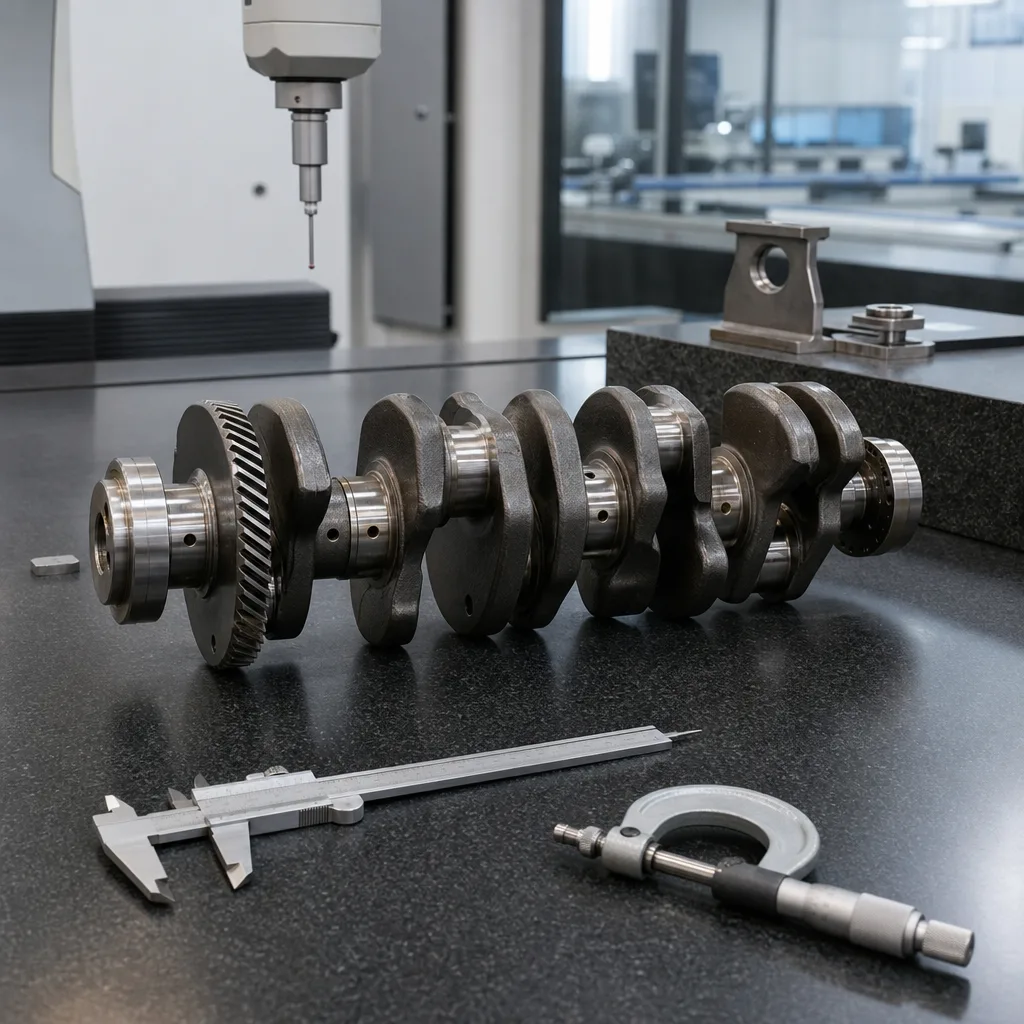
A workable replacement needs repeatable dimensions on every critical feature. The most useful documents are a first article report, a measured sample set, and a material declaration tied to the production batch. Buyers should ask for actual values, not general claims of compatibility.
| Check | What to request | Why it matters |
|---|---|---|
| Journal diameters | Micrometer or CMM data for every bearing seat | Protects oil clearance and bearing life |
| Lobe lift and base circle | Profile measurement for each lobe | Preserves valve timing and lift |
| Runout and straightness | Shaft inspection record | Reduces vibration and uneven wear |
| Surface hardness | Heat-treatment report and hardness test | Supports wear resistance |
| Surface finish | Roughness data on journals and lobes | Affects friction and oil film stability |
| Trigger geometry | Dimensional check on sensor features | Prevents ECU signal errors |