Camshaft for Genesis G80 Aftermarket Replacement: Buyer Guide
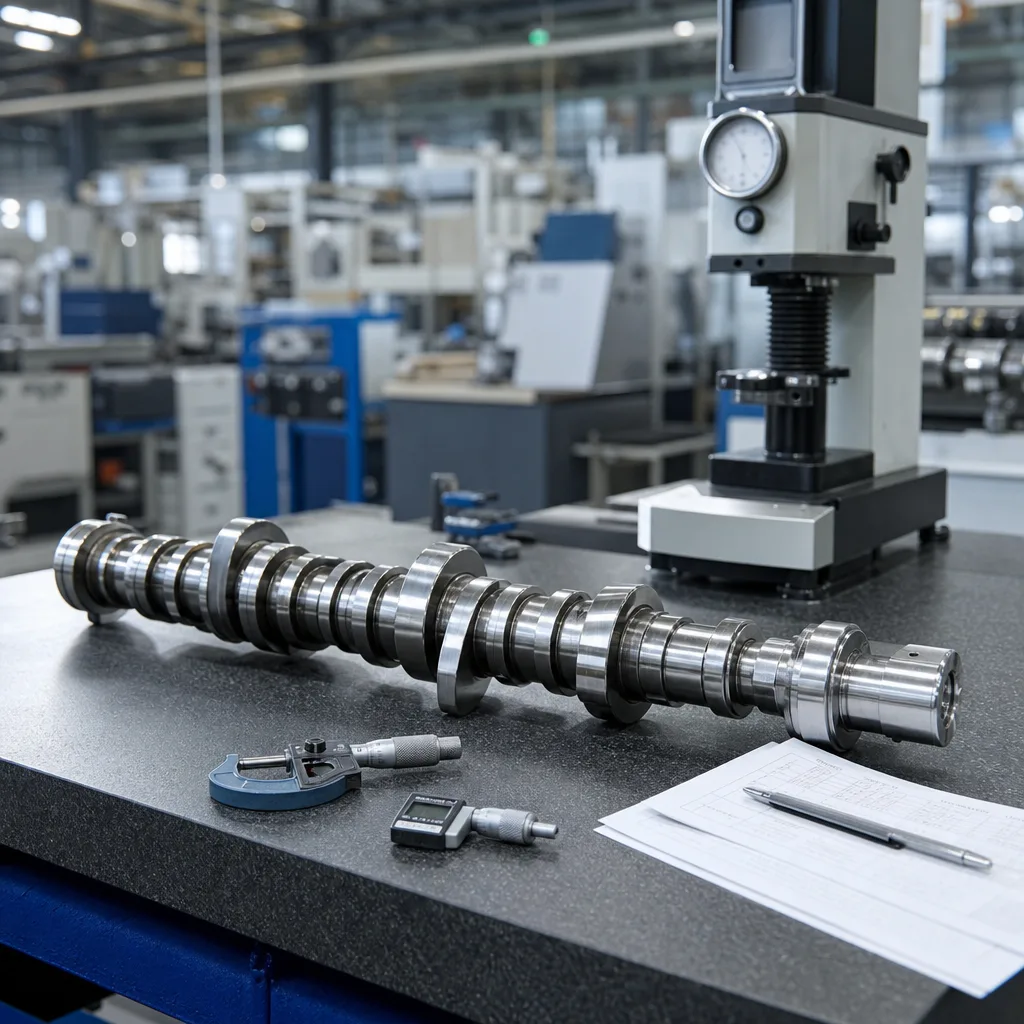
A camshaft for Genesis G80 aftermarket replacement must match the engine application, lobe profile, journal geometry, oiling features, and sensor trigger layout used in the original design. For procurement teams, the key question is not whether the part fits physically, but whether it reproduces the OE functional envelope across lift, duration, base circle, phasing compatibility, and surface finish. That is what controls valvetrain stability, emissions behaviour, and long-term wear. Driventus supplies camshafts as an independent aftermarket manufacturer; brand names are referenced for fitment only. Each programme is built under IATF 16949:2016 and ISO 9001:2015 controls, with material and dimensional checks tied to customer drawing data and application validation. This article explains what to verify before placing an order, how replacement camshafts are evaluated, and which documents buyers should request before approval.
What an aftermarket replacement camshaft must match
A replacement camshaft is not a generic rotating shaft. It must reproduce the engine’s valve-event timing and geometry within the allowed tolerance window for that application.
Key match points
Journal diameter and roundness
Overall length and thrust location
Lobe lift and lobe separation
Base circle diameter
Cam phaser or reluctor features, where used
Oil groove and drilling pattern
Surface hardness and finish
For a Genesis G80 application, buyers should confirm the engine code first, then cross-check OE drawings or an approved sample. If the OE part number is available, record it in the RFQ as a reference, for example OE 06A107065 style notation only when the source catalogue already uses that convention. Do not rely on vehicle model name alone.
Materials, heat treatment, and wear control
Camshaft life depends on material choice and the consistency of heat treatment. Common aftermarket constructions include chilled cast iron, alloy cast iron, and forged steel depending on load, valvetrain design, and target cost.
Parameter
Typical requirement
Why it matters
Material traceability
Heat / batch record
Supports incoming inspection and recall control
Surface hardness
Application-specific range
Reduces lobe and follower wear
Journal finish
Low roughness, controlled geometry
Protects oil film stability
Runout
Tight control at centres
Prevents timing variation and NVH
Lobe profile
OE-equivalent or validated
Maintains engine breathing and emissions
</tr></thead><tbody> </tbody></table>Driventus validates production under documented process control, with hardness, dimensional, and visual inspection checkpoints aligned to the approved specification. For buyers, the important request is not only the part itself, but the inspection record attached to the shipment.
Replacement validation before purchase order release
A correct replacement should be validated on paper before it is validated on the engine.
Recommended document set
1. Application cross-reference by engine code and OE reference 2. Dimensional report for critical features 3. Material and heat-treatment certificate 4. Surface hardness or case-depth report where applicable 5. Sample approval record or first-article inspection report 6. Packaging and traceability label format
If your programme uses PPAP-style controls, ask for dimensional evidence against the agreed drawing and check whether the supplier can support revised-control plans. Driventus works to IATF 16949:2016 and ISO 9001:2015 procedures, which supports repeatability across production lots. For export markets, buyers may also need REACH (EC) No 1907/2006 declarations where material compliance is part of the approval file.
How to compare suppliers on a like-for-like basis
Procurement teams should compare suppliers on measurable attributes, not on packaging or catalogue language.
Comparison item
Minimum buyer check
OE cross-reference
Verified by engine code and catalogue data
Dimensional control
Critical dimensions listed with tolerances
Metallurgy
Material grade and heat treatment stated
Process control
Documented inspection plan and traceability
Testing
Validation data for wear, hardness, and geometry
Logistics
Lead time, carton count, and export labelling
</tr></thead><tbody> </tbody></table>For a camshaft for Genesis G80 aftermarket replacement, ask whether the supplier has verified lobe profile stability after heat treatment and final grinding. Also confirm whether the part has been checked for phaser compatibility, sensor target geometry, and oiling path alignment if the engine variant uses those features.
Testing and compliance buyers should ask for
Validation should be tied to the failure mode that matters most: timing drift, lobe wear, oil starvation, or installation mismatch.
Common checks
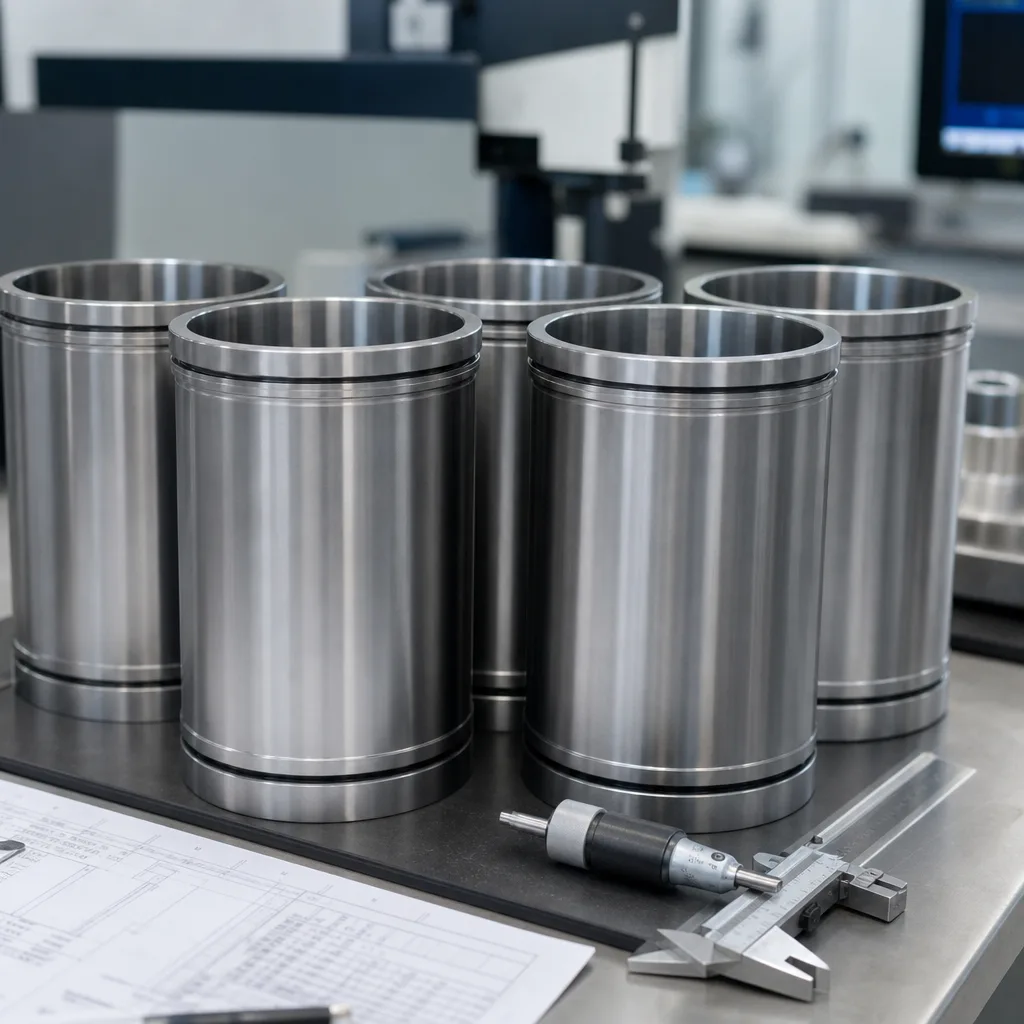
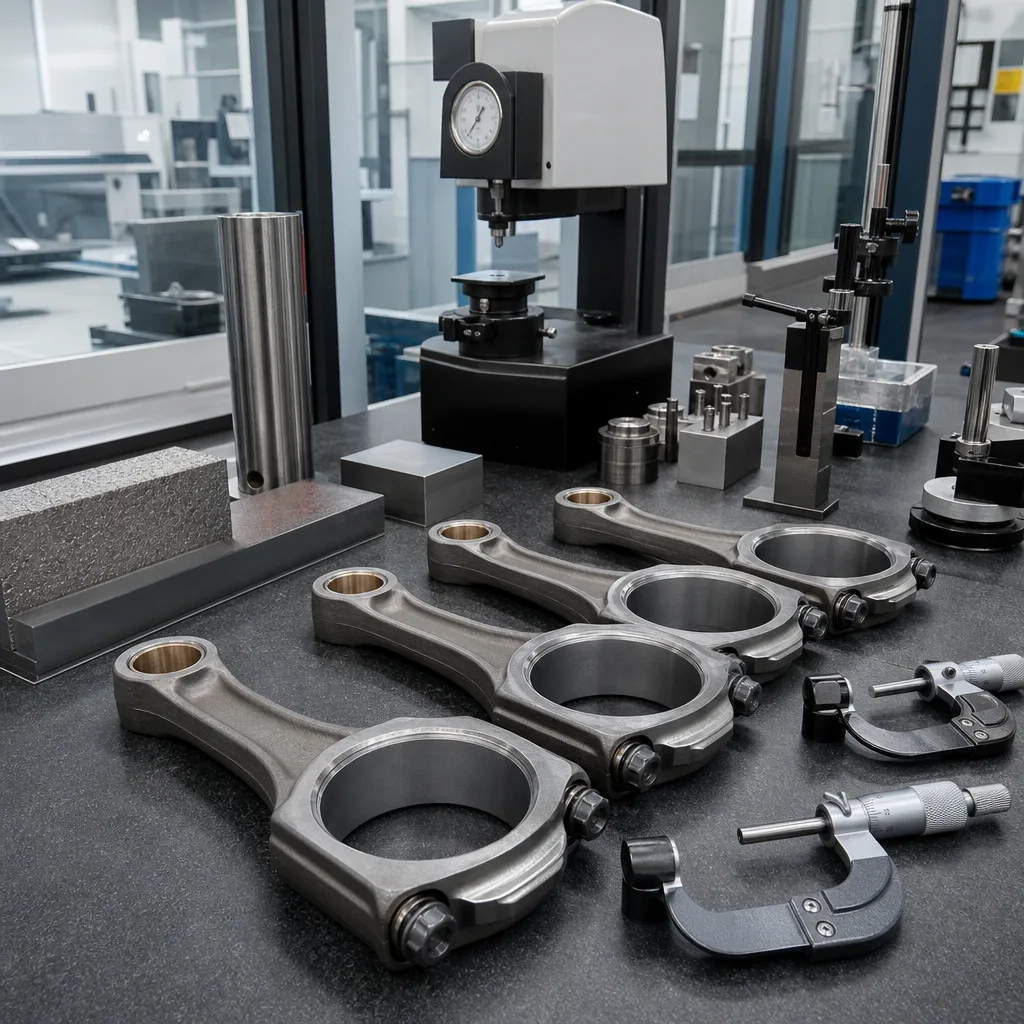
Dimensional inspection on CMM or dedicated gauges
Rockwell or equivalent hardness verification
Surface roughness measurement on journals and lobes
Runout and concentricity checks
Visual inspection for burrs, scoring, or casting defects
Packaging integrity and corrosion protection review
Where the programme requires environmental or durability evidence, buyers may request test references such as SAE J2527 for corrosion-related exposure methods or application-specific endurance testing defined in the purchase specification. Driventus can also support our catalog, quality system, custom manufacturing, and request a quote workflows for buyers who need a controlled sourcing file.
Why buyers choose an engineered aftermarket route
An engineered aftermarket replacement is usually selected when the buyer needs stable supply, controlled cost, and a replacement part that matches the OE geometry without waiting for dealer channels. For multi-location repair chains and distributors, the important benefits are inventory consistency and reduced sourcing risk.
Driventus is an independent aftermarket manufacturer; brand names are referenced for fitment only. That disclosure matters because the commercial decision should be based on measurable compatibility, not implied endorsement. For programmes that require wider engine coverage, our engine-component portfolio can be coordinated through our catalog and custom manufacturing, with export-ready packing and lot traceability.
Frequently asked questions
Start with the engine code, then verify OE reference, lobe profile, overall length, journal dimensions, and any phaser or sensor features. Model name alone is not enough.
Ask for a dimensional report, material certificate, heat-treatment record, hardness data, and traceability details. For controlled buys, request sample approval or first-article evidence.
Not necessarily. A well-controlled aftermarket part can match OE geometry and performance if the supplier maintains dimensional control, validated materials, and stable process inspection under IATF 16949:2016 and ISO 9001:2015.
If you are sourcing a camshaft for Genesis G80 aftermarket replacement, send the engine code and OE reference for a technical review. Use our team to check fitment, validation, and export terms at /contact.html