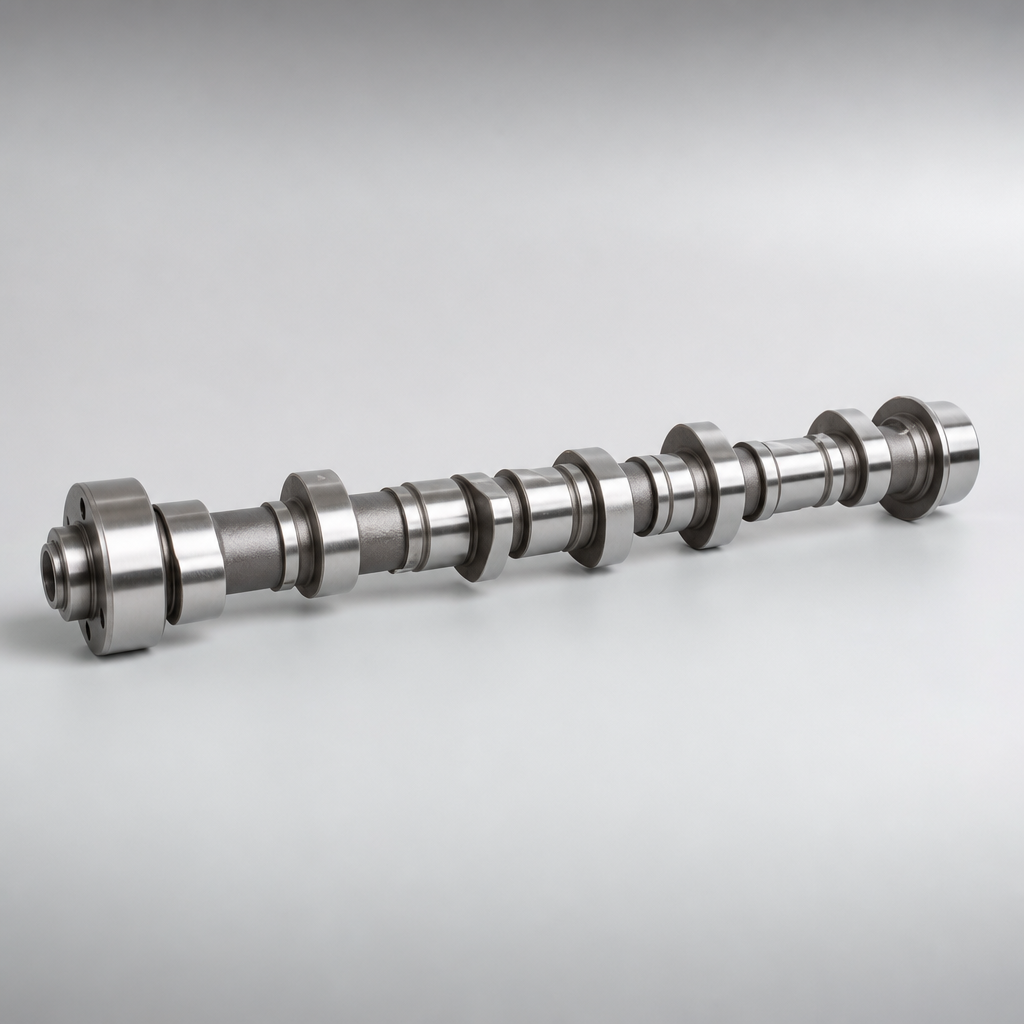
Buying a camshaft for Cadillac Escalade replacement is rarely a simple catalog match. For distributors, rebuilders, and service networks, the real question is whether the part will install cleanly, run to spec, and hold up across repeat orders. Small errors in journal diameter, lobe lift, phasing, hardness, or runout can change valve timing, disrupt lubrication, and turn one low-cost line item into a costly warranty case.
That is why experienced buyers work from measurable checks, not fitment claims alone. Journal tolerances may need to stay around +/-0.010 to +/-0.020 mm, finished runout is often expected at <=0.03 to 0.05 mm depending on design, and hardened lobe surfaces commonly fall in the 55-62 HRC range. Commercial terms matter too: prototype MOQ may be 2-10 pieces, pilot runs often sit at 20-50, and routine export production can start around 100-300 pieces per SKU. This article breaks the topic into decision points, failure risks, validation steps, and supplier comparison criteria so buyers can assess a camshaft for Cadillac Escalade replacement without relying on generic aftermarket language. Driventus is an independent aftermarket manufacturer; brand names are referenced for fitment only.
Start with the fitment decision, not the quote
The first decision is not price. It is application accuracy. When sourcing a camshaft for Cadillac Escalade replacement, buyers should lock down engine code, model year range, valvetrain configuration, and any variable valve timing requirement before they compare offers.
That matters because similar-looking shafts can still differ in lobe phasing, trigger features, oiling details, journal widths, or end geometry. A quote based on the wrong engine family is unusable even if the metallurgy and finish are acceptable. For Escalade-related demand, 5.3L, 6.0L, 6.2L, and generation-specific LS or EcoTec3/L83-L86 applications should be separated early.
A practical buyer checklist includes:
Engine displacement and generation compatibility
Intake or exhaust position where applicable
Journal diameters and bearing surface finish
Overall shaft length and end-feature geometry
Lobe lift, duration, and phasing versus target spec
Compatibility with timing components and actuator systems
Packaging, rust prevention, and traceability labels for imported stock
In the RFQ stage, ask for controlled dimensions rather than a broad fitment statement. Useful checkpoints include journal diameters by position, thrust face dimensions, lobe centerline data, dowel or bolt-end geometry, and trigger-feature dimensions where relevant. The supplier should also state how those values are measured, for example by outside micrometer, V-block and dial indicator, or CNC cam measuring equipment.
Commercial assumptions belong in the same conversation:
Sample MOQ: 2-10 pcs for fitment and metallurgical review
Pilot MOQ: 20-50 pcs for first market release or distributor trial
Mass-order MOQ: 100-300 pcs per SKU, sometimes higher for private-label packaging
Lead time for stocked standard items: often 15-30 days
Lead time for fresh production: commonly 35-60 days after drawing confirmation and deposit
Lead time with new tooling or masters: commonly 45-75 days depending on grinding and validation scope
If a listing includes an OE-style cross-reference, treat it as a filter, not proof. A reference such as OE 06A107065 or OE 11251... still needs to be checked against drawings, inspection records, and approved samples.
Spec deep-dive: what actually makes a camshaft OE-equivalent
OE-equivalence is a combination of geometry, material control, and process stability. A shaft can look correct in a photo and still fail in service because hardness drifted, lobe grinding moved off target, or straightness changed after heat treatment.
Typical checkpoints for OE-equivalent evaluation
Parameter
What to verify
Why it matters
Journal diameter
Measured against drawing tolerance, often within about +/-0.010 to +/-0.020 mm on critical journals
Controls oil clearance and bearing stability
Total indicated runout
Verified on finished shaft, commonly targeted at <=0.03 to 0.05 mm depending on design length
Limits vibration and uneven contact
Lobe profile
Compared to approved master data, including lift curve, base circle, and phasing
Affects valve event accuracy
Surface hardness
Checked after heat treatment; hardened lobes often fall around 55-62 HRC
Supports wear life at lobe/contact interface
Core hardness
Confirmed within target range, often lower than lobe hardness to preserve toughness
Prevents brittle fracture or distortion
Surface roughness
Measured on journals and lobes; journal Ra may be around 0.2-0.4 um where specified
Influences lubrication film formation
End-play related geometry
Checked on thrust faces/features, often within tight axial tolerance bands
Helps maintain timing stability
</tr></thead><tbody> </tbody></table>Depending on design intent, production may use chilled cast iron or forged steel followed by precision machining and controlled hardening. The correct route depends on follower design, lubrication conditions, operating load, and OE architecture.
For buyers, the useful questions are direct:
Is the shaft cast or forged?
How are lobes hardened?
Are critical journals and lobes finish-ground after heat treatment?
Where is distortion checked and corrected?
A capable supplier should be able to describe the full route: blank inspection, rough machining, semi-finish machining, heat treatment, straightness correction where needed, finish grinding, runout inspection, hardness verification, cleaning, rust prevention, and packing. If that sequence is vague, repeatability is usually vague too.
Documentation matters as much as the nominal spec. Buyers should expect disciplined controls aligned with IATF 16949:2016 and ISO 9001:2015, especially for traceability, corrective action, and controlled records. Once monthly demand moves beyond small trial volumes, it is reasonable to ask for Cp/Cpk evidence on special characteristics such as journal diameter, lobe height, and runout.
Validation sequence before you approve recurring supply
Bench checks are necessary, but they are not enough. A reliable camshaft for Cadillac Escalade replacement should pass through a short, structured approval path before the programme moves into recurring purchase orders.
Use this sequence:
1. Review incoming material and process evidence Request chemistry certificates where applicable, metallographic records, and hardness data.
2. Run first-article inspection Measure critical dimensions, lobe coordinates, straightness, concentricity, and total indicated runout.
3. Check surface integrity Confirm roughness, inspect for visible defects, and include crack detection where the specification calls for it.
4. Perform assembly fit validation Verify compatibility with timing sets, bearings, sensors, and actuator-related parts.
5. Carry out durability review Inspect contact pattern, surface distress, and debris generation after controlled running conditions.
6. Test lot-to-lot consistency Pull samples from more than one batch. A single good pilot lot is not enough.
For sample planning, many buyers use 3-5 pieces for prototype review and 10-20 for pilot validation, then retain golden samples after approval. Reports should show actual values by journal and lobe position rather than a simple pass/fail sheet. For recurring B2B supply, first-article documentation should include runout, hardness, straightness, and key axial dimensions.
Durability work should also stay concrete. Even if a full OEM-style endurance program is out of scope, a shorter engine or bench-running cycle with teardown photos, oil analysis, and wear comparison against an approved sample still gives the buyer usable evidence during a claim review.
Commercial validation should happen in parallel. Confirm:
Unit price at sample, pilot, and volume tiers
Whether tooling, masters, or gauges are amortized into piece price or billed separately
Standard inspection frequency by lot size
Packaging count per inner box and export carton
The exact lead-time trigger point, such as deposit date, drawing approval date, or packaging approval date
For imported aftermarket engine parts, buyers may also request substance compliance support relevant to REACH (EC) No 1907/2006 when coatings, preservatives, or packaging materials are involved in EU-bound shipments.
Where a distributor needs non-standard oiling features, modified packaging, or private-label traceability, the requirement should be frozen before tooling approval. Projects like that are generally handled through custom manufacturing with formal drawing review and sample sign-off.
Where replacement programmes usually fail
Most avoidable returns follow a familiar pattern. The part was matched too broadly, validated too lightly, or produced with weak process control.
Frequent risk points
1. Incorrect lobe geometry Small deviations in lift or phasing can affect idle quality, emissions behavior, and power delivery. A part may install physically and still trigger field complaints.
2. Excessive shaft runout Runout can create unstable contact patterns, noise, and accelerated wear. When a supplier struggles here, other precision features often drift as volume rises.
3. Inconsistent hardness Over-hardened lobes may crack. Under-hardened lobes may wear early. Mixed results inside one batch usually point to unstable heat-treatment control.
4. Poor journal finish Surface defects disrupt oil film formation and can damage associated bearings. Descriptions such as polished or finished are not enough; buyers should request actual roughness values where required.
5. Weak lot traceability Without batch coding, containment becomes slow and expensive. At minimum, each shaft and carton should link to production date, line or machine, and inspection record.
6. Incomplete fitment validation Intake and exhaust variants, VVT-related geometry, and model-year changes are common sources of avoidable mismatch.
The financial impact is usually larger than the component value. A failed camshaft can trigger labor reimbursement, workshop downtime, return freight, contamination risk, and lost customer confidence. In practice, one warranty event may absorb the margin from several successful sales.
That is why retained samples, batch records, and PPAP-style documentation can make commercial sense even in the independent aftermarket. For recurring orders, buyers should also define claim rules in advance: notification window, required evidence, failed-part return expectations, and whether credit is issued against future orders or paid directly.
How to compare suppliers when two offers look similar
When two camshaft offers appear close on paper, the better supplier is usually the one with the clearer process and the cleaner quotation.
Start with evidence. Ask:
Is production in-house or subcontracted?
Which dimensions are treated as special characteristics?
What is the control plan for heat treatment and post-machining inspection?
How are runout, lobe profile, and hardness recorded by batch?
What corrosion protection method is used for ocean freight?
What is the standard packaging count and pallet configuration?
Can the supplier support sample approval before container-scale orders?
Then compare quoting discipline. A serious quotation for camshaft for Cadillac Escalade replacement should separate unit price by volume tier, tooling or sample charges, packaging cost where non-standard, lead time, Incoterm, payment term, and warranty basis. A single flat number without MOQ and lead-time assumptions is difficult to benchmark and often changes later.
A practical comparison framework looks like this:
Lower price with no process evidence often carries higher validation and warranty risk
Higher MOQ with standard packaging and no new tooling usually gives the lowest unit cost
Low MOQ or mixed-SKU ordering raises unit cost because setup and inspection are spread across fewer pieces
Private-label packaging may increase MOQ and add 7-15 days to launch timing
Custom features or drawing changes can add sampling cost and delay approval by several weeks
Air shipment for urgent replenishment may protect service levels but can erase margin on lower-value SKUs
Before approval, ask for records from recent lots: inspection reports, hardness records, batch photos, packaging photos, and sample labels. Dated records are a stronger signal than a polished brochure.
Driventus manufactures engine and powertrain components for export markets and supports B2B programmes that require documented controls, stable lead-time planning, and fitment-focused technical review. Buyers comparing alternatives can start with our catalog, then move into a technical discussion through request a quote.
Driventus is an independent aftermarket manufacturer; brand names are referenced for fitment only.
Frequently asked questions
Ask for dimensional inspection reports, hardness data, material or process certificates where applicable, batch traceability details, and packaging specifications. For recurring programmes, sample approval records and control-plan summaries are also useful. For higher-value or larger-volume orders, request actual measured values for runout, journal diameters, lobe profile checkpoints, heat-treatment records, and a quotation that defines MOQ, lead time, and packaging assumptions.
No. A cross-reference helps narrow the application, but fitment should still be verified against engine code, production range, lobe profile, journal dimensions, and any timing-system features relevant to the target installation. For camshaft for Cadillac Escalade replacement sourcing, buyers should also confirm whether the part is intake or exhaust where applicable and whether any VVT-related geometry or trigger features differ by engine generation.
Excessive runout can affect rotation stability, contact pattern, and wear behaviour. It may also contribute to noise and timing inconsistency, especially in demanding V8 applications with tight lubrication and valvetrain control requirements. In sourcing terms, runout is also a useful process-capability indicator: if a supplier cannot hold the agreed runout limit consistently, other critical dimensions are more likely to drift as volume increases.
If you are qualifying a camshaft for Cadillac Escalade replacement supply programme, we can review drawings, fitment targets, inspection requirements, MOQ options, and lead-time assumptions with your team. Send your RFQ or application list here: /contact.html