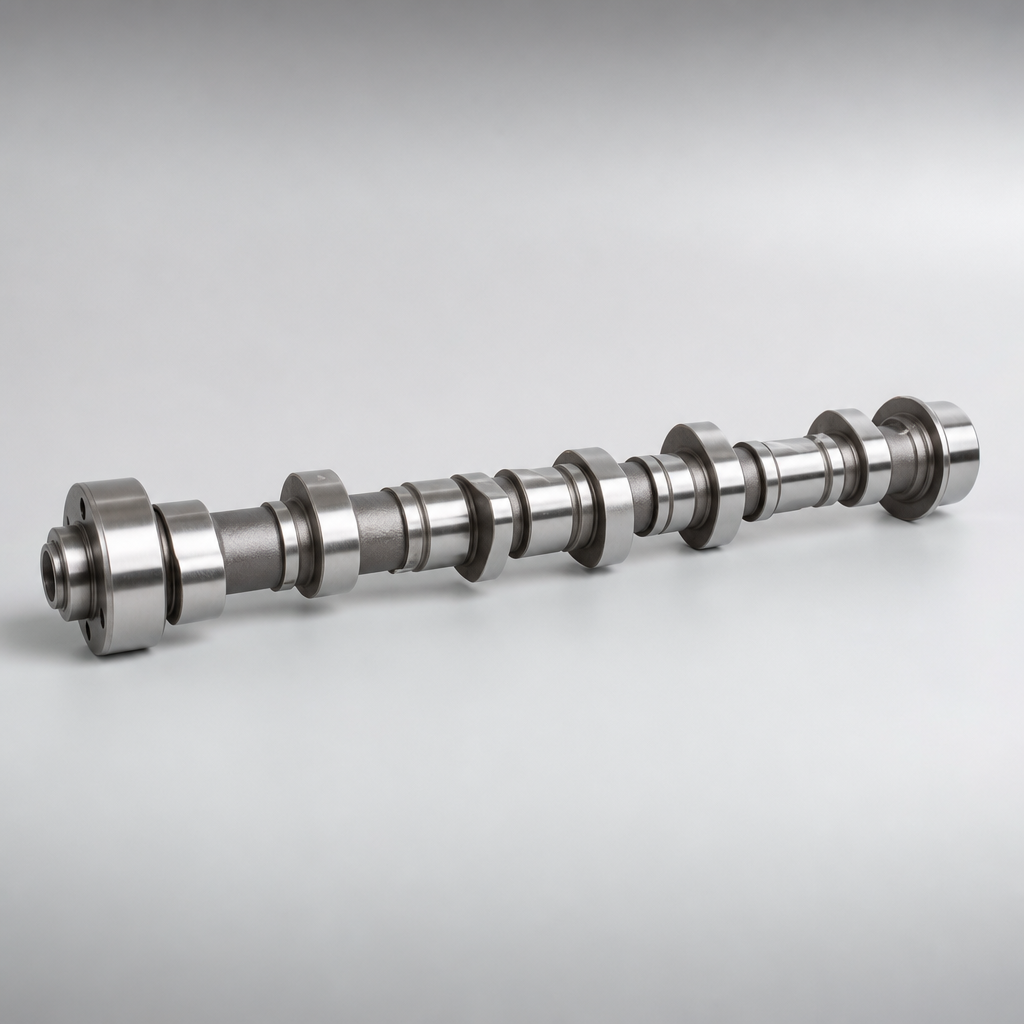
When buyers ask for a **camshaft for Acura MDX OE equivalent** supply, the real question is not whether the part can be installed. It is whether the shaft will hold geometry, hardness, and wear performance across repeated batches and real service conditions. That distinction matters. A camshaft that looks correct on arrival but drifts on runout, lobe profile, or surface condition can turn a low purchase price into returns, warranty claims, and damaged customer confidence.
For distributors, repair chains, engine rebuilders, and private-label importers, the job is to separate true interchangeability from catalog-level similarity. In this category, "OE equivalent" should cover journal geometry, lobe accuracy, runout control, surface hardness, and packaging that prevents corrosion or edge damage during export transit. It should also be backed by documented process control under systems such as IATF 16949:2016 and ISO 9001:2015.
Commercial terms still matter, but only after the technical floor is clear. A buyer releasing 50-100 pieces may accept standard packaging and lot-based inspection. A quarterly program at 300-1,000 pieces usually needs fixed traceability, locked labels, stable lead times, and stronger packaging control. This guide reframes the sourcing process around how buyers actually make decisions: what to verify first, where failures usually start, how to compare offers fairly, and when a sample result is strong enough to justify production release. Driventus is an independent aftermarket manufacturer; brand names are referenced for fitment purposes only.
Start with the decision standard, not the catalog claim
The phrase "OE equivalent" only has value if it maps to measurable checkpoints. For camshafts, buyers should judge that claim against the part's geometry, material behavior, and repeatability, not against listing language alone.
At a minimum, the supplier should be able to confirm these points:
Base material conformity: cast iron or forged steel grade suited to application load, contact stress, and wear pattern
Lobe profile accuracy: intake and exhaust event geometry controlled to the required opening and closing characteristics, usually checked against a master profile or CNC measuring system
Journal size and roundness: oil film stability depends on journal diameter, cylindricity, and surface finish; buyers often expect roundness in the low-micron range
Runout control: excess runout can affect timing stability, bearing wear, and valvetrain noise; a common aftermarket acceptance window is about 0.02-0.05 mm depending on design and measuring points
Heat treatment consistency: lobe and journal hardness should stay within a defined lot-to-lot range on the drawing or control plan
Assembly compatibility: correct fit with sprockets, phasers, seals, caps, and related timing components where applicable
That gives procurement a practical screen: can the supplier show drawing control, inspection records, and validation data, or only a fitment list? If dimensional checkpoints, hardness bands, or profile verification are unavailable, the part is better treated as a generic replacement.
A useful internal definition is simple: the part should install without modification, rotate within specified bearing clearances, maintain timing event accuracy through service life, and arrive free from corrosion or transit damage. That is the threshold buyers should use when reviewing a camshaft for Acura MDX OE equivalent sourcing program.
Where camshaft programs usually fail during supplier approval
A camshaft is a precision wear component. Most sourcing problems do not start with a dramatic defect; they start with one uncontrolled variable that is easy to miss during a sample review.
The table below shows the checks that usually expose risk early.
Check point
Why it matters
Typical procurement evidence
Overall length and key datum dimensions
Confirms direct interchangeability
Drawing balloon report, CMM report
Journal diameter and roundness
Affects oil clearance and bearing life
Micrometer log, roundness inspection
Lobe lift and phasing
Affects engine breathing and timing events
Cam profile test report
Shaft runout
Reduces vibration and abnormal wear
V-block and dial gauge report
Surface hardness
Determines wear resistance at lobe contact zone
Hardness test record
Surface roughness
Supports lubrication performance
Ra measurement record
Metallographic structure
Verifies material and heat-treatment quality
Metallography report
Corrosion protection and packaging
Prevents transit damage and shelf corrosion
Packaging specification, salt-spray data if used
</tr></thead><tbody> </tbody></table>Common failure modes during supplier approval include:
the sample fits, but the supplier cannot show how profile accuracy is controlled in serial production
runout is checked on the first article, then only loosely monitored on later batches
hardness is declared as a target, but batch frequency is undefined
packaging is acceptable for local delivery and inadequate for sea freight or long warehouse storage
traceability exists on paper but does not link returned stock back to heat, batch, or inspection record
This is why batch consistency matters more than first-sample appearance in many export programs. A supplier supporting multiple warehouses or long replenishment cycles should define control plans, traceability by heat or batch code, and final inspection release criteria inside its quality system.
On technical review calls, ask for numbers. General assurances are easy; controlled data is harder to fake. Useful questions include:
What is the specified journal diameter tolerance and the actual sample result?
What runout limit is used at final inspection: 0.02 mm, 0.03 mm, or another value?
Is lobe profile checked at setup and by interval, or only by final lot audit?
What is the surface roughness target for journals and lobes, such as Ra <= 0.4-0.8 um depending on feature?
Is hardness checked on every batch, every furnace lot, or by shift?
If the camshaft includes coated or treated surfaces, buyers should also confirm chemical compliance for destination markets, including REACH (EC) No 1907/2006 where applicable.
Spec deep-dive: the material and machining details that actually affect claims
Warranty risk in this category is usually created long before packing. It starts in the process route: casting or forging, heat treatment, machining, grinding, cleaning, and final inspection.
Material and heat treatment
For passenger-vehicle applications, buyers should review whether the material and hardening method are appropriate for the contact stress at the lobe-to-follower interface. The supplier should be able to define:
material specification and incoming inspection method
heat-treatment route
hardness target and acceptance band
microstructure verification frequency
The exact hardness value depends on design. What matters commercially is control. Buyers want a declared target band, backed by recorded verification, whether the working surface is chilled-cast, induction-hardened, or controlled by another route. When that control drifts, the result often appears later as scuffing, pitting, abnormal lobe wear, or premature journal distress.
Machining and profile control
Journal finish, lobe contour, and axial positioning need stable process capability. A supplier should be able to explain how it controls datum references, grinding compensation, and profile repeatability from batch to batch.
In practical review terms, ask whether the process includes:
rough machining after casting or forging with datum control
semi-finish turning of journals and critical seats
CNC lobe grinding with master profile compensation
100% runout check after grinding
deburring and ultrasonic or pressure washing before oiling and packing
It is also worth checking how the plant manages burrs, edge condition, fixture repeatability, and residual cleaning debris. A part can pass basic dimensions and still create field issues if finish quality or cleanliness is inconsistent.
For tolerance-sensitive programs, ask whether process capability is tracked on critical features such as journal diameter and lobe height. Many buyers use Cp/Cpk expectations of 1.33 or above for stable serial production on controlled dimensions.
Validation and endurance
Validation should match the sales channel. Standard aftermarket distribution often focuses on dimensional audit, hardness verification, material review, fitment confirmation, and packaging tests for export handling. Higher-volume private-label or OE-service projects may add endurance or dyno-based validation where program specifications require it.
When evaluating a camshaft for Acura MDX OE equivalent supply, the right validation sequence is the one that reflects how the product will actually be sold and supported. A warehouse distribution program may care most about packaging integrity and traceability. An engine rebuilder may care more about profile accuracy and wear behavior across repeat lots.
A practical export validation flow often looks like this:
1. First article inspection against controlled drawing 2. Material and hardness confirmation on pilot batch 3. Trial installation or fitment check on target engine family 4. Packaging test for 5-10 day air transit or 30-45 day sea transit 5. Pre-shipment release based on agreed AQL or full critical-feature check
Driventus supports project-specific validation and custom manufacturing for customers that need tailored inspection plans, packaging, or branding requirements.
A fair comparison method for competing quotations
Most quote comparisons are distorted from the start. One supplier prices only the shaft. Another includes inspection records, protective oil, individual sleeves, and stronger packaging. On paper the cheaper offer wins. In practice it may carry more risk and more downstream cost.
Use this checklist to normalize offers for MDX replacement demand:
Confirm exact application coverage by engine code and model year range
Request dimensional inspection points, not only a fitment declaration
Verify hardness test method and sampling frequency
Ask whether runout is checked 100% or by lot sampling
Review corrosion protection for ocean freight and warehouse storage
Confirm carton quantity, inner protection, pallet pattern, and label format
Check PPAP availability if the program supports OEM or Tier supply
Review traceability method under IATF 16949:2016 and document control under ISO 9001:2015
Then compare the commercial structure line by line: unit price, tooling assumptions if any, sample policy, inspection scope, packaging detail, Incoterms, and lead time. Two quotations can look similar while representing very different control levels.
Volume changes the logic. Typical buying patterns in this category are:
Sample order: 1-5 pieces, higher unit price, often charged at evaluation cost plus freight
Trial batch: 20-50 pieces, used for market test or branch rollout, usually with standard packaging and limited private labeling
Serial aftermarket order: 100-300 pieces per release, where carton optimization, pallet loading, and more stable pricing start to matter
Private-label program: 300+ pieces per release or scheduled quarterly demand, where custom box print, barcode format, and fixed replenishment windows become feasible
Buyers should also separate piece price from landed cost. A quote that is USD 3-5 lower per unit can become more expensive after rust claims, repacking labor, or emergency air freight caused by unstable lead time. In many export transactions, a realistic lead-time structure is 30-45 days for repeat orders using standard process flow, and 45-60 days where new packaging, first-article approval, or capacity scheduling is involved.
If the buyer is managing private-label aftermarket business, packaging quality matters almost as much as machining quality. Camshafts are vulnerable to edge damage and surface corrosion when packed with poor separation or weak oil-film protection.
The better supplier is usually the one that can keep the camshaft for Acura MDX OE equivalent specification stable across production lots, shipment cycles, and claims handling, not the one with the lowest ex-works price.
What procurement should ask for before internal sign-off
Approvals move faster when the document request is structured. Without that, procurement, engineering, and QA often review the same program in three different ways and still miss a gap.
For this product family, a practical approval file should include:
Material certificate or declared material specification
Dimensional inspection report against controlled drawing
Hardness report by batch or lot
Runout and lobe profile inspection record
Process flow and control plan for serial production
Traceability format for batch identification
Packaging specification for export shipments
Declaration related to REACH (EC) No 1907/2006 where required by market
Certification status for IATF 16949:2016 and ISO 9001:2015
Depending on the program, buyers may also request sample photos, label format, nonconformance procedure, and retention policy for inspection records. Those details help later when a returned part has to be traced back to an approved lot.
For buyers consolidating several engine-component lines under one vendor, it is also useful to review whether the supplier can support related items such as gaskets, pistons, timing parts, or water pumps from the same manufacturing network. That can reduce vendor count and simplify inbound quality management.
A practical way to request the file is in three blocks:
1. Technical release file: drawing, balloon report, profile report, runout record, hardness data 2. Quality system file: certificates, control plan, traceability method, nonconformance flow 3. Commercial execution file: MOQ, standard pack quantity, lead time by order stage, warranty terms, and Incoterms
That format keeps the review focused and reduces delay between sample approval and first production order.
Sample-to-production: a staged release scenario that works
A clean sample result is only the first gate. It proves the part can be evaluated. It does not prove the supplier can repeat it.
Production release should follow a short but structured sequence. Typical criteria include:
1. Passed dimensional and hardness review 2. Confirmed fitment on the target application 3. No abnormal lobe or journal finish issues 4. Stable transit packaging for sea or air shipments 5. Agreed lead time, MOQ, and replenishment terms 6. Clear warranty handling procedure
Before moving to volume, buyers should confirm that the approved sample and the serial-production part are controlled under the same process conditions. That means the same material source, heat-treatment route, inspection method, and packaging format. Without that link, a good sample may say very little about field performance.
For distributors and repair chains, the supplier should also be able to hold stable specifications across future lots. That matters for catalog continuity, branch inventory consistency, and returns analysis.
A useful conversion test is to ask four questions that require numbers, not promises:
What is the standard MOQ for repeat production: 50, 100, or 300 pieces?
What is the lead time for repeat orders after artwork and sample approval?
What critical features are checked 100%, and which are checked by sampling?
What claim window and replacement policy apply if a dimensional or hardness issue is found in stock?
Many buyers use a staged release model:
1. Engineering sample: 1-5 pieces for dimensional and fitment review 2. Pilot order: 20-50 pieces to verify packing, labels, and arrival condition 3. First production order: MOQ level with final approved packaging and batch traceability 4. Rolling replenishment: forecast-based releases once field performance is stable
This sequence works especially well when annual demand is moderate and buyers want to avoid overcommitting stock before claim behavior is known. It also improves price negotiation, because one-off sample cost can be separated from repeat serial pricing.
Driventus manufactures engine and powertrain components for export programs and can support sample review, technical document sharing, and commercial discussion for replacement demand. Buyers evaluating a camshaft for Acura MDX OE equivalent sourcing can use request a quote when they are ready to review a live project.
Frequently asked questions
An OE-equivalent part should match critical dimensions, lobe geometry, hardness, runout, and material control, with documented inspection data. A generic replacement may fit physically but offer limited evidence on durability, wear performance, or batch consistency.
For most B2B buyers, the baseline is a supplier operating under IATF 16949:2016 or ISO 9001:2015. These certifications do not guarantee a specific part will pass your requirements, but they indicate formal control of production, traceability, corrective action, and document management.
Yes. At minimum, request dimensional inspection, hardness data, fitment confirmation, and declared runout or profile limits for the target application. For higher-risk programs, add endurance or dyno-related validation if required by your internal approval standard or customer warranty exposure.
If you are qualifying a new source for MDX camshaft replacement demand, Driventus can provide technical documents, sample support, MOQ and lead-time discussion, and production review. Contact the team here: /contact.html