Camshaft Dodge Wholesale: Procurement Guide for Buyers
Procurement teams buying camshafts for Dodge applications need more than a part number and a price. The real cost sits in fitment accuracy, heat treatment stability, packing quality, and whether the supplier can repeat the same specification across batches. That matters for aftermarket distributors, OEM and Tier-1 programmes, and multi-location repair chains that need consistent supply with traceable documents. Driventus is an independent aftermarket manufacturer; brand names are referenced for fitment only. For buyers comparing camshaft Dodge wholesale offers, the right approach is to verify engine code coverage, dimensional control, lead time, and the supplier's quality records before discussing volume. This article outlines the checks that reduce mismatch risk, how to compare supply models, and what to ask for when you move from enquiry to production order.
What wholesale buyers should verify first
A camshaft is not a universal part, even when the vehicle badge looks familiar. The same Dodge model can use different cam profiles, trigger patterns, sensor provisions, or timing set requirements across model years and engine variants. Buyers should validate the engine family, displacement, valve train layout, emissions calibration, and any OE cross-reference before placing a blanket order. Keep OE cross-references in the procurement file, but treat them as fitment references only. For example, an OE-style reference such as OE 06A107065 should never be used as a claim of manufacturer approval.
Use a buyer-side checklist for every line item:
Engine code and model year break
Intake and exhaust cam designation, if separate
Number of lobes, journals, and drive features
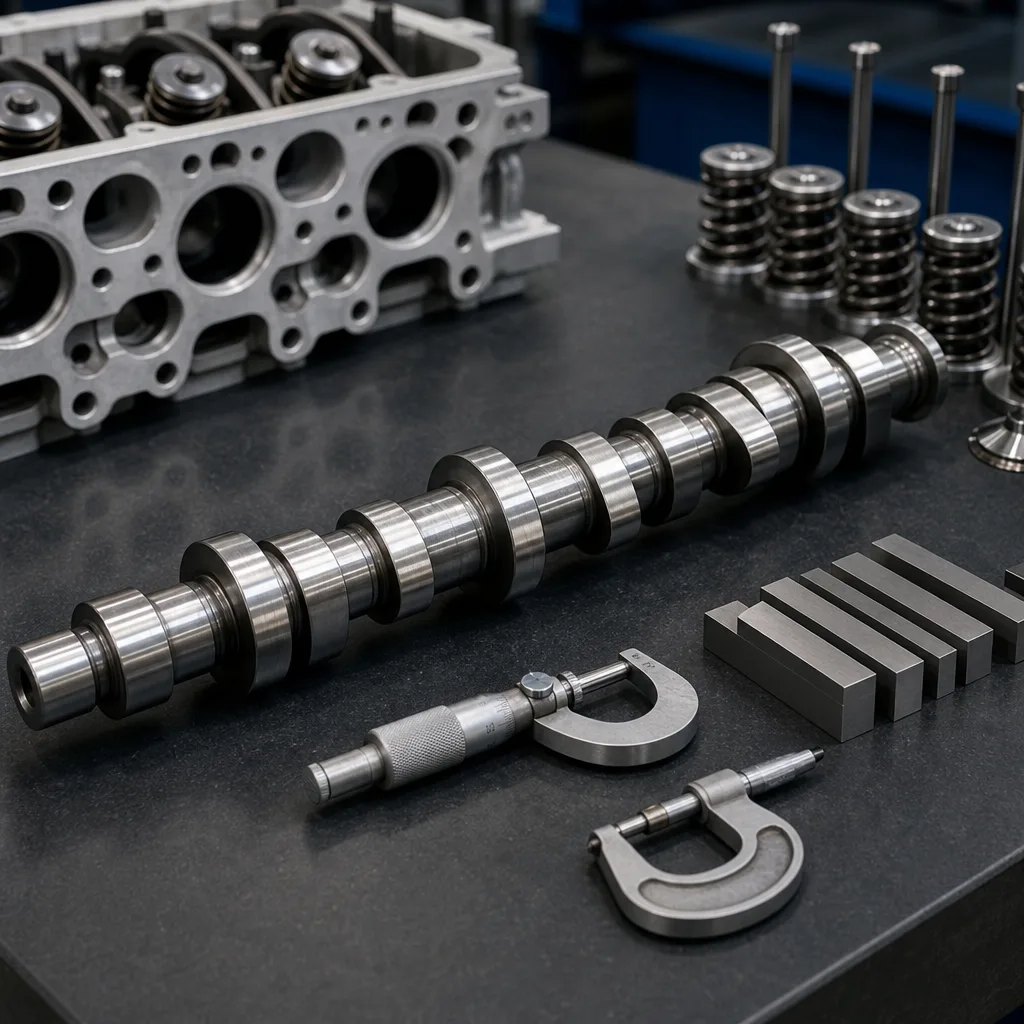
Surface finish, hardness target, and straightness requirement
Packaging method for long-distance freight
Required documents: material certs, inspection report, and country-of-origin records
If you already have a drawing, compare it against the current revision before asking for a quotation. That single step prevents most fitment disputes.
Key specifications that affect fit and life
Wholesale buyers usually see a short description on the sales sheet, but the engineering detail is what determines whether the part will survive real service. For camshafts, the critical variables are lobe profile, base circle, journal diameter, core material, hardening method, and finish after grinding. If any of these drift, valve timing, oil film behaviour, and wear rate can change.
Specification
Why it matters
Buyer check
Lobe lift and duration
Controls valve timing and airflow
Match the approved drawing or sample
Journal diameter
Affects bearing fit and oil clearance
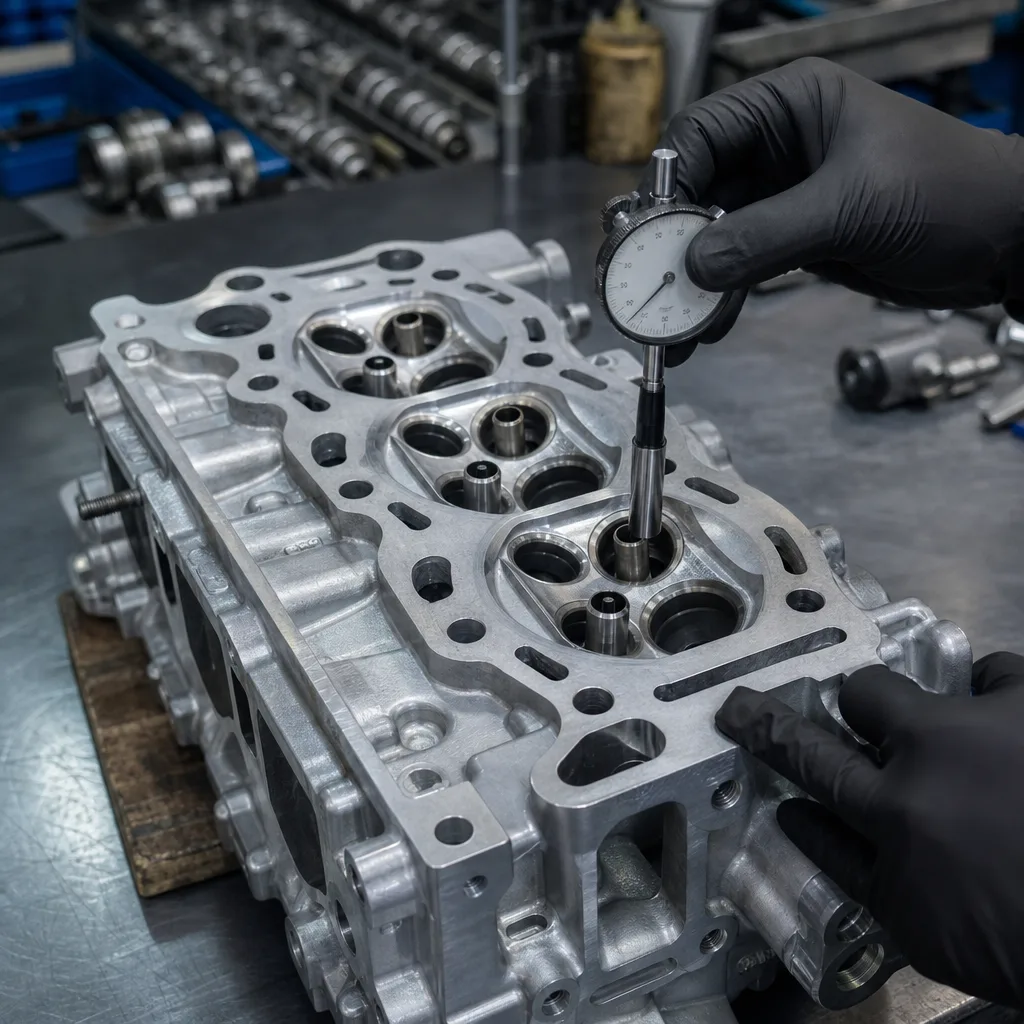
Measure against the nominal tolerance band
Runout and straightness
Prevents vibration and premature wear
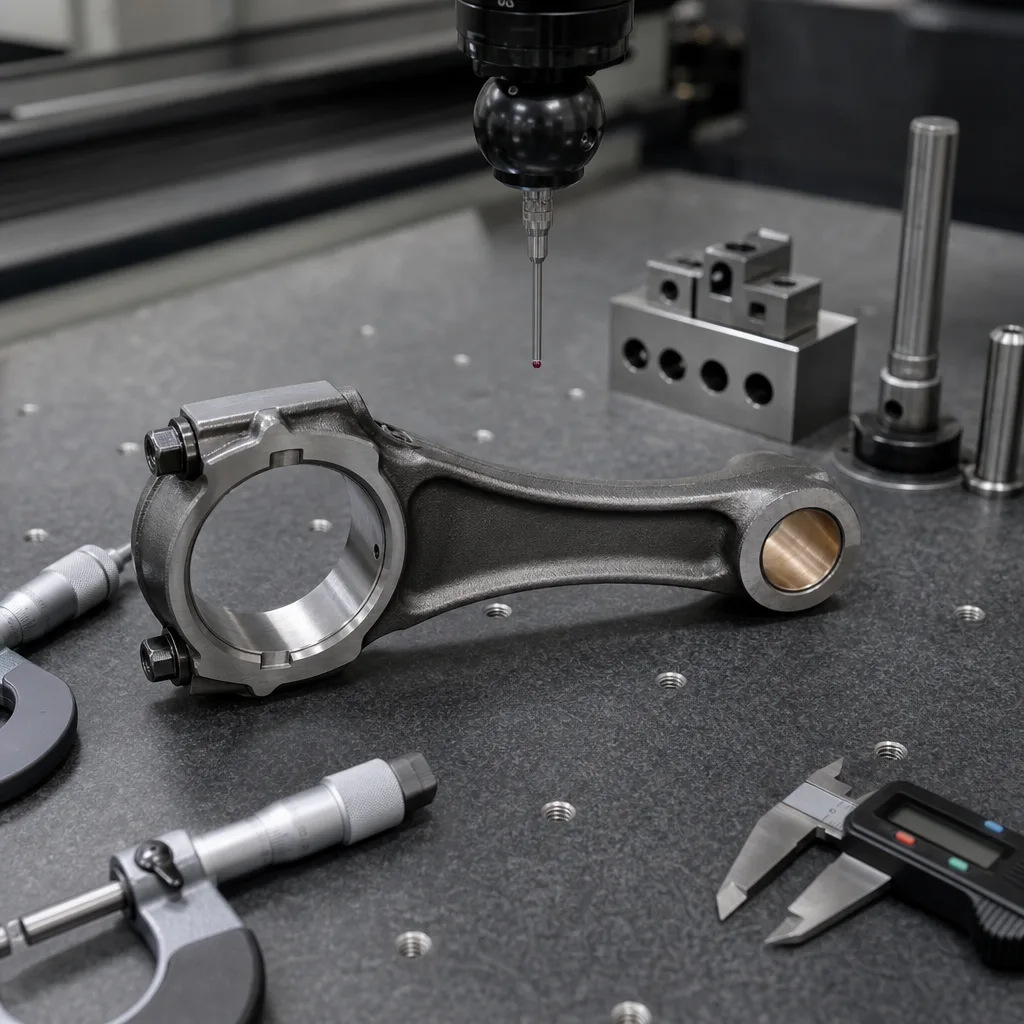
Require a dimensional inspection report
Surface hardness
Supports wear resistance
Request hardness records by batch
Drive and sensor features
Ensures correct installation
Verify against the engine code and revision
Packaging and corrosion protection
Protects long transit and warehouse storage
Specify VCI, separators, and outer carton strength
</tr></thead><tbody> </tbody></table>If your line card covers multiple markets, ask for a specification matrix by engine variant. That helps your team separate stock codes from engineering changes and reduces the chance of mixing near-identical parts.
Stock supply, MOQ, and lead time
Wholesale sourcing should be evaluated as a supply model, not just a unit price. A low quote with unstable lead time often costs more once you add stock-outs, air freight, and returns. The right model depends on order volume, application spread, and how quickly your customers need replenishment.
Supply model
Best for
Typical trade-off
Stocked wholesale
Fast-moving SKUs and repeat orders
Higher unit price, lower lead time
MOQ-based batch production
Mid-volume programmes with stable demand
Requires forecast discipline
Custom manufacturing
Special profiles, private label, or drawing-based parts
Longer launch time, better specification control
</tr></thead><tbody> </tbody></table>For import managers, the practical questions are simple: what is the MOQ per SKU, how many days from order to ex-works ready date, and what packaging can be held at the factory for repeat releases. Ask whether the supplier can consolidate mixed SKU orders and whether cartons are labelled for warehouse scan-in. If your network spans the EU, UK, US, Canada, Australia, and Brazil, stable packaging and repeatable paperwork are as important as the part itself.
Quality system and validation records
For camshaft supply, quality is not a claim on a brochure. It is a set of records that show the supplier can hold the same geometry, metallurgical condition, and packaging standard across runs. At minimum, the supplier should be able to explain how it works under IATF 16949:2016 and ISO 9001:2015. For chemical compliance on coatings, oils, and packing materials, ask how REACH (EC) No 1907/2006 is managed.
A procurement pack should normally include:
Dimensional inspection report
Material certificate or equivalent melt traceability record
Heat treatment summary
Surface hardness and runout results
First article or sample approval record
Batch coding and traceability method
If your organisation audits suppliers, ask for the control plan, calibration status, and nonconformance process. If the parts are for a repair network, also ask how claims are handled when a fitment issue appears after installation. The answer matters because it shows whether the supplier can isolate a batch quickly and keep your service levels stable.
When custom manufacturing is the better option
Custom manufacturing is not only for performance parts. It is often the correct route when a buyer needs a legacy profile, a market-specific emission variant, a private-label programme, or a packaging format that supports regional distribution. It can also reduce risk when the existing OE line is no longer dependable in supply.
A drawing-controlled camshaft with fixed revision control
A dedicated packaging spec for pallet efficiency or anti-corrosion storage
A consolidated programme across multiple distribution centres
A controlled change process for new engine coverage
If you are comparing supply options, start with our catalog and the broader engine components range, then move to a drawing review if the application is not a clean catalogue match. Buyers who want batch consistency should also review the quality system before finalising a long-term order. That sequence gives procurement, engineering, and warehouse teams the same reference point before volume is committed.
Frequently asked questions
Verify the engine code, model year, valve train type, and any OE cross-reference against the current drawing or sample. Do not rely on the vehicle badge alone. If the supplier cannot show dimensional control and revision history, treat the fitment as unconfirmed.
Ask for a dimensional inspection report, material traceability, heat treatment summary, batch coding method, and packaging specification. If the supplier works to IATF 16949:2016 or ISO 9001:2015, request evidence that those controls apply to the camshaft line you are buying.
Move to custom manufacturing when the application needs a drawing-controlled profile, a special packaging requirement, a private label programme, or a stable supply plan for a legacy engine. It is also useful when you need tighter control over revision changes and batch repeatability.
If you need a camshaft supply plan for Dodge applications, send your engine code, target volume, and any drawing or sample data. [Request a quote](/contact.html).