Camshaft for Dodge Ram 1500 OE Equivalent: Sourcing Notes
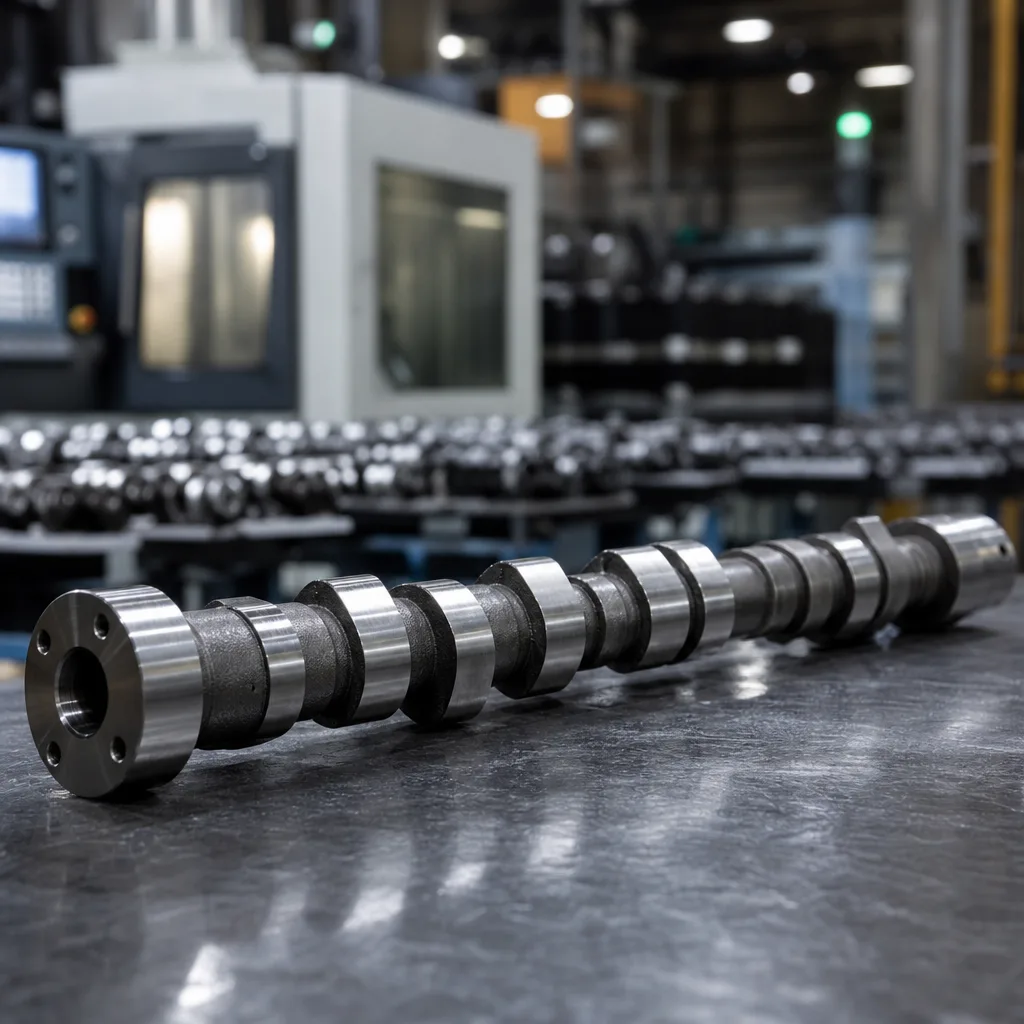
Sourcing a camshaft for Dodge Ram 1500 OE equivalent replacement is not just a catalogue exercise. The commercial goal is clear: restore OE-style valve timing, idle quality, emissions behaviour, oil control, and service life without changing the rest of the engine package. Technically, that means the replacement has to match the cam profile and installed phasing, including lobe lift, duration at the specified checking height, base-circle diameter, journal size, thrust control, oil-feed geometry, reluctor or trigger features, and cam-sensor phasing. The engine control module must see the part as the original specification, and the valve train must work with the same geometry and contact conditions.
For B2B buyers, the real question is not whether the part appears in a catalogue. It is whether the camshaft can be validated against controlled drawings, measured timing events, material records, hardness limits, dimensional inspection, packaging controls, and durability expectations under IATF 16949:2016 and ISO 9001:2015 systems. Driventus is an independent aftermarket manufacturer; Dodge, Ram, and other brand names are referenced for fitment identification only. This article explains how to define an OE-equivalent replacement, what to check before ordering, how to compare suppliers, and which records matter for fleet, wholesale, distributor, and workshop channels.
What OE-equivalent means in practice
An OE-equivalent camshaft is defined by geometry, metallurgy, process control, and installed function, not by packaging or a broad catalogue claim. The replacement should match, or stay within an agreed engineering tolerance, for lobe lift, duration at checking height, base-circle diameter, journal diameters, lobe separation angle, lobe indexing, thrust-face geometry, oil grooves, end features, and trigger details for cam sensors or variable-valve-timing systems. These details affect valve opening and closing points, hydraulic lifter preload, oil-film stability, bearing load, and how the engine control module reads cam position.
For a Dodge Ram 1500 application, confirm the engine family before discussing price or MOQ. The 3.7L, 4.7L, 5.7L, and 3.6L variants do not share one camshaft specification. Even engines in the same displacement range can vary by model year, emissions package, cylinder-head design, cam phaser arrangement, MDS configuration, or sensor target. A qualified supplier should be able to map the camshaft to engine code, model year range, intake or exhaust position where applicable, valve-train layout, timing hardware, and OE cross-reference logic.
In practice, OE-equivalent means a controlled replacement that installs without calibration changes, unusual break-in demands, or compensating parts. It should preserve expected manifold vacuum, idle stability, low-speed torque, valve-to-piston clearance, lifter rotation or roller tracking, and diagnostic behaviour. If the supplier cannot connect the part to a drawing, master sample, timing-event data, or controlled reference standard, the camshaft may fit physically while still changing drivability, emissions readiness, or fault-code behaviour after installation.
Normal service replacement, fleet maintenance, distributor stock
Reprofiled or used core
Existing core reworked to restore or alter a profile
Unknown wear history, variable hardness depth, reduced base circle, uncertain oiling and fatigue life
Limited availability or older applications after engineering review
Generic aftermarket blank
Broad fit claim, simplified profile control, limited application validation
Timing mismatch, sensor error, noise, accelerated lifter or follower wear
Only where the buyer accepts engineering responsibility
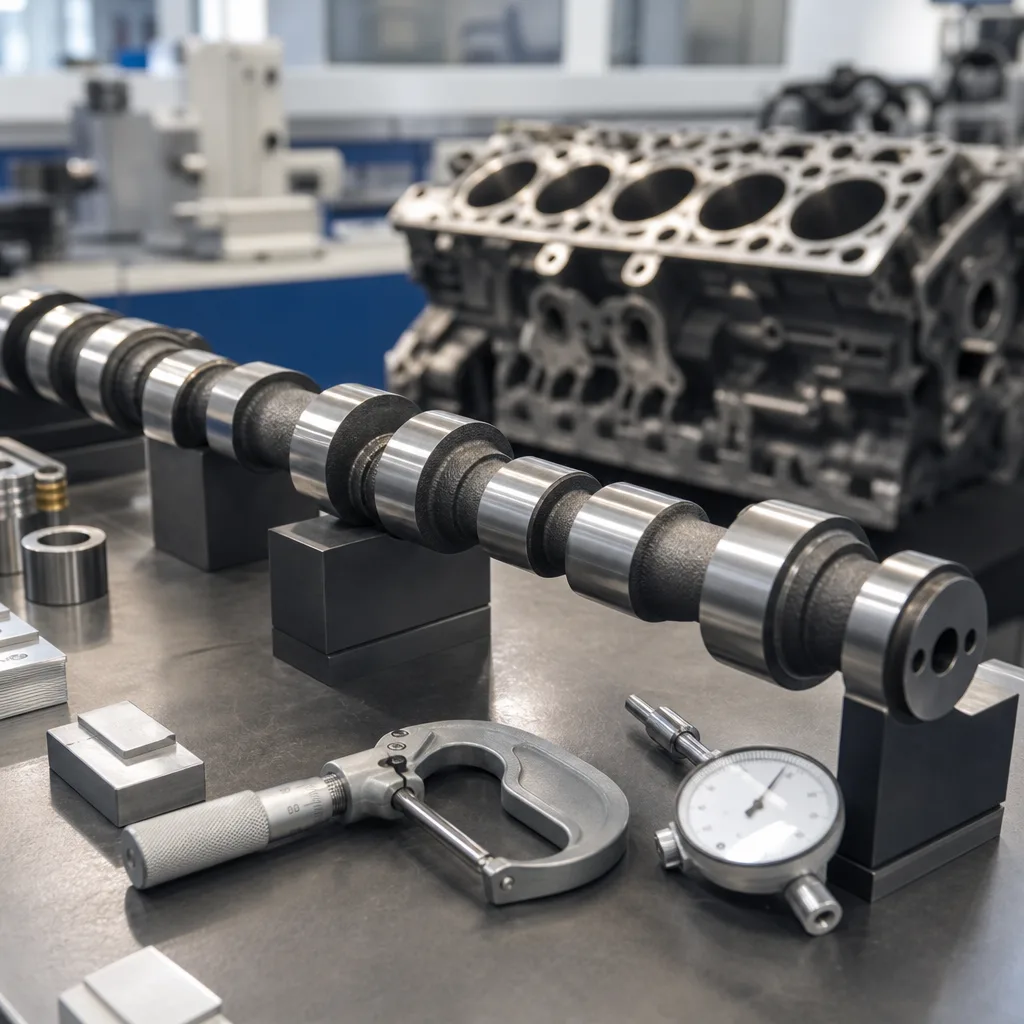
</tr></thead><tbody> </tbody></table>The critical-to-function dimensions include lobe lift, base circle, journal diameter, journal roundness, journal taper, total indicated runout, lobe-to-lobe consistency, lobe index, thrust width, oil-hole or oil-groove position, and end-feature position. Buyers should ask suppliers to state the actual inspection tolerances used for the part number, not just the nominal dimensions. As a practical sourcing benchmark, production inspection commonly controls journal size and roundness in the micron range, lobe lift within a narrow profile tolerance, and runout with a defined TIR limit. The exact limits should come from the approved drawing or master sample.
Small deviations can turn into expensive field issues. A reduced base circle can change hydraulic lifter preload and pushrod geometry. An undersize journal can reduce oil-film thickness and shorten bearing life. Excess runout can create uneven bearing loading and timing-chain disturbance. Incorrect lobe indexing can shift valve timing even when the timing marks are aligned. Trigger or reluctor error can cause cam/crank correlation faults, extended crank, misfire diagnostics, or VVT control complaints.
Material and surface treatment carry the same weight as dimensions. Depending on engine design and production route, a camshaft may require chilled cast iron, alloy cast iron, forged or machined steel, induction hardening, nitriding, or another controlled hardening process. Buyers should ask for the material grade, hardness range, effective case depth where applicable, surface roughness after final grinding, and the method used to protect finished lobes and journals from corrosion. The lobe surface must resist adhesive and abrasive wear while remaining compatible with the lifter, follower, lubrication regime, and break-in conditions.
Packaging belongs in the specification. Cam lobes and journals can be damaged by minor impact, poor separation, or moisture during sea freight and warehouse storage. A qualified supplier should define rust inhibitor, end protection, individual wrapping, carton strength, pallet configuration, humidity protection, and inspection after packing. If the supplier cannot state the material grade, heat-treatment route, final grinding sequence, cleaning method, and transit protection method, the part is not ready for release into a controlled supply chain.
Validation records to request
Ask for the records that separate a production camshaft from a visual match. Minimum evidence should include an incoming material certificate, drawing or controlled specification reference, dimensional inspection report, hardness report, surface-finish check, lobe profile measurement, journal inspection, and final runout result. Fatigue performance and tribology data also matter because the lobe and follower interface works under high Hertzian contact stress, especially during start-up when boundary lubrication is common.
A mature supplier should document process controls for casting or billet preparation, rough machining, heat treatment, straightening, finish grinding, washing, anti-corrosion preservation, and final packing. Inspection should not stop at the first article. Buyers should look for repeatable controls such as process flow charts, control plans, in-process gauges, calibrated measuring equipment, batch traceability, nonconforming-product handling, and clear acceptance limits for critical characteristics. Where volume is significant, request capability data for journal diameter, lobe lift, lobe index, base circle, thrust width, and runout.
If the camshaft is sold into the EU or into a regulated customer programme, material declarations should support REACH (EC) No 1907/2006 and any customer-specific restricted-substance requirements. If the buyer needs a PPAP-style submission, request sample approval, dimensional layout, process flow, control plan, PFMEA where applicable, material certificate, initial sample inspection report, and appearance or packaging approval before release. For high-volume distributors, lot coding and retention-sample practices are valuable because field claims can be traced to a production batch instead of being handled as isolated returns.
Documentation is more useful than a simple fitment claim because it shows whether the supplier can repeat the part at scale. A catalogue listing tells you what the part is intended to fit. Inspection and validation records show whether it was built consistently enough to protect installers, warranty exposure, replenishment planning, and customer-specific approval requirements.
Fitment checks before purchase
Do not buy a camshaft for Dodge Ram 1500 OE equivalent on year and engine size alone. Confirm the complete application data before purchase:
Engine family, engine code, displacement, cylinder count, and model year range
VIN reference or OE cross-reference where available
Intake or exhaust cam position on multi-cam engines
Timing system type, including chain layout, phasers, guides, sprockets, and reluctor or trigger position
Presence of VVT, MDS, cam sensor targets, or other cylinder-management features
Lifter, follower, rocker arm, pushrod, and spring specification
Oil grade, break-in procedure, and lubrication history
Cylinder-head and block machining history
Emission calibration or market-specific variant
Required service kit contents, including seals, bolts, phaser hardware, lifters, or timing components where applicable
If the engine has already been rebuilt, check whether the original cam profile was paired with aftermarket lifters, springs, pushrods, timing components, or tuning. A replacement can be dimensionally correct against an OE-style drawing and still be wrong for a modified valve train. Excess spring pressure, worn lifters, contaminated oil passages, incorrect oil viscosity, misaligned timing hardware, or a faulty phaser can damage a new camshaft quickly and make a good part look like the failure point.
For workshops and fleets, the right question is total installed risk, not just unit price. When an engine has shown wear at the lobes, journals, lifters, followers, or oiling points, hidden damage can outlast the visible failure. Before installing the replacement, inspect mating components, oil supply, timing set condition, bearing surfaces, debris contamination, and PCM diagnostic history. For distributor purchasing, the same discipline applies upstream: confirm the application split, label data, carton protection, cross-reference logic, and return-analysis process so the part that reaches the installer is the part the engine actually needs.
How Driventus supports B2B sourcing
Driventus supports B2B buyers with catalogue parts, sample-based matching, and drawing-based development for engine components. Buyers can review our catalog for available programmes, check related engine components, confirm the quality system, or use custom manufacturing when a non-catalogue profile, special coating, private-label packaging, or application-specific inspection plan is required.
For distributors, wholesalers, fleet maintenance groups, and repair networks, the aim is to control fitment risk while keeping replenishment practical. Driventus can work from an OE sample, technical print, controlled reference data, or buyer-supplied acceptance criteria. Critical points such as lobe lift, base-circle diameter, journal size, thrust width, hardness, case depth where applicable, runout, trigger geometry, surface finish, washing, rust prevention, label format, and packaging can be aligned before mass production, so both sides understand what will be inspected and released.
This approach helps when a buyer needs more than a transactional quote. It creates a clearer approval trail: application confirmation, sample or drawing review, specification alignment, inspection planning, pilot approval, packaging confirmation, and production supply. For B2B camshaft sourcing, that structure can reduce catalogue errors, installation disputes, field returns, and warranty uncertainty while preserving the repeatability procurement teams need.
Frequently asked questions
Compare lift, base circle, journal diameters, lobe phasing, trigger geometry, oiling features, surface finish, and hardness against a drawing, master sample, or approved inspection report. If the supplier cannot provide controlled dimensional data, treat it as a generic replacement rather than a validated OE-equivalent camshaft.
No. Engine family, model year, timing system, VVT arrangement, MDS configuration, cylinder-head design, and sensor targets can change between variants. Always check the exact engine code, OE cross-reference, and application data before ordering.
Ask for dimensional inspection, hardness results, material traceability, surface-finish data, lobe-profile data, runout results, packaging details, and relevant production quality records. For regulated supply chains, also ask for REACH declarations and any PPAP-style documents required by your customer.
If you need a quotation or sample review, send the application data and request a quote at /contact.html