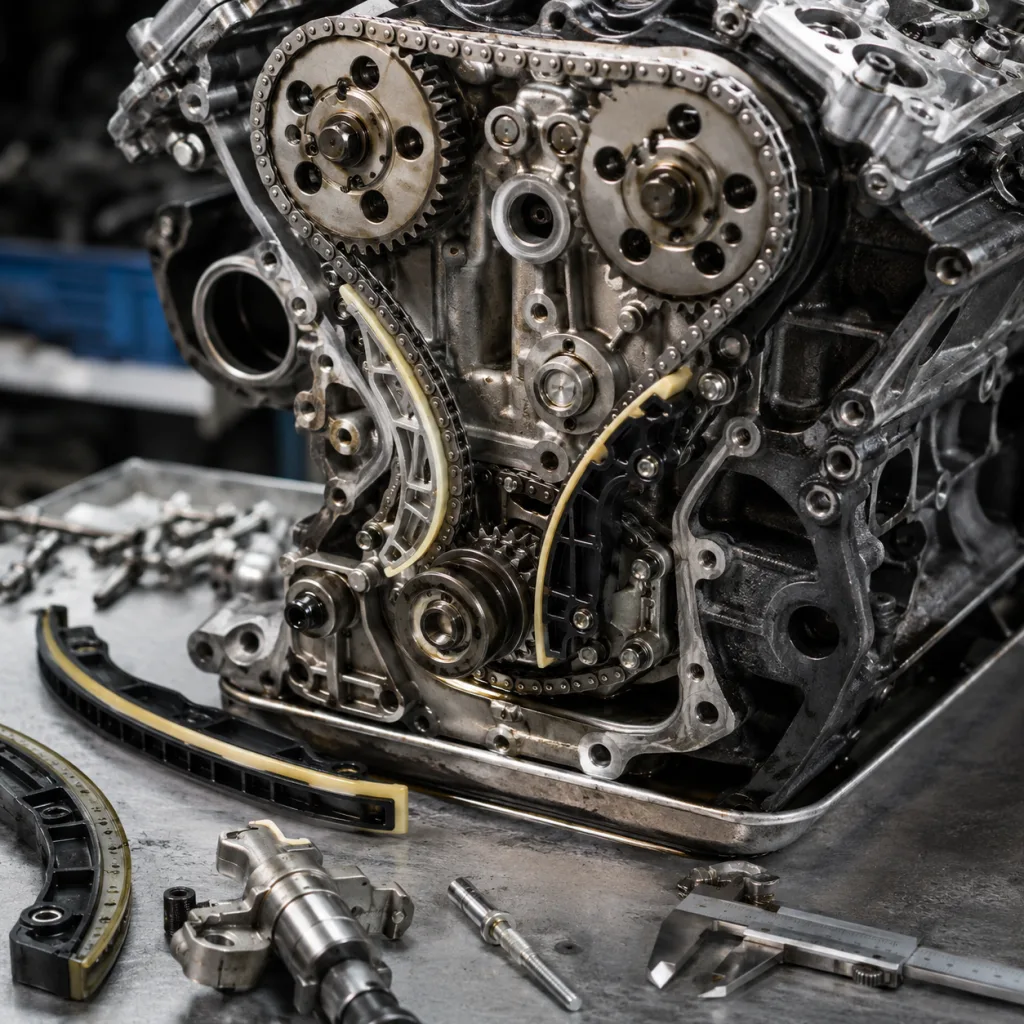
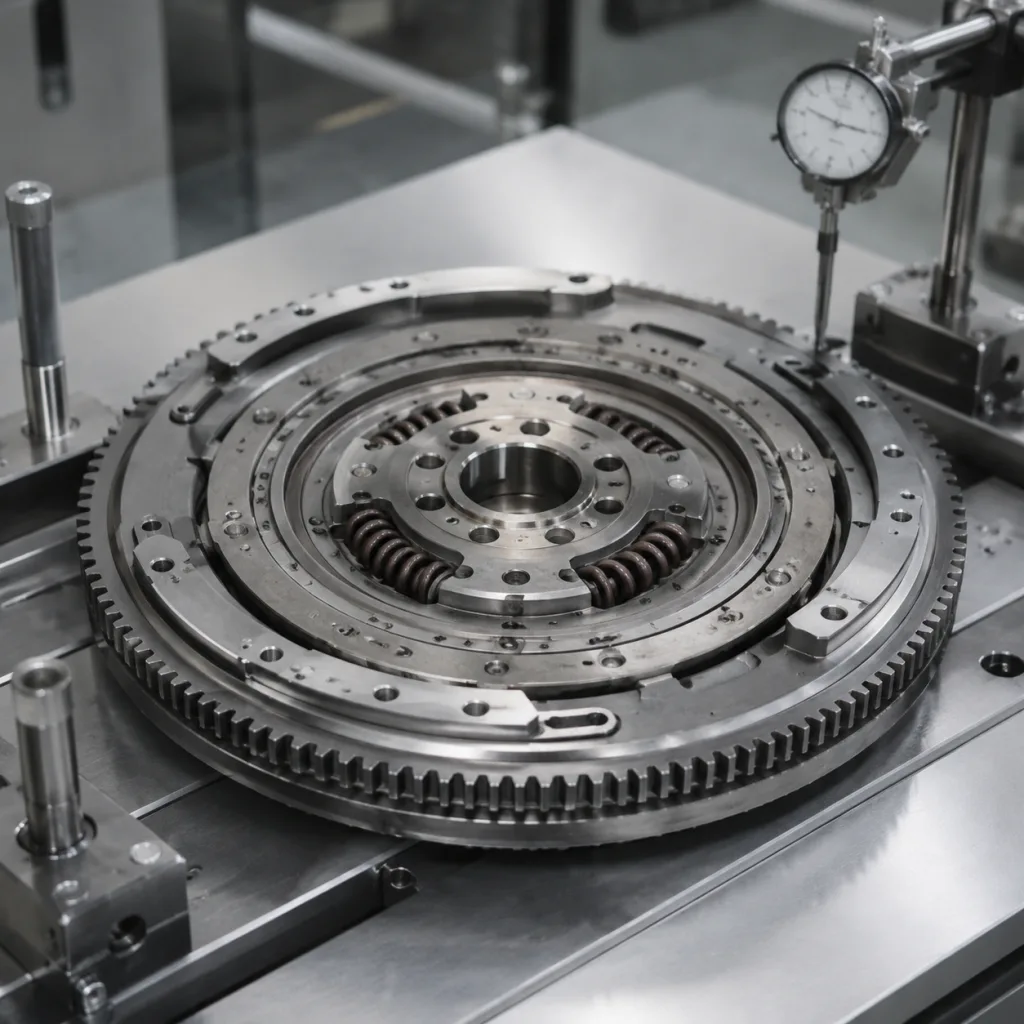
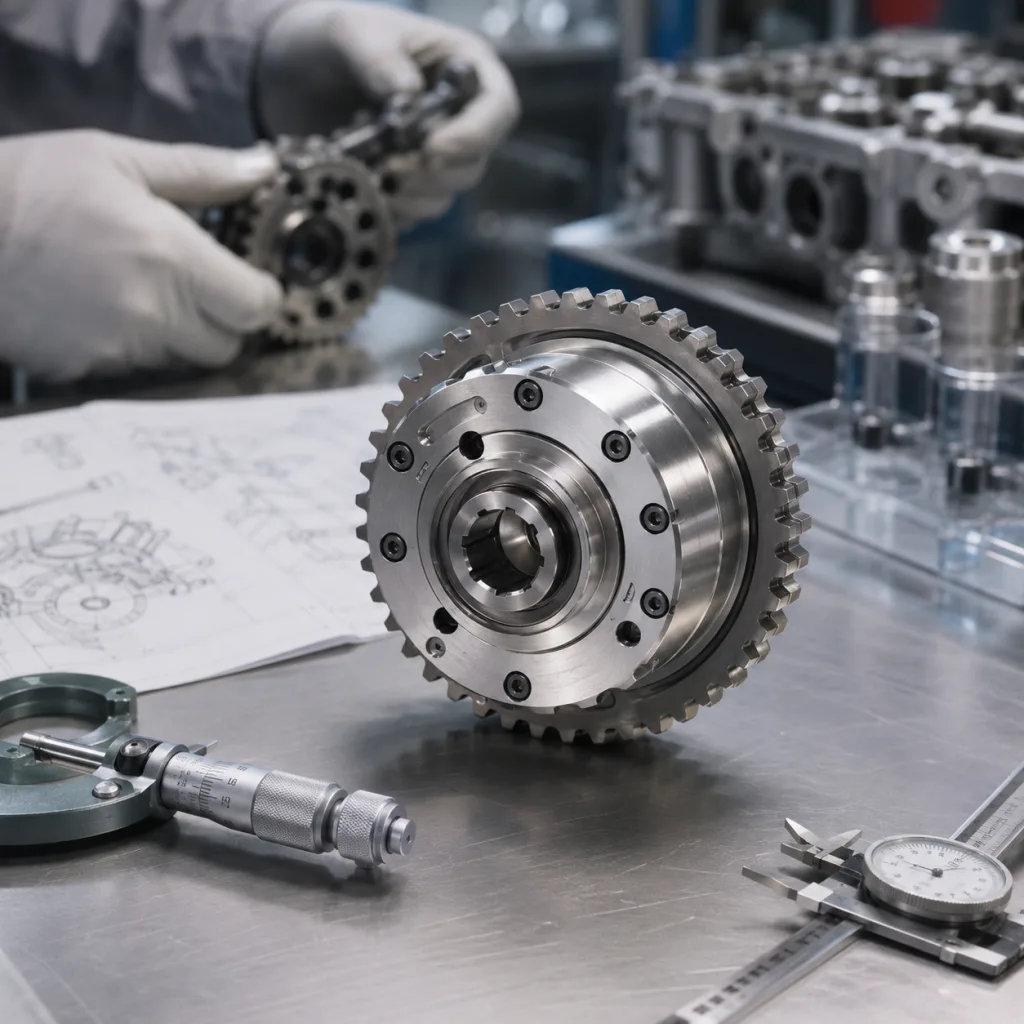
A camshaft Dodge OE equivalent must match more than the visible profile of the original part. For distributors, repair-chain buyers, and import managers, the commercial risk is tied to fitment accuracy, lobe geometry, surface hardness, oil-hole alignment, and batch consistency. A camshaft that installs correctly but has poor hardness depth or unstable timing geometry can create warranty claims across multiple workshops. Driventus manufactures replacement camshafts for aftermarket engine programmes, with production control aligned to IATF 16949:2016 and ISO 9001:2015. This guide explains how to assess OE-equivalent camshafts for Dodge applications without implying vehicle manufacturer approval. It covers dimensional matching, material selection, validation testing, packaging, and sourcing documentation for professional buyers. Driventus is an independent aftermarket manufacturer; brand names are referenced for fitment only.
What OE-Equivalent Means for Dodge Camshafts
OE-equivalent means the replacement camshaft is engineered to match the functional requirements of the original equipment part family. It does not mean the part is supplied, approved, or endorsed by the vehicle manufacturer. For Dodge replacement applications, the focus is on fitment, timing function, valve-train interface, lubrication paths, and durability under normal service conditions.
A credible OE-equivalent camshaft programme should control the following points:
Journal diameter and roundness for correct bearing clearance
Lobe lift, base circle, flank profile, and opening and closing timing
End thrust face dimensions and surface finish
Oil feed holes, grooves, and chamfers
Cam sensor trigger features where applicable
Heat treatment depth and surface hardness
Straightness after machining and heat treatment
Packaging protection against corrosion and impact
Procurement teams should request drawings or specification sheets that define measurable characteristics rather than relying only on application listings. Fitment tables are useful, but dimensional evidence is what reduces dispute risk when a distributor is carrying stock across several engine variants.
Dimensional Match and Critical Tolerances
A replacement camshaft must maintain valve timing within the intended operating window. Small deviations in lobe geometry can affect idle quality, emissions behaviour, valve-train noise, and long-term wear. For this reason, incoming and in-process inspection should include both conventional dimensional checks and profile verification.
Check item
Typical procurement requirement
Why it matters
Journal diameter
Controlled to drawing tolerance, commonly within micron-level limits
Maintains oil clearance and bearing support
Lobe lift
Verified against master profile or drawing
Controls valve opening height and engine breathing
Base circle
Matched to follower/lifter design
Prevents lash, noise, and incorrect preload
Runout/straightness
Checked after final grinding
Reduces bearing load and timing variation
Surface roughness
Specified by journal and lobe area
Supports oil film stability and wear resistance
Oil-hole position
100% visually or fixture checked where required
Prevents lubrication restriction
</tr></thead><tbody> </tbody></table>For B2B sourcing, it is useful to separate application identification from product validation. An application list may state compatibility with Dodge engine families, while the technical file should show how the camshaft geometry is controlled. Buyers can review our catalog and related engine components to understand how Driventus groups parts by engine system and replacement use case.
Materials, Heat Treatment, and Surface Control
Camshaft durability depends on the base material, casting or forging quality, heat treatment, and final grinding. Different engine designs use different cam-follower interfaces, so one material route is not automatically suitable for every Dodge application. Common aftermarket camshaft materials include chilled cast iron, alloy cast iron, and steel, selected according to lobe loading and production specification.
Key specification points for buyers include:
Material grade and chemical composition range
Hardness target for lobes and journals
Case depth or hardened layer depth where applicable
Microstructure requirements after heat treatment
Crack inspection method, such as magnetic particle inspection where specified
Final grinding process and surface finish range
Anti-rust oil or VCI packaging requirement for sea freight
The supplier should be able to provide batch traceability from raw material to finished part. For export programmes, documentation may also need to support customer obligations under REACH (EC) No 1907/2006 when materials, coatings, or packaging are reviewed by EU importers. Driventus maintains production and inspection records within a documented quality system structured around IATF 16949:2016 and ISO 9001:2015.
Validation Testing for Replacement Programmes
A camshaft Dodge OE equivalent should be validated through a mix of dimensional, metallurgical, and functional checks. The exact validation plan depends on the engine family, annual volume, and buyer risk level. For high-volume distributor programmes, first article inspection and periodic production audits are usually more useful than a one-time sample approval.
Recommended validation package:
First article inspection report with critical dimensions
Material certificate or internal material verification record
Hardness test results for lobes and journals
Surface roughness report for contact areas
Lobe profile measurement report where available
Runout or straightness inspection record
Oil-hole and key-feature position check
Salt-spray or packaging corrosion assessment when required by the buyer
Fitment review using OE part-number cross-references where applicable, such as OE 06A... or OE 11251... conventions only when supplied by the customer catalogue data
For emissions-related engine service parts, buyers should also consider local market obligations. Standards such as ECE R-83 define vehicle emissions requirements, while component replacement claims must be written carefully so they do not imply certification beyond the actual part validation. Driventus does not claim vehicle manufacturer approval for aftermarket replacement camshafts.
Sourcing Criteria for Distributors and Repair Chains
Replacement camshafts are often purchased as part of a wider engine repair assortment. Importers need stable part numbering, clear interchange data, predictable packaging, and defect containment procedures. Repair chains also need repeatability across batches because installation labour is more costly than the component itself.
When evaluating suppliers, ask for:
MOQ by part number and by mixed camshaft assortment
Lead time for standard stock, repeat production, and new development
Private-label packaging options and barcode format
Country-of-origin marking and export carton specification
Inspection level for critical dimensions
Warranty return analysis process
PPAP-style documentation when required by OEM or Tier-1 customers
Audit access for process review and corrective action verification
Driventus supports standard aftermarket supply and custom manufacturing for buyers who need controlled dimensions, dedicated packaging, or customer-specific inspection plans. For multi-location repair networks, a controlled OE-equivalent camshaft programme can reduce catalogue confusion and support consistent repair outcomes across branches.
Commercial Documentation and Fitment Risk
Fitment data should be handled with care. A distributor may use brand names, model names, and engine codes to identify vehicle applications, but the sales file should state that these references are for fitment only. This is especially important in the EU, UK, US, Canada, Australia, and Brazil, where buyers may combine local catalogue data with imported replacement stock.
A practical sourcing file should include:
Internal part number and buyer part number
Engine family and model-year range, where supplied by the buyer
OE reference format, if provided by customer data
Drawing or critical dimension sheet
Inspection report template
Packaging artwork approval record
Country-specific labelling requirements
Warranty handling procedure
Driventus is an independent aftermarket manufacturer; brand names are referenced for fitment only. Buyers sourcing camshaft dodge oe equivalent parts should confirm interchange data before purchase orders are released, particularly when one engine family has several camshaft variants with different sensor triggers, timing slots, or lobe profiles.
Frequently asked questions
No. OE-equivalent means the aftermarket camshaft is engineered to match the relevant fitment and functional requirements. It does not mean approval, endorsement, or supply by the vehicle manufacturer. Brand names are referenced for fitment only.
Importers should request critical dimensions, material or hardness records, first article inspection, packaging details, interchange references, and quality certification evidence such as IATF 16949:2016 and ISO 9001:2015 documentation.
Yes. Driventus can review samples, drawings, and target specifications for replacement camshaft development. The scope normally includes dimensional study, material selection, prototype inspection, packaging definition, and batch control requirements.
For camshaft sourcing, interchange review, or a controlled replacement programme, send your part list and target market requirements to Driventus. You can [request a quote](/contact.html)