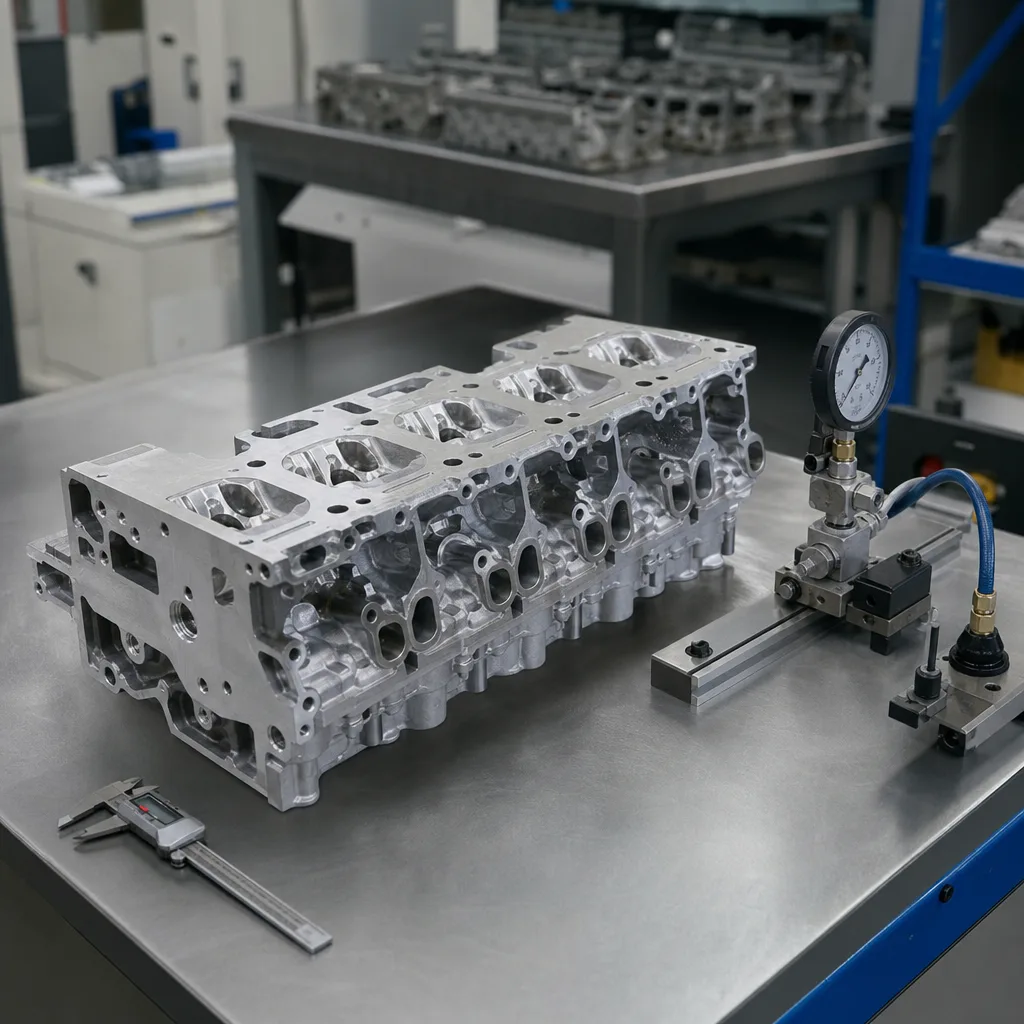
Procurement teams sourcing camshafts for BMW applications need more than a part name and an OE reference. The critical checks are dimensional match, lobe profile, hardness, journal finish, packaging, and traceable lot control. For wholesale programmes, the supplier must also support stable MOQ, repeatable lead times, and documented inspection records. Driventus is an independent aftermarket manufacturer; brand names are referenced for fitment only. Our camshaft production is supported by IATF 16949:2016 and ISO 9001:2015 systems, with material and process controls that are suitable for B2B export to the EU, UK, US, Canada, Australia, and Brazil. This article outlines what buyers should verify before placing a camshaft order, how to compare supplier offers, and which documents to request during qualification. If you are building a repeat programme or validating a new source, the points below will help you reduce risk and avoid avoidable returns.
What buyers should verify before placing a BMW camshaft order
For wholesale purchasing, the first task is fitment control. BMW camshafts vary by engine family, cylinder head revision, valve train layout, and sensor interface. Confirm the full application data before RFQ:
Engine code and displacement
Intake or exhaust position
Number of lobes and bearing journals
VVT or non-VVT configuration
Sensor trigger design and drive end geometry
OE reference, for example OE 06A107065 when the platform uses that style of cross-reference
A supplier should confirm dimensional compatibility against drawings or validated samples, not only by vehicle model name. For buyers, this is especially important when ordering through a wholesale channel where one part number may cover multiple build periods. If a supplier cannot state the measurement basis, the offer is not ready for production buying.
Wholesale supply terms that matter to procurement teams
Camshaft programmes are usually judged on repeatability, not just unit price. When comparing offers, request the following commercial and operational data:
Item
What to confirm
MOQ
Unit minimum per reference and per shipment
Lead time
Normal production lead time and peak-season impact
Packaging
Corrosion protection, cavity packs, and export carton spec
Traceability
Lot number, heat code, and inspection record retention
Warranty process
Claim handling and photo/video evidence required
</tr></thead><tbody> </tbody></table>For buyers in distributor and repair-chain channels, stable replenishment matters more than irregular spot pricing. A supplier that can hold consistent output across repeated runs will reduce order backlog and stock-out risk. Driventus supports wholesale programmes with controlled production planning and export packing suited to long-distance freight.
Materials, machining, and surface finish
Camshaft durability depends on material selection and process control. Common production routes include chilled cast iron, forged steel, or billet machining depending on application demand and cost target. Buyers should ask for:
Material specification and heat-treatment route
Journal diameter tolerances and runout limits
Lobe profile consistency across batches
Surface hardness targets
Anti-corrosion protection for sea freight
Typical inspection points
Journal diameter and concentricity
Lobe lift and base-circle geometry
Keyway or drive-end accuracy
Surface finish on bearing surfaces
Visual crack, burr, and chip inspection
For wholesale procurement, the key issue is not only whether a part fits but whether the profile remains stable from batch to batch. A supplier should be able to explain which dimensions are checked in-process and which are verified at final inspection.
Quality documents and compliance checks
A serious supplier should provide traceable documentation that supports your inbound inspection and vendor approval process. At minimum, request:
1. Certificate of conformity or batch release record 2. Material certificate for the relevant heat or batch 3. Dimensional inspection report 4. Packaging and labelling specification 5. Quality management certificates
Driventus operates under IATF 16949:2016 and ISO 9001:2015. For export markets, buyers may also need REACH (EC) No 1907/2006 declarations for applicable substances, and evidence that the product is packaged and marked in line with destination-market requirements. Where emissions-related fitment is relevant to the vehicle platform, confirm that the application does not require unsupported claims. Driventus does not claim vehicle manufacturer approval or endorsement.
How to compare suppliers for BMW camshaft wholesale
When two offers look similar on price, compare the technical and commercial risk behind them. A structured supplier review should include:
Drawing control: Can the supplier work from OE data, sample, or reverse engineering?
Measurement capability: Are critical dimensions measured with calibrated equipment?
Process stability: Is there evidence of batch-to-batch consistency?
Audit readiness: Can the factory support a remote or on-site supplier audit?
Engineering support: Can changes be handled without losing reference control?
If you need a wider sourcing programme, review our catalog and the quality system before sending an RFQ. For parts made to your drawing or sample, custom manufacturing is the appropriate route. Buyers who source multiple engine components together may also review engine components to consolidate freight and procurement administration.
A wholesale buyer should also check whether the supplier can provide long-term programme support. That includes repeat production scheduling, document retention, and a clear escalation path for non-conforming material.
Practical purchasing checklist for repeat orders
Use this checklist before you commit to a new camshaft lot:
Confirm engine code and application list
Match OE reference and revision level
Verify intake/exhaust side and VVT status
Request dimensional data and inspection report
Confirm MOQ, lead time, and packing standard
Ask for certificate copies and traceability format
Review sample approval before mass order
For repeat wholesale orders, sample approval should be done on at least one pilot lot with clear sign-off on dimensions, finish, and packaging. If the part is intended for multi-market distribution, ensure labelling and export documents are ready before shipment. This reduces delay at customs and simplifies inward quality checks at the warehouse.
Frequently asked questions
Yes, but each reference should be verified separately for engine code, intake/exhaust position, and OE cross-reference. Mixed orders are manageable when the supplier controls identification and packing at batch level.
Request the material certificate, dimensional inspection report, certificate of conformity, packing specification, and quality certificates. For regulated markets, also confirm REACH declarations where applicable.
Yes. For wholesale programmes, sample approval is recommended before repeat orders. It helps confirm fitment, finish, packaging, and inspection method before production commitment.
If you are qualifying a new source or expanding a repeat programme, send your reference list and target volumes. Request a quote at /contact.html