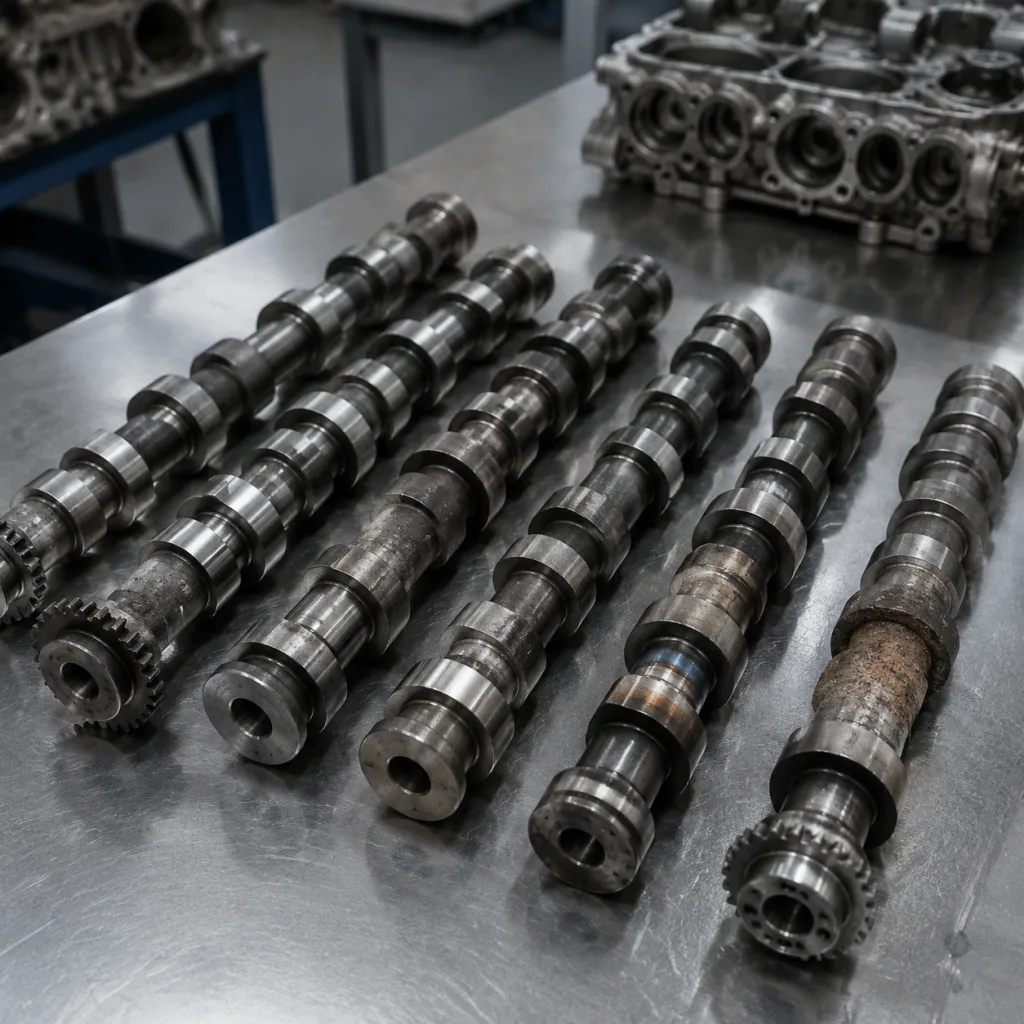
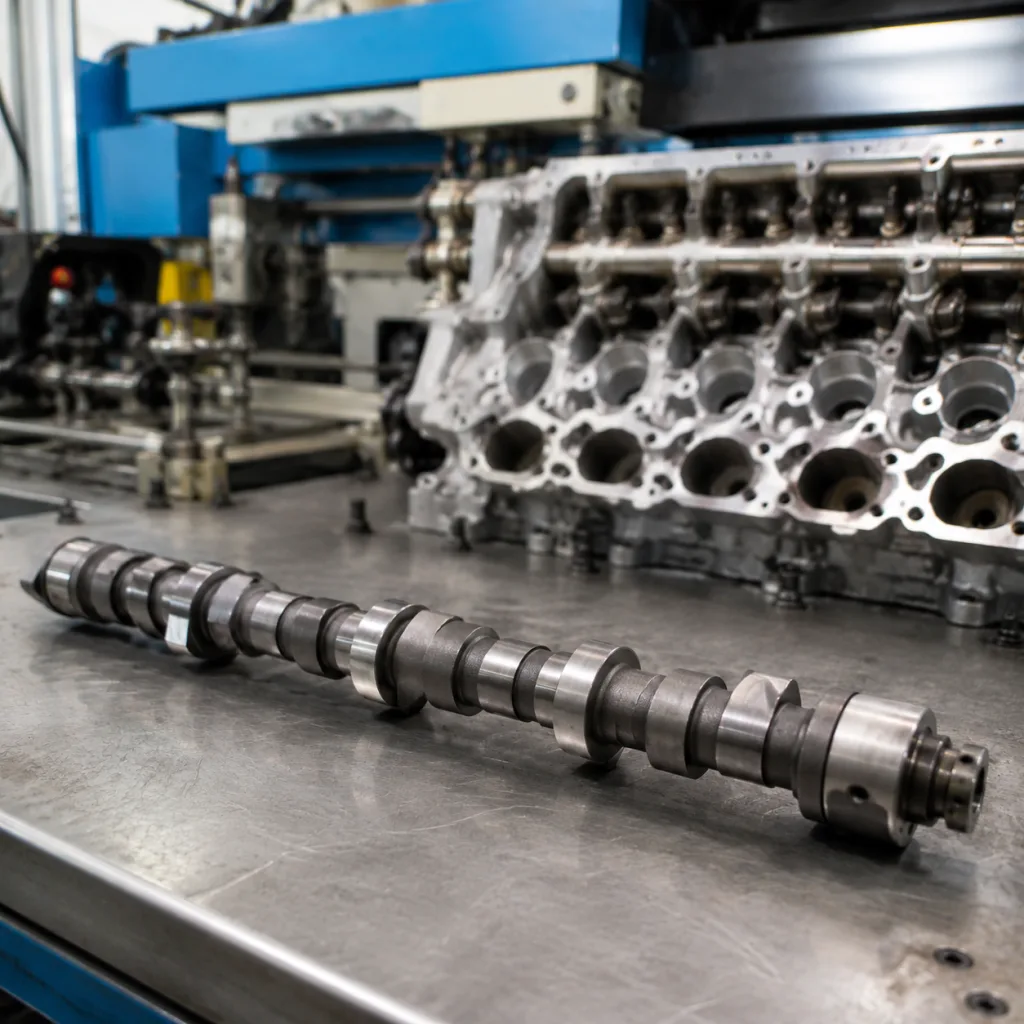
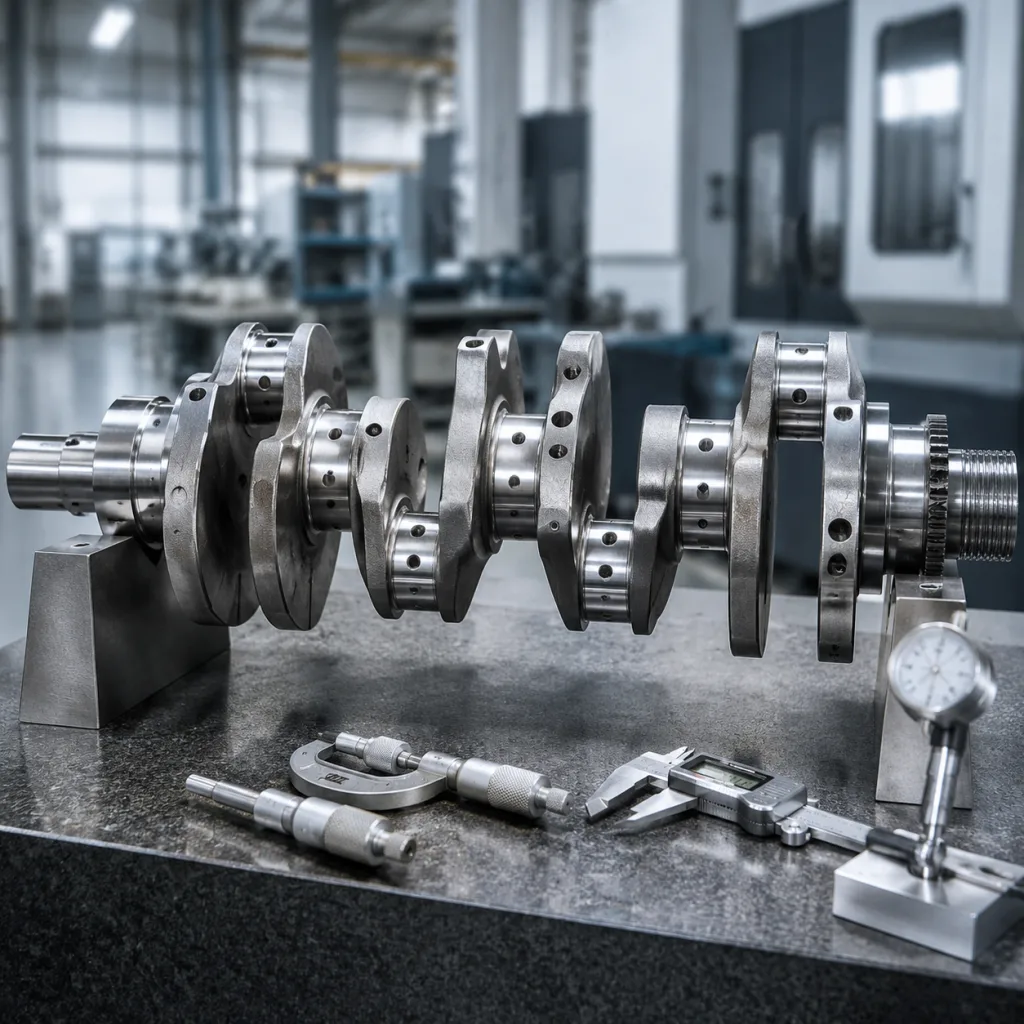
Procurement teams buying camshaft Alfa Romeo wholesale need more than a part description. The sourcing decision depends on dimensional fit, lobe profile control, surface hardening, runout, packaging, and supply consistency. For distributors, wholesalers, and multi-location repair chains, the key questions are whether the camshaft matches the intended OE application, whether the supplier can document inspection and traceability, and whether the factory can keep repeatable lead times across batches. Driventus is an independent aftermarket manufacturer; brand names are referenced for fitment only. We supply engine and powertrain parts from Taizhou, Zhejiang, with IATF 16949:2016 and ISO 9001:2015 systems in place. This article explains what buyers should verify before placing a wholesale order, how camshaft quality is checked, and when custom manufacturing is justified for special catalog programmes.
Decision first: what makes a camshaft line viable?
For a camshaft Alfa Romeo wholesale programme, the first question is not price. It is whether the part can be sold, installed, and reordered without ambiguity.
Start with fitment control. Confirm engine code, cylinder count, valve-train layout, and OE cross-reference before discussing commercial terms. A camshaft that looks close can still differ in base circle, journal diameter, lobe lift, or phasing.
Minimum buying checks
OE or reference number match, such as `OE 06A107065` when that application uses the convention
Engine code, model year band, and valve-train type verified against the target catalog line
Journal and nose diameter within drawing tolerance, typically checked to ±0.01 mm on critical diameters unless the approved drawing states otherwise
Intake and exhaust lobe lift matched to the intended engine variant, with lift variation controlled within ±0.05 mm on approved samples unless the OE drawing is tighter
Heat treatment method and surface hardness declared by the factory, commonly 52–58 HRC for hardened lobe surfaces depending on material and design
Packaging and anti-corrosion protection suitable for export warehousing, including VCI paper or oil film and inner sleeves that protect bearing journals
If the application spans multiple years or markets, define the acceptance rule before the first PO. Lock the stance on phasing, keyway location, end-play interfaces, and what happens if the sample passes one engine code but not another. That decision framework prevents the most common wholesale failure mode: a part that is dimensionally close but operationally wrong.
Spec check: the numbers that actually move the sale
A camshaft is not a cosmetic part. Its geometry and metallurgy determine valve timing stability, wear life, and engine output. Buyers should compare measured data, not just part labels.
Spec item
What to confirm
Typical procurement risk
Journal diameter
Measured against drawing, often with a target tolerance of ±0.01 to ±0.02 mm
Oil clearance issues
Lobe lift
Intake and exhaust separately, measured from base circle to nose
Power loss or misfire
Base circle
Must match follower geometry and valve timing plan
Incorrect lash and valve motion
Lobe width
Contact pattern and follower wear
Rapid surface wear
Runout
Straightness after machining, often target ≤0.03 mm TIR unless the drawing is stricter
Timing variation, vibration
Surface hardness
Post-treatment result, including depth if case hardened
Premature scuffing
Material grade
Cast iron or steel, as specified
Fatigue or fracture
Finish
Ra target on critical surfaces, commonly Ra 0.8–1.6 μm on journals and lobes depending on process
Assembly and wear issues
Phasing
Angular relation between lobes and key features
Incorrect valve timing
End dimensions
Nose, drive, and thrust-face features
Fitment failure
</tr></thead><tbody> </tbody></table>Where the buyer manages a multi-country SKU list, the technical data sheet should also identify engine family, valve count, lifter type, and timing-drive interface. That keeps warehouse substitutions from turning into workshop returns.
A proper spec sheet should also state measurement temperature, inspection instrument class, and whether the sample was taken from first-off, in-process, or final-accepted stock. Those small details matter when two suppliers quote the same part number but not the same control method.
Quality failure modes to avoid
The cheapest wholesale offer is often the one that hides the most risk. With camshafts, the recurring failure modes are predictable.
Mixed-engine fitment caused by sloppy catalog mapping
Wrong phasing or keyway location that slips past visual inspection
Surface wear from weak hardness control or shallow case depth
Runout drift after machining, grinding, or heat treatment
Packaging damage that ruins the journal surface before the part reaches the workshop
Missing traceability, which makes batch containment impossible when a problem appears
A credible wholesale quote should reference the supplier’s quality system, not only a final inspection promise. Driventus operates under quality system controls aligned to IATF 16949:2016 and ISO 9001:2015. For buyers in the EU and UK, material compliance documentation may also be required for packaging, coatings, or associated substances under REACH (EC) No 1907/2006.
For camshafts, ask for:
Incoming material verification, including mill certificate or heat lot confirmation where available
Machining process checks on journals and lobes, with first-piece signoff and periodic in-process checks
Heat treatment verification, including hardness mapping and case-depth confirmation where the design requires it
Final runout and profile inspection, with documented measurement method and sample size
Packaging and corrosion-prevention review, including seal condition, VCI content, and carton label legibility
Traceability review, so the buyer can match finished parts to process lot, date code, and inspection record
A practical buyer should also ask for the acceptance criteria in writing. Define the maximum allowable runout, the acceptable dimensional spread across a batch, and the rework or replacement rule if an inspection lot fails. If the programme is for hotter climates or higher load duty, ask for durability evidence tied to the actual engine family rather than a generic endurance claim.
How Driventus handles wholesale supply
Driventus supports wholesale buyers with export-oriented documentation, repeatable batch control, and application-specific packaging. Our catalog is organized for B2B sourcing across engine and powertrain families, including related parts in the engine components range.
For camshaft supply, buyers usually want three things: stable MOQ, predictable lead time, and the ability to scale from sample approval to container load. For standard catalogue parts, MOQ is usually driven by machining setup, heat-treatment batch size, and packaging format; buyers commonly see lower introductory MOQs for stock geometry and higher MOQs for private-label cartons or special marking. Lead time is typically shorter for existing tooling and approved drawings, while new profiles require engineering review, sample machining, inspection, and PPAP-style approval steps before production release. We support both standard catalogue supply and custom manufacturing when a customer needs a special profile, private-label packing, or a controlled launch into a regional market.
Typical wholesale points
MOQ set according to machining setup, heat-treatment batch size, and packing format
Batch traceability aligned to internal lot control, with lot number on cartons and unit packs where required
Export cartons and corrosion protection for ocean freight, with drop and compression protection suitable for long transit
Dimensional inspection report available for approved samples, including measured key diameters, runout, and lobe lift
Clear communication on engineering changes before repeat orders, including material, heat-treatment, or surface-finish revisions
Commercial terms aligned to forecast, with price breaks typically tied to order quantity, shipment frequency, and whether the buyer accepts standard packing versus private-label requirements
For buyers comparing landed cost, request three quote tiers: sample quantity, pilot order, and production order. That makes MOQ, unit price, and freight assumptions visible before the first PO is issued. It also shows whether the supplier can keep the same commercial logic when volume increases.
Custom run or stock line? Use this test
Custom manufacturing is appropriate when the commercial requirement cannot be met by a stock camshaft with the correct geometry. That includes private-label catalogue launches, regional variants, phased replacement for older engines, or packaging requirements for different distribution models.
It is usually not needed when the buyer only wants a standard replacement line with known OE fitment. In that case, the better approach is to approve a sample, lock the technical drawing, and manage repeat supply under the same reference.
Use custom manufacturing when you need:
A profile that is not already standardised in the catalog
Private-label or regional packaging rules
Marking, traceability, or carton branding specific to your network
A controlled launch for a new market or platform
Tighter control over phasing, lift, or surface finish than a stock part offers
It is generally a stock-line purchase when:
The OE reference is stable
The vehicle application is well documented
The customer only needs repeat replenishment
The target geometry already exists and has passed sample approval
A useful rule: if the buyer can describe the required geometry in a stable drawing and expects repeat replenishment, custom manufacturing is viable. If the requirement is still being debated, start with sample validation and a controlled pilot lot before committing to full-scale tooling. This is the point where procurement, quality, and engineering should review the same document set before production starts.
RFQ checklist: send this before asking for price
Before sending an RFQ, prepare the following items so suppliers can quote accurately and compare like for like:
1. Engine code and vehicle application 2. OE or cross-reference number 3. Annual volume and forecast split by quarter 4. Required packaging and labelling format 5. Sample approval requirement 6. Destination market and compliance needs 7. Target tolerances, including any required runout, hardness, or surface-finish limits 8. Expected MOQ, pilot quantity, and target reorder cadence
This reduces back-and-forth and makes it easier to evaluate landed cost, not just ex-works price. It also helps determine whether the right answer is stock supply, modified supply, or a dedicated run for your market.
For procurement teams that manage multiple programmes, the best result is a supplier who can hold the drawing, protect the lot record, and keep communication clear when demand changes. A good RFQ should also state whether the buyer needs mixed-pallet shipments, carton-level barcode labels, or regional-language packaging, because those items directly affect MOQ and unit price.
If you are comparing vendors, ask each one to quote sample lot, first production lot, and repeat order after approval. That is the fastest way to see the real price break and the lead-time change between trial and steady supply.
Frequently asked questions
Provide the engine code, OE or cross-reference number, annual volume, destination market, packaging format, sample approval requirements, and target tolerances. That lets the supplier quote the correct geometry and commercial terms.
Yes. Private-label and special packing programmes can be supported through custom manufacturing, subject to technical review, forecast volume, and agreed inspection criteria.
Driventus uses controlled inspection and traceability under IATF 16949:2016 and ISO 9001:2015. Buyers can request documentation during quoting and sample approval.
If you are building a wholesale camshaft programme or need a fitment review, send your OE reference and forecast to [request a quote](/contact.html). We will confirm the technical path, MOQ, lead-time assumptions, and next steps.