Camshaft Acura Supplier: B2B Sourcing Guide
Choosing a camshaft Acura supplier is not just an application-match exercise. For distributors, Tier-1 buyers, and repair-chain procurement teams, the decision depends on repeatable geometry, material traceability, heat-treatment control, packaging strength, and export lead-time discipline. Acura-fit camshafts also need accurate catalogue management because demand may span Honda/Acura engine families, model years, intake and exhaust positions, VTEC or non-VTEC designs, and regional specifications. Driventus manufactures engine and powertrain components in Taizhou, Zhejiang, and exports to more than 60 countries. Our camshaft programmes are built for B2B purchasing: quotation by application or drawing, batch traceability, inspection records, neutral or customer-specified packaging, and documentation aligned with international quality expectations. Driventus is an independent aftermarket manufacturer; Acura and other brand names are referenced for fitment identification only.
What Procurement Teams Should Verify First
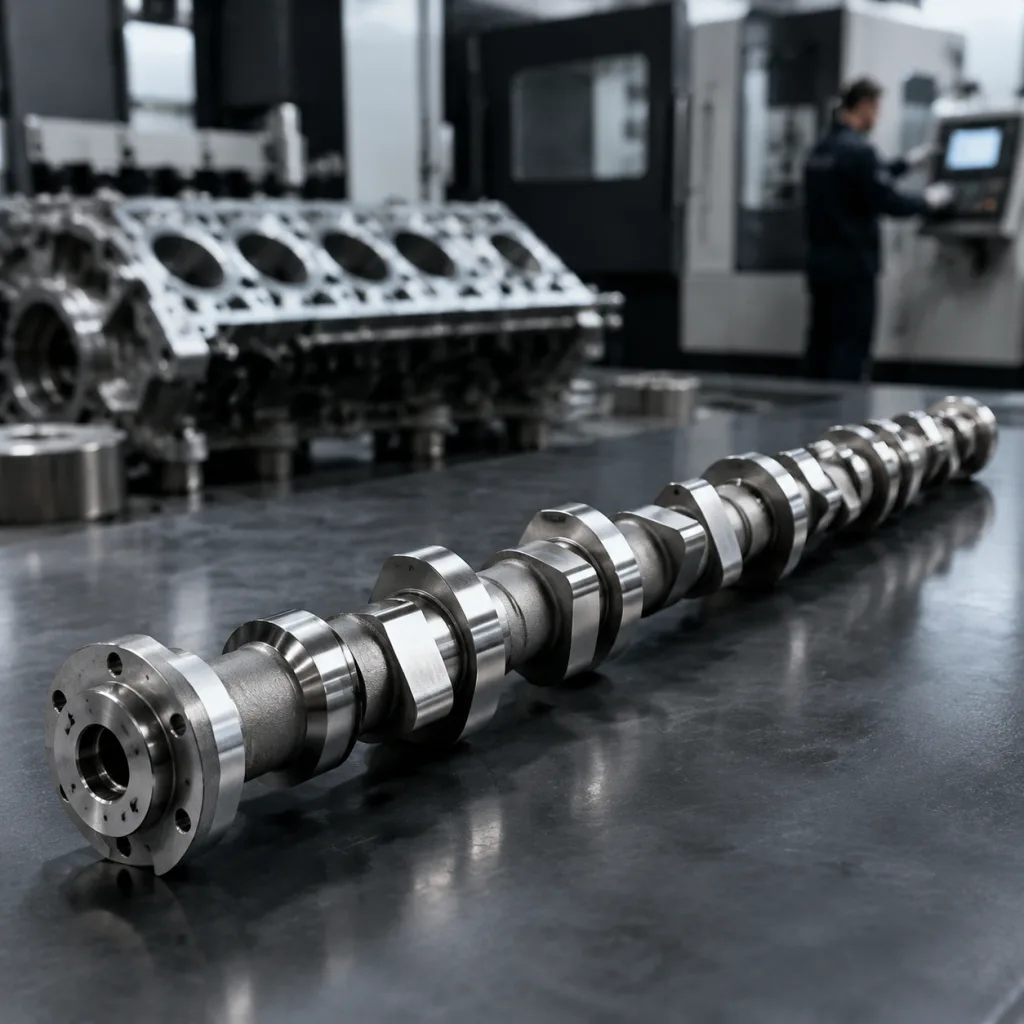
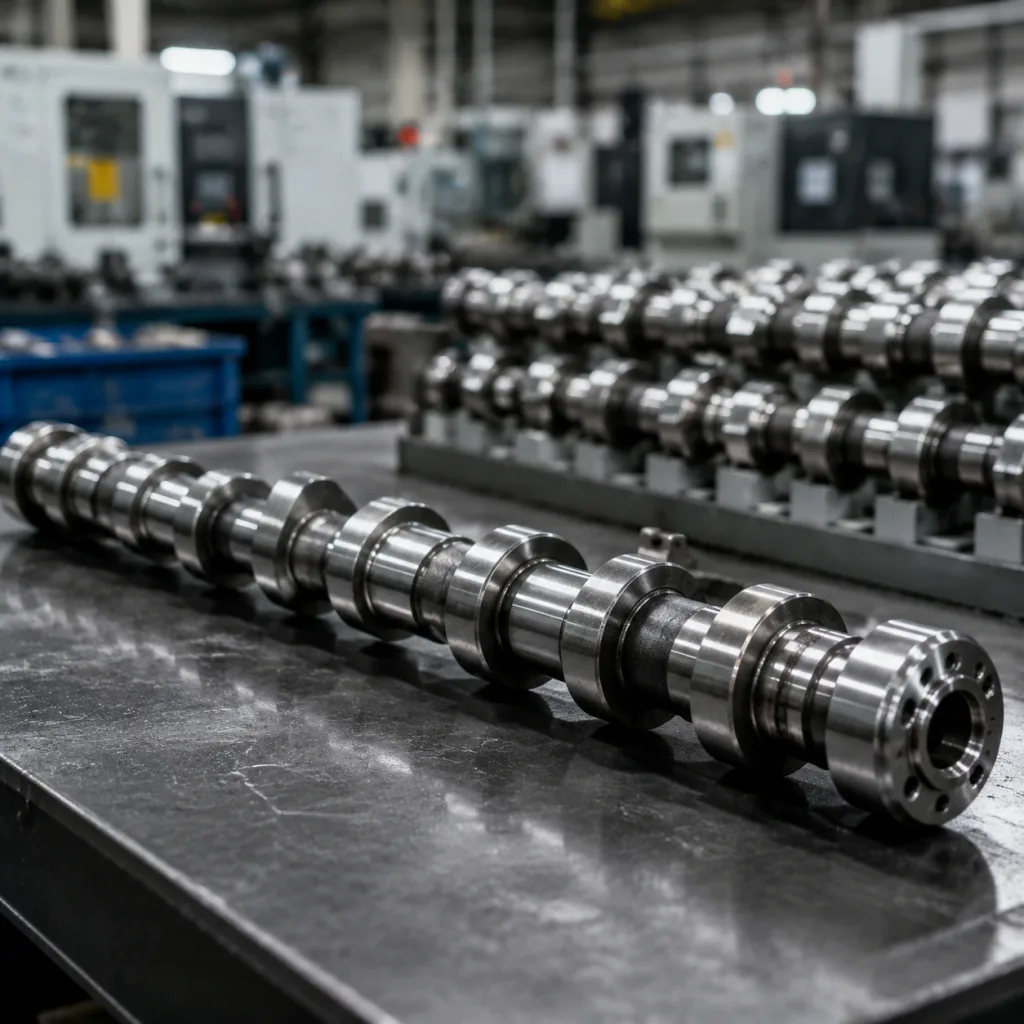
Before approving a camshaft Acura supplier, buyers should confirm whether the factory controls the production route or simply trades finished parts. Camshafts are sensitive to lobe profile, journal diameter, hardness depth, runout, surface finish, and timing-reference accuracy. Even small deviations can affect valve timing, oil-film stability, NVH, wear rate, and warranty exposure. As a working benchmark, many buyers ask suppliers to quote against controlled drawings with journal diameter tolerance in the ±0.005–0.015 mm range, camshaft runout checked at defined datum journals, and lobe lift verified with a CMM, cam profile tester, or calibrated height gauge fixture.
Key sourcing checks include:
- Application coverage by engine family, year range, cam position, valve-train type, and market region
- Drawing availability or reverse-engineering capability from approved samples, including datum definition
- Material grade, blank route, heat treatment method, and surface-hardness records, commonly targeting 55–62 HRC where specified
- Journal and lobe inspection method, including gauge calibration status and GR&R expectations for programme parts
- Batch traceability from steel input or semi-finished blank to final packing, preferably by heat number, work order, and carton label
- Packaging specification for sea freight, air freight, and mixed-SKU consolidation, including anti-rust oil, VCI sleeve, end protection, and pallet stack height
- Export documents, HS code support, and country-of-origin documentation
For broader engine component sourcing, buyers can review our catalog, including related valvetrain and rotating assembly parts. When Acura-fit camshafts are purchased with gaskets, timing components, seals, or oil-control parts, consolidated procurement can reduce inbound inspection workload, shipment handling, and container complexity.
Typical Supply Terms for Acura-Fit Camshafts
Supply terms depend on SKU complexity, annual forecast, packaging requirements, and whether the order uses an existing Driventus application or a customer-controlled drawing. Price is normally driven by blank cost, alloy or chilled-cast route, number of lobes and journals, grinding time, heat-treatment specification, inspection level, packing type, and order release pattern. The table below gives a practical planning range for wholesale, private-label, and programme buyers.
| Item | Typical B2B Range | Procurement Note |
|---|---|---|
| MOQ for stocked or developed SKUs | 100–300 pcs per SKU | Lower trial quantities may be reviewed for programme validation; mixed-SKU cartons should be agreed before PI |
| MOQ for new development | 300–1,000 pcs per SKU | Depends on tooling, blank route, machining fixtures, inspection gauges, and sample approval cost |
| Indicative price logic | Quoted per SKU and volume tier | Common breaks are sample, 100 pcs, 300 pcs, 500 pcs, and 1,000 pcs; private-label packing and special inspection are priced separately |
| Sample lead time | 30–60 days | Includes material confirmation, rough machining, heat treatment, finish grinding, cleaning, and dimensional inspection |
| Production lead time | 45–90 days | Depends on order mix, machining capacity, heat-treatment queue, inspection level, and packaging specification |
| Standard packaging | Neutral export carton or pallet | Customer branding, barcodes, carton test strength, desiccant, VCI film, and label formats can be quoted separately |
| Documentation | Invoice, packing list, inspection report, origin support | Additional PPAP-style files, control plan, material certificate, and hardness records can be discussed where required |
| Sourcing Model | Best Fit | Main Buyer Requirement |
|---|---|---|
| Catalogue supply | Aftermarket distributors and wholesalers | Fast quotation, OE cross-reference, fitment data, stable packaging, repeat orders from 100–300 pcs/SKU |
| Private-label supply | Regional importers and buying groups | Brand-specific packing, barcode, batch traceability, carton artwork control, pallet plan approval |
| Drawing-based production | OEM, Tier-1, specialist rebuilders | Engineering review, dimensional reports, revision control, tolerance agreement, sample sign-off |
| Consolidated engine kit supply | Repair chains and programme buyers | Camshaft plus related gaskets, seals, timing parts, oil-control parts, and one shipment schedule |