Brake Pads and Rotors Cost: What Buyers Should Budget
Brake pads and rotors cost is rarely just a parts-price question. For buyers supplying workshops, fleets, or multi-site repair groups, the real issue is how pad compound, rotor design, labour exposure, warranty risk, and compliance requirements combine into one brake-job cost structure.
In most passenger-vehicle markets, a front-axle pad-and-rotor replacement commonly falls somewhere around USD 180 to USD 650 installed. That spread is driven by specification, not randomness. A compact car with basic solid rotors sits in a different cost world from a premium SUV using coated vented discs, low-copper friction, and higher labour time. This article looks at brake pads and rotors cost through a buyer’s lens: where the money goes, where cheaper offers fail, and how to compare suppliers without relying on headline price alone. Driventus is an independent aftermarket manufacturer; brand names are referenced for fitment only.
Start with the budgeting frame: what does a brake job usually cost by segment?
A useful starting point is to separate parts cost from installed cost. Buyers often compare pad-and-rotor quotations correctly, then misread the final market price because labour and channel margin move faster than factory-gate cost.
</tr></thead><tbody> </tbody></table>*Indicative market ranges for one axle. Two-axle jobs can be significantly higher.
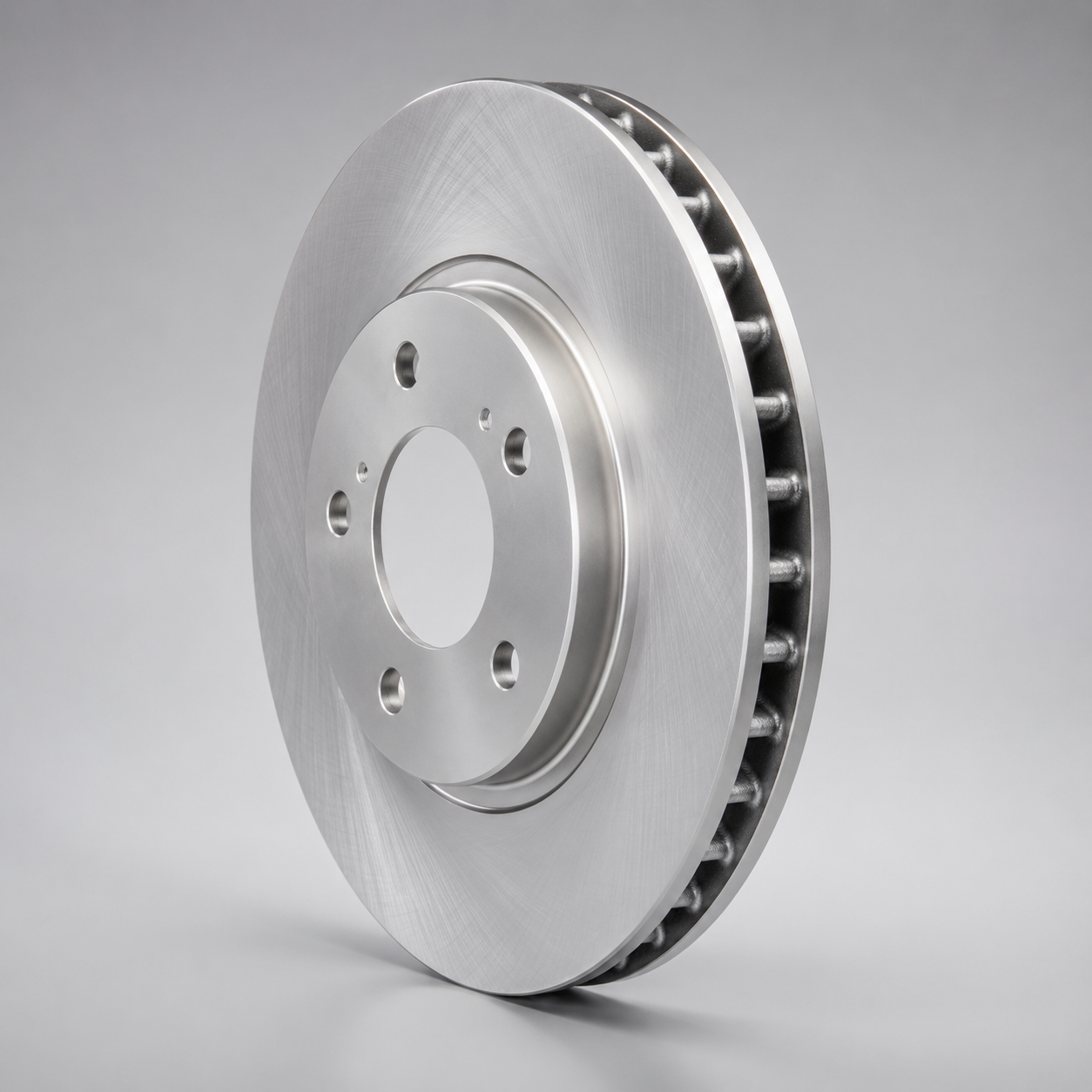
The table shows why brake pads and rotors cost should be discussed in bands, not as a single market number. Rotor specification is usually the biggest swing factor. A basic grey-iron solid rotor for a compact car is not comparable to a coated vented disc built to tighter runout control for a heavier platform.
Pads add another layer. NAO, semi-metallic, and ceramic formulations differ in raw-material cost, processing, dust behaviour, and wear profile. So when a buyer sees a low quote, the first question should be: *low compared with what exact specification?*
Spec deep-dive: which technical choices move brake pads and rotors cost the most?
If you want to understand why one quotation is 20% higher than another, break the product into technical cost drivers instead of looking at the set price as a black box.
Pad material and hardware package
Pad sets become more expensive when they include multilayer shims, precise chamfers or slots, wear indicators, and stainless fitting clips. Friction formulation matters too:
NAO / organic: often supports lower noise potential, but may offer less stable dust control at higher temperatures
Semi-metallic: usually performs well under higher load and can be cost-competitive in many applications
Ceramic: often improves visible dust performance and NVH stability, but usually at a higher formulation cost
In export programmes, copper-reduction rules can also reshape the formulation and the price. Buyers should confirm compliance with market-specific chemical restrictions, including REACH (EC) No 1907/2006 where relevant.
Rotor construction and machining standard
Rotor cost is heavily influenced by:
Grey iron grade and chemistry consistency
Solid versus vented construction
Coated versus uncoated finish
Final machining tolerance
Balancing and lateral runout control
Packaging protection against transit corrosion
A rotor held to tighter runout and disc-thickness-variation limits generally costs more to manufacture because it requires better process discipline and more inspection. That extra cost can reduce pedal pulsation complaints later.
Validation and process control
Suppliers working under IATF 16949:2016 and ISO 9001:2015 usually build more traceability, change control, and corrective-action discipline into production. That does not make every product equal, but it does improve the framework around consistency. You can review our broader quality system for the controls B2B customers commonly request.
Comparison that matters: why labour and channel structure can outweigh part price
Many buyers focus on the pad set and rotor price, then discover that installed market pricing is being driven just as much by workshop economics and warranty exposure.
Cost element
Share of total brake job
Why it varies
Pads
15-30%
Compound, hardware kit, brand tier
Rotors
20-40%
Diameter, vent design, coating, casting weight
Labour
30-50%
Workshop rates, seized hardware, service time
Shop supplies / extras
5-15%
Sensors, brake fluid, cleaner, fitting parts
Channel margin / warranty reserve
10-25%
Market competition, return rate, service policy
</tr></thead><tbody> </tbody></table>This is why brake pads and rotors cost cannot be judged fairly from ex-works price alone. Labour inflation, difficult fitment, missing hardware, or high return rates can erase a cheaper purchase price quickly.
Multi-location repair groups often accept a slightly higher acquisition cost when the programme delivers:
Stable fitment across batches
Lower noise and vibration claims
Predictable wear rate
Better corrosion appearance after installation
Reduced fitting time through complete hardware supply
In practice, the better question is not “Which line is cheapest?” but “Which line protects margin after labour, claims, and repeat service are included?”
Step-by-step: how to compare supplier quotations without false savings
A brake quote should be treated like a technical comparison exercise, not a simple price check. Two offers may look similar while describing materially different products.
Use a like-for-like checklist:
Pad backing plate thickness and tolerance
Friction material type and target friction class
Rotor minimum and nominal thickness
Rotor lateral runout limit after machining
Disc thickness variation control method
Coating type and salt-spray expectation if specified
Included accessories: clips, shims, sensors, bolts
Batch traceability and label format
Test references such as SAE J2522 or SAE J2527 where applicable
Compliance declarations for REACH (EC) No 1907/2006 and other requested market rules
If OE alignment matters, use validated cross-references only. For example, quote OE 11251… in the RFQ only when the customer already works from that reference pattern. Unverified interchange claims create avoidable risk.
For private-label or programme-specific needs, custom manufacturing can help align friction mix, coating level, packaging, and inspection scope with your target brake pads and rotors cost.
Failure modes to watch: where the cheapest brake programme becomes expensive
Low-cost sourcing does not automatically mean bad sourcing. But in brake products, aggressive price compression often shows up later in the form of claims, labour loss, or damaged customer trust.
The most common hidden-cost failure modes are:
Noise and vibration claims: weak shim bonding, unstable friction mix, or poor rotor finish
Short service life: low-density friction material or the wrong hardness balance between pad and disc
Corrosion complaints: insufficient coating coverage on rotor hats and edges
Fitment delays: incomplete hardware kits or inconsistent machining dimensions
Batch inconsistency: uncontrolled raw-material variation or weak process change management
That is why experienced buyers ask how output is controlled, not just how low the number can go. Useful checkpoints include incoming material inspection, moulding parameter control, curing records, rotor balancing, final dimensional inspection, and retained sample policy.
If fitment breadth is part of the sourcing decision, buyers should also review our catalog to compare part-family coverage with programme targets.
Scenario planning for 2026: how importers and repair groups should build the budget
For annual planning, a three-band model is often more practical than one blended average. It lets buyers map product level to customer type and claim tolerance.
Economy line: aimed at price-sensitive fleets and older vehicles; keep core dimensional and material controls, but accept simpler packaging and fewer cosmetic features
Mid-range line: the main volume segment for most distributors; balance coating level, NVH performance, and stable service life
Premium line: suited to newer platforms, higher-end workshops, and lower claim tolerance; specify tighter process control and stronger corrosion appearance
Then build the cost stack in order:
1. Ex-works or FOB unit price 2. Ocean freight and inland logistics 3. Duty and customs brokerage 4. Packaging for channel format 5. Warranty reserve per 1,000 sets 6. Expected labour sensitivity if fitment or noise issues occur
This approach gives a more realistic brake pads and rotors cost model than using unit price alone. It also improves supplier discussions because the commercial trade-offs are tied directly to specification choices.
Driventus is an independent aftermarket manufacturer; brand names are referenced for fitment only. If you are benchmarking new brake programmes, you can request a quote with target applications, annual volumes, and required test documentation.
Frequently asked questions
The biggest variables are labour rate, rotor specification, pad material, vehicle segment, and included hardware. A compact car with solid rotors and basic pads costs much less than an SUV or premium platform using coated vented discs and higher-grade friction material.
Usually, yes, but not in every programme. Cost depends on formulation, shim package, batch size, and compliance requirements. Buyers should compare full specification sheets rather than assume one material family always carries the same premium.
Use a like-for-like matrix covering pad compound, rotor dimensions, machining tolerances, coating, included hardware, traceability, test references, and compliance documents. Comparing unit price without those details often creates false savings and higher warranty cost.
If you are reviewing supply options for brake pads and rotors across multiple vehicle segments, send your target specifications and volume plan through our contact page. We can discuss fitment coverage, validation scope and commercial terms at /contact.html