Air Cabin Filter Replacement Cost: What Buyers Should Expect
Air cabin filter replacement cost looks simple on paper, then becomes inconsistent in practice. The invoice is shaped by two things at once: the filter itself and the time it takes to install it correctly. Media grade, frame accuracy, housing access, labour rate, vehicle mix, and service channel all change the final number.
For B2B buyers, that makes this a cost-control issue rather than a simple parts-price question. A low-priced filter can still be expensive if it fits poorly, extends technician time, creates bypass leakage, or forces early replacement. Across a fleet, workshop group, or distribution programme, those small losses repeat.
Most cabin filters follow a scheduled replacement cycle of about 12 months or 15,000-20,000 km, though dusty roads, urban pollution, and heavy HVAC use can shorten that to 8,000-12,000 km or roughly 6-9 months. So the real question is not just what one filter costs. It is what a repeatable replacement programme costs per vehicle, per year, across the full vehicle parc.
This article breaks down the cost logic behind air cabin filter replacement cost from a buyer perspective: where the money goes, why retail price comparisons often mislead, which technical details actually move service spend, and how distributors and service networks can compare OE-equivalent aftermarket supply more realistically. Driventus is an independent aftermarket manufacturer; brand names are referenced for fitment only.
Start with the cost equation, not the filter price
A cabin filter replacement invoice is usually built from three layers: part cost, labour time, and service overhead.
That sounds obvious. It is also where many buying decisions go wrong.
On many passenger vehicles, the part itself is not the dominant cost. A glovebox-access filter may take 5-15 minutes to replace. A unit behind trim, under the cowl, or inside a tighter HVAC housing may take 20-40 minutes. Some van and premium-platform applications can approach 0.6 hour if clips, covers, or wiper-scuttle components must be removed and refitted. In those cases, labour variation is larger than the price gap between a standard particulate filter and an activated carbon version.
Indirect costs matter too. Workshops may build in booking time, parts handling, consumables, and admin overhead. Fleets feel the same issue differently: bay occupancy, scheduling friction, and vehicle downtime. At a bay rate of US$70-150/hour, every additional 5 minutes adds roughly US$5.80-12.50 before markup.
The main variables behind air cabin filter replacement cost are usually:
Filter media: standard particulate media is usually cheaper than activated carbon or multi-layer anti-odour constructions
Dimensional accuracy: poor tolerance can increase install time or cause bypass leakage
Vehicle access design: glovebox, under-cowl, dash, and scuttle layouts create very different labour profiles
Service region: local labour rates can vary sharply between dealer, independent, and fleet contract channels
Kit format: some applications require twin filters, seals, or extra clips
Replacement interval: dusty and polluted environments shorten service life and raise annual spend
Vehicle segment: compact cars, SUVs, vans, and premium vehicles often have different service complexity
Channel margins: importer, distributor, workshop, and e-commerce channels all price differently
For procurement planning, the more useful metric is usually installed cost per vehicle per year. That allows a buyer to compare sourcing options on a like-for-like basis. A US$3 swing in installed cost across 2,000 annual replacements is already US$6,000. That is before comeback risk or lost workshop efficiency is counted.
Where the market actually lands on price
The ranges below are broad on purpose. Cabin filter pricing varies by application, region, brand position, and volume commitment.
Cost element
Budget aftermarket
Mid-range OE-equivalent
Higher-spec carbon / multi-layer
Part only, wholesale channel
US$1.80-4.50
US$4.50-8.50
US$8.50-15.00
Part only, workshop retail
US$8-18
US$15-28
US$25-45
Typical labour time
0.1-0.3 hr
0.1-0.4 hr
0.1-0.4 hr
Installed service total
US$20-45
US$35-75
US$55-110
</tr></thead><tbody> </tbody></table>Those ranges show why online retail comparisons can be misleading. Two filters of similar size can produce very different installed prices because labour structure, channel margin, and housing access vary more than buyers expect.
A few common scenarios:
Easy-access housing plus standard particulate filter: low installed total
Restricted housing plus activated carbon filter: much higher installed total
Fleet contract pricing: lower part and labour cost due to volume and standardised process
Premium workshop retail: higher margin and higher customer-facing overhead
A better planning method is to split the number into factory price, landed cost, channel markup, and installed labour.
For example, a US$3.20 EXW particulate filter might land at roughly US$4.00-4.60 after freight, duty, and local handling. It may then sell distributor-to-workshop at US$7.00-10.00 and finally appear as a US$20-35 installed service depending on labour time. An activated carbon unit bought at US$6.50-8.00 EXW might land near US$8.00-10.50 and end up in a US$45-80 installed service once labour and margin are added.
Volume structure changes the economics too:
Trial or mixed-SKU orders: higher unit cost because of setup, carton splitting, and weaker freight efficiency
Routine replenishment: better pricing once demand is stable and full-carton ordering is possible
Annual programme or frame agreement: best pricing when forecast volume, order cadence, and packaging standards are fixed
As a general aftermarket reference, MOQ often sits around 100-300 pieces per SKU for standard printed packs, 500-1,000 per SKU for private label, and 2,000+ per design where custom tooling, unique frames, or dedicated packaging are involved. Repeat lead times are often 25-40 days; first-order or new-label programmes may run 35-60 days before transit.
So if a buyer is evaluating air cabin filter replacement cost, the useful comparison is not the search result headline. It is the full installed-cost path from factory to vehicle.
Three technical failure modes that quietly raise replacement cost
Cheap filters rarely fail on invoice price. They fail in service.
For B2B buyers, the hidden cost usually comes from one of three places: airflow performance, fitment precision, or durability in logistics and installation.
1. Media that looks acceptable but performs poorly
Typical cabin filter constructions include:
Particle filter media for dust, pollen, and general particulates
Activated carbon media for odour reduction and adsorption of certain gaseous pollutants
Multi-layer designs that combine particulate capture with carbon treatment and support layers
The material choice affects both market position and service outcome. Standard particulate filters often suit entry-level programmes. Activated carbon filters are more common in urban markets, premium applications, and workshop channels where odour control is part of the service promise.
Buyers usually compare media basis weight, pleat count, and pressure-drop behaviour at defined airflow points. Typical checks may include pressure drop at 150-300 m3/h, media consistency within agreed tolerance bands, and carbon layer presence or loading stability for odour-control SKUs. A filter with low media area or unstable pleat geometry may still look fine visually but can raise blower load, reduce HVAC flow, and create customer complaints.
2. Frame tolerance that wastes technician minutes
Frame squareness, seal compression, pleat stability, and media bond integrity all affect installation speed and field performance. Common checkpoints include:
Length, width, and height versus drawing
Media area consistency lot to lot
Frame rigidity during installation
Seal compression without distortion
Moisture-related deformation resistance
Clean edges and stable frame-media bonding
In many buyer control plans, practical targets may include overall dimensions within about ±0.5-1.0 mm, frame warp below roughly 1.5-2.0 mm on flatness check, and bonded edges without open gaps. Soft PU or foam seals also need compression recovery: too little causes bypass, too much slows installation.
A filter that has to be re-seated, forced into place, or adjusted around a warped frame adds hidden labour cost immediately. One extra minute across 2,500 annual replacements is more than 40 labour hours.
3. Packaging and logistics damage before installation
A technically acceptable part can still arrive unusable if packaging is weak. Crushed cartons, pallet overhang, poor moisture control, and long sea transit can distort the frame enough to create fitment issues.
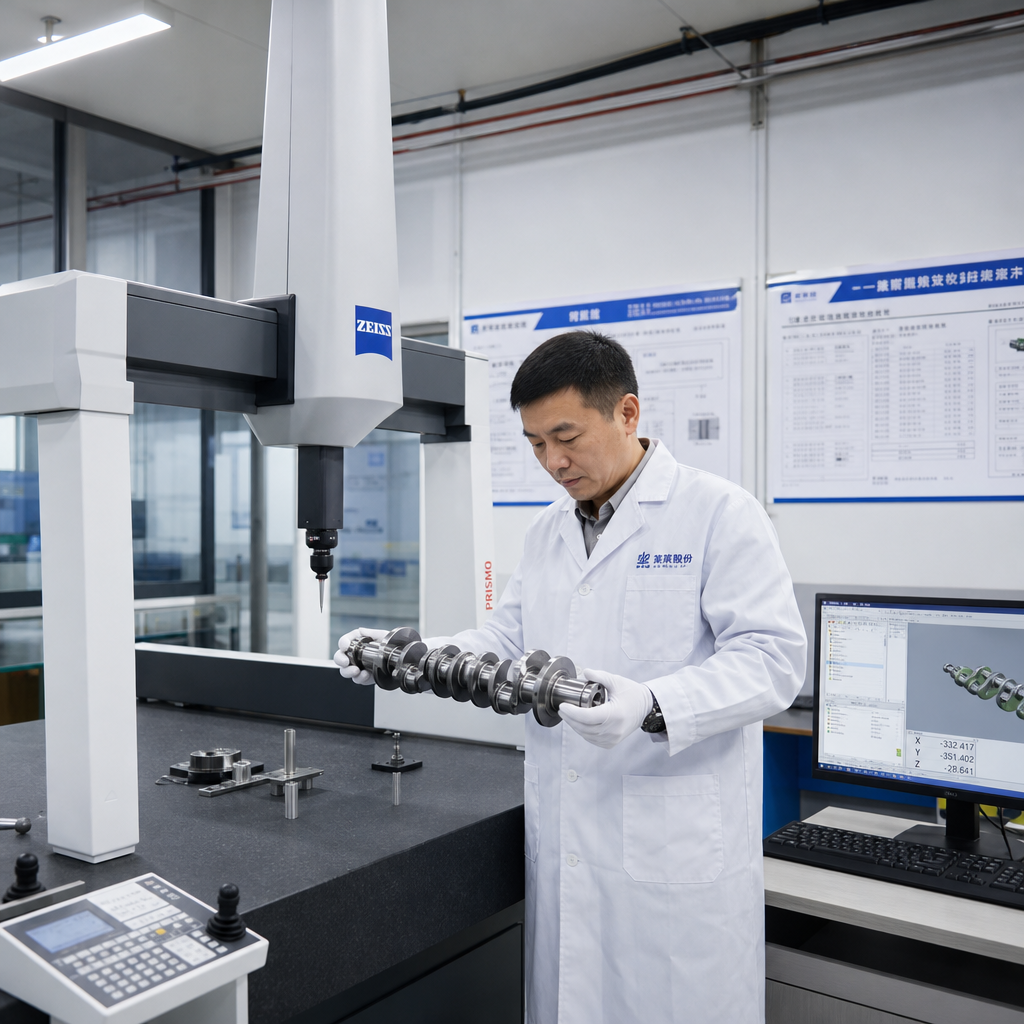
That is why validation should cover more than the part itself. Buyers often review dimensional inspection, airflow resistance, media integrity, environmental material compliance, and transport protection together. For EU and UK markets, requests commonly include documentation related to REACH (EC) No 1907/2006. Process discipline and traceability are often expected to align with IATF 16949:2016 and ISO 9001:2015.
For buyers reviewing sourcing options, our quality system outlines process controls and inspection discipline relevant to repeatable aftermarket fitment.
Low unit price vs. low service spend: a comparison buyers should run
The lowest ex-works price is not automatically the cheapest programme. In multi-location service networks, labour minutes and comeback rate often matter more than a small part-price saving.
Procurement factor
Lower unit price focus
Lower total service cost focus
Unit part cost
Lowest possible
Controlled, not necessarily lowest
Fitment consistency
Variable by batch
Tight dimensional repeatability
Technician install time
Less predictable
More predictable
Customer comeback risk
Higher if sealing is poor
Lower with stable quality
Inventory complexity
May increase with fragmented sourcing
Lower with consolidated range
Suitable for
Spot-buy trading
Planned service programmes
</tr></thead><tbody> </tbody></table>A practical review should ask:
1. Is the part dimensionally matched to the target housing? 2. Is the media specification stable across production batches? 3. Can the supplier provide cross-reference mapping where applicable? 4. Are packaging and labels suited to the intended channel? 5. Can the supplier support private label or special pack formats? 6. Is there evidence that install variability is low across workshops?
Here is the simple math buyers often overlook.
Assume Option A is US$1.20 cheaper than Option B. But Option A adds 4 minutes of install time because fit is less consistent. At US$90/hour labour, those 4 minutes cost about US$6.00. The apparent saving becomes a net US$4.80 loss per vehicle before warranty, rework, or customer handling is considered.
Now add comeback rate. If service complaints rise from 0.3% to 1.0%, the cost gap widens again through repeat labour, replacement parts, and administration.
Stock policy also changes the comparison. A supplier with the lowest price but long lead times and high MOQ can force excess inventory. If a buyer must take 1,000 pieces to secure the best price but monthly demand is only 120 pieces, carrying cost, warehouse space, and obsolescence risk can erase the purchase advantage.
If you are managing a broad application range, product breadth matters too. You can review our catalog for the available programme and discuss custom manufacturing where bespoke packaging, media selection, or channel-specific requirements apply.
A practical approval workflow for OE-equivalent cabin filters
When buyers say they want OE-equivalent supply, they should define what that means in operational terms. Visual similarity is not enough. Approval should cover fit, sealing, airflow behaviour, service interval expectation, and traceability.
A usable sourcing checklist includes:
Dimensions: length, width, depth, and frame profile match the housing
Airflow characteristics: pressure drop stays within acceptable range at specified airflow
Media basis weight and layer structure: aligned to intended service level
Odour control requirement: activated carbon used where the channel expects it
Packaging durability: no frame deformation through freight or warehousing
Traceability: batch codes linked to inspection records
Compliance documents: material declarations available where required
Application accuracy: vehicle mapping verified against documented references
A disciplined approval sequence usually looks like this:
1. Document review: drawing, dimensions, media specification, cross references, and compliance documents 2. First-article sample check: measure critical dimensions and inspect frame, pleats, seals, and bond quality 3. Fitment validation: install on target vehicles or housings, not just bench-check against appearance 4. Service-risk review: confirm pressure drop, sealing behaviour, and install repeatability 5. Packaging review: check master carton strength, palletisation, and transit protection 6. Lot-control agreement: define traceability, inspection records, and nonconformance handling before repeat orders
Where an application is sold against an OE format or cross-reference family, the cross-mapping should be document-based and application-specific. Look-alike matching is not enough, especially when small dimensional differences can change sealing or make installation awkward.
Typical checks may include 5-10 sample measurements per lot, pleat count verification, visual review for flash or burrs, seal adhesion inspection, and carton compression review after simulated transport. For higher-volume programmes, buyers may also request AQL-based outgoing inspection, for example AQL 1.0-2.5 for major defects depending on channel risk tolerance.
Supplier process maturity matters as well. Controls associated with IATF 16949:2016 and ISO 9001:2015 can support repeatability in incoming material inspection, in-process checks, nonconformance handling, and lot traceability. They do not replace application validation, but they do reduce variability across repeat orders.
Packaging deserves separate attention. Weak individual boxes, poor moisture protection, or excessive pallet overhang can deform the frame during 30-45 day sea transit. Buyers often specify drop resistance, humidity-safe storage, and pallet stack limits because packaging failure becomes fitment cost later.
Driventus is an independent aftermarket manufacturer; brand names are referenced for fitment only.
How distributors and service networks should build the buying strategy
The most effective purchase plan is usually segmented, not generic. Cabin filters should be bought by application type, service profile, and demand behaviour rather than treated as one flat commodity category.
A practical segmentation model may include:
High-volume passenger car applications: prioritise stock depth, fast turnover, broad coverage, and stable pricing
Premium applications: use activated carbon options where margin and customer expectation justify it
Fleet-maintained vehicles: prioritise fast installation, predictable intervals, and dependable application data
Seasonal service promotions: use pre-kitted packs, retail-ready packaging, and campaign support for spring or air-quality promotions
Supplier questions should be specific:
What is the coverage by market and vehicle parc?
What are MOQ and lead time by SKU family?
What are carton pack data and pallet efficiency figures?
Is private label available?
Can the supplier provide outgoing QC records and inspection plans?
Is material compliance support available for destination markets?
Can replenishment run on rolling forecast schedules?
For larger programmes, compare landed part cost against expected workshop minutes saved per installation. Even 3-5 minutes saved across thousands of vehicles can justify a higher buy price, especially where labour is expensive, service bays are constrained, or the vehicle mix includes difficult-access HVAC housings.
In practice, buyers often divide strategy into three lanes:
1. Fast-moving standard range: stock locally, order in regular cycles, aim for lower MOQ and 25-35 day repeat lead times 2. Medium-volume long-tail applications: consolidate monthly or quarterly to improve carton efficiency and reduce dead stock 3. Private-label or exclusive range: lock in annual forecast, packaging approval, and buffer-stock expectations early because MOQ and lead time are usually higher
Typical buying logic may look like this:
For standard range, MOQ may be 100-300 pcs/SKU with mixed-container loading accepted
For private label, MOQ may rise to 500-1,000 pcs/SKU because printed packaging and changeover cost must be absorbed
For new-tool or uncommon applications, lead time may extend to 45-60 days after sample approval
For annual contracts, better pricing is often available when buyers provide 3-6 month rolling forecasts instead of spot orders
Freight and warehousing also matter. If one supplier packs 40 pieces per master carton and another packs 24 for the same filter size, freight cost per unit and warehouse handling cost will differ. Buyers should request carton dimensions, net and gross weight, units per pallet, and loading quantity per 20GP or 40HQ to compare landed cost properly.
The best strategy usually balances four things at once: cost, application coverage, service efficiency, and supply reliability. Optimising only for ex-works price often raises the real cost later.
If you need application review, packaging options, or supply terms for your channel, you can request a quote with your target range and annual volume forecast.
Frequently asked questions
In many markets, installed service totals fall between about US$20 and US$110 depending on filter type, vehicle access difficulty, labour rate, and service channel. Simple glovebox-access jobs usually sit at the lower end, while restricted-access or activated-carbon applications are typically higher. For buyer planning, a practical model is part cost plus 0.1-0.4 labour hour, with some difficult applications running higher.
Labour depends mainly on housing location and trim removal requirements. Some vehicles allow a 5-10 minute replacement, while others require cowl panel, trim, or glovebox removal and 20-40 minutes of work. Local workshop labour rates then amplify that difference. At US$90/hour, the difference between a 10-minute and 30-minute job is about US$30 in labour alone.
Not if installed service efficiency matters. Lower-priced filters can raise total cost if frame tolerances are inconsistent, sealing is poor, pressure drop is excessive, or fitment causes technician delay. For fleets, distributors, and repair chains, lower total service spend is usually the better procurement metric, especially when annual volume, MOQ, inventory holding, and comeback cost are included.
If you are reviewing cabin filter sourcing for distribution or service networks, Driventus can discuss application coverage, packaging and supply terms. Contact our team to [request a quote](/contact.html).