Aftermarket Automotive Parts Buying Guide for Importers
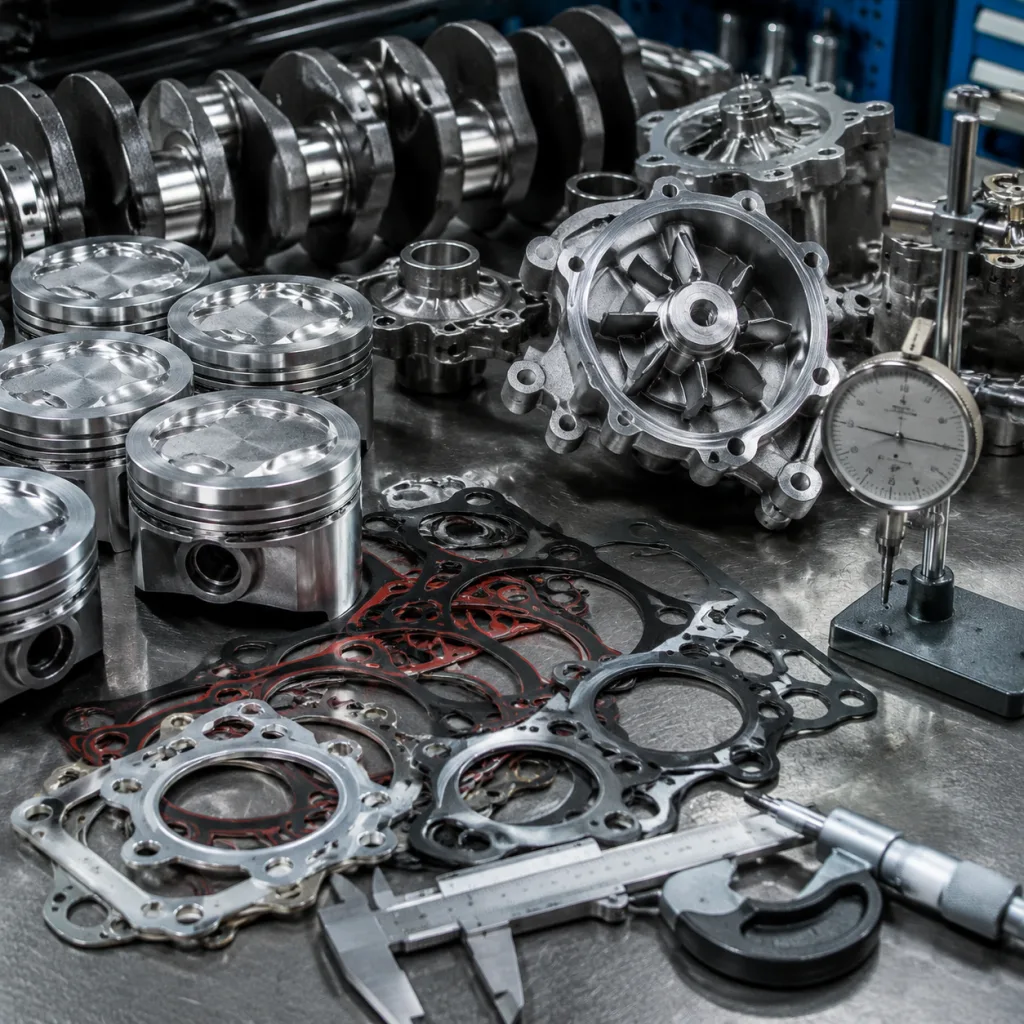
Aftermarket automotive parts are a high-volume sourcing category, but strong demand does not remove procurement risk. Importers still need to confirm fitment data, dimensional compatibility, material consistency, process control, packaging, documentation and batch traceability before placing repeat orders. This guide is written for distributors, wholesalers, repair-chain buyers and sourcing engineers evaluating replacement engine and powertrain components from independent manufacturers. It explains how to compare suppliers by product scope, OE-reference handling, quality management, validation evidence, commercial terms and compliance documentation. Driventus manufactures pistons, crankshafts, gaskets, water pumps, turbochargers and related engine components in Taizhou, Zhejiang, and exports to more than 60 countries. Driventus is an independent aftermarket manufacturer; brand names and OE references are used for fitment identification only.
Define the Sourcing Scope Before Comparing Suppliers
A clear sourcing scope reduces quotation errors and keeps different risk levels from being mixed into one tender. Engine gaskets, pistons, crankshafts, water pumps and turbochargers do not share the same tooling, metallurgy, balancing, sealing or validation requirements. Before requesting prices, separate fast-moving replacement lines from low-volume technical parts and define which items need catalog matching versus engineered review.
For each product group, specify:
Vehicle applications and model years
OE-reference format, for example generic cross-references such as OE 06A… or OE 11251… where applicable
Annual volume by SKU and destination market
Packaging requirements: neutral, private label or bulk service packaging
Required documents: inspection report, material declaration, certificate of conformity and packing list
Warranty handling process and failure-analysis turnaround time
A qualified manufacturer should be able to map part numbers against dimensions, application data and production specifications without claiming approval by a vehicle manufacturer. Cross-references are used for identification and fitment matching only; they are not evidence of OE endorsement.
For an initial range review, buyers can compare engine and powertrain categories in our catalog. If a program requires new drawings, dedicated tooling, private moulds, revised materials or controlled branding, custom manufacturing is the better route than standard catalog sourcing.
Evaluate Product Fitment, Materials and Process Controls
Fitment problems usually begin before production, often with incomplete application data, copied catalogues, uncontrolled drawings or weak change management. Procurement teams should ask how the supplier controls product data from enquiry through sampling, production and shipment.
A credible replacement-parts supplier should provide a controlled drawing or specification record for critical dimensions. For pistons, this may include skirt profile, pin bore, ring groove width and crown geometry. For crankshafts, it should include journal diameter, fillet radius, hardness zone, oil-hole finishing and runout. For gaskets, it should include bore diameter, bead geometry, coating type and compressed thickness. For water pumps, it should include impeller design, bearing type, seal material and pulley alignment.
Product family
Critical checks
Typical procurement risk
Pistons
Diameter grading, ring groove width, pin bore, alloy specification
</tr></thead><tbody> </tbody></table>Dimensional tolerance requirements vary by part family and application. Buyers should not accept broad claims such as “OE quality” unless the supplier can show measurable inspection criteria, defined acceptance limits and part-specific validation records. Request actual control plans, sample inspection records and batch-level traceability evidence before approving regular supply.
Check Quality System Evidence, Not Only Certificates
Certificates are useful, but sourcing decisions should be based on how the quality system is applied to the products being purchased. IATF 16949:2016 and ISO 9001:2015 are relevant quality management standards for automotive suppliers because they support structured process control, corrective action, traceability, internal audits and supplier management. However, a certificate alone does not prove that a specific aftermarket automotive parts program has passed validation.
During supplier review, ask for evidence in four areas:
1. Incoming material control: chemical composition reports, supplier qualification and heat/batch records. 2. In-process control: machining checks, torque records, hardness testing, pressure testing or balancing logs where relevant. 3. Final inspection: dimensional reports, visual criteria, leakage tests, rotating assembly checks or packaging inspection. 4. Corrective action: 8D reports, containment records and repeat-defect monitoring.
Driventus operates under IATF 16949:2016 and ISO 9001:2015. Buyers can review the structure of our quality system when assessing whether our process controls match their sourcing requirements.
Compliance expectations also vary by market. For EU and UK buyers, material declarations may need to support REACH (EC) No 1907/2006 obligations. For emission-related components, confirm the legal requirements for the specific destination market before making performance or compliance claims. ECE R-83 is relevant to vehicle emissions type approval, but it should not be used as a blanket claim for all replacement components.
Compare Supplier Types by Cost, Control and Risk
The lowest unit price is not always the lowest landed cost. Importers should compare supplier structures by defect risk, communication speed, tooling control, documentation quality, engineering support and ability to manage private-label programs.
Supplier type
Advantages
Limitations
Best fit
Trading company
Wide SKU access, flexible small orders
Limited process visibility, variable factories
Trial orders and mixed containers
Single-process factory
Deep capability in one process
Narrow product range, more supplier coordination
Technical parts with high process focus
Vertically integrated manufacturer
Better control over machining, inspection and traceability
May require clearer forecasts and MOQ planning
Regular programs and private-label lines
Local distributor
Fast domestic delivery, simple returns
Higher unit cost, limited customisation
Urgent replenishment and low-volume repair needs
</tr></thead><tbody> </tbody></table>For aftermarket automotive parts, total procurement cost should include more than FOB price. Add inspection costs, consolidation costs, packaging damage, claim handling, stockout risk, slow-moving inventory and engineering time spent correcting catalogue or application errors.
A supplier that can support both standard catalog items and engineered modifications may reduce coordination cost. For example, a distributor may use standard gasket and water-pump references for common applications while requesting dedicated piston packaging, revised labels or controlled material specifications for a private program.
Build a Practical RFQ and Sample Approval Checklist
A complete RFQ improves quotation accuracy and reduces disputes after sampling or shipment. Buyers should send structured data rather than only a list of part numbers. Where possible, include expected annual quantity, shipment frequency, target destination, packaging format and any required certificates or declarations.
Recommended RFQ checklist:
Part-number list with application notes and OE cross-reference format where available
Required quantity per SKU: sample, first order and annual forecast
Destination country and preferred Incoterms
Packaging specification, label language and barcode requirements
Required documents: inspection report, certificate of conformity, material declaration and commercial invoice format
Testing requirements by product family, such as pressure test, hardness test, leakage test or dynamic balance report
Acceptable tolerance standard or buyer drawing where controlled
Claim process: evidence required, response time and replacement or credit method
Sample approval should be documented. For critical engine parts, do not rely only on visual comparison. Measure key dimensions, check materials and confirm installation feedback from a qualified technical team. If the buyer has its own drawing or test protocol, that document should control the approval process.
Brake-related procurement teams may use published procedures such as SAE J2527 when evaluating friction performance, where applicable to the product category. The same principle applies to engine components: cite relevant published standards when they apply, but avoid attaching unrelated standards to a part for marketing purposes.
Plan Lead Time, MOQ and Post-Shipment Support
Commercial execution is as important as technical approval. A capable supplier should state realistic lead times for sample production, first-batch production and repeat orders. Timing depends on material availability, machining capacity, surface treatment, inspection load, packaging preparation and the number of SKUs in the order.
Typical planning ranges for engine and powertrain replacement programs:
Stage
Typical planning point
Buyer action
RFQ review
3–7 working days for structured lists
Provide complete data and target market
Sample preparation
15–45 days depending on tooling and stock
Confirm drawings, packaging and tests
First production order
30–60 days after approval
Freeze labels, artwork and inspection criteria
Repeat order
25–50 days depending on SKU mix
Share rolling forecast and priority SKUs
Claim analysis
5–15 working days after evidence receipt
Provide photos, mileage, installation data and batch code
</tr></thead><tbody> </tbody></table>MOQ should be discussed at SKU level, not only order level. A container may meet the total order value but still include uneconomic quantities of slow-moving items. For mixed engine-parts orders, buyers can group fast movers with medium-volume items and schedule rare SKUs less frequently.
Post-shipment support should include traceable batch codes, retained inspection records and a defined claim review process. For importers and repair chains, this helps separate installation issues, catalogue errors, logistics damage and manufacturing defects.
To start a structured review of aftermarket automotive parts for distribution or repair-chain supply, buyers can request a quote with their SKU list, destination market and packaging requirements.
Frequently asked questions
Request a formal quotation, part-number cross-reference list, product drawings or key dimensions where available, inspection report format, certificate of conformity, packaging specification and material declarations when required. For repeat programs, also ask for batch traceability, claim handling procedure and quality system certificates such as IATF 16949:2016 and ISO 9001:2015.
OE references can be used to identify fitment and application compatibility, such as generic formats like OE 06A… or OE 11251…. They should not be presented as vehicle manufacturer approval. Driventus is an independent aftermarket manufacturer; brand names and OE references are used for fitment identification only.
Start with a controlled sample approval process, measure critical dimensions, confirm packaging, request batch inspection records and define claim evidence requirements before shipment. For technical engine parts, use drawings, material checks and application validation rather than price comparison alone.
If you are building a replacement engine-parts program, Driventus can review your SKU list, packaging needs and destination-market requirements. Send the details to our team at /contact.html