Acura OEM: How B2B Buyers Compare Replacement Parts
For procurement teams, **Acura OEM** is usually a benchmark, not a purchasing conclusion. It signals the level of fit, function, documentation, and service performance a replacement part must meet. Importers, distributors, and repair networks may still choose an independent aftermarket source—if the supplier can prove dimensional conformity, material control, validation discipline, and repeat production consistency without adding unnecessary warranty risk or supply-chain drag.
That changes the real question. It is not simply "Is there an OE reference?" It is "Can this supplier match the reference where it matters, and keep matching it lot after lot?" For engine and powertrain parts, the answer should come from drawings, test data, batch traceability, packaging control, and process evidence rather than catalogue language.
This guide is built for that decision. It shows how B2B buyers can assess replacement parts for Acura applications against OE-reference requirements across gaskets, water pumps, pistons, crankshafts, and related assemblies. The focus is practical: critical dimensions often checked within ±0.02 mm to ±0.10 mm depending on feature, hardness windows such as HRC 28-34 or HB 187-241 where relevant, pilot-order defect targets below roughly 500-1,000 ppm for mature items, and MOQ/lead-time structures such as 200-500 pcs for stocked lines versus 1,000-3,000 pcs for private-label or new-tool projects. Set those gates early, and supplier comparison gets much clearer.
Driventus is an independent aftermarket manufacturer; any brand names are mentioned for fitment reference only.
Start with the benchmark: what an Acura OEM reference does—and does not—tell you
In B2B sourcing, an OE-reference replacement part is an aftermarket component engineered to match the original application in the dimensions, materials, and performance characteristics that affect real service life. When buyers search for Acura OEM, they are usually looking for that benchmark: a known reference point for interchangeability, operating behaviour, and documentation quality.
It does not automatically mean factory endorsement. Any supplier implying manufacturer approval should be able to show written proof. If they cannot, treat the OE number as a fitment reference only.
A credible comparison normally covers five areas:
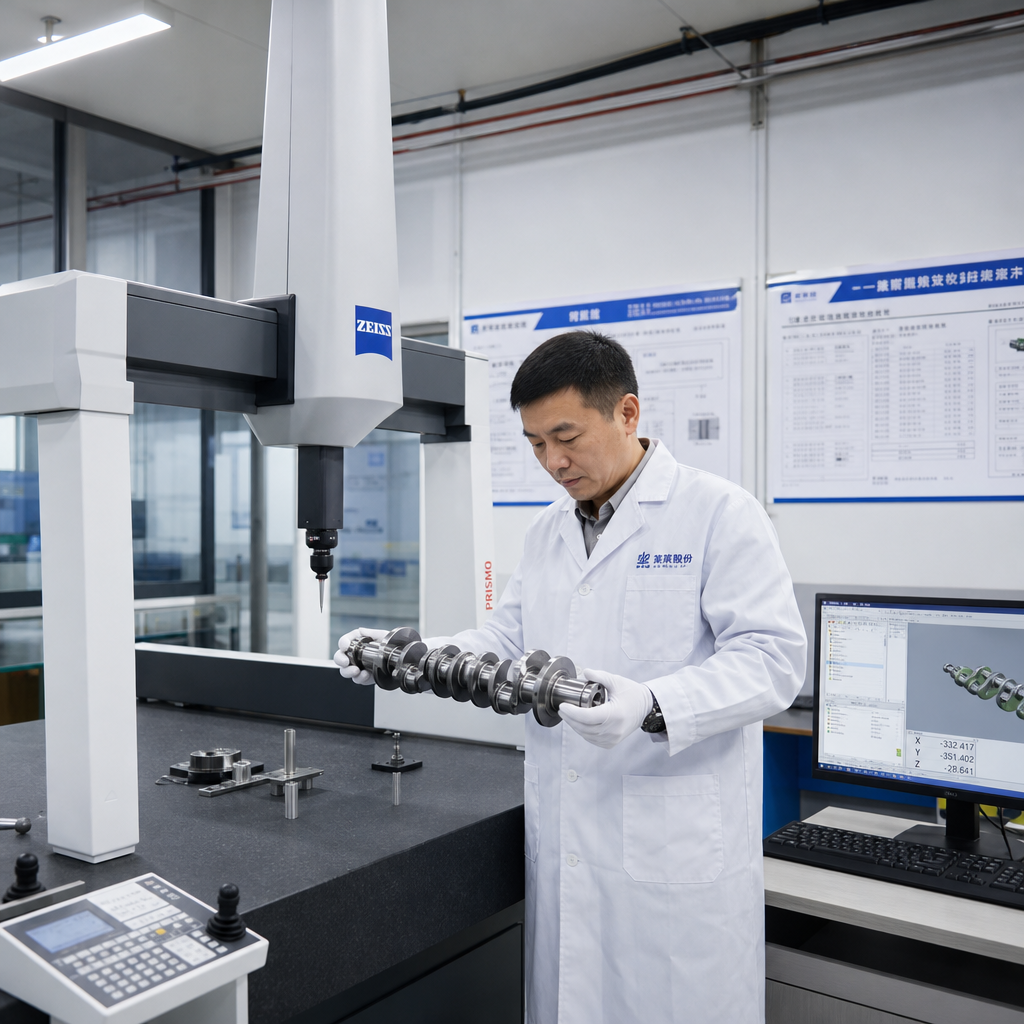
Fitment geometry: mounting points, bolt-hole pitch circle, flange thickness, sealing land width, shaft diameter, journal size, ring-groove dimensions, or gasket outline. For many engine parts, critical dimensions should be checked by CMM or calibrated gauges, with acceptance bands such as ±0.03 mm on sealing surfaces, ±0.02 mm on bearing-related diameters, and ±0.10 mm on non-critical external features.
Material grade: aluminium alloy, forged steel, cast iron, elastomer compound, graphite facing, bearing material, or coating system. A serious supplier should name the actual grade—ADC12 or AlSi12, 45# / C45, 40Cr, FKM, NBR, or MLS stainless construction—not hide behind generic descriptions.
Performance criteria: flow rate, pressure retention, hardness, thermal stability, fatigue life, balance tolerance, or leakage limits. Ask for values. For example: water-pump leakage after endurance testing, piston weight tolerance within ±3 g per set, or crankshaft runout and balance limits.
Quality documentation: control plans, inspection records, PPAP-style submissions where requested, lot coding, and traceability. For higher-risk items, a Level 3 PPAP-style file with control plans and capability data is often worth requesting even if the contract does not require it.
Regulatory and chemical compliance: declarations for REACH (EC) No 1907/2006 where applicable to EU-bound shipments.
For broad product portfolios, branding language is weak evidence. What matters is whether the supplier can demonstrate measurable equivalence to the OE reference and then hold that standard through repeat production. That is the real issue when an Acura OEM number is used internally as the baseline but the commercial choice is between aftermarket factories.
A practical way to structure approvals is to split parts into three risk classes:
1. Low-risk static parts such as basic gaskets, where dimensional conformity, compressed thickness, and media compatibility dominate. 2. Medium-risk assemblies such as water pumps, where bearing source, seal life, pulley alignment, and leak-test discipline matter more. 3. High-risk rotating or combustion parts such as pistons and crankshafts, where metallurgy, weight matching, hardness depth, surface finish, and fatigue performance justify deeper review.
This prevents over-reviewing simple items and under-reviewing expensive ones. A gasket programme may move on a smaller mixed MOQ and short sample cycle. A crankshaft programme should not.
Use a buyer scorecard, not a catalogue claim, when comparing suppliers
A structured sourcing review cuts down on later disputes over fitment, quality, or warranty liability. When Acura OEM numbers are used as the benchmark, every claim of equivalence should connect to evidence—not to a broad fitment list.
Defined alloy, steel grade, elastomer, or facing material
Material cert, hardness report, lab test summary, heat number if relevant
Reduces early wear or sealing failure
Functional testing
Application-specific performance target
Bench test data, endurance summary, leak/flow records with test hours and conditions
Confirms service behaviour
Process capability
Stable repeat production
Control plan, PFMEA summary, Cp/Cpk where available, gauge calibration status
Supports consistent quality
Traceability
Batch identification
Date code, cavity or line traceability, carton label format, lot-retention period
Speeds containment if a claim occurs
Packaging protection
Transit and shelf-life control
Packaging spec, VCI or anti-corrosion method if relevant, carton burst rating
Prevents damage before installation
</tr></thead><tbody> </tbody></table>### RFQ documents worth asking for immediately
Part drawing or dimensional sheet with critical-to-function features marked
Sample inspection report with actual measured values, not pass/fail only
Material declaration for regulated markets
Test summary tied to the exact revision level
Packaging specification and carton label format
Plant certification copies for IATF 16949:2016 and ISO 9001:2015 where relevant
Commercial sheet showing MOQ, tooling status, sample charge policy, standard lead time, and price-break logic
A useful RFQ pack also asks the supplier to state one set of commercial facts clearly: EXW unit price by volume tier, MOQ per SKU, mixed-order policy, sample lead time, mass-production lead time, tooling amortisation method, and claim settlement rules.
Typical patterns look like this:
Stocked standard references: MOQ 50-200 pcs per SKU, 2-4 week lead time, less room on price.
Regular production items: MOQ 300-1,000 pcs per SKU, 30-45 day lead time after deposit or artwork approval.
Private-label packaged items: MOQ often rises by 20-50% if custom cartons, labels, or inserts are required.
New-tool or modified-tool items: MOQ 1,000-3,000 pcs, sample lead time 20-45 days, production lead time 45-75 days depending on process.
For multi-category buying, a weighted scorecard is more reliable than memory or sales impressions. One practical model is 35% technical conformity, 20% validation evidence, 15% quality system maturity, 15% commercial terms, and 15% logistics/packaging performance. That keeps a low quote from outranking a weak technical file.
Where approvals usually fail: critical checks by part family
Not all engine parts fail in the same way. That is why approval criteria should change by product family. A static gasket does not need the same review depth as a rotating crankshaft or a complete water pump assembly.
Part family
Core checks
Typical validation focus
Common risk if under-reviewed
Cylinder head and manifold gaskets
Compressed thickness, bore opening, bead position, facing material
Compression recovery, leakage, heat ageing
Coolant or oil leaks
Water pumps
Impeller geometry, bearing specification, seal material, pulley alignment
</tr></thead><tbody> </tbody></table>For engine-related sourcing, see our catalog and /products/engine-components.html for the part groups most often evaluated against OE references.
If a buyer inquiry already includes an OE number, compare against that exact reference format—such as OE 06A107065 or OE 11251…—and ask the supplier to confirm any supersession, production change, or regional fitment note in writing. An Acura OEM reference may identify the application family, but interchangeability can still shift with engine code, model year split, emissions package, or market-specific revision.
Here is where buyers should go deeper:
Cylinder head and manifold gaskets: Request free-state and compressed thickness, often controlled within about ±0.05 mm to ±0.10 mm depending on construction. For MLS gaskets, ask for layer count, stopper design, emboss height, and coating type. For composite gaskets, ask for facing density, binder system, and temperature limit. Bench checks should include bolt-hole alignment, bore concentricity, and fluid-port exposure against a mating sample.
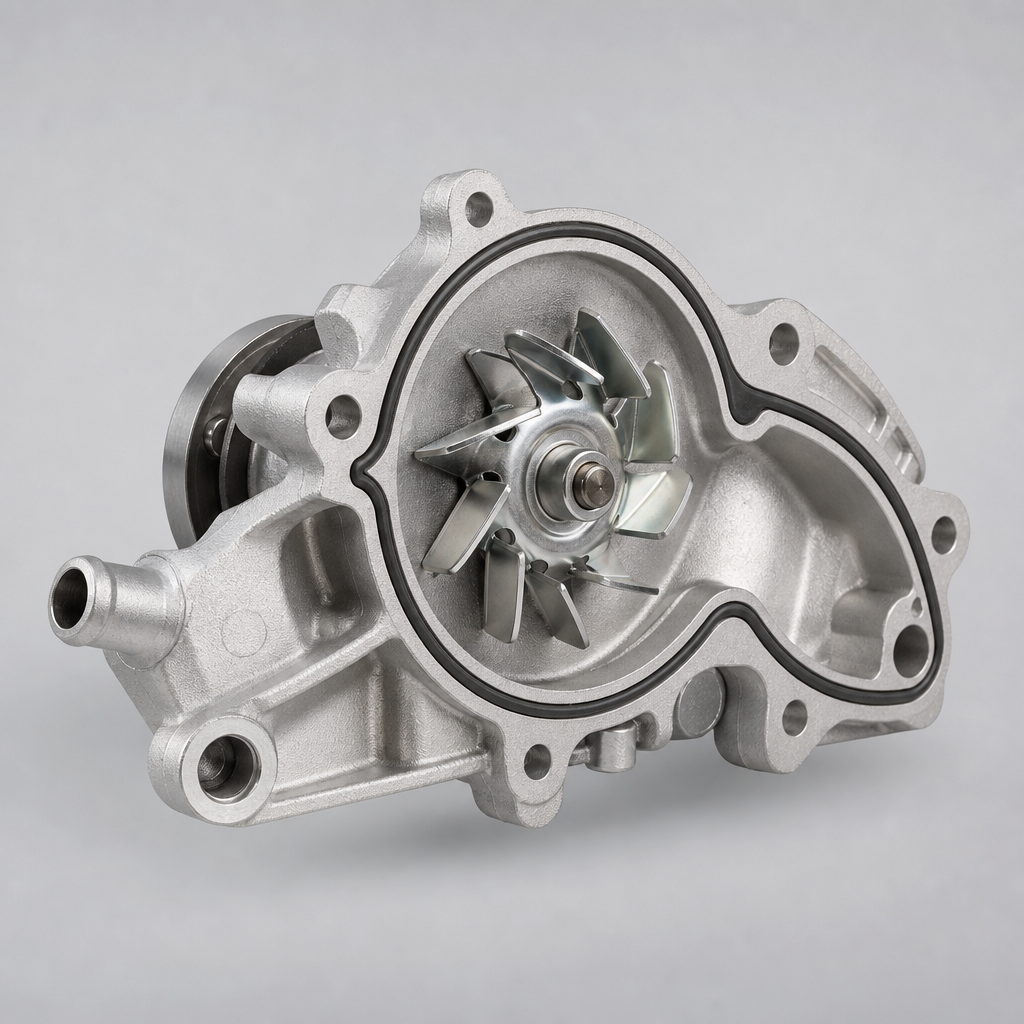
Water pumps: Ask for bearing brand/source, shaft material, impeller material, seal-face composition, and pulley or hub concentricity. Practical checks include shaft runout typically within 0.05 mm or better, impeller-to-housing clearance control, air or coolant leak-test results, and endurance hours at defined rpm. No endurance hours usually means a weak validation file.
Pistons and rings: Request piston alloy, skirt coating, pin-bore tolerance, groove width tolerance, and weight grading. Common buyer checks include weight spread within ±3 g per set or tighter for premium programmes, pin-bore size verified to micron-level tolerance, ring end-gap range, and hardness or microstructure evidence where relevant. Also ask whether ring packs are made in-house or bought from an outside source.
Crankshafts: Request forging or casting route, heat treatment, journal hardness, fillet rolling status, runout spec, and balancing method. Buyers should ask for journal diameter tolerance—often in the ±0.01-0.02 mm range—surface finish on bearing journals, and non-destructive testing such as magnetic particle inspection on critical lots.
Seals and gasket sets: Confirm elastomer compound, spring material where applicable, lip profile, and storage-life conditions. Oil-seal lip dimensions, garter-spring retention, and fluid compatibility with engine oil, coolant, or ATF should all be explicit. Packaging should protect sealing lips from deformation during sea freight.
A useful rule is simple: the closer the part is to a rotating, pressurised, or combustion-facing function, the less acceptable it is to approve it on a catalogue cross-reference alone.
The controls behind the part: how to spot a supplier that can actually repeat quality
Two suppliers may quote the same Acura OEM reference. Only one may be able to make it consistently.
That difference usually appears in process control, not in marketing. For imported replacement parts, buyers should examine how the supplier manages incoming material inspection, in-process checks, final audit, non-conformance handling, and traceability.
At Driventus, buyers typically ask for evidence linked to the quality system, including:
Incoming inspection against material and dimensional requirements
First-off and patrol inspection at controlled intervals
SPC use on high-risk dimensions where the process justifies it
Final audit sampling before packing
Lot traceability from production batch to shipment carton
Corrective action workflow for claims and deviations
Certification is not a guarantee of zero defects. It is a signal of system maturity. For automotive sourcing, IATF 16949:2016 matters because it goes beyond basic quality management and pushes risk-based controls, traceability, change management, supplier development, and continual improvement. ISO 9001:2015 remains useful as the baseline.
Where friction or brake-related items are part of a broader programme, buyers may also ask for validation aligned with standards such as SAE J2527. Where emissions-related fitment is discussed, market compliance may intersect with regulations such as ECE R-83, depending on the component and destination market. The important point is specificity. If a supplier positions a part as an Acura OEM alternative, the evidence should match the product function, be current, and be tied to the quoted revision.
Good audits ask what happens on the shop floor, not just what appears in a presentation:
Incoming material: Are alloy ingots, steel bars, seal rubbers, or gasket sheets checked by certificate review only, or also by hardness, chemistry, thickness, or density sampling? For critical materials, one sample per heat or lot plus visual and dimensional checks is a practical minimum.
In-process inspection frequency: For machined parts, are key dimensions checked every 30 minutes, every 100 pcs, or only at shift change? Clear answers matter.
Capability on CTQ features: Ask for Cp/Cpk targets on critical-to-quality dimensions. Many buyers use Cpk ≥1.33 for stable production features and require containment if results fall below that level.
Final sampling plan: Clarify whether the supplier uses ISO 2859 / ANSI-style AQL sampling and at what level. Common practice is AQL 0.65-1.0 for critical defects, 1.0-1.5 for major defects, and 2.5 for minor defects, adjusted to product risk.
Traceability retention: Ask how long records are kept. For slow-moving export parts, 24-36 months is often more practical than 12 months.
Change control: Confirm whether changes to material source, sub-supplier, tooling, process route, or packaging trigger engineering-change notification before shipment.
A sharp test question is this: if a water pump claim occurs, can the supplier trace the shaft batch, bearing lot, seal lot, assembly date, leak-test result, and shipment carton within 24-48 hours? If the answer is no, the risk is not theoretical.
Price is only one line item: choosing the right supplier for the programme
Procurement decisions here are usually won or lost on total landed risk, not unit price. A cheaper quote can disappear fast once returns, workshop rejection, line stoppage, relabelling, or compliance problems start showing up.
So when buyers compare Acura OEM references with replacement options, they should evaluate not only technical equivalence but also programme fit.
Useful supplier questions include:
What is the standard MOQ by SKU, and can mixed-container orders be supported?
What is the production lead time for repeat orders versus new-tool items?
Can the supplier support private-label packaging and barcode requirements?
Is there a formal engineering change notification process?
What claim response time and containment procedure are documented?
Can sample approval be tied to a locked drawing revision?
If you need private-label or drawing-based development, custom manufacturing can be part of the sourcing strategy, especially for distributors consolidating multiple part families through one audited supplier. Often that is more efficient than managing separate factories with different document habits, packaging rules, and change-control discipline.
For repair-chain customers, packaging consistency matters almost as much as the component itself. A mislabelled variant creates avoidable workshop returns even if the part is dimensionally correct. That is why carton spec, inner-pack count, barcode placement, and fitment coding should be approved alongside the product. When an Acura OEM number appears on customer-facing documentation or cross-reference tables, labelling discipline becomes even more important.
A practical commercial review separates cost into four layers:
1. Piece price: EXW or FOB by volume break, such as 200 pcs, 500 pcs, 1,000 pcs, and full-container mix. 2. Programme cost: tooling, sample freight, custom packaging, barcode setup, palletisation, and inspection fees. 3. Risk cost: expected return rate, warranty reserve, emergency airfreight exposure, and relabelling risk. 4. Cash-flow cost: deposit terms, balance terms, and inventory carried during long lead times.
Typical market logic is not complicated. A supplier may quote a lower unit price at 1,000 pcs, but if monthly demand is only 120 pcs and lead time is 60 days, the stock burden may erase the saving. On the other hand, if a water pump SKU moves 800-1,200 pcs per month, a higher MOQ and dedicated packaging line may lower total cost.
Common commercial benchmarks include:
Standard sample orders: 2-10 pcs per SKU for fitment and dimensional checks
Pilot orders: 50-300 pcs per SKU to validate packaging, outbound handling, and field installation
Repeat production: 300-1,000+ pcs per SKU depending on demand velocity
Custom printed cartons: often 1,000-3,000 pcs per artwork for efficient carton pricing
Lead time: 7-15 days for plain-pack samples if stock exists, 30-45 days for repeat production, 45-75 days for new-tool or private-label projects
Claim management should be settled before PO release. Buyers should know whether the supplier commits to 24-48 hour initial response, 5-10 working day containment analysis, and clear replacement or credit rules by defect type. Those terms are usually more valuable than a small unit-price difference.
A 7-gate approval workflow buyers can reuse across Acura OEM-reference parts
A repeatable workflow keeps purchasing decisions tied to evidence instead of sales pressure. It also creates a record that helps with future replenishment, supplier review, and claim handling.
1. Define the target application clearly: include engine code, model year range, regional market, and any Acura OEM or OE reference used internally. 2. Request technical data with the quotation: drawing, material information, inspection sheet, and test summary. 3. Approve samples against critical dimensions: do not rely on visual checks alone. 4. Confirm compliance documents: especially for EU shipments requiring chemical declarations under REACH (EC) No 1907/2006 where applicable. 5. Lock packaging and labelling: barcode format, country-of-origin marking, carton strength, and pallet rules. 6. Run a pilot order: monitor defect rate, packaging damage, and fitment feedback before scaling. 7. Review supplier responsiveness: corrective action speed is often as important as the initial quality level.
For high-volume search terms like this one, buyer intent often starts with branded references and ends with a sourcing decision based on measurable equivalence, supply reliability, and documentation quality. Teams that formalise approval criteria usually see fewer warranty claims and cleaner replenishment planning.
If you want to review a current part list against replacement options, use our catalog as a starting point and then request a quote with your target references, volumes, and destination market.
To make the workflow operational, many importers turn those seven steps into gated approval records:
Gate 2: Technical file review — check drawing, tolerance list, material callout, test data, and revision status.
Gate 3: Sample approval — record measured values on all critical dimensions, sample photos, installation notes, and any deviations.
Gate 4: Packaging approval — confirm inner and outer pack count, barcode scan test, carton drop condition, pallet configuration, and shipping marks.
Gate 5: Pilot release — set pilot quantity, for example 50-300 pcs, and define acceptance criteria such as less than 1% packaging damage and zero critical fitment failures.
Gate 6: Production release — issue PO only after sample sign-off, agreed artwork, and commercial confirmation of MOQ, lead time, and claim terms.
Gate 7: Post-shipment review — track ppm, return reasons, supplier response time, and any field trend by lot.
Useful numeric thresholds can include:
Critical dimensions: 100% match to the approved tolerance window on the sample report
Pilot defect target: 0 critical defects, major defects below agreed AQL, and field return rate trending below 0.5-1.0% during early rollout
Packaging performance: zero barcode readability failures and no moisture or corrosion issues after transit simulation or first import run
Documentation completeness: no PO release until all required files are tied to the exact revision and lot format
This kind of structure is especially helpful when one distributor is buying gaskets, pumps, pistons, and crankshafts from the same source. It prevents one weak SKU from slipping into the catalogue just because the rest of the programme looks fine.
Frequently asked questions
Yes, if the supplier can demonstrate equivalent fit, function, durability, and chemical compatibility for the intended application. Buyers should focus on critical dimensions, performance data, operating conditions, and field-risk profile rather than assuming every material difference automatically makes the part unacceptable. In practice, that means asking for actual numbers such as hardness range, thickness tolerance, leak-test result, or endurance hours rather than only a material name.
At minimum: a dimensional inspection report, material information, test summary, packaging specification, traceability method, and certification evidence such as IATF 16949:2016 or ISO 9001:2015 where relevant. For EU shipments, ask about REACH declarations when applicable, and make sure the documents are tied to the exact revision being quoted. It is also useful to request MOQ, lead time, sample policy, and claim-response terms in writing so the commercial side is locked before release.
No. An OE reference is a starting point, not final proof. Buyers should still verify application details, revision status, dimensional conformity, and any region-specific fitment differences before approving the part for stock, distribution, or private-label sale. For engine components, even a small variance in bore opening, flange thickness, shaft offset, or seal lip design can create installation failure despite a matching cross-reference.
If you are comparing Acura OEM or OE-reference requirements with aftermarket replacement options, send your part list, target volumes, annual demand, MOQ targets, packaging requirements, and destination market to Driventus. We can review fitment, documentation, pilot-order logic, and supply options through /contact.html