Hood Panel OEM Sustainability Sourcing Criteria for Manufacturing RFQs in Canada
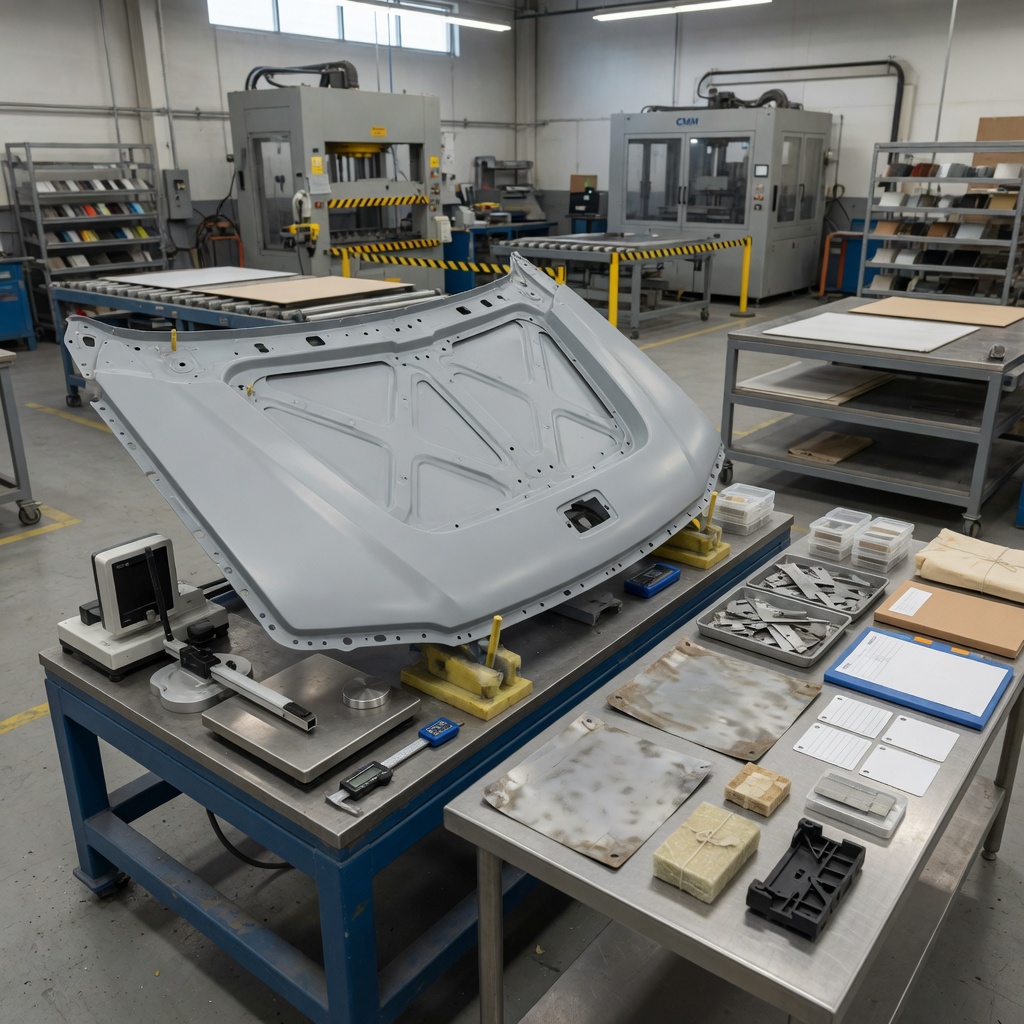
By Vincent Xi, Editorial Author
Author basis: Vincent Xi’s author profile identifies him as an Editorial Author. No first-hand factory, testing, audit, certification, or customer-outcome claim is made.
For Canadian OEM and tier-supplier procurement teams, hood panel OEM sustainability sourcing criteria should answer a narrow RFQ question: which sustainability statements are traceable and comparable enough to influence source selection? A statement should enter quote comparison only when the supplier links it to the quoted hood-panel identifier and revision, saleable-unit boundary, manufacturing site, reporting period, declared unit or denominator, calculation method, evidence owner, supporting record, and change-notification trigger. If any link is missing, classify the statement as unverified or non-comparable rather than awarding sourcing credit.
This page sits within the mirrors body manufacturing product-family taxonomy, but its evidence boundary is the quoted hood panel. Evidence for a mirror, another body component, a different facility, or a corporate average cannot substitute for hood-panel evidence unless the supplier discloses the allocation method, coverage, and limitations and the buyer approves them before comparison.
The supplied sources support RFQ question areas involving molded-content sustainability, raw-material ESG standards systems, and supplier self-assessment. They do not establish an approved hood-panel specification, supplier qualification, current certification, actual product performance, or a Canada-specific legal requirement.
Canada RFQ Sustainability Sourcing Criteria for the Quoted Hood Panel
Decision rule: A sustainability statement may affect the RFQ only when its scope, evidence level, method, and document status match the technically accepted quoted revision.
| RFQ criterion | Supplier evidence to request | Buyer decision rule | Evidence basis |
|---|---|---|---|
| Quoted item and evidence boundary | Hood-panel part or drawing identifier, revision, saleable delivered configuration, included and excluded materials and processes, manufacturing and relevant sub-supplier sites, and reporting period. Supporting records should map to the same scope. | Exclude evidence that cannot be traced to the quoted scope. Accept broader data only after the allocation method, coverage, and limitations are disclosed and approved. Keep sustainability acceptance separate from engineering and quality approval. | Buyer-defined scope and approval control. |
| Material identity and mass | Material designation and revision; component and total mass in kg per saleable hood-panel assembly; measurement or calculation date; method; measured-unit count; included finishes and joining materials; equipment identification and calibration status where applicable. Request the bill of materials, weighing record or calculation file, and applicable material record. | Reconcile the declaration with the quoted configuration before using mass as a denominator for recycled-content, carbon, or end-of-life statements. | Buyer-defined comparability control. |
| Recycled content | Percentage by mass; denominator; qualifying feedstock category; physical, allocation, or other accounting method; manufacturing site; reporting period; exclusions; traceability path; evidence owner; and relevant material, purchasing, or batch records. | Compare only compatible definitions, denominators, accounting methods, sites, and periods. Recycled-content acceptance does not replace technical validation of the proposed material. | Molded-content question context from the Hi-Rel source; part-level controls are buyer-defined. |
| Carbon result, if requested | Carbon-dioxide-equivalent mass per saleable quoted unit; system boundary; included processes; manufacturing site; reporting period; allocation method; primary and secondary data sources; exclusions; and assurance status if claimed. Request the calculation report, boundary map, data summary, and current assurance document where applicable. | Do not rank results with materially different boundaries, facilities, periods, exclusions, or allocation methods until an accepted reconciliation is available. | Raw-material carbon question context from the Hi-Rel source; a complete unit result is a buyer-defined extension requiring separate evidence. |
| End-of-life evidence | Part-specific material map, attachment and joining methods, separation assumptions, contamination assumptions, recovery-pathway basis, and exclusions. | Do not accept a generic recyclability statement as evidence for the quoted hood-panel configuration. | End-of-life question context from the Hi-Rel source; part-specific controls are buyer-defined. |
| Raw-material ESG system or named scheme | Material and sub-supplier scope, due-diligence process, governance, assurance and oversight, audit-result availability, escalation, corrective action, and improvement controls. For any named standard, scheme, or certification, request a current governing document or certificate showing issuer, holder, scope, site, material or product coverage, validity, exclusions, and unresolved findings. | Treat the standards system’s requirements, the supplier’s operating practice, and any certification status as separate evidence layers. Do not infer certification from a logo, membership statement, questionnaire, or expired document. | Standards-system assessment context from Drive Sustainability; verification controls are buyer-defined. |
| Supplier sustainability self-assessment | Questionnaire title or version, completion date, submitting legal entity, facilities covered, buyer-specific additions, open corrective actions, and supporting records. | Use the response for supplier-level screening and follow-up. Require separate hood-panel and manufacturing-site evidence before granting part-level credit. | Supplier-screening context from ACEA; part and site controls are buyer-defined. |
| Current performance, alternatives, and change control | Current baseline with unit, period, method, and evidence; future target with due date and accountable owner; proposed changes to material, process, source, sub-supplier, site, delivered boundary, or calculation method; and a separate quotation and validation package for each alternative. | Record targets as future commitments rather than current performance. Do not treat an alternative as equivalent to the baseline until technical, quality, commercial, and evidence changes are accepted. Require notification and buyer approval before implementing a relevant change. | Buyer-defined sourcing-risk control. |
What the Supplied Sources Support—and What They Do Not
The cited pages explain why particular questions may appear in the RFQ. They do not verify a supplier, manufacturing site, or quoted hood panel.
| Supplied source context | Supported topic | Permitted RFQ use | Unsupported inference to prevent |
|---|---|---|---|
| Hi-Rel Plastics automotive injection-molding sourcing article | In an automotive injection-molding sourcing context, the article discusses recycled content, end-of-life recyclability, raw-material carbon considerations, bio-based thermoplastics, post-consumer material, and sustainability documentation. | Use these topics as questions only for molded content actually included in the quoted hood-panel boundary. | The article does not establish a hood-panel material grade, dimension, mass, recycled-content result, production capability, qualification outcome, or supplier approval. |
| Drive Sustainability raw-material ESG announcement | The announcement describes assessment dimensions for raw-material ESG standards systems, including assurance and oversight, governance, transparency of audit results, and continuous improvement. | Use those dimensions to examine the governance and credibility of a standards system referenced by a supplier. | Standards-system evidence is not a hood-panel requirement, product certificate, facility approval, or proof of the supplier’s operating practice. |
| ACEA supplier sustainability self-assessment announcement | The announcement presents a supplier sustainability self-assessment context covering environmental and social topics, business conduct, compliance, supplier management, and company-specific additions. | Use a current response for supplier screening and corrective-action follow-up, with hood-panel and site-specific questions added to the RFQ. | Questionnaire completion alone does not prove part compliance, site performance, recycled content, carbon performance, or technical acceptance. |
Mirrors Body Manufacturing Scope: Keep Evidence on the Hood Panel
The mirrors body label is a product-family taxonomy, not an evidence-sharing rule. A mirror record or unrelated body-component record is not interchangeable with evidence for the quoted hood panel. Facility-level or company-level data may enter comparison only when the supplier discloses the allocation method, dataset coverage, and limitations and the buyer accepts that method in advance.
> Copy-ready scope clause: Supplier shall identify the quoted hood-panel part or drawing revision, saleable delivered configuration, included and excluded materials and processes, manufacturing site, reporting period, calculation method, evidence owner, and supporting record. Any value derived from a facility, product-family, or company dataset shall disclose its allocation method, coverage, and limitations before comparison.
> Copy-ready consistency clause: Supplier shall use the same quoted-unit boundary and denominator across mass, recycled-content, carbon, and end-of-life submissions or provide a documented reconciliation for each difference.
> Copy-ready technical and change-control clause: Sustainability acceptance shall not constitute engineering or quality approval. Supplier shall notify the buyer before changing a material, source, sub-supplier, site, process, evidence boundary, or calculation method that could affect an accepted statement.
Canada Quote Comparison and Approval Status
The cited sources do not establish Canada-specific bilingual-labeling, legal-compliance, customs, landed-cost, or logistics requirements for this sustainability schedule. Keep those workstreams outside the sustainability comparison unless a separately verified program requirement makes them relevant. A statement such as Canada compliant receives no sustainability credit unless the supplier identifies the applicable requirement, quoted product and revision, responsible legal entity, evidence record, scope, and validity.
Use categorical RFQ statuses until the evidence is comparable:
| Evidence condition | RFQ status | Buyer action |
|---|---|---|
| The statement matches the quoted revision, delivered-unit boundary, manufacturing site, reporting period, method, and supporting record. | Accepted for comparison | Retain the evidence, owner, approval record, and update obligation in the sourcing file. |
| Potentially relevant evidence has a correctable missing field or record. | Clarification required | Request the missing information and withhold sustainability credit while the action remains open. |
| A boundary, denominator, unit, period, site, definition, or allocation difference prevents a defensible comparison. | Non-comparable | Keep the result outside ranking until an accepted reconciliation is supplied. |
| The supplier provides a target or improvement plan without evidence that the result has been achieved for the quoted scope. | Future target | Track it separately from current performance and define the verification trigger. |
| The evidence applies to another product, revision, site, or unsupported scope, or relies on an absent, expired, or inapplicable document. | Excluded from comparison | Record the exclusion reason and do not convert the statement into a weighted sustainability result. |
Illustrative Canada RFQ Material-Mass Calculation
Every figure below is a buyer-created assumption or derived output for a hypothetical Canadian hood-panel RFQ during calendar year 2026. The figures are not source-reported product data, Driventus specifications, supplier performance, or approved program values. Each input must be verified in the supplier quote before use.
| Example input or result | Value, unit, scope, period, and evidence status |
|---|---|
| Net assembly mass | 16.0 kg per saleable hood-panel assembly for the hypothetical Canada RFQ during calendar year 2026; buyer-created assumption to verify in the supplier quote. |
| Program demand | 25,000 saleable hood-panel assemblies for the hypothetical Canada RFQ during calendar year 2026; buyer-created assumption to verify in the supplier quote. |
| Baseline recycled-content share | 20% by total delivered assembly mass for the hypothetical Canada RFQ during calendar year 2026; buyer-created assumption to verify in the supplier quote. |
| Alternative recycled-content share | 35% by total delivered assembly mass for the hypothetical Canada RFQ during calendar year 2026; buyer-created assumption to verify in the supplier quote. |
| Total delivered assembly mass | 400,000 kg of delivered assembly mass for the hypothetical Canada RFQ during calendar year 2026; buyer-created calculation from the stated assumptions, to be recomputed after supplier verification. |
| Baseline attributable recycled material | 80,000 kg of attributable recycled material for the hypothetical Canada RFQ during calendar year 2026; buyer-created calculation from the stated assumptions, to be recomputed after supplier verification. |
| Alternative attributable recycled material | 140,000 kg of attributable recycled material for the hypothetical Canada RFQ during calendar year 2026; buyer-created calculation from the stated assumptions, to be recomputed after supplier verification. |
| Difference between the illustrative options | 60,000 kg of attributable recycled material for the hypothetical Canada RFQ during calendar year 2026; buyer-created calculation from the stated assumptions, to be recomputed after supplier verification. |
The calculation multiplies assumed assembly mass by assumed program demand to obtain total delivered mass, then applies each assumed recycled-content share. The difference subtracts the baseline attributable mass from the alternative attributable mass. This arithmetic does not establish chain of custody, carbon reduction, recyclability, technical suitability, manufacturing feasibility, price benefit, or supplier compliance.
Canadian Buyer RFQ Release Checklist
- [ ] Identify Canada as the program market and lock the quoted hood-panel identifier, revision, delivered configuration, manufacturing site, and reporting period.
- [ ] Define every included and excluded material, reinforcement, attachment, finish, sealant, and joining material.
- [ ] Classify each record as part-level, facility-level, supplier-level, or standards-system evidence.
- [ ] For each quantitative statement, capture the unit or denominator, boundary, method, period, exclusions, allocation, evidence owner, and supporting record.
- [ ] Reconcile material and mass declarations with the configuration used for recycled-content, carbon, and end-of-life evidence.
- [ ] Compare quotes only when definitions, units, boundaries, sites, periods, and allocation methods are compatible.
- [ ] Separate current performance from targets, improvement plans, and unvalidated alternatives.
- [ ] Obtain the current governing document or certificate for any named standard, scheme, or certification statement.
- [ ] Keep sustainability approval separate from technical and quality approval.
- [ ] Define notification and buyer-approval triggers for changes to material, source, sub-supplier, site, process, boundary, or calculation method.
- [ ] Record the final evidence status, reason, owner, open action, approver, and update obligation in the sourcing file.
Methodology and Limitations
The source-to-claim method used for this article was to identify the topic explicitly described by each supplied page, classify that topic at the molded-content, standards-system, or supplier-organization level, and convert it into an RFQ question without presenting it as product compliance. Scope, comparability, approval, and change-control measures are identified as buyer-defined controls. The illustrative data method multiplies assumed assembly mass by assumed demand and then applies each assumed recycled-content share.
Limitations and items to verify include:
- The Hi-Rel page is an automotive injection-molding sourcing article. Its sustainability topics apply only where molded content is included in the quoted hood-panel boundary.
- The Drive Sustainability page addresses the assessment of raw-material ESG standards systems, not hood-panel performance, company practice, facility approval, or supplier certification.
- The ACEA page describes a supplier self-assessment context. Buyers must verify the current questionnaire version, submitting entity, facilities covered, buyer-specific additions, and corrective-action status.
- The supplied sources do not provide a hood-panel drawing, dimensions, approved material grade, production mass, actual recycled-content value, product carbon result, validated end-of-life result, current supplier certificate, or approved manufacturing site.
- The supplied sources do not establish a Canadian bilingual-labeling, legal-compliance, customs, landed-cost, or logistics requirement for this sustainability RFQ.
- Carbon and recycled-content comparisons require aligned units or denominators, boundaries, sites, reporting periods, definitions, accounting or allocation methods, exclusions, and supporting traceability.
- A standard’s requirement must be taken from its current governing document. A supplier’s own practice must be documented separately, and certification must not be inferred without a current document covering the relevant holder, site, and scope.
- The mirrors body taxonomy does not expand the evidence boundary beyond the quoted hood panel.
Approval gate: Nominate or order only when every accepted sustainability statement traces to the quoted hood-panel revision, saleable delivered scope, manufacturing site, reporting period, declared unit or denominator, calculation method, supporting evidence, technical acceptance, and buyer-approved change-control process.
Discuss Your Requirements
Review our manufacturing capabilities, then share your specifications for a supplier-fit review.