Jeep 4.0 Engine Rebuild Kit RFQ Template and Buyer Checklist
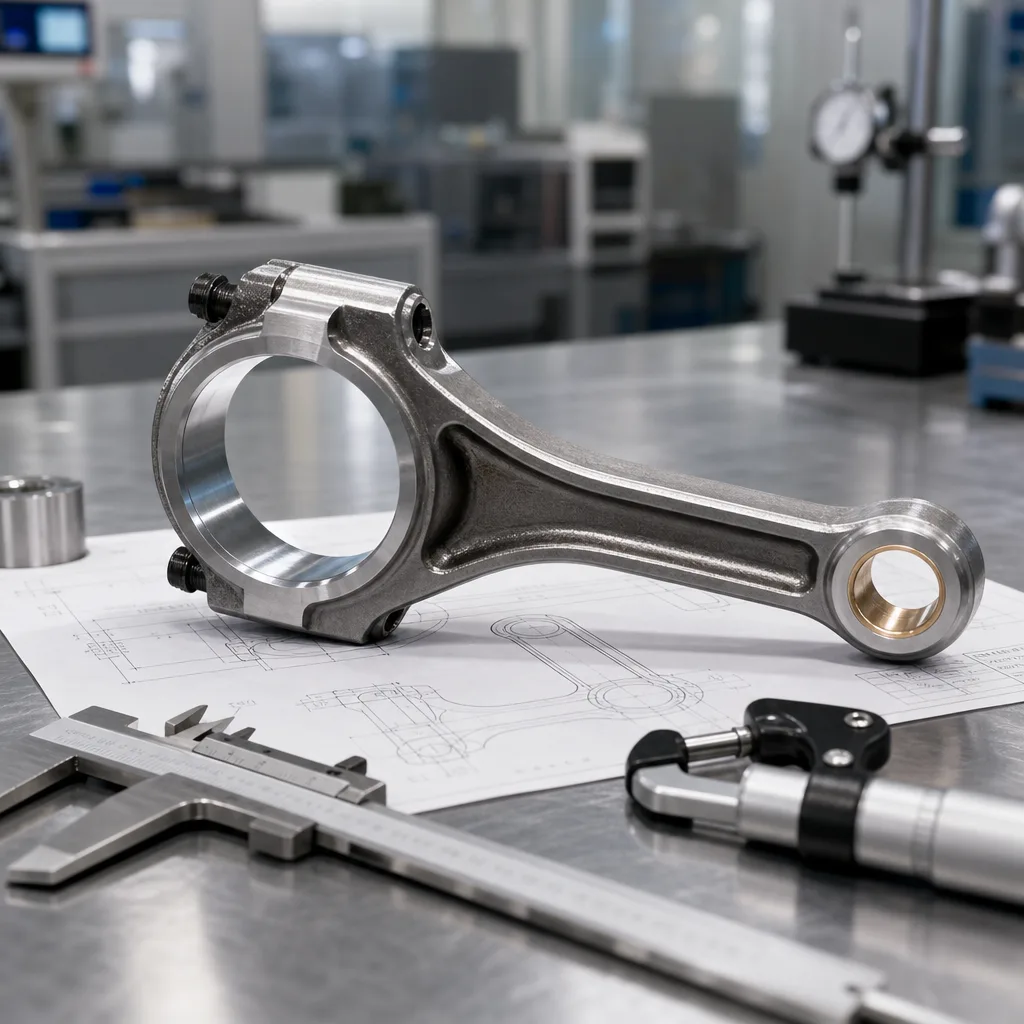
Jeep 4.0 Engine Rebuild Kit RFQ Template and Buyer Checklist
A Jeep 4.0 engine rebuild kit RFQ should make every quote comparable. Ask each supplier to confirm the application, included components, excluded items, size assumptions, substitution rules, and lead time in writing. Do not treat a catalog category, product name, or phrase such as complete kit as a bill of materials.
Use the supplied references as sourcing and review starting points only: Clegg Engine, Titan Engines, Northern Auto Parts, and Wrangler TJ Forum. The purchase decision should rely on the supplier's written quote, line-item bill of materials, confirmed sizes, listed exclusions, and agreed substitution policy.
1. RFQ Header Information
Start with a structured header so every supplier quotes the same application and purchasing conditions.
| RFQ field | Buyer entry | |---|---| | Request | Jeep 4.0 engine rebuild kit | | Vehicle model | To be completed by buyer | | Model year | To be completed by buyer | | Engine information | Jeep 4.0L plus available engine identification details | | Rebuild objective | Repair rebuild, stock rebuild, fleet service, or other defined use | | Quantity | Number of kits required | | Delivery location | Ship-to address or region | | Quote deadline | Required supplier response date | | Required delivery date | Desired in-hand date | | Measurement status | Complete, pending, or not started | | Documentation requested | Bill of materials, size details, part references, exclusions, lead time, substitution policy |
If the repair team is using model-year service information, identify that reference in the RFQ. Forum discussion may be useful during research, but it should not replace the technical information selected by the repair team for the specific vehicle and model year (Wrangler TJ Forum).
2. Component Scope to Quote
Ask the supplier to mark each component area as included, excluded, optional, or not applicable. Require a part reference, quantity, and size wherever those fields apply.
| Component area | Buyer should specify | Supplier should return | |---|---|---| | Pistons | Required size or measurement pending | Inclusion status, quantity, size, part reference | | Rings | Required bore size or size options requested | Inclusion status, quantity, size, part reference | | Main bearings | Standard, undersize, oversize, or pending | Inclusion status, quantity, size, part reference | | Rod bearings | Standard, undersize, oversize, or pending | Inclusion status, quantity, size, part reference | | Cam bearings | Required, not required, or pending | Inclusion status, quantity, part reference | | Gasket set | Full set, head set, lower set, or named scope | Set description and listed contents if available | | Rear main seal | Included, excluded, or optional | Confirmation and part reference | | Timing set | Included, excluded, or optional | Contents and price if optional | | Oil pump | Included, excluded, or optional | Price and lead time if optional | | Lifters | Required only if part of this RFQ | Inclusion status, quantity, part reference | | Push rods | Required only if part of this RFQ | Inclusion status, quantity, part reference | | Rocker arms | Required only if part of this RFQ | Inclusion status, quantity, part reference | | Fasteners | Head bolts, studs, or other named items only | Inclusion status, quantity, part reference |
The cited supplier URLs can support sourcing research, but the RFQ should not assume that any page includes a specific part, brand, size, or kit configuration unless the supplier confirms it in the quote (Clegg Engine, Titan Engines, Northern Auto Parts).
3. Measurement and Machining Status
The RFQ should state whether inspection and measurement are complete. Do not release a final-size purchase order until the buyer or repair team has confirmed the required piston, ring, and bearing sizes.
Use one of these statuses:
- Measurements complete: quote the exact required piston, ring, main bearing, rod bearing, and cam bearing sizes.
- Measurements pending: quote available size options and lead times, but hold final ordering until sizes are confirmed.
- Measurements not started: request budgetary pricing only, with final sizing to follow inspection and machine-shop review.
The supplier response should make all assumptions visible. If the quote assumes standard-size parts, it should say so. If an item is optional, it should be priced separately. If a gasket set is not quoted as a full set, the supplier should describe the set being quoted.
4. Supplier Response Matrix
Attach a response matrix and require suppliers to complete it. The completed matrix can also be used during receiving inspection.
| Field | Supplier response required | |---|---| | Component category | Piston, ring, bearing, gasket, seal, timing, oiling, valvetrain, fastener, or other | | Included quantity | Number of pieces or sets | | Size | Standard, oversize, undersize, or pending | | Supplier part number | Catalog or quote reference | | Manufacturer or brand | Disclose if available | | Package unit | Piece, set, kit, carton, or other | | Labeling method | How size and part reference will appear on packaging | | Substitution rule | None, buyer approval required, or supplier-defined equivalent | | Exclusions | Items not included in the quoted price | | Lead time | Time from purchase order to shipment | | Quote validity | Date or number of days | | Shipment terms | Shipping language used by the buyer or supplier |
Do not ask suppliers to claim certifications, testing, origin, materials, performance attributes, or equivalency unless they can provide supporting documentation for those claims.
5. Substitution Rules
State the substitution rule before the purchase order is issued. Use one of these options or replace them with the buyer's own purchasing language:
- No substitutions without written buyer approval.
- Substitutions allowed only when the supplier identifies the changed part before shipment and the buyer approves it.
- Supplier may quote alternates, but the buyer must approve the final bill of materials before order release.
For any alternate part, require the supplier to identify the component, size, part reference, quantity, and price effect. Do not rely on a general statement that an alternate is equivalent unless the buyer has defined the evidence required to support that statement.
6. Receiving Inspection Checklist
Use the approved supplier response as the receiving checklist. Incoming inspection should confirm that the shipment matches the quote before parts move to the build area.
- Confirm all cartons and internal packages are present.
- Match the packing list to the approved bill of materials.
- Confirm quantities for every quoted line item.
- Confirm piston, ring, and bearing sizes against the order.
- Confirm gasket-set type and listed contents.
- Confirm timing, oiling, valvetrain, and fastener items only where ordered.
- Check packaging condition and label readability.
- Record any missing, damaged, mislabeled, or substituted item before use.
- Hold any unapproved substitution until the buyer and repair team approve it.
The inspection record should identify what was received, what was accepted, and what requires supplier follow-up.
7. Purchase Order Red Flags
Pause before issuing a purchase order if any of the following are true:
- The quote says complete kit but does not include a bill of materials.
- Piston, ring, or bearing sizes are missing.
- The quote assumes standard sizes while measurements are pending or confirmed otherwise.
- Gasket-set scope is unclear.
- Optional items are not separated from included items.
- Substitution rules are not stated.
- Lead time or quote validity is missing.
- Packaging or labeling information is missing where receiving inspection depends on it.
- The quote includes unsupported certification, testing, origin, material, performance, or equivalency claims.
Practical RFQ Checklist
- [ ] Identify buyer company, contact, delivery location, and quote deadline.
- [ ] State the request as a Jeep 4.0 engine rebuild kit.
- [ ] Provide vehicle model, model year, and available engine identification details.
- [ ] State quantity and whether the purchase is one-time or recurring.
- [ ] Define the rebuild objective.
- [ ] Reference the applicable technical information used by the repair team.
- [ ] State whether measurements are complete, pending, or not started.
- [ ] List required piston and ring sizes, or request available size options.
- [ ] List required main, rod, and cam bearing sizes, or request available size options.
- [ ] Define gasket-set scope.
- [ ] Confirm rear main seal inclusion or exclusion.
- [ ] Confirm timing set inclusion, exclusion, or optional pricing.
- [ ] Confirm oil pump inclusion, exclusion, or optional pricing.
- [ ] List valvetrain parts only if required.
- [ ] List fasteners only if required.
- [ ] Require a line-item bill of materials with quantities.
- [ ] Require part references and size details on the quote.
- [ ] State substitution rules.
- [ ] Ask for packaging and labeling details needed for receiving inspection.
- [ ] Ask for lead time, shipment terms, quote validity, and minimum order quantity if applicable.
- [ ] Require the supplier to list exclusions clearly.
Bottom Line
A Jeep 4.0 engine rebuild kit RFQ should control fitment information, measurement status, component scope, substitutions, and receiving inspection. Use supplier and forum URLs as research references only. Approve the purchase only after the supplier provides a written bill of materials, confirmed sizes, exclusions, and substitution terms.