Heavy Duty Diesel Engine Parts: Technical Specs and RFQ Checklist for B2B Buyers
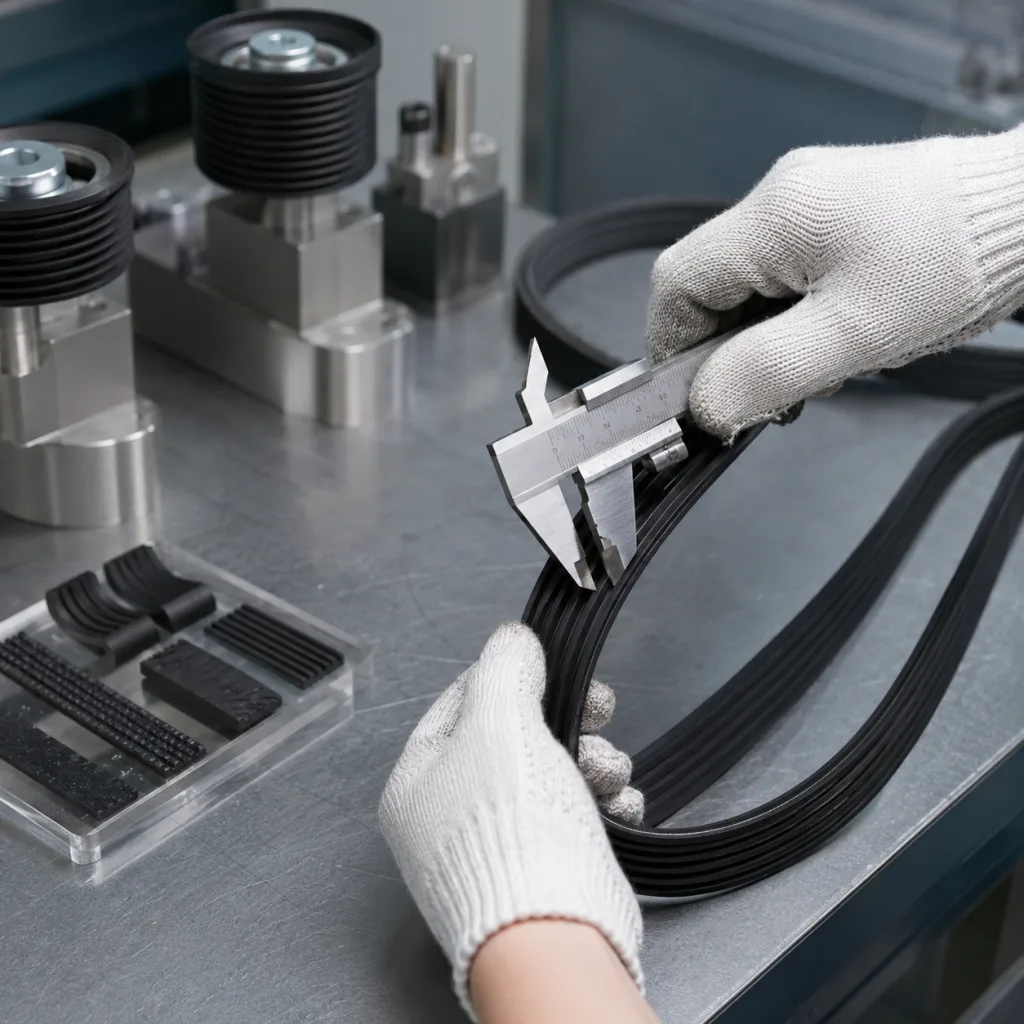
Heavy Duty Diesel Engine Parts: Technical Specs and RFQ Checklist for B2B Buyers
**By Vincent Xi, Editorial Author**
Fleet, equipment, and industrial buyers rarely fail because a catalog lists “diesel parts.” RFQ risk rises when the package omits application identity, duty cycle, wear history, dimensional class, and acceptance criteria. This guide explains how to specify **heavy duty diesel engine parts** with enough technical precision for comparable supplier quotes, then converts that work into a practical RFQ checklist.
Use it as a decision package for procurement, engineering, and rebuild teams: reduce wrong-fit risk, incomplete kits, and unplanned downtime without relying on brand-name shopping language.
Why heavy duty diesel engine parts RFQs fail
Heavy duty diesel engines are commonly specified for high cylinder pressure, long continuous duty, elevated thermal load, and multi-shift utilization. Parts that look interchangeable at a high level—pistons, liners, rings, bearings, gaskets, timing components, oil pumps, valves, and fasteners—can diverge by engine family, emissions configuration, compression ratio, piston cooling design, liner finish, bearing overlay, and fastener grade. Those differences must be confirmed from the engine maker’s service data and the supplier’s written supersession path; they are not interchangeable by displacement label alone.
Published high-mileage rebuild documentation outside the diesel segment is still useful as a process lesson: incomplete repair history and application shortcuts can create later integrity failures. In one documented third-generation 5.7 Hemi case, a timing-chain defect event occurred at **66,000 miles** (vehicle mileage context: 2014 repair on a 2011 Dodge Challenger R/T MDS-equipped unit), and the engine was later removed at about **235,000 miles** after head-gasket integrity issues tied to earlier repair-path problems (Hot Rod / MotorTrend rebuild report, published 2022-02-07). That gasoline case is not a diesel specification source. It is a source context for why RFQs should capture mileage/hours, prior repairs, and the exact failure mode before parts are ordered.
For heavy duty diesel programs, treat every RFQ as a controlled technical package:
1. Identify the engine and application with serial-level precision. 2. Translate wear observations into dimensional and material requirements using measured residual condition. 3. Separate mandatory OEM-equivalent requirements from optional upgrades. 4. Define inspection evidence and acceptance limits before price comparison.
Core technical specifications to capture before sourcing
A usable specification should answer five questions: what engine, what duty, what failed, what condition the remaining hardware is in, and what standard of fit/finish is acceptable.
1) Application identity
Collect at minimum:
- Engine make, model family, displacement, and serial number or equivalent build code
- Equipment platform (on-highway truck, construction, generator set, marine, ag, industrial)
- Emissions configuration and related hardware where applicable (EGR, aftertreatment interactions, high-pressure fuel system generation)
- Aspiration and cooling package notes (turbo model family, oil cooler, piston cooling jets)
- Operating region and fuel quality constraints when known
Parts catalogs for other engine families show how tightly application years and vehicle classes are filtered. One premium rebuild-kit listing for a **5.7L / 345** OHV V8 application is scoped to Jeep/truck/van/SUV fitment for model years **05–08**, illustrating how suppliers already segment by platform and year band rather than generic displacement alone (Titan Engines product listing). Diesel RFQs should be at least as precise and should require serial/build-code confirmation in the supplier response.
2) Duty cycle and life-to-date data
Record hours or miles, average load factor, idle percentage, oil drain interval practice, coolant history, and known overheating/overfueling events. Life-to-date is a wear-class input, not a marketing claim. In the published Hemi rebuild narrative, the powertrain remained in service long enough that later integrity issues emerged after earlier intervention, with final removal near **235,000 miles** (Hot Rod / MotorTrend). For diesel fleets, equivalent hour-based history is often more relevant than odometer-only data; record the reading date with every hours/miles figure.
3) Dimensional and material classes
For common heavy duty diesel wear parts, specify classes rather than only part names. Request values against the engine maker’s service limits; do not treat catalog names as dimensional proof.
| Component group | Spec fields buyers should request | | --- | --- | | Pistons / pins / rings | Crown design, compression height, pin diameter/retention, ring pack land widths, coating, oversize class | | Cylinder liners / sleeves | Dry/wet type, flange height, OD/ID, flange diameter, plateau-hone target Ra range if supplied finished | | Main / rod bearings | Size class (std / under), material stack, crush, oil-hole orientation, thrust control | | Gaskets / seals | Multi-layer steel vs composite where applicable, bore sealing design, fluid compatibility | | Valvetrain | Face angle, stem diameter, seat insert material, spring load class, rotator use | | Fasteners | Grade, torque-to-yield vs reusable, coating, length under head | | Oil pump / cooling | Flow class if published, relief-valve setting basis, drive type |
If the supplier cannot state size class, material family, and revision/supersession path in writing, the quote is incomplete for technical comparison.
4) Failure mode and residual hardware condition
Attach photos and measurements when available: ovality, taper, fretting, cavitation on wet liners, bearing overlay wipe, ring land damage, valve recession, and crank journal condition. Rebuild literature and rebuild-kit merchandising both assume the buyer is choosing a package against a known teardown state, not guessing from a vague “engine noisy” note (Hot Rod rebuild process context; Titan Engines kit category structure).
5) Acceptance criteria and documentation
Define what “good” means before awarding the order:
- Dimensional report format and sampling plan
- Material certificates where the buyer’s quality system requires them
- Packaging and corrosion-protection requirements
- Lot traceability for safety-critical fasteners and bearings
- Clear statement of what is included vs excluded in a kit
Name industry standards only when they are truly relevant to the buyer’s contract. Distinguish a standard’s requirement from a supplier’s own internal practice, and do not treat marketing language as certification evidence. Do not imply certification unless a current certificate or report is attached to the quote.
Buyer decision table: kit vs component vs long-block strategy
Choose the commercial form of supply before detailed RFQ release.
| Decision factor | Individual components | Matched rebuild kit | Reman/partial long-block path | | --- | --- | --- | --- | | Best when | Teardown is complete and only discrete worn parts need replacement | Multiple wear groups are due and labor coordination benefits from one BOM | Core is uneconomical or downtime cost dominates | | Spec burden on buyer | Highest; every size class and revision must be controlled | Medium; still requires application and size-class confirmation | Medium-high; core policy, included hardware, and residual components must be defined | | Common risk | Missing interrelated parts (rings without correctly classed pistons/liners) | Kit billed as “complete” but missing seals, bolts, or application-specific variants | Reused external parts create secondary leaks or timing issues | | QC leverage | Strong if buyer has metrology capability | Strong if supplier provides matched size sets and inspection notes | Depends on reman process transparency and final test scope stated in writing | | Quote comparability | Hard unless BOM is identical | Good when kit contents are itemized | Good only when inclusion list and warranty boundaries match | | Example process lesson | Measure first, then order oversize/undersize classes | Catalog kits are year/platform filtered for a reason (Titan Engines 05–08 5.7L/345 example) | Published high-mileage cases show external components may be reused only after inspection (Hot Rod) |
**Example calculation (assumption to verify in the supplier quote, not a market price):** If a shop estimates **18 labor hours** for in-frame bearing and seal work at a **$95/hour** shop rate, labor alone is **18 × 95 = $1,710** before parts. If incomplete sealing or wrong bearing class causes a rework of **8 labor hours**, rework labor alone is **$760**. Buyers should ask suppliers to itemize kit contents so the quote can be compared on avoided rework risk, not unit price alone. Verify local labor rates and actual job-hour standards in the supplier or shop quote; these hour and rate figures are illustrative assumptions only.
Practical RFQ checklist for heavy duty diesel engine parts
Copy this checklist into the RFQ package. Require written responses, not checkbox silence.
A. Identity and configuration
- [ ] Engine manufacturer, model, displacement, serial/build codes
- [ ] Equipment OEM, model, and unit ID
- [ ] Fuel system generation and injector/pump family if relevant to the BOM
- [ ] Turbo and oil-cooler configuration notes
- [ ] Emissions-related hardware that affects gasket, EGR, or cooling parts
- [ ] Operating environment (ambient range, dust, marine, continuous gen-set, etc.)
B. Service history and failure evidence
- [ ] Hours and/or miles, with as-of date of the reading
- [ ] Oil analysis trends if available (metal ppm, soot, fuel dilution)
- [ ] Prior repairs, TSBs, or campaign work, with dates
- [ ] Primary complaint and confirmed failure mode
- [ ] Photos of failed parts and mating surfaces
- [ ] Residual measurements: journals, bores, deck, liner protrusion, valve recession
C. Parts definition
- [ ] Itemized BOM with quantities
- [ ] Size classes (std / OS / US) for pistons, liners, bearings, valves, seals
- [ ] Material or coating preferences only where engineering has approved alternatives
- [ ] Fastener policy: TTY single-use vs reusable; required replacements
- [ ] Gasket set boundary: head, oil pan, front cover, turbo feed/return, cooler seals
- [ ] Explicit exclusions (sensors, harnesses, mounts, flywheel bolts, etc.)
- [ ] Supersession mapping for obsolete numbers
D. Quality, inspection, and packaging
- [ ] Required dimensional reports and sampling plan
- [ ] Traceability expectations for bearings, fasteners, and injectors if included
- [ ] Cleanliness and corrosion-protection requirements
- [ ] Packaging method for liners, pistons, and precision bearings
- [ ] Incoming inspection criteria the buyer will apply on receipt
- [ ] Nonconformance and RMA process, including photo evidence rules
E. Commercial terms that affect technical risk
- [ ] Lead time by line item, not only order total
- [ ] Partial-ship policy for long-lead components
- [ ] Core charges and core acceptance criteria if reman is involved
- [ ] Warranty boundary: parts only vs parts-and-labor contribution
- [ ] Country of origin and dual-source options if required by the buyer’s policy
- [ ] Revision control: how the supplier notifies BOM changes
F. Quote format requirements
Ask every bidder to return:
1. Line-item pricing with manufacturer/brand and part revision 2. Kit content list with quantities 3. Size-class assumptions 4. Lead time and MOQ 5. Inspection documents included in the base price 6. A clear statement of what is *not* included
Translating teardown findings into a controlled BOM
After teardown, convert observations into purchase classes:
1. **Geometry class** — standard vs oversize/undersize, and whether the mating part must be replaced as a set. 2. **Surface integrity class** — reuse, refinish, or scrap for heads, blocks, cranks, and rods. 3. **Sealing class** — which interfaces need upgraded multilayer or application-specific gaskets because of prior seepage or machining. 4. **Dynamic component class** — timing, oil pump, and valvetrain parts that failed or are near life limit per service data. 5. **Consumable class** — filters, fluids, single-use fasteners, and assembly lubricants required for a clean install.
Published rebuild narratives show that external covers, pans, and manifolds may be candidates for reuse only after inspection, while internal wear parts need a matched plan (Hot Rod). Diesel RFQs should force that same separation in writing and require size-class confirmation before award.
Inspection-ready acceptance criteria buyers can put in the PO
A purchase order is stronger when it states receiving checks:
- Verify part numbers and size marks against the approved BOM before opening all packages.
- Check bearing overlays and piston skirts for handling damage.
- Confirm liner flange and seal surfaces are free of nicks.
- Validate kit quantity counts against the supplier’s itemized packing list.
- Quarantine any line item lacking the agreed traceability or inspection document.
Where the buyer’s quality system requires material certificates or dimensional reports, state that as a contractual deliverable. Do not assume a catalog description equals inspected conformance.
RFQ scoring model for comparable bids
Score suppliers on technical completeness before price:
| Scoring area | Weight example | What “good” looks like | | --- | --- | --- | | Application match evidence | 25% | Serial/model mapping and supersession notes provided | | BOM transparency | 20% | Every component listed with quantity and size class | | Inspection documentation | 20% | Clear reports included or priced as options | | Lead-time realism | 15% | Line-item dates, not only a single optimistic ship date | | Commercial risk controls | 10% | Core policy, warranty boundary, RMA process stated | | Price | 10% | Compared only after the above gates are passed |
**Example scoring assumption to verify internally:** If two quotes differ by **8%** on parts price but only one provides size-class confirmation and an itemized gasket boundary, the incomplete quote should not win on price alone. The 8% figure and the weight percentages above are illustrative assumptions for internal scoring design, not market statistics.
Closing guidance for procurement and rebuild teams
Heavy duty diesel engine parts sourcing improves when the RFQ reads like an engineering control document: identity, duty, failure evidence, dimensional class, kit boundary, inspection proof, and commercial risk controls. Use published rebuild and catalog examples only as process reminders that application filters and wear history matter (Hot Rod; Titan Engines). For diesel programs, validate every number, clearance, and inclusion list against the engine’s current service data and the supplier’s written quote.
Source contexts and how the supporting data was used
**Source context 1 — high-mileage rebuild case narrative:** A 2022 published rebuild/autopsy report on a third-generation 5.7 Hemi documents a timing-chain event at **66,000 miles** and later engine removal near **235,000 miles**, with discussion of repair-path effects and which external components were candidates for reuse (Hot Rod / MotorTrend, published 2022-02-07). This article uses that report only as process evidence that mileage/hours, prior repair quality, and residual hardware condition belong in an RFQ—not as diesel interchange data.
**Source context 2 — application-filtered rebuild kit listing:** A commercial rebuild-kit page for a **5.7L / 345** application is filtered to Jeep/truck/van/SUV platforms for years **05–08**, and the surrounding catalog taxonomy separates pistons/rings, bearings, gaskets, timing sets, and related groups (Titan Engines product listing). This article uses that listing as evidence that serious parts supply is application-scoped and component-grouped, which is the same discipline diesel buyers should demand.
Methodology note
The technical framework above is derived by mapping (a) published rebuild process lessons about service history and residual condition and (b) catalog application-filtering practices into a diesel-parts RFQ structure. Numeric examples taken from the cited pages are limited to the values those pages state, with units and context preserved. Any cost, labor, weight-percentage, or price-delta arithmetic is labeled as an example calculation or internal scoring assumption for quote verification and is not a market survey.
Limitations / what to verify
- The cited rebuild case and kit listing are **not** heavy-duty diesel engines; do not transfer their part numbers, clearances, or life expectations to diesel platforms.
- Displacement, year bands, and mileage figures above are source-specific and time-stamped to those publications/listings; confirm current supersessions with the supplier.
- Diesel liner protrusion, bearing clearance, ring end-gap, and fastener torque values must come from the engine maker’s service data or a qualified rebuild specification—not from this article.
- Kit “completeness,” warranty language, and inspection scope vary by supplier; verify each quote’s written inclusions.
- Labor hours, shop rates, rework hours, scoring weights, and the 8% price-delta example are assumptions for internal process design; replace them with buyer-specific data before use.
- No certification, factory audit, customer outcome, product performance claim, or company capability claim is implied by this editorial guide.
Editorial authorship for this guide is attributed to Vincent Xi, Editorial Author (author profile). No first-person operational claims, factory visits, test campaigns, certifications, or customer outcomes are asserted in this article.