6.4 Powerstroke Engine Rebuild Kit: Specs, Kit Scope, and RFQ Checklist
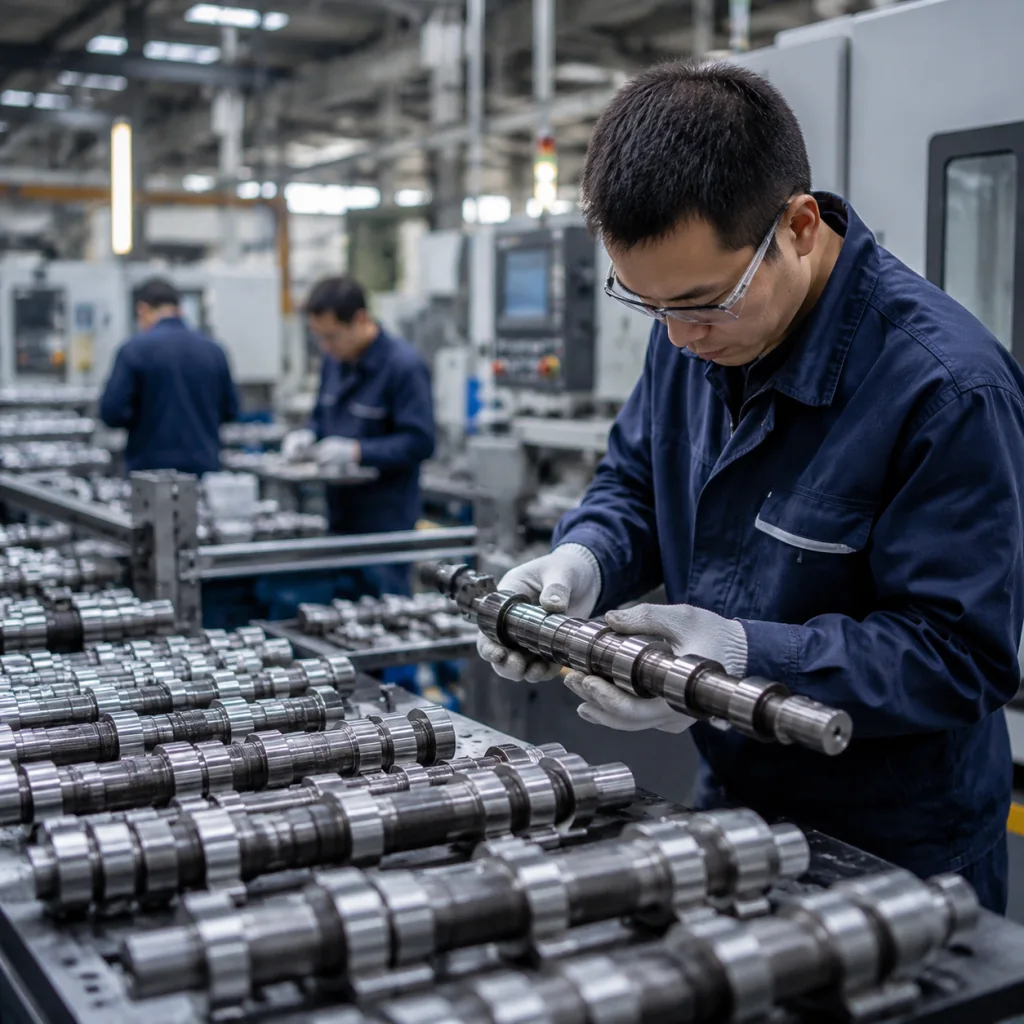
6.4 Powerstroke Engine Rebuild Kit: Specs, Kit Scope, and RFQ Checklist
**By Vincent Xi, Editorial Author** Author profile
Fleet, reman, and independent diesel shops buying a **6.4 Powerstroke engine rebuild kit** need more than a stage label or SKU. They need a locked bill of materials, fitment boundaries for the 6.4L Power Stroke applications commonly listed as **2008–2010** on public kit pages, machining gates that set piston and bearing sizes, and a quote format that exposes omissions before purchase.
This article is a buyer-side specification and RFQ guide. It organizes publicly referenced kit contents, planning price anchors, and procurement questions. It does not claim first-hand rebuild results, factory testing, certification status, proprietary product performance, or customer outcomes.
Buyer order of operations
Use this sequence before comparing suppliers:
1. Define the rebuild objective: short-block refresh, staged bottom-end upgrade, or full project return-to-service. 2. Collect machine-shop measurements for bore, crank journals, rods, and sealing surfaces. 3. Convert any “Stage 2 / Stage 3” language into a line-item BOM with sizes, brands, and exclusions. 4. Quote the kit and out-of-kit systems separately (head hardware, HPFP, injectors, coolers, fluids). 5. Score quotes on completeness, size flexibility, documentation, exclusions, and commercial terms—not stage names.
Why kit selection is a specification problem
Community rebuild planning treats a 6.4L Power Stroke rebuild as a multi-system project. The kit is one work package inside a larger bill of materials that may also include head hardware, high-pressure fuel pump work, injectors, coolant, and fuel-system support components (Powerstroke.org rebuild list thread). Public short-block / long-block build documentation likewise frames the 6.4L project as a multi-page parts and logistics process rather than a single consumable kit (Scribd 6.4L build guide listing).
“Stage 2” or “Stage 3” is not a universal industry standard. Supplier catalogs use stage names for different mixes of pistons, camshafts, bearings, valvetrain parts, and gasket coverage. Public product taxonomy for 6.4L Powerstroke rebuild / overhaul kits appears on pages such as Dynamic Diesel’s Stage 3 listing (Dynamic Diesel Stage 3 product page) and other aftermarket kit listings for the 6.4L family (DK Engine Parts 6.4L kit page). For procurement, treat stage names as marketing shorthand until the supplier provides a packing list, material callouts, size options, and exclusions in writing.
Evidence basis and methodology
This article is derived from publicly available product and discussion sources:
1. Community rebuild shopping lists and kit comparisons in a Powerstroke.org rebuild discussion (source). 2. Supplier product pages describing 6.4L Powerstroke overhaul / stage kits (Dynamic Diesel Stage 3 product page; DK Engine Parts 6.4L kit page). 3. A short-block / long-block build document framing the 6.4L rebuild as a multi-page parts and logistics process (Scribd 6.4L build guide listing).
**How the data was derived:** prices, kit-content descriptions, and related non-kit line items below are taken from those public pages and threads as published reference points, then normalized into buyer questions on scope, fitment, inspection, and quote completeness. No lab testing, teardown program, supplier audit, or live price scrape is implied.
**Limitations / what to verify:** online kit prices and stage descriptions change without notice; community shopping lists are not formal quotes and may be outdated relative to current supplier catalogs; piston coatings, cam profiles, bearing coatings, and gasket brand mixes vary by seller; emissions-related modifications discussed in forums may be restricted by law and are outside a parts RFQ. Confirm every number, part number, size option, and warranty term against a **dated supplier quote** and your machine shop’s measured clearances.
Core technical scope of a 6.4 Powerstroke engine rebuild kit
In public merchandising and rebuild planning, a 6.4L engine rebuild kit typically supports short-block refresh and sealing. Depending on packaging, it may be sold as a bottom-end package, a stage kit with valvetrain and camshaft content, or a broader overhaul set. Map every line item to one of four work packages:
1. **Rotating assembly interface:** pistons, rings, wrist pins/locks, rod bearings, main bearings. 2. **Valvetrain / cam drive interface:** cam bearings, lifters, push rods, and any included camshaft. 3. **Sealing package:** upper and lower gasket/seal coverage required for the intended teardown level. 4. **Hardware and support parts not always included:** head studs/bolts, oil-system parts, fuel-system parts, coolant, filters, and fasteners outside the gasket set.
Community-referenced kit contents and planning price points
In one public rebuild planning thread, a poster compared Stage 2-style kits and related supporting parts. As listed in that community shopping list (Powerstroke.org thread)—**community-reported planning figures only; not verified live quotes, not dated formal RFQs, and not supplier catalog guarantees**:
- A Dynamic Diesel-style **6.4L Stage 2 rebuild kit** planning figure of **USD 2,799.99**, described in that list for **2008–2010** coverage.
- An Asheville Engine **Stage 2 Enhanced Rebuild Kit** planning figure of **USD 3,755.00**, described there as including delipped thermal-coated Mahle pistons with rings (**set of 8**, with wrist pins and locks), a Stage 2 camshaft, coated main/rod/cam bearing sets, **valve lifters (set of 16)**, **push rods (set of 16)**, and a complete upper/lower Mahle gasket set.
- Related non-kit line items on the same list: ARP head studs at **USD 528.71** (listed as part **250-4203**) and an Alliant high-pressure fuel pump (**AP63643**) at **USD 1,049.95**.
- Additional non-kit planning figures on the same list: injectors at **USD 800.00** for clean/tested units, and coolant at **USD 160.00** for ELC concentrate planning.
Use these only as planning anchors. Re-price against current supplier terms, taxes, core charges, shipping, and availability. Any exact figure above is an example planning amount from the cited thread and must be verified in the supplier quote.
Translate “Stage 2” / “Stage 3” into RFQ requirements
Supplier catalogs present multiple stage levels for the same engine family. Public product taxonomy for 6.4L Powerstroke rebuild kits appears on overhaul kit pages such as Dynamic Diesel’s Stage 3 listing (Dynamic Diesel Stage 3 page) and other aftermarket kit listings that call out piston packages for the 6.4L family (DK Engine Parts 6.4L kit page).
For B2B quoting, convert stage language into measurable requirements:
- **Duty profile:** stock daily / moderate tow versus high-load commercial use.
- **Cylinder condition path:** standard bore, oversize pistons, or sleeve strategy after bore-gauge results.
- **Piston specification:** OE-style, coated, delipped, or alternate piston family—only if compatible with compression, bowl, and ring-pack goals.
- **Cam and valvetrain package:** stock replacement versus supplier stage cam, plus matched lifters/push rods.
- **Bearing package:** material/coating, size options (standard/undersize), and whether cam bearings are included.
- **Gasket coverage:** full upper/lower versus partial; brand and MLS head-gasket strategy if heads are resealed.
- **Excluded systems:** turbos, injectors, HPFP, EGR/DPF hardware, oil cooler, and electronics are often outside the rebuild kit and must be quoted separately.
Buyer decision table: kit type versus rebuild objective
| Decision factor | Basic short-block refresh kit | Enhanced / stage-style rebuild kit | Full project BOM beyond the kit | | --- | --- | --- | --- | | Typical objective | Return to service with measured stock clearances | Address weak points with upgraded pistons/cam/bearings/gaskets as packaged by supplier | Complete vehicle return-to-service including fuel, air, cooling, and sealing systems | | Common included focus | Pistons/rings, bearings, gasket set (varies by seller) | Expanded content such as cam, lifters, push rods, coated bearings, enhanced pistons (example contents as listed in the community Stage 2 kit description) (Powerstroke.org thread) | Head studs, HPFP, injectors, lift pump, coolant, filters, turbos, sensors | | Best when | Block and heads are within service limits; duty cycle is moderate | Buyer wants one staged package and has machine-shop validation for the upgrades | Failure analysis shows multi-system damage or deferred maintenance | | Main RFQ risk | Missing cam bearings, incomplete gasket coverage, no oversize options | Stage name used without line-item BOM or size chart | Underestimating fuel/cooling/turbo work and total downtime | | Quote fields to demand | Exact part list, sizes, brands, piston/ring specs | Cam part ID, piston coating/delip status, bearing coating, lifter/pushrod counts | Separate lines for hardware, fuel system, machining, and labor |
Fitment, inspection, and machining gates before ordering
Order the kit only after dimensional inspection. Public short-block build documentation for the 6.4L frames the project as a multi-step parts and logistics process, not a single-box installation (Scribd 6.4L build guide listing). For procurement, the kit is one work package inside block, crank, rod, and head decisions. Public kit listings commonly reference **2008–2010** coverage for this engine family; still confirm chassis application, casting/serial identifiers, and year coverage on the quote itself (Dynamic Diesel Stage 3 page; DK Engine Parts 6.4L kit page).
Minimum inspection package for kit sizing
Request or complete the following before finalizing piston and bearing sizes:
- **Cylinder bore:** taper, out-of-round, and finish capability for the selected ring pack.
- **Deck and main bore condition:** especially after overheating or spun bearings.
- **Crank journals:** diameter, taper, and whether standard or undersize bearings are required.
- **Connecting rods:** big-end bore, bend/twist, and rod-bolt strategy.
- **Piston-to-wall and ring end-gap targets:** confirm against the piston supplier’s instructions, not only the kit marketing page.
- **Cam and lifter bores:** if the kit includes a cam and lifters, verify oiling and bore condition first.
- **Head and block sealing surfaces:** flatness and surface finish compatible with the gasket set.
If measurements are unavailable, state in the RFQ that piston oversize, bearing undersize, and final gasket strategy remain open pending machine-shop data.
Common exclusions that drive change orders
Community rebuild lists repeatedly show large non-kit spend around fuel and clamping systems. In the same Powerstroke.org shopping list, injectors were listed at **USD 800.00** for clean/tested units and coolant at **USD 160.00** for ELC concentrate planning (Powerstroke.org thread). Those are community-reported planning figures only, but they show why a kit-only quote can understate project cost.
Confirm whether the kit includes:
- cam bearings
- freeze plugs / expansion plugs
- rear main seal and front cover seals
- oil cooler or oil cooler seals
- head bolts/studs
- oil pump and pickup tube O-rings
- thermostat housing and EGR-adjacent gaskets if the upper end is opened
Standards and quality language to use carefully
When writing an RFQ, distinguish **industry/standard requirements** from **supplier commercial claims**:
- Ask for material and dimensional conformity statements for pistons, rings, bearings, and gaskets, but do not assume a supplier is certified to a named quality system unless a current certificate is provided.
- If the machine shop works to OEM service-limit tables or published overhaul procedures, state those as the shop’s acceptance criteria. Do not present a kit brand’s stage name as an OEM service procedure.
- Coatings (thermal piston coatings, polymer bearing coatings, and similar) should be identified by process description and intended operating benefit, not treated as a certification.
- Emissions components and calibration remain governed by applicable local law. Forum discussions about DPF/EGR modifications are not a compliance path and should not be written into commercial rebuild specifications.
Practical RFQ checklist for a 6.4 Powerstroke engine rebuild kit
Use this as a buyer-side document. Require written answers on the quote.
A. Application and identity
- [ ] Engine family: 6.4L Power Stroke
- [ ] Model years / chassis application range requested (commonly **2008–2010** in public kit listings; confirm on quote)
- [ ] Serial/casting identifiers available? Yes / No
- [ ] Rebuild target: short block only / long block / in-chassis overhaul support
- [ ] Intended duty: light service / tow / commercial / other (describe hours/load)
B. Kit content definition (line-item BOM required)
- [ ] Pistons: brand, part family, compression features, coating/delip status, quantity (community full-kit descriptions reference a **set of 8**)
- [ ] Rings: brand, gap-instructions reference, quantity
- [ ] Wrist pins and locks included? Yes / No
- [ ] Rod bearings: material/coating, size options, quantity
- [ ] Main bearings: material/coating, size options, quantity
- [ ] Cam bearings included? Yes / No; size options
- [ ] Camshaft included? Yes / No; profile ID
- [ ] Lifters included? Quantity (community Stage 2 descriptions reference a **set of 16**)
- [ ] Push rods included? Quantity (community Stage 2 descriptions reference a **set of 16**)
- [ ] Complete upper and lower gasket set? Brand and coverage list
- [ ] Freeze plugs, seals, or oil-system seals included?
C. Dimensional and machining assumptions
- [ ] Standard bore only, or available oversizes (list)
- [ ] Standard bearings only, or undersizes (list)
- [ ] Required cylinder finish / ring-pack notes
- [ ] Balancing, clearancing, or break-in procedure documents included?
- [ ] Machine-shop measurements attached to RFQ? Yes / No
D. Quality, packaging, and traceability
- [ ] Country of origin by major component group (if available)
- [ ] Lot/batch traceability for pistons, bearings, gaskets
- [ ] Packaging method for rings/bearings to prevent corrosion/damage
- [ ] Photo or packing list to be provided before shipment?
- [ ] Nonconformance / RMA process and lead time for replacements
E. Commercial terms
- [ ] Unit price by kit configuration (standard / oversize / stage variant)
- [ ] Core charge, if any
- [ ] Lead time (stock vs build-to-order)
- [ ] Shipping terms and dimensional-weight assumptions
- [ ] Warranty term, covered components, and labor exclusion language
- [ ] Price validity date
- [ ] Minimum order quantity and volume breaks for fleet/reman buyers
F. Out-of-kit systems to quote separately
- [ ] Head studs/bolts
- [ ] HPFP and related fuel-system components
- [ ] Injectors (new, reman, or flow-tested)
- [ ] Oil cooler / EGR cooler decision path
- [ ] Coolant type and volume plan
- [ ] Filters, fluids, and break-in oil specification
- [ ] Turbo inspection/replacement criteria
How to compare supplier quotes without stage-name confusion
When two quotes both say “Stage 2” or “overhaul kit,” score them on completeness rather than title:
1. **BOM completeness score:** count included rotating, valvetrain, and sealing line items. 2. **Size flexibility score:** available piston oversizes and bearing undersizes. 3. **Documentation score:** installation notes, torque references (if provided), packing-list fidelity. 4. **Risk score:** number of critical exclusions (cam bearings, head hardware, oil cooler seals). 5. **Commercial score:** lead time, warranty boundaries, and replacement logistics.
A lower kit price can still produce a higher total project cost if head studs, HPFP, injectors, and machining are discovered late. The Powerstroke.org planning list is a useful reminder that non-kit lines can each land in the hundreds or thousands of **USD** on a community shopping list, depending on parts chosen (Powerstroke.org thread).
Sourcing note for B2B buyers
For multi-unit reman programs, standardize the RFQ around a locked BOM revision. Require suppliers to notify you before substituting piston brand, ring pack, bearing coating, or gasket brand. Substitution without approval is a common source of clearance and installation mismatches.
If you are soliciting alternative sources for a **6.4 Powerstroke engine rebuild kit**, request:
- a packing-list PDF matched to the quote revision
- photos of the actual kit contents before shipment for first-article orders
- written confirmation of year coverage and excluded systems
- a single point of contact for missing-piece claims within a defined inspection window after delivery
Editorial summary
A 6.4 Powerstroke engine rebuild kit should be purchased as a controlled technical package: defined pistons/rings/bearings/gaskets, optional cam and valvetrain content, measured size options, and explicit exclusions. Public community lists show Stage-style kits and supporting parts spanning multi-thousand-dollar project budgets, with example Stage 2 kit shopping-list figures of **USD 2,799.99** and **USD 3,755.00** in one thread, plus separate head-stud and HPFP lines of **USD 528.71** and **USD 1,049.95** respectively (Powerstroke.org thread). Supplier catalog pages confirm that staged overhaul kits are merchandised for the 6.4L family, but contents must still be verified line by line (Dynamic Diesel Stage 3 page; DK Engine Parts 6.4L kit page).
Treat every exact price, coating claim, and stage label as provisional until confirmed in a dated supplier quote and validated against machine-shop measurements. That process—not marketing stage numbers—determines whether the kit fits the rebuild.
---
**Author note:** This article is prepared by Vincent Xi in an editorial capacity for Driventus Auto Parts. No first-person service claims, factory visits, certifications, customer outcomes, or proprietary test results are asserted. Technical points are attributed to the public sources linked above and should be re-verified before purchase or installation.
**Related sourcing page:** https://driventus.com/