12 Valve Cummins Engine Rebuild Kit: Technical Specs and RFQ Checklist for B2B Buyers
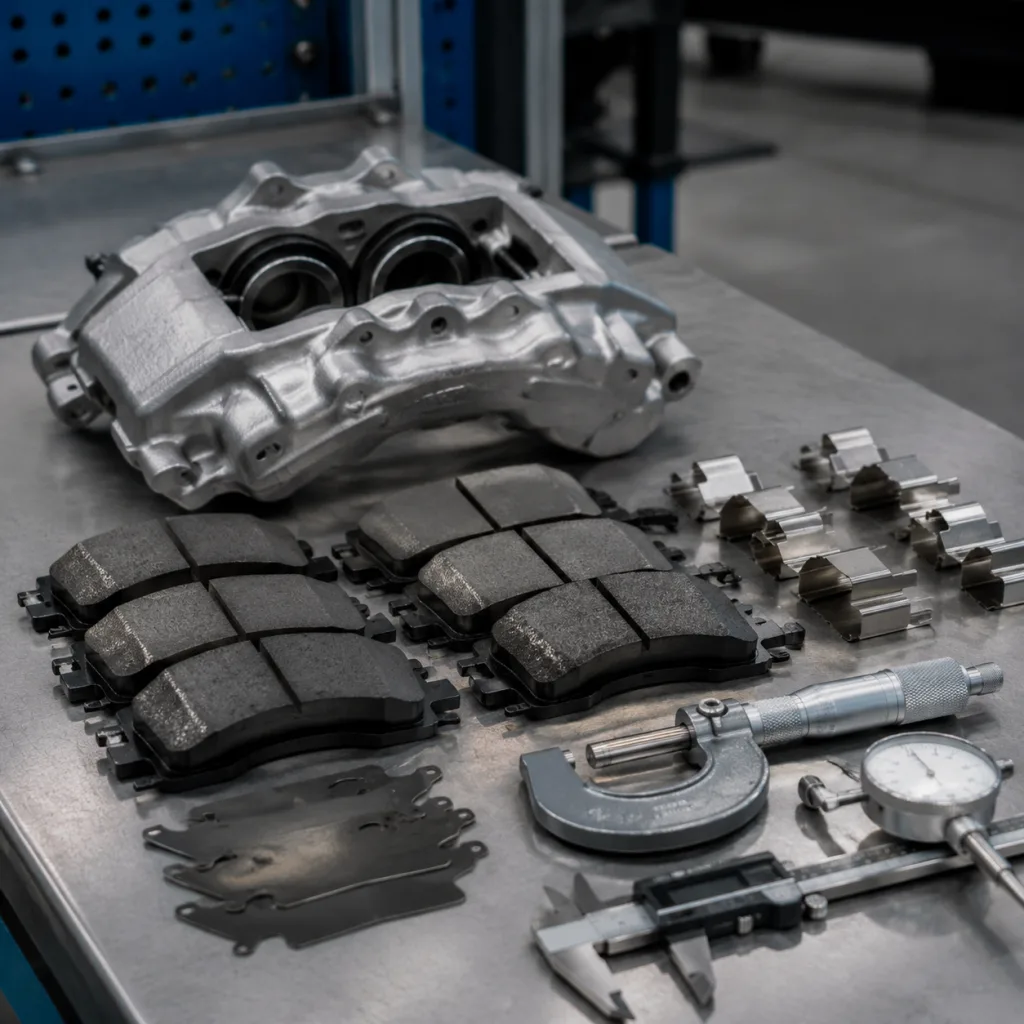
12 Valve Cummins Engine Rebuild Kit: Technical Specs and RFQ Checklist for B2B Buyers
**By Vincent Xi, Editorial Author** Author profile
Procurement teams, fleet shops, and diesel rebuild specialists often search for a **12 valve Cummins engine rebuild kit** when an inline-six platform commonly designated in the market as the 12-valve 5.9 L family needs a planned overhaul rather than a full long-block replacement. The commercial risk is rarely whether a kit can be purchased. The risk is ordering the wrong kit scope for the engine’s serial identity, measured clearances, fuel-system generation, and duty cycle.
This page is a specification-and-RFQ workflow for technical buyers. It prioritizes what to document before requesting quotes, how to compare kit tiers, and which inspection findings change the bill of materials. It does **not** publish OEM wear limits, torque tables, or a Driventus-branded kit bill of materials.
Scope, evidence basis, and method
**How this article was derived:** Public rebuild case documentation and commercial rebuild-kit product taxonomies were reviewed to identify recurring specification fields buyers must capture when RFQing engine rebuild kits. Component categories commonly associated with premium rebuild kits—bearings, gasket sets, pistons and rings, timing components, oil pumps, and related hard parts—were used only as a checklist scaffold based on how one supplier organizes engine rebuild kit catalogs for a **different** engine family (Titan Engines product taxonomy for a premium engine rebuild kit listed for Jeep truck/van/SUV 5.7 L 345 OHV V8 16V 2T Hemi, model years 05–08). A published high-mileage rebuild autopsy was used only as a **process** reference for inspection-driven decision making, not as Cummins fitment or wear data (Hot Rod Hemi rebuild autopsy, published 2022-02-07). Rebuild documentation practices were also cross-checked against published rebuild-manual product positioning for modern engine families (CarTech Books rebuild manual listing for New Hemi engines, 2003–present).
**Limitations / what to verify:** The supplied public sources are **not** 12-valve Cummins OEM service literature and are **not** a Cummins kit packing list. Mileage and failure examples below come from a different engine family and must not be transferred as Cummins wear limits, service intervals, or acceptance criteria. Any exact oversize, undersize, compression, torque, displacement callout, or kit-contents statement in an RFQ or quote should be treated as either (a) source-attributed to a non-Cummins case study or catalog example, or (b) an **example calculation/assumption to verify in the supplier quote**. Always confirm against engine serial number, CPL/build list where applicable, measured journals/bores, and the supplier’s written kit bill of materials before purchase or assembly.
**Author note:** This page is an editorial specification guide by Vincent Xi (Editorial Author). No first-person shop experience, factory-visit claims, certifications, customer outcomes, or proprietary test results are asserted.
Why RFQ quality matters more than catalog labels
A “complete” 12 valve Cummins engine rebuild kit is not a single universal SKU. Kit content changes with:
- Engine identity (year range, industrial vs. automotive application, serial and CPL/build data when available)
- Measured block and crank condition (standard vs. oversize pistons; standard vs. undersize bearings)
- Cylinder-head strategy (reuse, machine, or replace; valve-train parts in or out of kit)
- Fuel and timing strategy (mechanical pump generation, timing cover/gear needs, front seal package)
- Duty cycle (highway fleet, agricultural PTO, generator, vocational truck)
Published rebuild reporting on other mass-produced engines shows why inspection must lead the purchase decision. In a rebuild autopsy of a third-generation 5.7 Hemi V-8—**a different engine family used here only as a high-mileage process example**—the unit was removed at about **235,000 miles** (odometer context reported in the case; not a Cummins limit) after earlier repair history, and the teardown indicated that condition of retained parts, not mileage alone, determined rebuild feasibility (Hot Rod, published 2022-02-07). That same case history reported an earlier timing-chain event at about **66,000 miles** (event year reported as 2014 on a 2011 vehicle), reinforcing that prior repair quality can dominate later gasket and sealing outcomes (Hot Rod, published 2022-02-07).
For a 12-valve Cummins RFQ, apply the same **process** logic only: capture failure mode and measured dimensions first, then request the kit. Do not reverse the order. Do not import the Hemi mileage figures as Cummins decision thresholds.
Step 1 — Freeze engine identity before any kit discussion
Provide the supplier with a single identity package before commercial discussion:
- Exact engine family designation as labeled on the data plate / casting marks
- Engine serial number
- CPL or equivalent build-list reference when available
- Vehicle or equipment application (truck, ag, industrial, marine conversion, etc.)
- Approximate hours or miles and duty description
- Known prior machining (rebore, crank grind, head work)
Without this package, a supplier can only quote a “generic 12-valve kit,” a common root cause of wrong pistons, wrong gasket thickness strategy, or incomplete sealing sets. Identity fields are buyer-controlled inputs; they are not claims about any specific catalog SKU.
Step 2 — Run inspection gates that change the bill of materials
Separate **kit selection** from **machine-shop findings**. Minimum gates before freezing the PO:
1. **Block decks and bores** — out-of-round, taper, and whether oversize pistons are required 2. **Crankshaft** — main/rod journal diameters, thrust width, seal surface condition 3. **Connecting rods** — big-end roundness, bushing condition if applicable 4. **Oil system** — pump wear, pickup integrity, cooler restriction history 5. **Head path** — crack check, valve guide/seat condition, whether head work is in-house or outsourced 6. **Prior repair evidence** — oversize fasteners, previous sealant misuse, non-OEM repair parts
The Hemi autopsy reference is useful only as process evidence: high-mileage hardware can remain rebuildable when inspection is thorough, but prior repair shortcuts can still force later sealing failures even when core metallurgy looks serviceable (Hot Rod, 2022-02-07). Translate that lesson into Cummins RFQs by attaching photos of journals, bore reports, and any previous machine paperwork to the quote request—not by copying another engine’s reported mileage history into acceptance criteria.
Step 3 — Specify kit technical fields by subsystem
Bottom-end specification
Request explicit confirmation of:
- Main bearing size grade (standard or undersize)
- Rod bearing size grade
- Thrust bearing configuration
- Piston part strategy (standard bore vs. oversize; coated or non-coated as quoted)
- Ring pack type and gap-instructions reference (supplier sheet or service manual callout)
- Oil pump inclusion or exclusion
- Rear main seal design generation and housing condition assumptions
**Example calculation/assumption to verify in the supplier quote (not a measured field value and not a Driventus specification):** if a quote line lists **6** rod-bearing pairs for an inline-six and offers an undersize option labeled **0.010 in (0.25 mm)**, treat that only as a candidate size after journal measurement. Confirm whether the quote is for one full engine set, whether thrust location is included, and whether packaging is matched to measured crank diameters before issuing a PO.
Sealing and short-block interfaces
Gasket set scope is a frequent RFQ failure point. Ask the supplier to itemize:
- Head gasket type and thickness strategy (and whether multi-layer steel or other construction is being quoted)
- Oil pan, front cover, valve cover, and cooler/filter head gaskets if applicable
- Intake/exhaust manifold gaskets if the kit is marketed as “upper and lower”
- Seal kit contents (front crank, rear main, valve stem seals if included)
Commercial rebuild-kit catalogs commonly separate gasket sets from bearings, pistons/rings, timing sets, and oil pumps. That category split is a useful RFQ structure even when buying a bundled kit; the cited catalog example is for a Jeep/Hemi application and must not be read as Cummins content (Titan Engines rebuild-kit and related parts taxonomy, 5.7 L Hemi fitment listing years 05–08).
Timing, gear train, and front-end parts
Force a written yes/no on:
- Timing gears / related timing set components
- Front seal and cover gasket package
- Cam bushings/bearings if applicable to the kit definition
- Any hardware that is single-use or stretch-type on the target engine family
If the supplier says “timing set optional,” require a separate line item and lead time so the shop does not discover the omission mid-assembly.
Cylinder head and valve-train boundary
Define whether the RFQ is:
- **Short-block oriented kit** (bottom end + seals/gaskets only)
- **Long-block oriented kit** (adds valve-train wear parts)
- **Out-of-frame complete kit** (adds more external sealing and accessory interface parts)
Do not accept ambiguous labels such as “master kit” without a parts list. Rebuild manuals and formal rebuild documentation exist precisely because assembly order, inspection gates, and parts boundaries are easy to mis-scope (CarTech Books rebuild manual product listing for engine rebuild documentation).
Buyer decision table: kit path vs. alternative paths
| Decision path | Best when | Typical kit/control focus | Main commercial risk | RFQ must lock | |---|---|---|---|---| | Standard in-frame / short-block rebuild kit | Crank and block are within service limits; downtime window is planned | Bearings, rings/pistons as required, gasket/seal set, oil pump decision | Wrong size grades after machining | Measured sizes + written BOM | | Oversize/undersize machine-matched kit | Bores or journals require cut | Explicit piston oversize and bearing undersize lines | Mixing standard and cut parts | Machine shop report attached to PO | | Long-block oriented kit + head work package | Valve-train wear or head damage is known | Bottom-end kit plus valve seals/guides/springs as quoted | Scope creep on head parts | Head included/excluded matrix | | Reman long-block purchase (kit alternative) | Shop capacity or core risk is too high | Not a kit buy; define core return and residual parts reuse | Core charges and residual accessory fitment | Core policy + residual parts list | | New partial/complete replacement assembly (kit alternative) | Immediate uptime dominates total cost | Reuse decision for manifolds, covers, pan, electronics/sensors as applicable | Paying twice for parts already on the engine | Reuse list signed by shop foreman |
**Example commercial assumption to verify (not a market price claim and not a Driventus quote):** if management compares a rebuild kit path against a replacement assembly path, model total cost as kit + machine shop + labor hours + risk contingency, not kit price alone. Use the shop’s own labor rate and measured machine quote; do not import third-party consumer pricing or assume a fixed percentage contingency without local data.
Practical RFQ checklist for a 12 valve Cummins engine rebuild kit
Use the checklist below as the body of the RFQ email or portal form.
A. Administrative
- [ ] Buyer legal name, ship-to, and required delivery window
- [ ] Quote validity period requested (state the date you need pricing held through)
- [ ] Target currency and Incoterms if cross-border
- [ ] Required documents: packing list, invoice, certificate of conformance if your QA system needs it (do not assume a supplier holds a specific certification unless a current document is provided)
B. Engine identity
- [ ] Serial number
- [ ] CPL/build list or equivalent
- [ ] Application and duty cycle
- [ ] Miles/hours and failure symptoms
- [ ] Photos of data plate and major castings
C. Measured condition (attach reports)
- [ ] Bore diameters / intended piston size
- [ ] Main and rod journal sizes / intended bearing grades
- [ ] Deck condition notes
- [ ] Crank thrust and seal surface notes
- [ ] Oil pump reuse or replace decision
D. Kit scope matrix (require yes/no + part lines)
- [ ] Main bearings
- [ ] Rod bearings
- [ ] Thrust bearings/washers
- [ ] Pistons
- [ ] Rings
- [ ] Liners (if applicable to the exact configuration being rebuilt)
- [ ] Full gasket set contents itemized
- [ ] Front and rear seals
- [ ] Timing/gear components
- [ ] Oil pump
- [ ] Freeze plugs
- [ ] Valve-train parts (if long-block scope)
- [ ] Any single-use fasteners
E. Quality and receiving controls
- [ ] Request country of origin by major subcomponent group if your compliance team requires it
- [ ] Request dimensional inspection sheet for critical bearings/pistons when available
- [ ] Define nonconformance process (RMA window, photo evidence, replacement lead time)
- [ ] Require sealed packaging photos before shipment for high-value international orders
- [ ] State whether partial shipments are allowed
F. Commercial comparability rules
- [ ] Every bidder must quote against the same BOM matrix
- [ ] Optional parts quoted as separate lines
- [ ] Lead time stated in calendar days from PO
- [ ] Core charges, if any, stated separately
- [ ] No substitution without written approval
This checklist mirrors how serious rebuild operations already separate catalog categories—bearings, gasket sets, pistons and rings, timing sets, oil pumps—rather than relying on a marketing label alone. Again, the cited taxonomy is structural only and is not Cummins fitment proof (Titan Engines kit/parts category structure, Hemi application listing).
Receiving dock controls before the kit enters the clean room
- Match every line on the packing list to the approved BOM
- Verify size markings on bearings and pistons against the machine report
- Check ring sets for correct bore grouping
- Inspect sealing surfaces of gaskets for transit damage
- Quarantine any substitution immediately
**Example receiving assumption to verify:** if the PO states standard-size main bearings and one box is marked for a different grade, stop the job. Do not “fit check and see.” Size grade mismatches are a documentation failure, not a technician preference.
Standards and practice boundaries
Where a dimensional or assembly standard is relevant (for example, shop measurement practice, torque sequence from OEM service information, or customer-mandated QA documentation), distinguish clearly between:
- **the standard or OEM service requirement**, and
- **the supplier’s quoted commercial practice**
Do not imply that a rebuild kit, a seller, or Driventus is certified to a named standard unless a current certificate or controlled document is attached to the transaction file. Kit purchase and machine-shop compliance are separate controls. This article does not name a certification status for any party.
Recommended internal workflow for procurement and the shop
1. Freeze engine identity and failure notes 2. Complete measurements and machine plan 3. Convert the machine plan into a BOM matrix 4. Issue the RFQ with the checklist above 5. Score quotes on BOM completeness, lead time, and nonconformance terms—not only unit price 6. Place PO with size grades written in plain text 7. Receiving inspection against the machine report 8. Assembly only after quarantine issues are closed
This sequence is intentionally conservative. It is designed for B2B downtime control, warranty defensibility, and auditability.
Source contexts buyers should keep in the project file
1. **Process context — inspection before parts commitment:** High-mileage rebuild case documentation shows that teardown condition and prior repair quality can matter more than odometer reading when deciding rebuild scope. Reported example values from that non-Cummins case include removal near **235,000 miles** and an earlier timing-chain event near **66,000 miles** (2014 event on a 2011 vehicle) (Hot Rod Hemi rebuild autopsy, 2022-02-07). Keep an equivalent teardown photo set in the Cummins project file; do not transfer those mileages as Cummins limits. 2. **Commercial context — kit taxonomy and line-item control:** Supplier catalog structures that split rebuild kits from bearings, gasket sets, pistons/rings, timing sets, and oil pumps provide a practical template for apples-to-apples RFQs. The cited listing is explicitly a Jeep/Hemi kit taxonomy for model years 05–08, not a Cummins BOM (Titan Engines). 3. **Documentation context — formal rebuild references:** Using a written rebuild procedure/manual discipline reduces omitted steps when multiple technicians touch the same engine (CarTech Books rebuild manual listing).
Key takeaways for technical buyers
- A **12 valve Cummins engine rebuild kit** should be purchased as a measured, identity-matched BOM—not as a generic catalog title.
- Use published rebuild case studies from other engines only for process lessons, never as transferred wear limits (Hot Rod, 2022-02-07).
- Force line-item clarity using the same category discipline suppliers already use for bearings, gaskets, pistons/rings, timing sets, and oil pumps—without treating non-Cummins catalog pages as fitment authority (Titan Engines).
- Keep rebuild documentation and inspection records with the commercial file (CarTech Books rebuild documentation example).
- Label every numeric assumption in quotes and internal spreadsheets as either measured data or “to verify in the supplier quote.”
If you are preparing a live RFQ, start with the engine serial/CPL package, attach bore and journal measurements, and require every supplier to answer the checklist with a written yes/no matrix. That single discipline prevents most wrong-kit purchases before payment is released.
---
**Editorial attribution:** Vincent Xi, Editorial Author, Driventus Auto Parts — https://driventus.com/authors/vincent-xi/
**Evidence method (short):** Synthesis of publicly available rebuild-process reporting and commercial rebuild-kit category structures for RFQ design. **Limitations:** Source material is not 12-valve Cummins OEM service data; verify all fitment, sizes, and kit contents in the supplier quote and against the engine in hand.